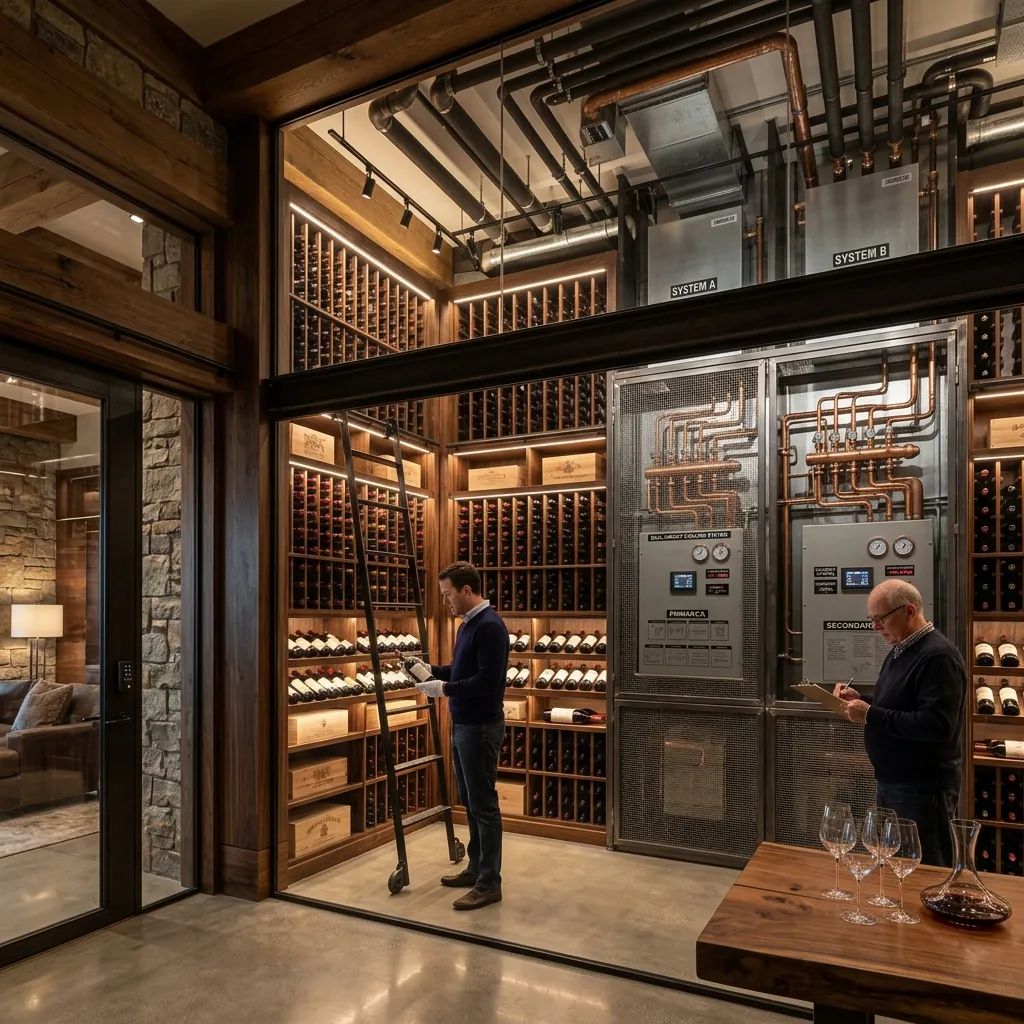
Ensure your wine cellar is perfectly insulated for optimal aging.
Book a ConsultationLearn how the R-value impacts temperature control and wine preservation.
Higher R-values provide better insulation, helping maintain a consistent temperature in your wine cellar.
Investing in the right R-value can reduce energy consumption, leading to lower utility bills.
Proper insulation with the right R-value helps to prevent mold growth and control humidity levels.
When it comes to creating the perfect environment for your wine collection, the R-value of your insulation is crucial. The R-value measures the insulation's resistance to heat flow; the higher the R-value, the better the insulation. This is particularly important for wine cellars, as even minor temperature fluctuations can affect the aging process of your wines. A well-insulated cellar ensures that your wine remains at a stable temperature, enhancing its flavor and quality over time.
Choosing the right R-value also contributes to energy efficiency. By reducing heat transfer, you minimize the workload on your cooling system, which can significantly lower energy costs. Additionally, proper insulation reduces the risk of condensation and mold, creating a healthier environment for your wine and maintaining its integrity.
Essential Wine Cellar Engineering Resources:
R-value measures the thermal resistance of insulation. A higher R-value ensures better temperature regulation, which is essential for preserving wine quality.
Higher R-values lead to less heat transfer, which reduces the energy needed for cooling, resulting in lower energy bills.
For optimal insulation, aim for an R-value between 19-30, depending on your local climate and the specifics of your wine cellar.
Whether you need installation, service, or maintenance — our team is ready to help. Fill out the form below and we'll get back to you within 24 hours.
By submitting this form, you agree to our Privacy Policy. CSLB Lic#1055057
VA Wine Cooling engineers and maintains precision commercial and residential cooling systems across Southern California.