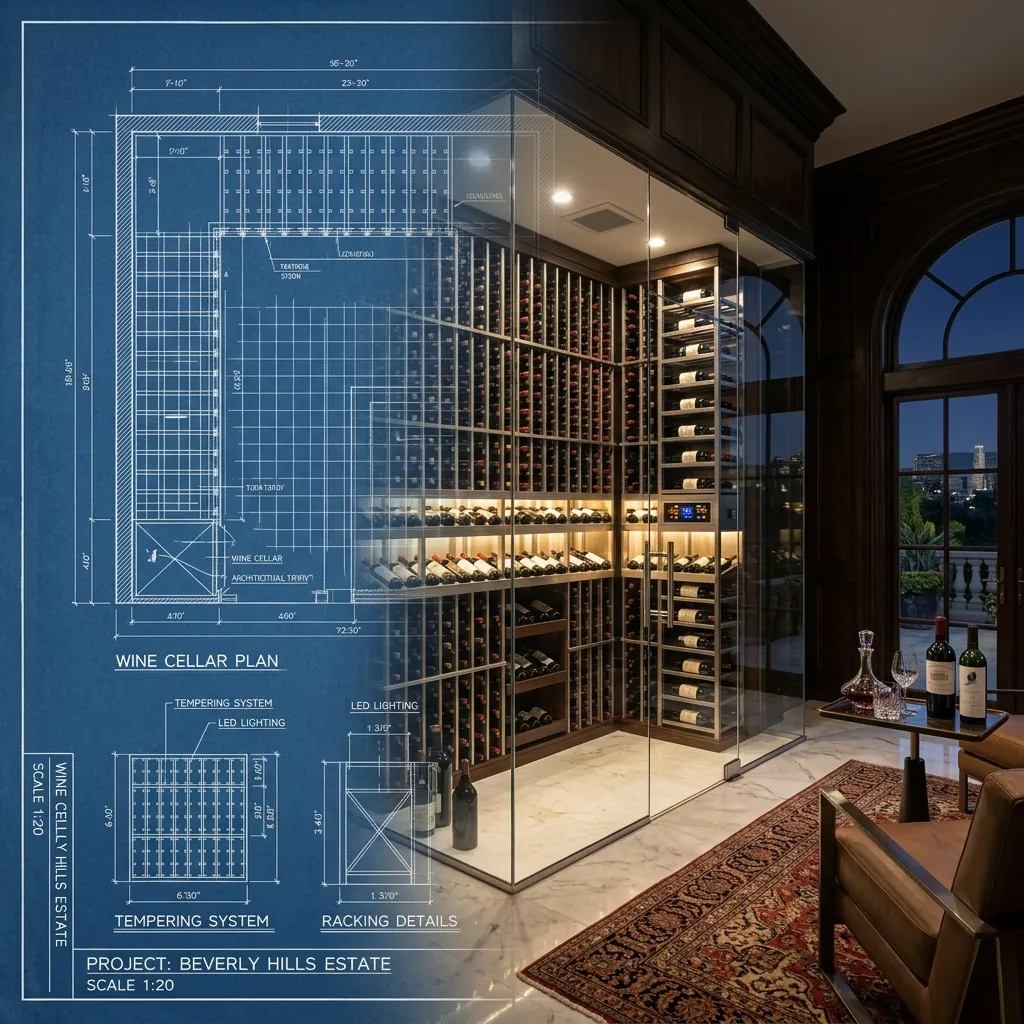
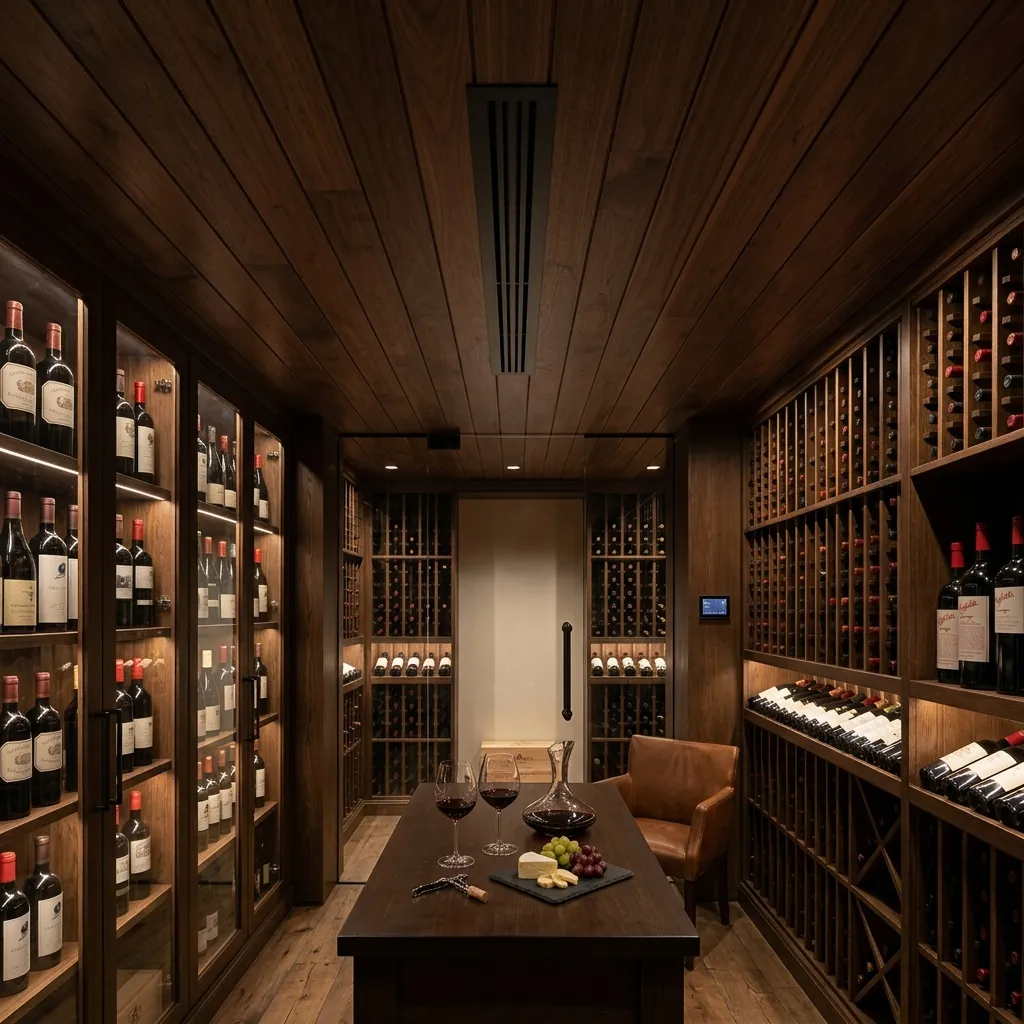
Discover how a custom wine cellar cooling system can protect your collection, preserve flavor, and perform reliably in Cypress and throughout Orange County. From design considerations to installation best practices, learn what it takes to create the ideal wine storage environment in Southern California.
Book a ConsultationIn a climate like Cypress, where warm temperatures and seasonal fluctuations can challenge even the most carefully designed wine storage space, a custom wine cellar cooling system is more than a luxury—it is a necessity. Wine is highly sensitive to heat, humidity swings, vibration, and inconsistent airflow, all of which can quietly damage bottles over time and compromise the aging process. Whether you are building a private collection, designing a showcase cellar in your home, or upgrading an existing wine room, the right cooling solution ensures your investment remains protected. A custom system is tailored to the exact dimensions, insulation levels, glass exposure, and usage patterns of your cellar, which means it performs more efficiently and more consistently than a one-size-fits-all approach. For homeowners in Cypress and across Orange County, that precision matters because local environmental conditions can place added stress on any storage space. With the right planning and professional installation, your wine cellar can maintain the stable, controlled atmosphere that fine wine requires while also enhancing the beauty and value of your home.
Custom wine cellar cooling systems are designed to maintain a stable temperature within the ideal wine storage range, helping prevent premature aging and flavor degradation. Instead of relying on a generic unit, a custom solution accounts for cellar size, insulation quality, and heat load so your system can operate with greater accuracy and fewer fluctuations.
Proper humidity is essential for preserving cork integrity and preventing labels from drying out or peeling. A custom cooling system can help balance moisture levels so your bottles remain sealed and your collection stays in excellent condition, even during Southern California’s dry periods.
Wine should rest undisturbed, which is why low-vibration operation is so important. Custom systems are selected and configured to minimize noise and movement, creating a peaceful environment for both your collection and your living space.
Every cellar is different, and a custom system reflects that reality. Whether your wine room is a compact under-stair enclosure or a large showcase cellar with glass walls, a tailored cooling design ensures the equipment matches the architecture, insulation, and aesthetic goals of the space.
A custom wine cellar cooling system is built to do one thing exceptionally well: create and maintain the exact environment your wine needs to age properly. Unlike standard air conditioners, which are designed for human comfort and short-term temperature changes, wine cellar systems are engineered for long-term stability. They operate by removing heat from the cellar, controlling humidity within a healthy range, and circulating air so no warm pockets or stagnant zones develop. This is especially important in Cypress, where ambient conditions can make it difficult for a poorly designed cellar to remain consistent without the right equipment.
The process starts with a detailed assessment of the cellar itself. Professionals evaluate room dimensions, insulation type, vapor barriers, door seals, glass exposure, lighting, and the number of bottles the cellar is expected to hold. These factors determine the heat load, which is the amount of heat the system must remove to keep the room at the desired temperature. A custom wine cellar cooling system is then selected to match those exact conditions, reducing the risk of overworking the equipment or undercooling the cellar. This careful sizing is one of the biggest reasons custom systems outperform off-the-shelf alternatives.
Another major advantage of a custom setup is the ability to choose the right configuration for the space. Some cellars benefit from ducted systems that hide the mechanical components away from view, while others are better suited to self-contained units or split systems that separate noisy parts from the cellar interior. In a luxury home or design-forward wine room, this flexibility allows the cooling equipment to support the aesthetic of the space rather than interrupt it. The result is a cellar that looks as refined as the collection it protects.
Humidity control is also a critical part of the equation. If a cellar becomes too dry, corks can shrink and allow oxygen into the bottle, which can spoil the wine. If it becomes too humid, condensation and mold can become concerns. A properly selected custom cooling system helps keep humidity within an appropriate range, preserving both the wine and the cellar materials. This balance is particularly valuable in Orange County homes where indoor comfort systems and exterior climate conditions can vary significantly throughout the year.
Finally, custom systems are designed to run efficiently and quietly over the long term. Wine cellars are not spaces that should experience constant temperature swings or loud compressor cycling. When the system is sized and installed correctly, it works steadily in the background, preserving your collection without drawing attention to itself. For homeowners in Cypress who want dependable performance and a seamless finish, this level of engineering makes all the difference.
Essential Wine Cellar Engineering Resources:
Selecting the right wine cellar cooling system begins with understanding how your cellar will be used. A small private collection stored in a compact room has very different needs than a large display cellar with glass walls, frequent access, or high-end lighting. In Cypress and throughout Orange County, many homeowners are surprised to learn that the design of the room itself can be just as important as the equipment. Factors such as insulation thickness, wall construction, ceiling height, and the amount of exterior exposure all influence how much cooling power the system must provide. That is why a professional consultation is so valuable before any installation begins.
One of the most common decisions involves choosing between self-contained, ducted, split, or fully ducted systems. Self-contained units are often ideal for smaller cellars or more straightforward installations, while split systems are popular when the homeowner wants to isolate mechanical noise and heat away from the wine room. Ducted systems can be an excellent choice when aesthetics matter, because they allow the equipment to be hidden while still delivering strong performance. The best option depends on both the cellar’s physical requirements and the homeowner’s design goals. A custom approach ensures you are not forced to compromise performance for appearance or vice versa.
Another important consideration is the cellar’s insulation and vapor barrier. Even the best cooling system cannot compensate for a poorly sealed room. If warm air leaks in or moisture escapes through the walls, the system will have to work harder, which can shorten equipment life and raise energy use. In Cypress, where homes may experience strong sun exposure and varying indoor-outdoor temperature differences, a properly insulated cellar is essential. Professional installers evaluate these details carefully and often recommend improvements before the cooling system is put into service. This proactive approach helps ensure long-term reliability and better efficiency.
Energy efficiency is also worth considering, especially for homeowners who want their cellar to operate continuously without unnecessary power consumption. A custom wine cellar cooling system can be selected and configured to match the space more closely, which reduces strain and helps the unit cycle appropriately. This can lead to quieter operation, lower utility costs, and a more durable system overall. When a cooling system is oversized or undersized, it tends to cycle improperly, creating uneven conditions that are unhealthy for the collection. Custom design helps eliminate that issue from the start.
Ultimately, the right system is the one that fits your wine, your room, and your lifestyle. A climate-controlled cellar should feel effortless to use while delivering precision behind the scenes. By working with an experienced wine cellar cooling specialist, Cypress homeowners can create a storage environment that supports both immediate enjoyment and long-term preservation. The goal is not just to cool the room, but to create the ideal home for every bottle in the collection.
Homeowners often have important questions before investing in a custom wine cellar cooling system, and that is a good thing. A wine cellar is a specialized environment, and every detail—from construction to maintenance—affects how well it performs. In Cypress, where the climate can challenge ordinary cooling solutions, getting clear answers early helps you make a more confident decision. Below are some of the most common questions we hear from homeowners planning a cellar in Orange County, along with detailed answers that explain what to expect from a professional installation.
One of the first questions people ask is how long a custom wine cellar cooling system should last. The answer depends on the quality of the equipment, the accuracy of the installation, and how well the cellar is built. When the room is properly insulated and the system is matched to the heat load, a high-quality unit can provide many years of dependable service. Regular maintenance also plays a major role in longevity. Filters, coils, fans, and drains should be inspected periodically to keep the system operating efficiently and to prevent minor issues from turning into expensive services. A well-maintained system not only lasts longer but also protects the wine more effectively.
Another common concern is whether a wine cellar cooling system can be installed in an existing room. In many cases, yes, but the room may need modifications first. Retrofitting a space often requires improving insulation, sealing air leaks, upgrading the door, and ensuring the vapor barrier is correctly installed. The cooling system itself must then be selected based on the room’s final conditions rather than its original construction. This is why working with a specialist matters so much. A professional can identify hidden issues that might otherwise compromise performance and recommend the best path forward for a successful retrofit.
Homeowners also want to know whether a custom system is worth the investment compared with a standard unit. In almost every serious wine storage application, the answer is yes. Standard systems may seem less expensive at first, but they often struggle with temperature swings, excess noise, or poor humidity control. Over time, those shortcomings can damage wine and create more maintenance headaches. A custom wine cellar cooling system is designed specifically for the space, which means better reliability, better protection, and better long-term value. For collectors in Cypress and Orange County, that peace of mind is often worth far more than the initial price difference.
Finally, many people ask how to keep their cellar looking beautiful while still meeting technical requirements. The answer lies in thoughtful planning. A custom cooling solution can be integrated into the architecture so that vents, grilles, and equipment placement complement the overall design. This allows homeowners to enjoy a visually stunning wine room without sacrificing performance. Whether the cellar is intended as a private retreat, an entertaining feature, or a high-end display, the right cooling system makes it possible to have both form and function in one elegant space.
Sizing a wine cellar cooling system requires a detailed evaluation of the room’s dimensions, insulation, vapor barrier, door quality, glass exposure, lighting, and the amount of heat generated by the surrounding home. In Cypress and throughout Orange County, climate conditions can increase the load on the system, so a simple square-foot estimate is not enough. A professional installer will calculate the cellar’s heat load and recommend a unit that can maintain stable temperature and humidity without overworking. Proper sizing is essential because an undersized system will struggle to keep up, while an oversized system may cycle too frequently and fail to control humidity effectively. The best approach is always a custom assessment based on the actual construction and use of the cellar.
Yes, a custom cooling system can often be added to an existing wine room, but the success of the project depends on the condition of the space. If the room lacks proper insulation, has air leaks, or does not include a vapor barrier, those issues should be corrected before installation. In some retrofit projects, the cooling equipment is only one part of the solution; the room itself may need upgrades to perform correctly. A specialist can inspect the cellar, identify problem areas, and recommend the best system type for the finished space. With the right preparation, existing rooms can be transformed into highly effective wine storage environments that protect the collection and enhance the home.
A wine cellar cooling system should be inspected and maintained on a regular basis, typically at least once a year, though some high-use or more complex systems may benefit from more frequent service. Maintenance usually includes checking refrigerant levels, cleaning coils, inspecting fans and drains, verifying thermostat accuracy, and making sure airflow remains unobstructed. These steps help the system run efficiently and reduce the risk of breakdowns. In a climate like Cypress, where reliable cooling is important year-round, routine service is especially valuable because it helps preserve stable storage conditions and protects the wine from temperature or humidity fluctuations. Preventive maintenance is one of the simplest ways to extend the life of the equipment and safeguard your investment.
Whether you need installation, service, or maintenance — our team is ready to help. Fill out the form below and we'll get back to you within 24 hours.
By submitting this form, you agree to our Privacy Policy. CSLB Lic#1055057
VA Wine Cooling engineers and maintains precision commercial and residential cooling systems across Southern California.