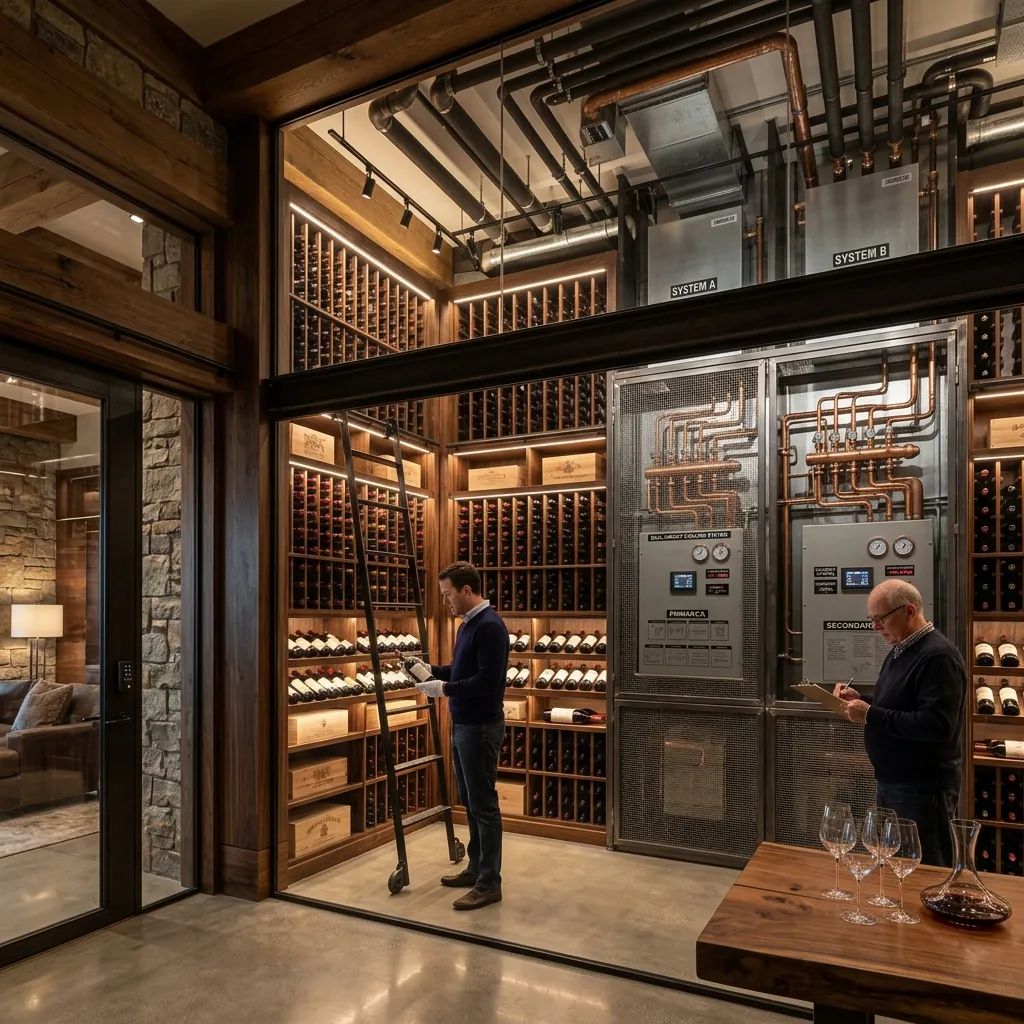
Keep your wine room performing at its best with expert HVAC system maintenance tailored to Laguna Hills and the unique climate demands of Orange County. From protecting fine vintages to preserving ideal temperature and humidity, consistent care is the key to long-term wine storage success.
Book a ConsultationA wine room is not just another conditioned space in your home or business—it is a precision environment designed to safeguard valuable bottles from heat, vibration, odor, and humidity swings. In Laguna Hills, where warm afternoons, coastal influence, and seasonal temperature changes can all affect indoor comfort, wine room HVAC maintenance becomes even more important. A properly maintained system helps ensure that your collection ages gracefully and that your cooling equipment operates efficiently, quietly, and consistently year-round.
Regular HVAC maintenance helps keep your wine room within the ideal temperature range, reducing the risk of heat spikes or cooling fluctuations that can damage wine quality and accelerate aging.
Wine storage depends on maintaining the right humidity level to protect corks, labels, and overall bottle integrity. Maintenance supports dependable moisture control and prevents overly dry or damp conditions.
Well-maintained wine room HVAC systems use less energy, run more efficiently, and experience less strain over time, which can help reduce utility costs and extend equipment life.
Preventive maintenance catches small issues before they become expensive services, helping protect your wine collection, your cooling equipment, and the investment you’ve made in your custom wine room.
When people think about wine room design, they often focus on aesthetics—beautiful racking, elegant lighting, glass doors, and custom finishes. But behind every stunning wine room is a critical mechanical system working quietly to protect the collection inside. The HVAC system in a wine room is responsible for more than just cooling; it helps preserve a stable environment where wine can age under ideal conditions. That means controlling temperature, managing humidity, limiting fluctuations, and ensuring the room remains insulated from the outside conditions that are common in Laguna Hills and throughout Orange County.
Wine is far more sensitive than many homeowners realize. Even small temperature swings can cause expansion and contraction inside the bottle, potentially affecting flavor, aroma, and long-term quality. Excessive dryness can shrink corks, allowing oxygen to enter the bottle, while too much humidity can lead to mold, label damage, and compromised storage conditions. Because of these risks, HVAC system maintenance for wine rooms is not optional—it is an essential part of protecting the value and integrity of the wine collection. A system that is neglected may still run, but it may no longer perform with the precision required for proper wine storage.
In Laguna Hills, local climate conditions add another layer of complexity. Orange County can experience warm days, cool nights, and periodic humidity changes, all of which place additional stress on cooling equipment. Wine room HVAC systems often run for long periods to maintain a narrow temperature band, and that constant operation means components wear down faster if they are not inspected and serviced regularly. Filters clog, coils collect dust, drains become blocked, and refrigerant levels can drift out of balance. Each of these issues can reduce performance and increase the risk of system failure.
Routine maintenance also supports quieter operation, which matters in a wine room where ambiance is part of the experience. A noisy compressor, rattling fan, or struggling blower can disrupt the peaceful atmosphere and signal deeper mechanical concerns. With professional maintenance, these issues can be identified early and corrected before they turn into major services. For homeowners, collectors, restaurants, and hospitality spaces in Laguna Hills, keeping the wine room system in top shape means preserving both the collection and the environment it is meant to enhance.
Ultimately, the role of HVAC in a wine room is to act as a guardian of quality. It protects the investment, preserves the tasting experience, and ensures that every bottle stored in the room has the best possible conditions for aging. That is why wine room owners who prioritize preventive care often enjoy better performance, fewer breakdowns, and greater peace of mind. The system may be hidden behind the walls, but its impact on the collection is impossible to overlook.
Essential Wine Cellar Engineering Resources:
Effective HVAC maintenance for a wine room starts with understanding that this is a specialized system, not a standard home comfort unit. The equipment is built to maintain precise conditions, and because it often runs continuously or near-continuously, every component needs regular attention. One of the most important tasks is filter replacement or cleaning. Dirty filters restrict airflow, force the system to work harder, and can reduce the consistency needed for wine storage. In a wine room, even minor airflow issues can affect temperature distribution and create pockets of uneven cooling.
Another essential maintenance task is coil cleaning. Both evaporator and condenser coils can accumulate dust, debris, and residue over time, especially in systems that operate frequently. When coils are dirty, heat transfer becomes less efficient, which means the system must run longer to achieve the same result. This not only increases wear but can also create subtle temperature instability that wine collections do not tolerate well. In Orange County homes, where indoor air quality and dust levels can vary by location and season, keeping coils clean is a simple but powerful way to preserve performance.
Drain line inspection is also critical. Wine room HVAC systems often manage moisture as part of their cooling process, and if condensate drains become clogged, water can back up into the system or surrounding space. That can lead to leaks, mold growth, unpleasant odors, and even structural damage. Because wine rooms are often designed with premium finishes, wood racks, and sealed enclosures, water intrusion can be especially costly. Regular maintenance includes checking drain lines, clearing blockages, and confirming that moisture is being removed safely and efficiently from the system.
Refrigerant checks, electrical inspections, and thermostat calibration are equally important. Low refrigerant levels can reduce cooling capacity and cause the unit to run longer than necessary, while electrical issues can create intermittent failures or safety concerns. Thermostat accuracy matters because even a small error in the control reading can shift the room outside of its ideal range. A professional maintenance visit should verify that all controls are responding correctly and that the system is maintaining the exact conditions the wine room was designed to hold.
For wine room owners in Laguna Hills, maintenance should also include a review of insulation, door seals, and vapor barriers. HVAC performance is only as strong as the enclosure it serves. If cool air escapes through poor sealing or warm air enters through gaps, the system must work harder and may never fully stabilize the room. A thorough maintenance plan looks beyond the mechanical unit and considers the entire wine room environment, ensuring the cooling system can do its job without unnecessary strain.
The ideal maintenance schedule for a wine room HVAC system depends on the equipment type, room size, usage patterns, and the surrounding environment, but most systems benefit from professional service at least twice a year. In Laguna Hills and the broader Orange County area, many wine room owners choose seasonal maintenance so the system is prepared for the hottest months before summer arrives and checked again before cooler weather places a different kind of demand on the unit. This proactive approach helps reduce the chance of unexpected failures when the system is needed most.
In addition to scheduled professional visits, wine room owners should monitor the space regularly. A quick visual check of the thermostat, a listen for unusual noises, and a look for condensation, leaks, or inconsistent temperatures can reveal early warning signs of trouble. If the system seems to be running longer than usual, cycling too frequently, or struggling to hold the set temperature, that is often a sign that maintenance is overdue. Because wine rooms are designed for precision, small changes are often the first clue that a larger issue is developing.
The age of the equipment also matters. Newer systems may operate smoothly with standard preventive care, while older systems often need more frequent attention to keep performance stable. Components such as fans, motors, sensors, and control boards can wear out gradually, and even a small decline in performance can affect the storage environment. If a wine room has experienced services in the past or if it is located in a high-use commercial setting, more frequent inspections may be the best way to ensure dependable operation. The goal is not simply to fix problems after they occur, but to anticipate them before they affect the collection.
Another factor to consider is how often the wine room door is opened and how much heat load the space must handle. A residential wine room that is accessed occasionally may have different maintenance needs than a restaurant cellar or tasting room in constant use. Likewise, a room with large glass panels or less-than-perfect insulation may require more system attention than a tightly sealed, highly efficient enclosure. A customized maintenance plan is the smartest approach because it accounts for the real-world conditions the equipment faces rather than relying on a one-size-fits-all schedule.
For anyone serious about wine storage, the best maintenance strategy is simple: stay ahead of problems. Waiting until the system shows obvious signs of failure can put the collection at risk and lead to costly emergency services. By scheduling regular service, tracking performance, and responding quickly to changes, wine room owners in Laguna Hills can protect both the cooling system and the wines it preserves. Preventive care is always less expensive, less stressful, and more effective than reacting after the fact.
Wine room HVAC maintenance is different because the system must maintain a much narrower and more precise environment than a standard comfort cooling system. A typical home HVAC unit is designed to keep people comfortable, which allows for broader temperature swings and less exact humidity control. A wine room, however, is built to protect a collection that can be damaged by even small changes in temperature, moisture, or airflow. That means maintenance has to focus not only on cooling performance but also on humidity regulation, enclosure sealing, refrigerant balance, and system consistency. In Laguna Hills, where warm weather and seasonal changes can put added stress on equipment, this specialized care becomes even more important. A wine room HVAC system also tends to run for longer periods, which increases wear and makes preventive maintenance essential. Without regular service, filters clog, coils dirty, drains back up, and performance drops in ways that may not be obvious right away but can still harm the wine over time.
There are several warning signs that suggest a wine room HVAC system needs attention. The most obvious is temperature fluctuation—if the room is no longer holding the set temperature consistently, the system may be struggling with airflow, refrigerant levels, or sensor accuracy. Other signs include unusual noises such as rattling, buzzing, clicking, or grinding, which can indicate worn components or loose parts. Excess condensation, water around the unit, or a musty odor may point to drain problems or humidity imbalance. You may also notice the system running longer than usual, cycling on and off too frequently, or failing to cool the room efficiently. In some cases, the wine room may feel slightly warmer than normal, or labels and corks may show signs of moisture issues. Because wine storage depends on precision, even subtle changes matter. If any of these symptoms appear, it is best to schedule professional maintenance quickly rather than waiting for a complete breakdown.
Professional HVAC maintenance helps protect a wine collection by keeping the storage environment stable, efficient, and dependable. During a service visit, a technician can clean coils, replace filters, inspect refrigerant levels, test electrical components, verify thermostat calibration, and check for airflow restrictions or drainage issues. These steps help the system maintain the exact conditions needed for safe wine storage. In Laguna Hills, where outside temperatures can rise significantly and place extra load on cooling equipment, professional maintenance is especially valuable because it reduces the risk of system strain and unexpected failures. It also helps extend the life of the equipment, which protects your investment in both the wine room and the collection itself. Perhaps most importantly, professional service gives you peace of mind. Instead of wondering whether the room is truly stable, you can trust that the system has been inspected by someone who understands the unique demands of wine storage. That level of care can make a meaningful difference in preserving the quality, value, and aging potential of every bottle in the room.
Whether you need installation, service, or maintenance — our team is ready to help. Fill out the form below and we'll get back to you within 24 hours.
By submitting this form, you agree to our Privacy Policy. CSLB Lic#1055057
VA Wine Cooling engineers and maintains precision commercial and residential cooling systems across Southern California.