High-altitude wine cellars face a very different cooling reality than sea-level spaces, and the right system must be engineered for thin air, dramatic temperature swings, and relentless UV exposure. VA Wine Cooling designs solutions that protect your collection with precision, stability, and long-term reliability in mountain environments.
Book a ConsultationA wine cellar built at elevation is not simply a standard cellar placed in a higher zip code; it is a climate-controlled environment operating under a unique set of physical conditions that can quickly overwhelm ordinary cooling equipment. At higher altitudes, the air is thinner, the atmosphere is drier, solar gain can be more intense, and daily temperature shifts are often more extreme than in lowland regions. These factors combine to place unusual stress on insulation, vapor barriers, refrigeration components, and humidity balance, all of which are essential to proper wine storage. For serious collectors, restaurateurs, architects, and homeowners building custom cellars in mountain homes or resort properties, the difference between a generic cooling approach and a purpose-built high-altitude wine cellar cooling system can mean the difference between flawless preservation and costly wine spoilage. VA Wine Cooling understands that high-altitude wine cellars demand more than raw cooling power; they require thoughtful engineering, careful load calculations, and equipment selected specifically for the environment in which it will operate. That is why our approach focuses on temperature stability, humidity control, system durability, and integration with the architectural realities of high-elevation construction.
At altitude, reduced air density changes how cooling equipment rejects heat and moves air, making standard systems less efficient and potentially less reliable. Our solutions are selected and configured to maintain performance where oxygen levels are lower and heat dissipation behaves differently than at sea level.
High-altitude regions are often notoriously dry, which can lead to cork shrinkage, label damage, and accelerated oxidation if humidity is not controlled. We design wine cellar cooling systems that help preserve the ideal moisture balance needed to protect both the wine and the cellar itself.
Mountain climates can shift from cold mornings to hot afternoons with surprising speed, placing constant pressure on cellar insulation and refrigeration cycles. Our cooling strategies are built to minimize temperature fluctuation and maintain the narrow, consistent range that fine wine requires.
High-altitude cellars are often located in custom homes, slopeside properties, basements with unusual layouts, or luxury hospitality spaces with architectural constraints. We tailor each system to the room’s size, insulation, glass exposure, heat load, and ventilation path for dependable long-term operation.
High-altitude wine cellar cooling begins with understanding that elevation changes the environment in ways many property owners do not immediately anticipate. The same cellar design that performs well in a coastal or low-elevation city may struggle in a mountain home where air pressure is lower, humidity is naturally reduced, and temperature swings are more dramatic. Wine is famously sensitive to its surroundings, and even small deviations in temperature or moisture can alter aging, compromise cork integrity, and diminish the long-term value of a collection. In a high-altitude setting, these risks are magnified because the cellar is constantly responding to a more aggressive climate profile. The cooling system must not only remove heat from the room, but also do so with exceptional consistency and enough reserve capacity to handle rapid environmental changes without short cycling or overcorrecting. VA Wine Cooling approaches these projects with a deep appreciation for how altitude affects refrigeration performance, airflow, and the surrounding building envelope.
One of the most important challenges is reduced air density. At higher elevations, there is less air mass available to carry heat away, which can affect the efficiency of condenser operation and the overall thermal balance of the system. This matters because a wine cellar cooling unit is designed to move heat from inside the cellar to another part of the building or to the exterior, and if the air around the equipment is thinner or warmer than expected, the unit may need to work harder to achieve the same result. In practical terms, that means a system selected for sea-level use may appear adequate on paper but underperform in the real world once installed in a mountain property. Proper high-altitude wine cellar cooling design accounts for these conditions from the start, ensuring the equipment is sized and configured for the actual operating environment rather than a theoretical one.
Humidity is another critical concern, and in many mountain regions it is the issue that causes the most hidden damage over time. Dry air can be especially harsh on wine corks, which rely on a balanced moisture environment to remain elastic and maintain a secure seal. When humidity falls too low, corks can shrink, allowing oxygen to enter the bottle and compromise the wine’s quality. Low humidity can also dry out labels, increase dust accumulation, and create an environment that is uncomfortable for people entering the cellar for tastings or inventory management. Because high-altitude climates often have naturally low ambient moisture, the cooling system must be chosen and installed with humidity control in mind, whether through integrated humidification, carefully managed refrigeration cycles, or room construction techniques that reduce moisture loss. In other words, the solution is not just cooling the cellar, but preserving the entire storage ecosystem.
Temperature swings present a third major challenge. Mountain weather can be unpredictable, with significant changes between day and night, and between seasons, that place extra strain on the cellar envelope. Sun exposure, roofline design, insulated walls, glass doors, and adjacent mechanical rooms can all create heat gain that fluctuates throughout the day. A wine cellar that is too reactive will cycle on and off repeatedly, creating micro-fluctuations that are harmless to people but harmful to wine. A well-designed high-altitude wine cellar cooling system prevents this by maintaining a steady, narrow temperature band and by matching the system’s operation to the room’s actual thermal load. This is especially important in luxury residences and commercial wine rooms where aesthetics may introduce additional glass, lighting, or architectural features that increase the cooling burden.
Construction quality also plays a much larger role at elevation than many people realize. A wine cellar depends on a highly controlled envelope, meaning the insulation, vapor barrier, door seals, flooring details, and penetrations for electrical or lighting lines must all be carefully managed. In dry, high-altitude environments, even small gaps can lead to moisture migration, temperature leakage, and compromised system efficiency. If the cellar is built into a basement, hillside, or custom addition, the surrounding structure may also experience unique pressure and thermal conditions that affect performance. VA Wine Cooling works with these realities by emphasizing load calculations, room design review, and system selection that aligns with the actual construction details of the cellar. That holistic approach helps prevent the common mistake of assuming a cooling unit alone can solve a room that has not been properly prepared for wine storage.
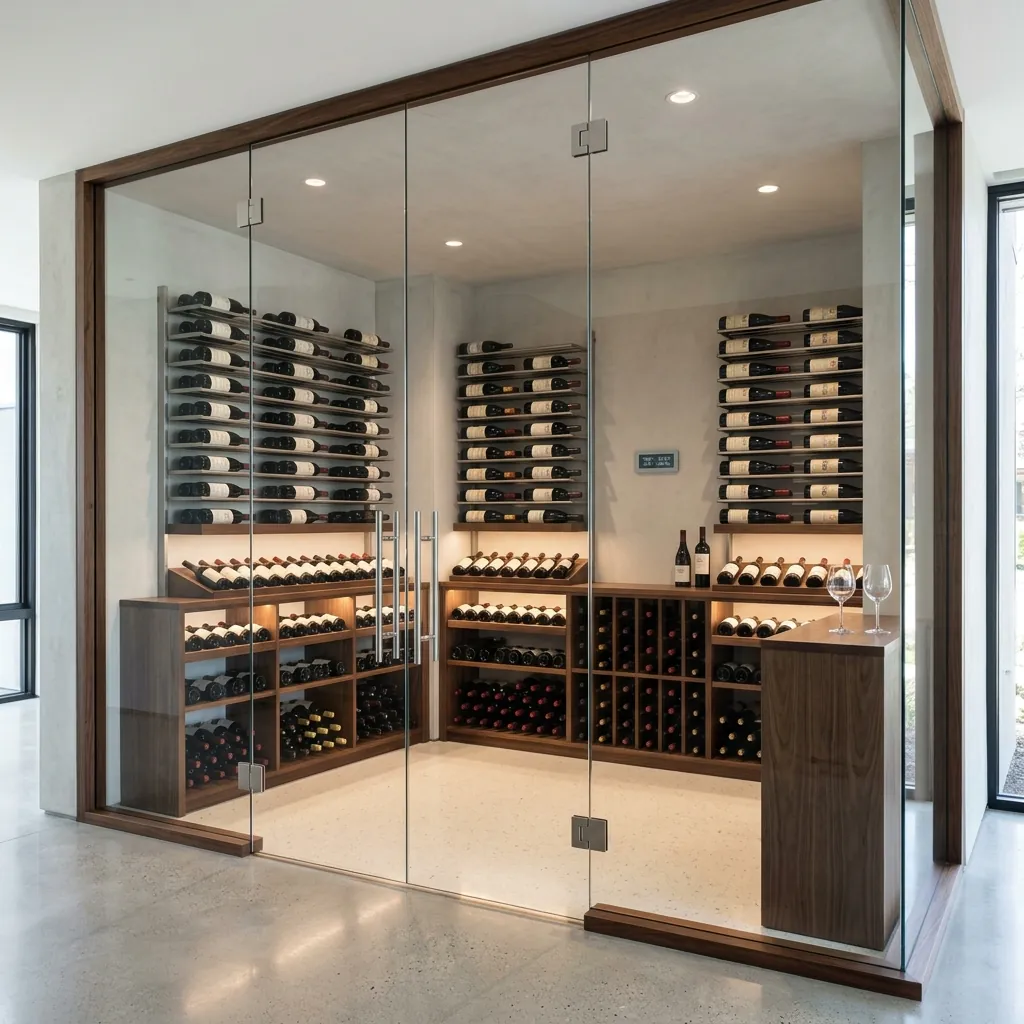
For collectors in mountain towns, ski resorts, and elevated residential communities, the stakes are high because a wine cellar is often a centerpiece of the property. It may be visible through glass, integrated into a tasting room, or used to showcase rare bottles in a hospitality setting. In these cases, the cooling system must deliver not only technical performance but also quiet operation, minimal vibration, and dependable aesthetics. High-altitude wine cellar cooling is therefore both a science and a craft: it requires understanding refrigeration physics, but also how to preserve the atmosphere, presentation, and long-term value of the collection. That is why customized planning is essential. A properly engineered system protects the wine, supports the architecture, and provides peace of mind that the cellar will perform beautifully in every season.
Essential Wine Cellar Engineering Resources:
Designing a successful high-altitude wine cellar cooling system begins long before equipment is installed. VA Wine Cooling starts with a detailed evaluation of the cellar’s location, construction, insulation quality, glass exposure, room volume, and surrounding heat sources. This process is essential because a cellar in a mountain estate with expansive windows and strong afternoon sun will have a very different cooling load than a compact underground storage room tucked into a shaded slope. At elevation, precision matters even more because the environment is already working against the cellar’s stability. A system that is too small will struggle to maintain temperature during peak load conditions, while a system that is too large may cool too aggressively, cycle too frequently, and fail to manage humidity properly. The goal is not maximum power; the goal is balanced, continuous performance that keeps the cellar in the ideal range for wine storage.
One of the most valuable parts of our process is matching equipment to the specific demands of the building envelope. High-altitude properties often include architectural features that are beautiful but thermally challenging, such as stone walls, vaulted ceilings, exposed beams, large glass doors, or open-concept entertainment spaces adjacent to the cellar. These features can increase heat gain and make it harder for the cooling system to maintain stable conditions. VA Wine Cooling evaluates the cellar as a complete system, considering how insulation, vapor barriers, door hardware, and room orientation influence the refrigeration load. In many cases, we recommend enhancements to the room itself before equipment selection is finalized, because even the best cooling unit cannot compensate for a poorly sealed or under-insulated cellar. This integrated approach is one of the reasons our solutions are so dependable in high-altitude settings.
Humidity control is built into our thinking from the start. In dry mountain air, the cellar may need more than basic temperature management to remain truly wine-safe. Depending on the room design and the local climate, that can mean selecting equipment that supports humidity retention, incorporating a separate humidification strategy, or using construction details that reduce moisture loss through walls and doors. We pay close attention to how air moves through the cellar, because airflow patterns can either help preserve a stable environment or strip moisture from the room too quickly. The objective is to create a gentle, even climate that allows wine to age naturally without the stress caused by overactive air movement or excessive dryness. For collectors who store premium vintages, this added layer of protection is not optional; it is a foundational part of preserving the investment.
Noise and vibration are also important design factors, especially in high-end homes and hospitality venues where the cellar is part of a living or entertaining space. At altitude, where mechanical systems may already be working harder, it becomes even more important to choose components that operate efficiently and quietly. VA Wine Cooling considers the placement of compressors, ducting, and air handlers to reduce sound transmission and vibration, helping maintain the refined atmosphere that luxury cellar owners expect. In some projects, this means recommending split systems or remote equipment placement so the cellar itself remains calm and visually clean. In others, it means fine-tuning airflow and return paths to prevent hot spots and reduce mechanical strain. The result is a cellar that performs with confidence while remaining discreet in the background.
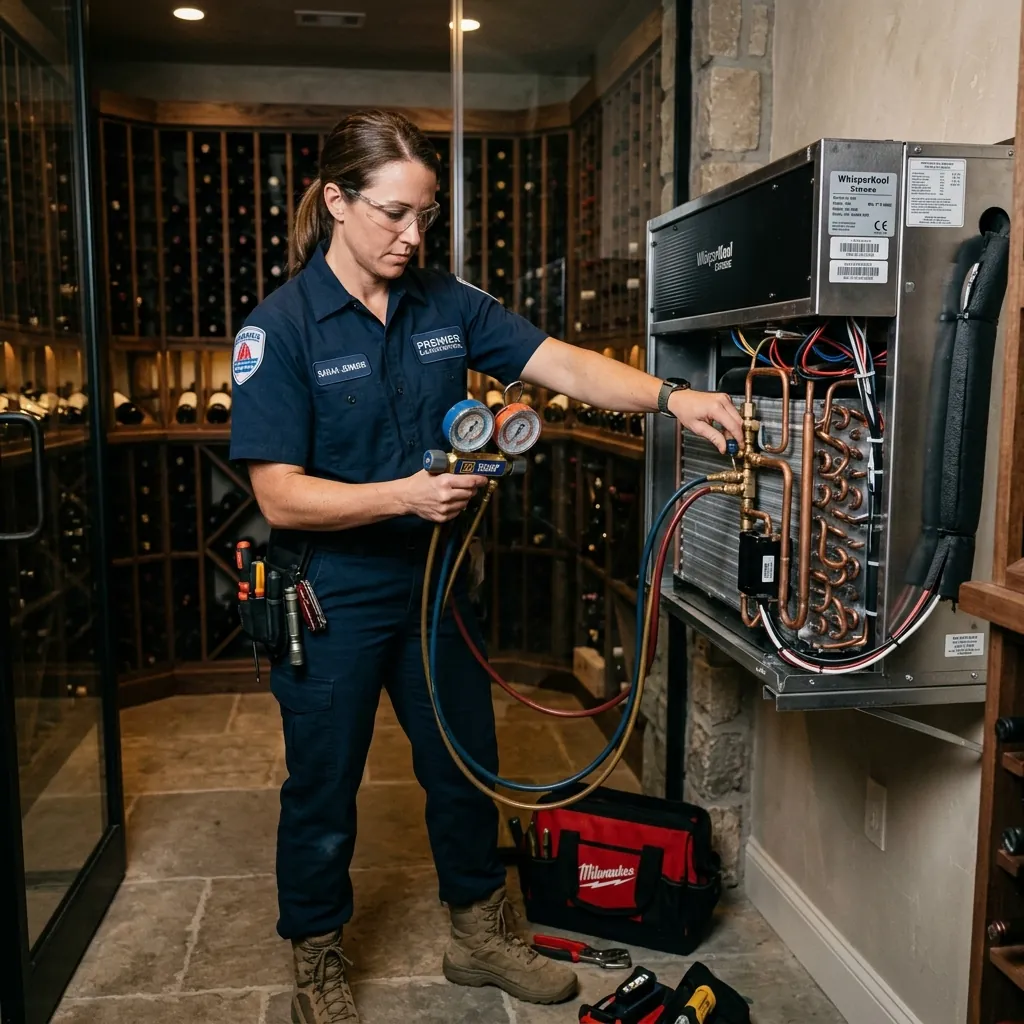
Another hallmark of our design approach is long-term reliability. High-altitude environments can be demanding on equipment over time, so we emphasize durable components, accessible serviceability, and system configurations that support maintenance without disruption to the collection. This is especially important in remote mountain properties where service access may be more limited and weather conditions can make emergency services difficult. By selecting the right system from the start, planning for maintenance access, and ensuring the cellar is built to support stable operation, we help reduce the likelihood of avoidable breakdowns. Wine storage is a long game, and the cooling solution should be built with that same long-term perspective. The best system is one that quietly does its job year after year without drawing attention or requiring constant correction.
Ultimately, our design philosophy is rooted in customization. No two high-altitude wine cellars are identical, because no two mountain properties are identical. A cellar in a luxury ski home, a tasting room in a mountain lodge, and a private collection in a high-elevation estate all present different challenges, even if they share the same general climate. VA Wine Cooling responds to that complexity with tailored recommendations that reflect the room, the wine, and the owner’s expectations. We combine technical knowledge with practical experience to create cooling systems that are not only effective but also appropriate for the setting. That is what makes high-altitude wine cellar cooling successful: not a one-size-fits-all product, but a carefully engineered solution that respects the unique demands of elevation.
Protecting wine in a high-altitude environment requires a broader mindset than simply installing a cooling unit and setting a target temperature. The cellar itself must be treated as a carefully balanced preservation space, and every detail from construction to maintenance affects how well the wine will age. One of the first best practices is to ensure the cellar envelope is built for control. That means high-quality insulation, a properly installed vapor barrier, tight door seals, and careful attention to all penetrations where wiring, lighting, or plumbing pass through the room. In mountain environments, where outside conditions can be especially dry and variable, these details become even more important because the cellar must resist both heat intrusion and moisture loss. A well-built room gives the cooling system a stable foundation and reduces the burden placed on the equipment.
Another best practice is to manage the cellar’s exposure to external heat sources. High-altitude homes often enjoy dramatic views, which can mean large windows, skylights, or open architectural layouts that increase solar gain. While these features are beautiful, they can create significant temperature stress if they are near the wine storage area. Even a nearby mechanical room, fireplace, or lighting design can increase the thermal load in ways that are not obvious at first glance. For this reason, it is important to think of the cellar as part of the broader home environment rather than as an isolated room. Strategic placement, shading, glass selection, and thermal separation all help reduce the workload on the cooling system and improve the cellar’s ability to maintain a stable climate through changing weather conditions.
Monitoring and maintenance are equally important. A high-altitude wine cellar cooling system should not be installed and forgotten; it should be periodically checked to ensure temperature and humidity remain within the desired range. Dust buildup, blocked airflow, worn seals, and seasonal climate changes can all affect performance over time. In remote or elevated properties, where service calls may be less convenient, proactive maintenance becomes even more valuable. Regular inspection of filters, condenser performance, drain lines, and humidity levels can prevent small issues from becoming major failures. For collectors with valuable or irreplaceable bottles, this level of vigilance is a necessary part of responsible wine stewardship. The goal is to create a system that is not only capable on day one but dependable throughout the lifespan of the cellar.
It is also wise to consider how the cellar will be used. A private cellar accessed only occasionally has different operational demands than a commercial tasting room or restaurant cellar with frequent door openings and inventory turnover. At high altitude, every opening of the door introduces environmental exchange, and in dry climates that exchange can rapidly affect both temperature and humidity. Best practices therefore include minimizing unnecessary door openings, using proper entry vestibules where appropriate, and designing the cellar for the actual usage pattern of the space. If the room is intended for display as well as storage, lighting should be selected carefully to reduce heat output while still presenting the collection beautifully. These details may seem small individually, but together they make a major difference in performance.
Finally, the best protection for wine in mountain environments is expert planning from the beginning. Many costly cellar problems arise because cooling is treated as an afterthought rather than as a core design element. In reality, the cooling system, insulation package, cellar layout, and building location must all work together. VA Wine Cooling helps clients avoid the common pitfalls of underestimating altitude-related challenges by providing solutions that are built around the realities of the site. Whether the project involves a compact residential cellar or a large-scale custom installation, the same principle applies: stable temperature, controlled humidity, and reliable equipment are the foundation of excellent wine storage. With the right plan in place, high-altitude cellars can preserve a collection just as effectively as any lowland cellar, while offering the distinctive character and beauty of mountain living.
For owners who are serious about long-term wine preservation, investing in a high-altitude-specific cooling strategy is not an indulgence; it is a practical necessity. The environment will always exert pressure on the cellar, but the right system can neutralize those pressures and create a consistently safe storage climate. That is the true value of a carefully designed solution: it allows the collector to focus on enjoying the wine, confident that the cellar is quietly doing its job behind the scenes. In a mountain setting, where the weather can be beautiful but unforgiving, that peace of mind is one of the most important benefits of all.
High-altitude wine cellar cooling is different because elevation changes the fundamental conditions under which the system operates. Thin air reduces heat transfer efficiency, dry climates increase the risk of low humidity, and mountain weather often creates larger day-to-night temperature swings than low-elevation regions. These factors can make standard cooling systems underperform or cycle improperly, which is why high-altitude cellars need customized load calculations, carefully selected equipment, and often additional humidity management. A system that works well in a coastal home may not be able to maintain the same stability in a mountain property, especially if the cellar has glass exposure, complex architecture, or limited ventilation around the equipment. Proper high-altitude design ensures the wine stays in a narrow, stable temperature range while also protecting corks, labels, and the cellar structure itself.
Yes, humidity control is often just as important as temperature control in high-altitude wine cellars. Many mountain climates are naturally dry, and low humidity can cause corks to shrink, allowing oxygen to enter the bottle and potentially spoil the wine. It can also dry out labels and create an environment that is less stable for long-term storage. Because of this, a high-altitude wine cellar cooling solution should be evaluated not only for its ability to remove heat, but also for how it supports moisture retention or integrates with a dedicated humidification strategy. The right approach depends on the cellar’s construction, local climate, and usage pattern, but in many cases, humidity management is essential to preserving both the quality of the wine and the integrity of the cellar. VA Wine Cooling designs systems with this balance in mind so the entire storage environment remains protected.
One of the biggest mistakes is assuming that a standard wine cellar cooling unit will perform the same way at elevation as it would at sea level. Many owners focus on the visible aspects of the cellar, such as racks, glass doors, or decorative finishes, while overlooking the construction details that determine whether the room can actually hold temperature and humidity. Poor insulation, weak vapor barriers, oversized glass areas, and inadequate consideration of heat loads can all create chronic performance issues that no cooling system can fully overcome. Another common mistake is ignoring the dry mountain climate and failing to plan for humidity control, which can be just as damaging as temperature instability. The best results come from treating the cellar as a complete climate system and designing the cooling solution around the actual conditions of the property. That is why expert planning and specialized high-altitude knowledge are so important from the start.
Whether you need installation, service, or maintenance — our team is ready to help. Fill out the form below and we'll get back to you within 24 hours.
By submitting this form, you agree to our Privacy Policy. CSLB Lic#1055057
VA Wine Cooling engineers and maintains precision commercial and residential cooling systems across Southern California.