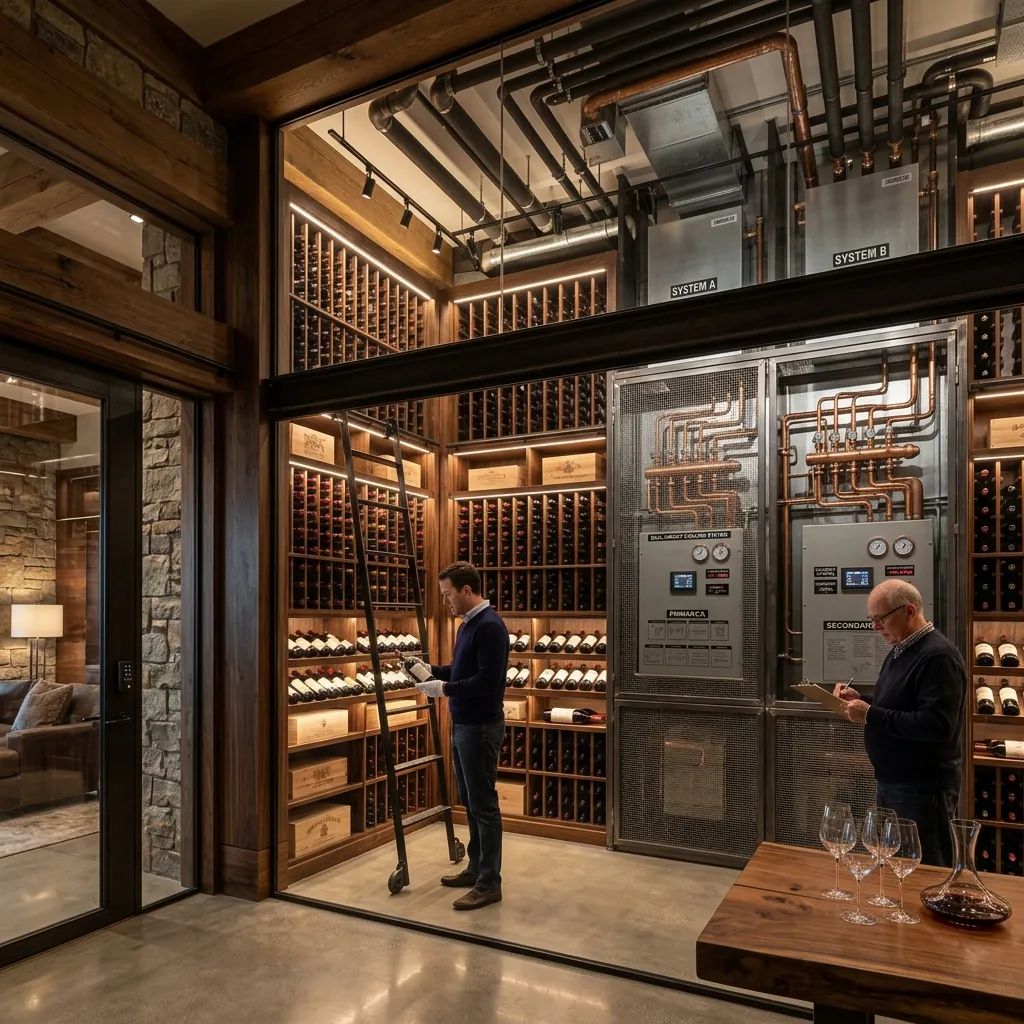
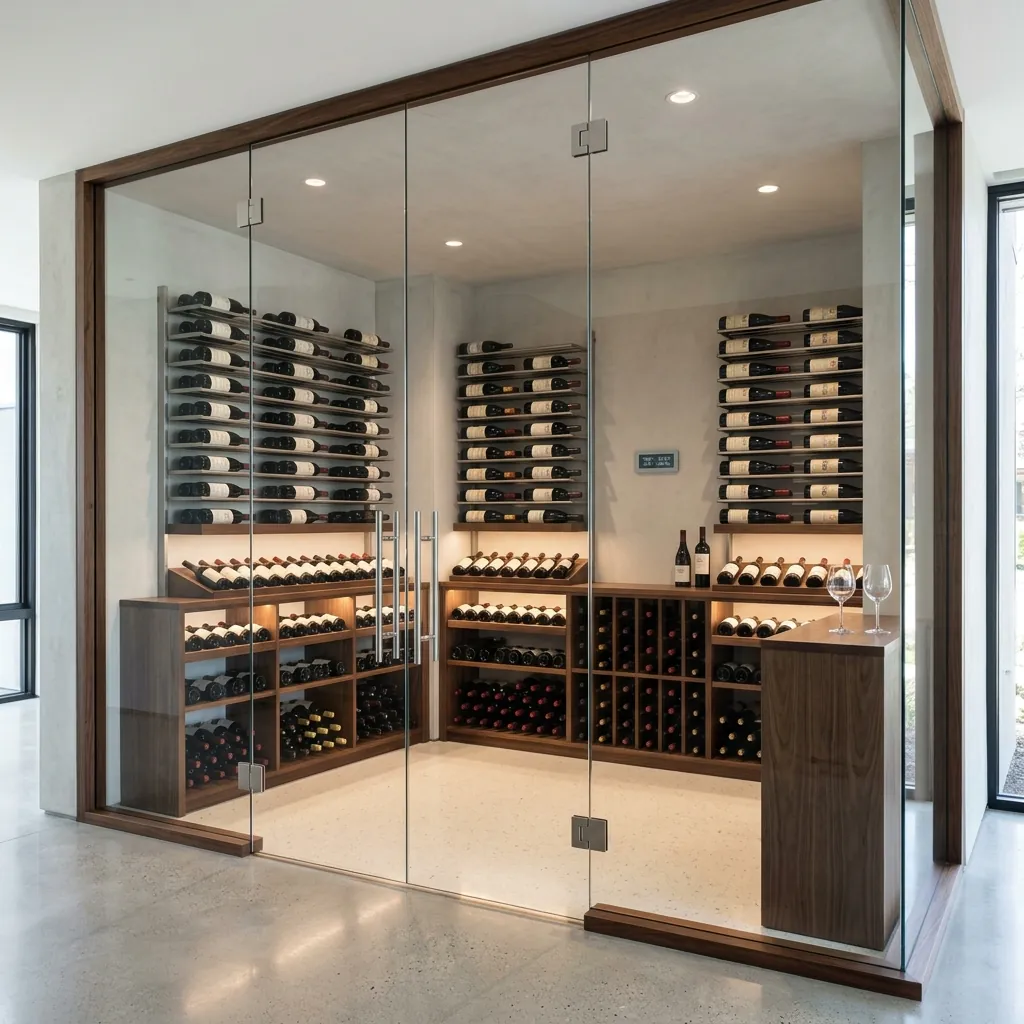
Choosing the right wine cooling unit is the foundation of a stable, elegant cellar. The ideal system preserves flavor, protects your investment, and gives your collection the precise environment it needs to age beautifully for years to come.
Book a ConsultationThe best wine cooling unit is never chosen in isolation; it is selected as part of a complete cellar strategy that accounts for room size, insulation quality, bottle count, ambient conditions, and how consistently you want your wines protected. At VA Wine Cooling, we always encourage collectors to begin with the cellar itself because the room determines the load, and the load determines the system. A beautifully built cooling unit can only perform as well as the environment it is serving, which is why understanding the dimensions, construction materials, and thermal behavior of your cellar is the first and most important step. Whether you are building a compact under-stair wine room, converting a basement corner into a dedicated cellar, or designing a large showcase space for an extensive collection, the cooling unit must be matched to the actual demands of the room rather than guessed based on bottle count alone. The goal is not simply to make the space cold; it is to create a controlled climate with minimal temperature swings, proper humidity balance, and quiet, dependable operation that supports long-term wine preservation.
Correct sizing is the cornerstone of effective wine cellar cooling. A unit that is too small will struggle to maintain temperature, run constantly, and wear out prematurely, while an oversized system may short-cycle, create uneven conditions, and fail to dehumidify properly. The right capacity depends on the cellar’s cubic footage, insulation value, glass exposure, door sealing, and the temperature difference between the cellar and the surrounding space. This is why professional load calculations matter so much. They transform assumptions into precise requirements, helping you choose a wine cooling unit that is powerful enough to protect your collection without wasting energy or overworking the system. In practical terms, accurate sizing improves reliability, lowers operating costs, and ensures your wines age in a stable environment rather than a fluctuating one.
Wine is highly sensitive to temperature swings, and even small fluctuations can affect aging, aroma development, and long-term quality. A premium wine cooling unit should maintain a steady set point with minimal variation, keeping the cellar in the ideal range for both red and white wines stored for aging. Temperature stability is influenced by compressor quality, airflow design, insulation, and how well the unit is matched to the room. The best systems do more than cool; they regulate. That means they cycle efficiently, respond predictably to changing loads, and prevent hot spots or cold pockets inside the cellar. If your goal is to preserve value and flavor, not just chill bottles, then stability should be one of your top decision factors.
A wine cellar must do more than keep bottles cool; it must also protect corks, labels, and the overall condition of the collection by maintaining proper humidity. Dry air can shrink corks and allow oxygen to enter the bottle, while excessive moisture can encourage mold and damage packaging. The right wine cooling unit helps manage this balance by removing heat without stripping the cellar of essential moisture. Some systems are better suited to humidity management than others, especially when paired with proper insulation and vapor barriers. If your cellar is being built from scratch or renovated, humidity performance should be part of the selection process from day one, because it directly affects both the longevity and presentation of your wines.
A wine cellar should feel calm, refined, and undisturbed, which is why low noise and low vibration matter more than many first-time buyers realize. Excess vibration can disturb sediment in older wines and create an environment that feels mechanical rather than luxurious, while loud operation can make the cellar less enjoyable to use and less suitable for integrated home design. High-quality cooling units are engineered with quieter fans, smoother compressors, and thoughtful mounting options that reduce transmitted vibration. Depending on the cellar’s location, you may also want to consider ducted, split, or fully remote systems that move the noisy components away from the tasting area. The result is a cellar that performs beautifully while remaining serene, discreet, and aligned with the elegance of the collection it protects.
When selecting a wine cooling unit, one of the most important decisions is understanding the different system types available and how each one fits a particular cellar design. Not every installation benefits from the same configuration, and the best choice often depends on where the cellar is located, how much architectural flexibility you have, and how important aesthetics, sound control, and service access are to your overall goals. The most common categories include self-contained through-the-wall units, ducted systems, split systems, and fully ducted or remote condensers, each offering distinct advantages. A through-the-wall unit can be a practical solution for smaller cellars with simple layouts and straightforward access, while a split system is often preferred when quiet operation and design flexibility are priorities. Ducted systems are especially attractive when you want to hide the equipment and preserve the visual integrity of the room. The key is to think beyond the catalog description and imagine how the unit will actually function in your home, because the right wine cellar cooling system should support the room rather than dominate it.
Self-contained systems are generally the easiest to install and are often selected for compact cellars or retrofit projects where access is limited. These units package the evaporator and condenser together, which simplifies the setup but may also introduce heat and noise into the surrounding area. That tradeoff is acceptable in some environments, particularly where the cellar is built into a utility space or where the surrounding room can handle the exhaust. However, if your wine room is part of a living area or a custom showcase installation, you may want a more refined approach. Split systems separate the noisy condenser from the evaporator inside the cellar, allowing the cooling source to be placed farther away, often outdoors or in another mechanical area. This design offers a quieter experience and more architectural freedom, but it also requires more planning and a professional installation to ensure refrigerant lines, drainage, and service access are all handled correctly.
Ducted and remote systems are often the preferred solution for premium cellars because they provide excellent control while keeping the cellar visually clean. By moving the heat-generating components away from the room, these systems help maintain a more polished appearance and reduce the sense that the cellar is a mechanical space. This matters especially when the cellar doubles as a design feature in a home, restaurant, or hospitality environment. The cooling unit should not compete with the bottles, the lighting, or the millwork; it should work quietly in the background so the collection remains the focal point. In many cases, the best wine cooling unit is the one you barely notice because it has been chosen and installed with such care that it blends seamlessly into the architecture.
Choosing among these configurations requires a realistic assessment of your space and your priorities. If your main concern is simplicity and cost, a self-contained system may be enough. If you are looking for quiet performance and premium presentation, a split or ducted system may be the better investment. If the cellar will be used frequently for entertaining or if it is positioned near bedrooms, living rooms, or open-concept spaces, noise control becomes even more important. The same is true if you are storing rare, high-value bottles that deserve the most stable environment possible. In those cases, the decision is not just about cooling capacity; it is about selecting an engineered environment that protects both the wine and the experience of owning it.
Another important consideration is serviceability. A wine cooling unit should be easy to maintain over time, with access to filters, drains, and key components when needed. Some systems are more straightforward to service than others, and the best choice may depend on how often you want to interact with the equipment and where it is installed. A premium cellar should be designed for long-term use, not just day-one performance, which means maintenance and future services need to be part of the decision. At VA Wine Cooling, we help clients look at the full lifecycle of the system, from installation and operation to upkeep and replacement planning, so the final choice is both beautiful and practical.
Essential Wine Cellar Engineering Resources:
Once you understand the major types of wine cellar cooling units, the next step is evaluating capacity in the context of the cellar’s environmental load. This is where many buyers make costly mistakes, because they focus on the size of the collection instead of the conditions the unit must overcome every day. A cellar in a cool basement with excellent insulation and a tight vapor barrier needs a very different system than a room built off a sunlit kitchen wall with glass doors and exterior exposure. The cooling unit must be selected according to the total thermal burden of the space, which includes wall construction, ceiling exposure, floor conditions, door quality, lighting heat, and the temperature of adjacent rooms. If the cellar is surrounded by conditioned interior spaces, the load may be relatively light. If it is exposed to the outdoors, located above a garage, or finished with decorative glass, the load can rise dramatically. This is why professional assessment is so valuable: it helps ensure the unit is sized for reality, not assumptions.
Insulation is one of the most powerful factors in wine cellar performance. Even the most advanced cooling system will struggle if the room leaks heat through poorly insulated walls, an unsealed ceiling, or a weak door. Proper insulation reduces the workload on the unit and helps the cellar maintain stable conditions with less energy. In a high-performance wine cellar, the insulation strategy should include not only the walls but also the ceiling, floor, and any penetrations for wiring, lighting, or shelving. A vapor barrier is equally important because moisture migration can undermine both insulation effectiveness and humidity control. If the room is built correctly, the cooling unit can operate more efficiently, cycle less frequently, and provide a smoother climate for the wines inside. In other words, the room itself becomes part of the cooling solution.
Capacity should also be viewed in relation to the cellar’s daily usage patterns. A cellar that is opened frequently for entertaining or bottle selection will experience more temperature and humidity disruption than a cellar that remains closed most of the time. The same is true for cellars with glass walls, display lighting, or adjacent mechanical equipment. Every opening of the door introduces outside air, and every source of heat adds to the demand on the system. A well-chosen wine cooling unit accounts for these realities and provides enough reserve capacity to recover quickly after disturbance without overcooling or creating uncomfortable swings. This reserve is especially important in climates with hot summers or in homes where the surrounding temperature changes significantly throughout the year.
It is also wise to think about future growth. Many collectors begin with a modest number of bottles and expand over time as their tastes evolve and their cellar becomes part of their lifestyle. A cooling system selected only for the current collection may become undersized later if the room fills out, shelving changes, or additional lighting is added. Planning for reasonable growth helps protect your investment and avoids the need for costly upgrades sooner than expected. That does not mean oversizing the system aggressively, because too much capacity can create its own problems. Instead, it means selecting a unit with enough headroom to handle normal expansion and real-world use without compromising temperature stability or humidity balance.
Environmental load calculations may sound technical, but they are ultimately about peace of mind. When the cooling unit is properly matched to the cellar, the owner does not have to worry about whether the system is running too hard, failing to recover, or creating uneven conditions that could affect the collection. The cellar simply works as intended. This is one of the reasons professional guidance is so valuable in the selection process. It turns a complex set of variables into a practical recommendation and helps ensure that the final installation supports the wines, the architecture, and the owner’s long-term goals. A well-sized unit is not just a piece of equipment; it is the backbone of a dependable wine preservation environment.
Humidity, ambient temperature, and insulation all work together, so they should never be evaluated in isolation. A room with excellent insulation but poor sealing may still struggle. A room with a powerful cooling unit but weak vapor protection may still develop moisture issues. A room with a beautiful finish but insufficient thermal planning can become expensive to operate and difficult to maintain. The ideal decision process is holistic, examining the cellar as a complete system. When every component supports the others, the wine cooling unit can do its job efficiently and quietly, giving you the confidence that your collection is aging under the right conditions every day of the year.
The final decision in choosing the perfect wine cooling unit should always account for performance quality, long-term reliability, and the skill of the installation itself. Even the best equipment can underperform if it is installed poorly, while a thoughtfully selected and properly installed system can deliver years of dependable service with minimal attention. Performance begins with how the unit regulates temperature and humidity, but it also includes airflow design, compressor efficiency, vibration control, and the ability to recover smoothly after door openings or changes in ambient conditions. A high-quality wine cellar cooling system should feel consistent and predictable, never erratic or overworked. It should support the cellar quietly in the background, allowing the owner to enjoy the collection without constantly monitoring the equipment. That level of confidence comes from choosing a system built for longevity and then installing it with precision.
Installation quality matters because wine cellar cooling is a specialized discipline, not a general HVAC task. Wine cellars require careful attention to refrigerant line lengths, condensate management, airflow pathways, insulation continuity, and the physical placement of the unit relative to shelving and finishes. Improper installation can create hot spots, moisture issues, excessive noise, or premature wear, all of which undermine the purpose of the system. A cooling unit that is technically capable on paper may still fail to protect the cellar if it is not integrated correctly into the room. This is why experienced wine cooling professionals are so important. They understand how to align the equipment with the cellar’s design, ensuring that the system performs as intended and that the room remains both functional and elegant.
Longevity should also be considered from the perspective of maintenance and service life. A well-built unit with quality components may cost more upfront, but it can save money over time through lower service frequency, better efficiency, and reduced risk of collection damage. When evaluating options, look for systems with strong reputations for durability, accessible service support, and parts availability. It is also worth considering whether the unit has features that simplify upkeep, such as washable filters, clear diagnostic indicators, or service-friendly layouts. A wine cellar is a long-term investment, and the cooling unit should be chosen with the same mindset. The goal is not to buy the least expensive machine; it is to buy the most dependable climate solution for the cellar you are creating.
Aesthetic integration can be just as important as mechanical performance, particularly in custom homes, hospitality environments, or display cellars where the room is meant to be admired. The cooling unit should complement the architecture rather than interrupt it. That may mean hiding the condenser, using ducted delivery, or selecting a system that allows the cellar to remain visually quiet and refined. When the equipment is integrated thoughtfully, the bottles, shelving, lighting, and finishes all stand out more clearly. The cellar feels intentional, not improvised. This is one of the reasons many clients prefer a tailored solution rather than a one-size-fits-all product. A custom approach allows the cooling system to support the design language of the room while still delivering the precise environmental control that wine demands.
Ultimately, the perfect wine cooling unit is the one that balances all the critical factors: correct sizing, strong humidity management, quiet operation, dependable performance, and an installation plan that respects the room’s architecture. If one of those factors is neglected, the overall experience suffers. But when every element is aligned, the cellar becomes more than storage. It becomes a stable, beautiful, and highly functional environment where wine can age gracefully and be enjoyed with confidence. That is the standard we aim for at VA Wine Cooling: not merely a cooling appliance, but a complete preservation solution designed to protect your collection today and for years to come.
For many collectors, the decision process becomes easier once they understand that the cooling unit is not the centerpiece of the cellar; the wine is. The equipment exists to make the cellar invisible in the best possible way, quietly maintaining a perfect climate so the bottles remain the focus. That perspective helps simplify the selection process. Ask which system will best protect the wine, preserve the room’s design, and remain dependable over time. When you prioritize those outcomes, the right choice usually becomes clear. And with expert guidance, that choice can be made confidently, ensuring your cellar performs beautifully from the first bottle to the last.
The correct size depends on more than the number of bottles you plan to store. A proper sizing decision takes into account the cellar’s cubic footage, insulation quality, vapor barrier, door type, lighting load, ceiling and wall exposure, and the temperature of the surrounding space. A cellar in a cool, well-insulated basement may need a much smaller unit than a similarly sized room with glass walls or exterior exposure. For the most accurate result, a professional load calculation is strongly recommended because it helps match the unit to the actual environmental demand rather than relying on rough estimates. This approach reduces the risk of under-sizing, which can cause the system to run constantly, and over-sizing, which can create short cycling and uneven conditions. In short, the right size is the one that can maintain stable temperature and humidity under real-world conditions, not just ideal ones.
For quiet performance, split systems and ducted or remote systems are often the best choices because they separate the noisy components from the cellar itself. In a split system, the condenser can be placed in another area, which greatly reduces sound inside the wine room. Ducted and remote systems go even further by moving heat and mechanical noise away from the cellar entirely, creating a calmer, more luxurious environment. This is especially valuable in homes with open floor plans, entertainment spaces, or cellars located near bedrooms and living areas. While through-the-wall units can be effective for smaller projects, they usually place more of the operational noise directly in or near the cellar. If silence, elegance, and architectural cleanliness are top priorities, a split or remote design is typically the strongest option. The best choice still depends on the room layout and installation constraints, but for premium quiet performance, these systems are usually favored.
Humidity control is essential because wine bottles are sealed with corks, and corks need a balanced environment to remain effective over time. If the air in the cellar is too dry, corks can shrink and allow oxygen to enter the bottle, which can damage the wine and reduce its aging potential. If the air is too humid, mold can develop on labels, cartons, and shelving, creating maintenance and presentation problems. A good wine cooling unit helps manage this balance by removing heat without excessively drying the air, especially when the cellar is properly insulated and sealed. In a well-designed cellar, humidity should support both preservation and presentation, helping protect labels, closures, and packaging while keeping the interior comfortable and stable. That is why humidity is not an optional feature; it is a core part of wine storage performance and a major factor in long-term collection care.
Whether you need installation, service, or maintenance — our team is ready to help. Fill out the form below and we'll get back to you within 24 hours.
By submitting this form, you agree to our Privacy Policy. CSLB Lic#1055057
VA Wine Cooling engineers and maintains precision commercial and residential cooling systems across Southern California.