Choosing between split and self-contained wine cooling systems is one of the most important decisions you can make for long-term wine preservation. This definitive comparison breaks down performance, installation, noise, efficiency, and best-use scenarios so you can select the ideal cooling solution with confidence.
Book a ConsultationWhen you are designing, upgrading, or troubleshooting a wine cellar, the cooling system is the heart of the entire environment. A wine cellar is only as stable as the system that protects it from temperature swings, humidity imbalance, vibration, and heat infiltration, and that is why the choice between a split wine cooling system and a self-contained wine cooling system matters so much. At a high level, both systems are engineered to maintain the precise conditions required for long-term wine storage, but they accomplish that goal in very different ways. A self-contained unit integrates the evaporator, condenser, and compressor into a single package that is mounted directly through a wall or ceiling opening, while a split system separates the noisy and heat-producing components from the conditioned space, allowing the evaporator to remain in or near the cellar and the condenser to be located remotely. For homeowners, collectors, restaurateurs, and designers, the distinction is not merely technical; it affects cellar aesthetics, usable space, sound levels, energy efficiency, maintenance access, and even the life expectancy of the equipment itself. Understanding these differences at the outset helps prevent costly redesigns later and ensures that the cooling solution aligns with the cellar’s size, insulation quality, architectural constraints, and the owner’s long-term goals. In practical terms, the right choice is the one that can consistently hold the cellar at approximately 55 degrees Fahrenheit with stable humidity, minimal vibration, and reliable year-round performance, while also fitting the physical limitations of the project and the expectations of the people who will live with it every day.
Split wine cooling systems are often considered the premium option because they separate the heat-producing condenser from the cellar itself, which gives designers much greater freedom in how the space is built and experienced. This configuration is especially valuable in high-end residential cellars, custom wine rooms, and commercial installations where aesthetics, silence, and thermal control are top priorities. By moving the condenser away from the cellar—often to a mechanical room, exterior location, or dedicated service area—the system dramatically reduces noise and vibration inside the wine storage space. That can be a major advantage for collectors who want to display wine in a dining area, near a tasting room, or in a visible architectural feature where a loud compressor would be disruptive. Split systems also tend to provide more installation flexibility because the remote condenser can be positioned where airflow and service access are more convenient, which can be especially helpful in homes with limited wall space or unusual cellar layouts. However, this flexibility comes with more complex planning, more components to coordinate, and typically a higher initial investment. The result is a solution that can be exceptionally refined and discreet, but only when it is properly engineered for the cellar’s load calculations, ducting or refrigerant line requirements, and maintenance expectations.
Self-contained wine cooling systems are designed for straightforward installation and dependable performance in smaller to mid-sized cellars where simplicity is a major advantage. Because all major components are housed in a single unit, these systems are often easier to specify, less expensive to purchase upfront, and quicker to install than split systems. They are commonly chosen for retrofit projects, modest residential cellars, and applications where the builder wants to minimize complexity without sacrificing the essential climate control required for wine storage. In many cases, a self-contained unit is installed through a wall or ceiling opening so that warm exhaust air is vented outside the cellar, while cooled air is circulated back into the room. This integrated format makes them appealing for projects with tighter budgets or shorter timelines, and it also reduces the number of external components that need to be coordinated during construction. The tradeoff is that the compressor and condenser are located closer to the cellar, which typically means more audible operation and more heat rejection near the conditioned space. For many owners, that is an acceptable compromise, especially when the cellar is tucked into a basement, utility area, or dedicated enclosure where sound and heat can be managed effectively. In the right setting, a self-contained unit delivers a practical, efficient, and relatively low-maintenance path to stable wine preservation.
Although both split and self-contained wine cooling systems are capable of protecting valuable wine collections, their performance characteristics can differ in ways that matter over the long term. A split system often offers superior control over noise, heat dissipation, and system placement, which can translate into more consistent cellar conditions when the installation is carefully designed. Because the condenser is remote, the cellar itself is less exposed to mechanical heat and vibration, two factors that can subtly undermine a stable storage environment if not managed correctly. Self-contained systems, on the other hand, can be highly effective in smaller or well-insulated cellars where the cooling load is predictable and the system is sized correctly. Their performance depends heavily on proper cellar construction, including vapor barriers, insulation, door sealing, and the elimination of thermal bridges. If the cellar is underbuilt or exposed to excessive ambient heat, even a good self-contained unit may struggle to maintain target conditions, which is why load calculation and site assessment are so important. In both cases, wine preservation is not just about reaching a temperature setpoint; it is about sustaining it with minimal fluctuation while preserving the humidity balance that protects cork integrity and label condition. The best system is the one that matches the cellar’s thermal load, usage pattern, and environmental exposure with enough capacity to perform reliably through seasonal extremes.
The true cost of a wine cooling system is not limited to the purchase price, and this is where the split versus self-contained comparison becomes especially important. Self-contained systems generally win on installation simplicity because they require fewer parts, less specialized coordination, and often less labor to get up and running. That can make them attractive for homeowners who want a dependable solution without a large construction footprint. Split systems, by contrast, usually require more advanced design and installation expertise, especially when refrigerant lines, condensate management, electrical requirements, and remote condenser placement must all be integrated cleanly and safely. Yet that added complexity can pay dividends in comfort and long-term usability, particularly when the cellar is part of a living space or a showcase environment. Maintenance also differs: self-contained units are typically easier to access in a straightforward way, while split systems may require a technician to service multiple components in different locations. On the other hand, the remote placement of a split condenser can make some service tasks easier because the heat and noise-generating equipment is located away from the cellar and can be accessed without disturbing the collection. For owners thinking beyond the first year of operation, it is wise to consider not only how a system will be installed, but how it will be maintained, what kind of service access is realistic, and whether the system will still meet expectations five, ten, or fifteen years from now.
At the most fundamental level, both split and self-contained wine cooling systems are designed to solve the same problem: they remove heat from a controlled space so wine can be stored in a stable, protected environment. The difference lies in how that heat is moved, where the equipment lives, and how much flexibility the owner has during design and operation. A self-contained system places the compressor, condenser, evaporator, and fans in one integrated housing, which is usually mounted through a cellar wall or ceiling. This all-in-one format is appealing because it simplifies the project and keeps the number of separate components to a minimum. For many smaller wine cellars, especially those built in basements or utility-adjacent spaces, this solution offers the quickest path to dependable cooling without requiring a highly specialized mechanical design.
Split wine cooling systems take a more modular approach. The evaporator component remains associated with the cellar, while the condenser and compressor are installed remotely, often in a mechanical room, garage, attic, or exterior location depending on the model and climate. This separation is what gives split systems their reputation for quiet operation and design flexibility. Because the noisy, heat-generating portion is removed from the cellar, the environment feels calmer and more refined, which is especially valuable in luxury wine rooms or hospitality spaces where guests may spend time near the collection. In addition, the remote condenser can be positioned for better airflow and easier access, which can improve serviceability and, in some cases, overall system performance.
For wine preservation, the distinction matters because the cellar is not merely a storage room; it is a microclimate that must remain stable over time. Even small temperature fluctuations can accelerate aging, while poor humidity control can dry corks and compromise bottles. A properly engineered split system can excel in demanding installations where ambient heat loads are high or where the cellar is part of a larger architectural statement. A self-contained system can perform just as well in the right conditions, but its success depends more heavily on the quality of the envelope around it. If the cellar is well insulated, vapor-sealed, and protected from sunlight and exterior heat, a self-contained unit can provide years of reliable service with less complexity and lower upfront cost.
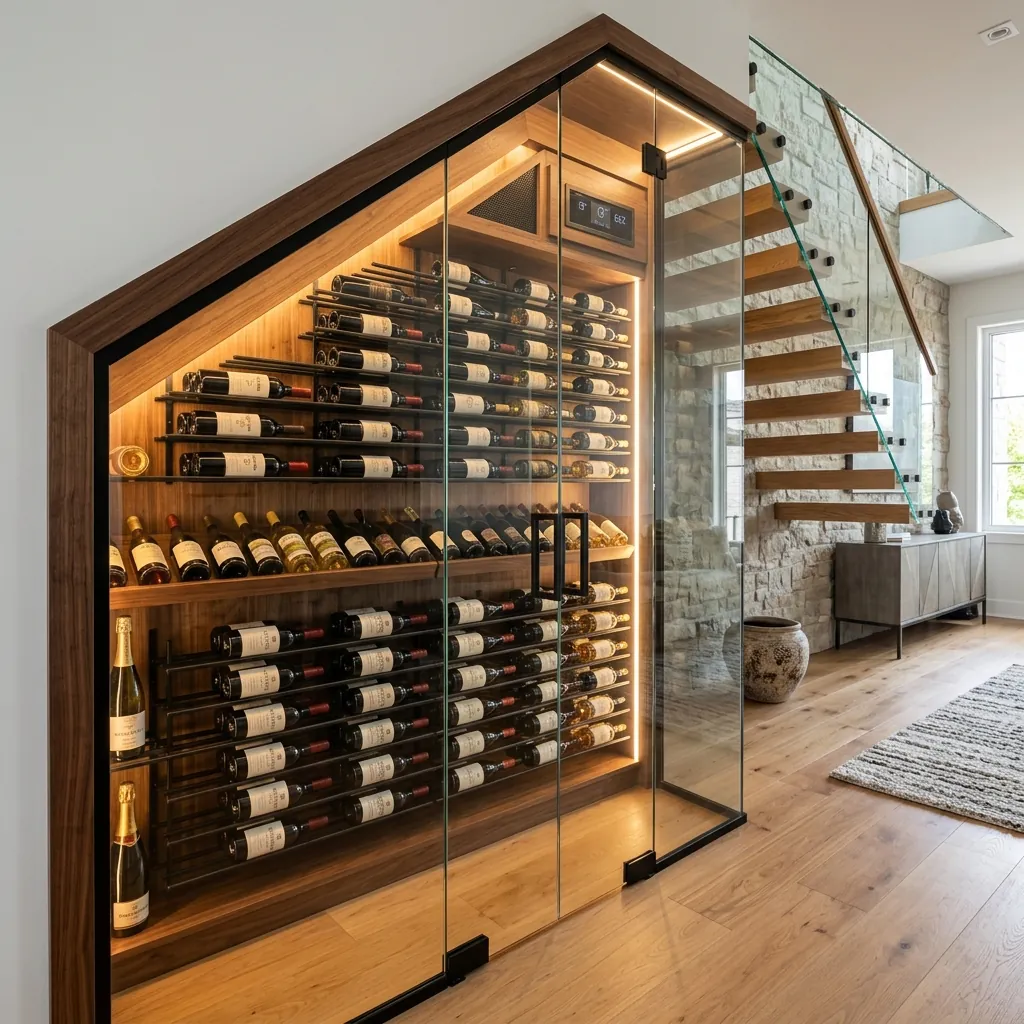
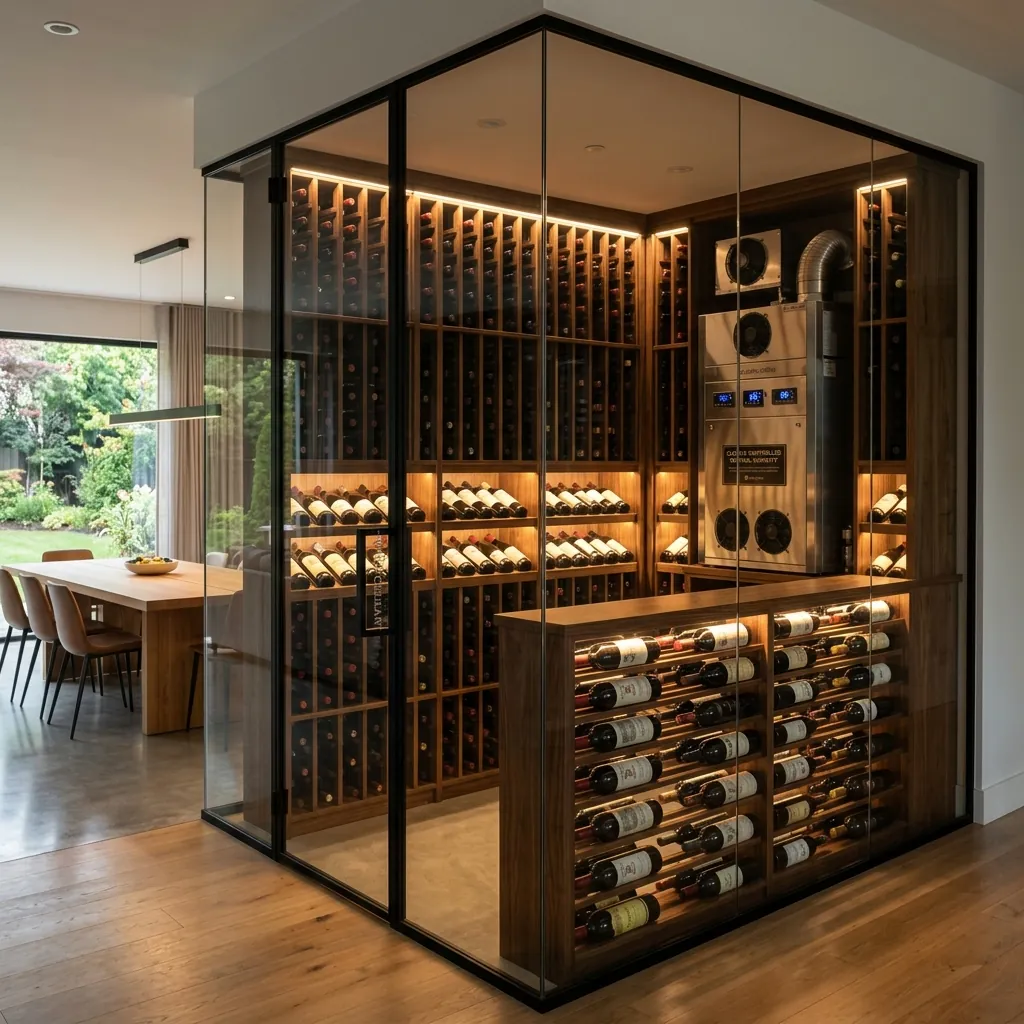
One of the most important reasons to compare these systems carefully is that the best choice is rarely universal. A collector building a showcase cellar behind a glass wall in a living room may prioritize silence and aesthetics, making a split system the clear winner. A homeowner finishing a basement storage room for a modest but valuable collection may care more about cost, simplicity, and fast installation, which makes a self-contained system more practical. Commercial applications add another layer of complexity because restaurants, wine bars, and hospitality venues often need equipment that balances presentation, service access, and operational consistency under frequent use. In those cases, the right cooling strategy depends on how the cellar is used, how often the door opens, and whether the system must be hidden from guests.
Another key point is that neither system can overcome a poorly built cellar. Insulation, vapor barriers, door quality, sealing details, and room geometry all affect the cooling load. A self-contained unit in a leaky, overexposed room will struggle no matter how reputable the brand is. A split system can provide more design freedom, but it still relies on proper load calculations and correct placement of both indoor and outdoor components. This is why professional consultation is so valuable: the goal is not simply to buy a cooling unit, but to create a complete thermal management strategy that supports the wine collection for the long haul.
In short, split systems typically excel when the project demands quiet operation, remote heat rejection, and premium integration, while self-contained systems shine when the project calls for simplicity, affordability, and a compact footprint. Understanding where each system excels is the first step toward selecting a solution that complements the cellar rather than fighting against it.
Essential Wine Cellar Engineering Resources:
When comparing split vs. self-contained wine cooling systems, many buyers begin with price, but the most intelligent comparison looks beyond the initial quote. Upfront cost certainly matters, and self-contained systems usually have the advantage here because they are less complex, require fewer components, and often involve a shorter installation process. That simplicity can be a major benefit for homeowners who want to control budget without sacrificing the core function of wine preservation. Split systems generally cost more at the outset because they involve additional equipment, more planning, and a more technical installation. However, the higher initial expense can be justified by the benefits of quieter operation, better aesthetic integration, and more flexible equipment placement. In premium cellars, those benefits often outweigh the extra investment because the cooling system becomes part of a larger architectural and lifestyle experience rather than a purely utilitarian device.
Noise is another decisive factor. Self-contained systems, by design, keep the compressor close to the cellar, which means some level of operational sound is inevitable. For a cellar tucked behind a basement wall, that may be perfectly acceptable. For a cellar integrated into a dining room, tasting room, or open-concept living area, the hum and vibration can become distracting. Split systems solve this problem by relocating the loudest components away from the occupied space. The result is a more serene atmosphere and a more luxurious presentation, which is why split wine cooling systems are frequently recommended for high-end custom projects. Owners who value silence often find that this alone is enough to justify the added complexity, especially if the cellar is meant to serve as a focal point rather than a hidden storage room.
Energy efficiency is more nuanced. A well-selected self-contained unit can be efficient in a properly constructed cellar because the system is compact and direct, and there is no need to route refrigerant or air over long distances. Yet efficiency is heavily dependent on how well the cellar is insulated and sealed. If warm air infiltrates the room or if the unit is undersized, it must run more frequently and can consume more energy than expected. Split systems can offer efficiency advantages in certain installations because the condenser can be positioned in a location with better airflow and less heat recirculation, which helps the system operate under more favorable conditions. In practice, however, the real efficiency winner is the system that is correctly sized for the actual load. Oversized or undersized equipment of either type can waste energy, create humidity problems, and shorten equipment life.
Maintenance and serviceability also deserve serious attention. Self-contained systems often make service straightforward because the entire unit is in one place and can be inspected without coordinating multiple locations. For some owners, this is a major benefit, especially when the cellar is in a residential setting with limited mechanical access. Split systems, while more complex, can also simplify certain aspects of service because the condenser is remote and may be easier to reach without entering the cellar. Still, the fact that components are separated means technicians must evaluate both ends of the system, and refrigerant-related issues can require specialized expertise. That is why installation quality matters so much: a well-installed split system can be extremely reliable, but a poorly planned one may create avoidable service headaches.
Long-term ownership costs should also be evaluated in the context of the cellar itself. If the room is poorly insulated, the most advanced system in the world will still be fighting a losing battle. Investing in the building envelope often produces better returns than simply buying a larger unit. Likewise, if the cellar is meant to grow over time, the cooling strategy should account for future bottle capacity, lighting loads, and door usage. A self-contained system may be ideal for a static, modest collection, while a split system may better support a larger or evolving cellar where future flexibility matters. The smartest buyers think in terms of total cost of ownership, not just equipment price, because the right system can save money over time through reduced stress, fewer performance issues, and a more stable storage environment.
Ultimately, the practical comparison comes down to priorities. If simplicity, speed, and lower upfront cost are your top concerns, a self-contained system is often the clear choice. If silence, design freedom, and premium integration matter most, a split system usually delivers greater value over the life of the cellar. In both cases, the key is to align the technology with the room, the collection, and the expectations of the owner so the cooling system supports the wine rather than becoming a source of frustration.
One of the biggest mistakes buyers make is assuming that a more expensive system automatically equals better performance. That is not always true. A properly sized self-contained unit in a well-built cellar may outperform a poorly designed split system in real-world conditions. The reverse can also be true. This is why professional evaluation, accurate load calculations, and proper cellar construction are every bit as important as the brand or model of the equipment itself.
Choosing between a split and self-contained wine cooling system begins with a clear understanding of the cellar itself. The size of the room, the quality of its insulation, the type of door, the amount of glass, the surrounding ambient temperature, and the frequency of door openings all influence the cooling load. A small, well-sealed basement cellar with minimal exposure to outside heat may be an ideal candidate for a self-contained system because the demands are manageable and the installation can remain simple. By contrast, a large custom cellar with glass walls, decorative lighting, and a visible location in the home may benefit from a split system because the room’s presentation and noise sensitivity make remote cooling far more attractive. The more the cellar resembles a living space, the more the advantages of a split system tend to stand out.
Another major consideration is the construction phase. If you are still in the planning stage, you have the greatest flexibility and the widest range of options. This is the moment to think about insulation levels, vapor barriers, equipment placement, drainage, electrical access, and service clearance. Split systems often work best when the project can accommodate them from the start, because the remote condenser and associated lines can be integrated cleanly into the building design. Self-contained systems can also be planned elegantly, but they are generally more forgiving when the project is smaller or when the cellar is being retrofitted into an existing structure. If the room is already built and you need a practical cooling solution with minimal disruption, a self-contained unit may be the most efficient path to reliable climate control.
Noise tolerance and lifestyle use should not be underestimated. A wine cellar that is visited occasionally for storage access has different requirements than a room used for tastings, entertaining, or display. If guests will spend time near the cellar, the reduced sound and vibration of a split system can significantly improve the atmosphere. If the cellar is hidden away in a utility area where sound is not a concern, the simplicity of a self-contained system may be more than enough. The same logic applies to maintenance preferences. Some owners want a straightforward unit that can be serviced with minimal fuss, while others are happy to invest in a more elaborate system if it means better integration and quieter operation. There is no universally correct answer, only the answer that best reflects how the cellar will actually be used.
Climate and environmental conditions also influence the decision. In hotter regions or in buildings with challenging ambient conditions, the cooling system may need additional capacity and more thoughtful heat rejection planning. Split systems can be particularly useful in these environments because the condenser can be placed where it has better access to cooler air or improved ventilation. In milder environments, a self-contained system may be more than sufficient, provided the cellar is properly insulated and the unit is matched carefully to the load. The goal is not to overcomplicate the project, but to ensure that the chosen system has enough capability to maintain stable conditions when outside temperatures rise and usage patterns change.
For many buyers, the final decision comes down to balance. If budget, simplicity, and quick deployment are the top priorities, a self-contained system offers a highly practical solution. If the cellar is a focal point of the home, if silence matters, or if the project requires a more sophisticated mechanical strategy, a split system is often the better long-term investment. What matters most is that the system is selected intentionally, not by default. Wine is a long-term asset, and the cellar that protects it should be designed with the same care and foresight as the collection itself.
At VA Wine Cooling, the best outcomes come from matching the system to the room, not forcing the room to adapt to the system. That means evaluating insulation, usage, aesthetics, service access, and performance expectations together. When those factors are considered holistically, the split vs. self-contained decision becomes much clearer, and the resulting cellar is far more likely to deliver dependable performance for years to come.
Neither system is universally better; the right choice depends on the cellar’s size, insulation, design goals, noise sensitivity, and installation constraints. Split systems are often preferred for premium or visible cellars because they are quieter and more flexible, while self-contained systems are often better for smaller or simpler projects where lower cost and easier installation matter most. The ideal system is the one that can maintain stable temperature and humidity in your specific space with the least compromise.
Yes, in most cases split wine cooling systems are significantly quieter because the compressor and condenser are located remotely rather than inside or directly adjacent to the cellar. This reduces both operational noise and vibration in the wine storage space, which is especially valuable in living areas, tasting rooms, and showcase cellars. Self-contained systems can still be perfectly acceptable in basements or utility spaces where a modest amount of sound is not a concern.
A self-contained system can cool a larger cellar only if the room is exceptionally well insulated, the cooling load is accurately calculated, and the unit is properly sized for the space. However, as cellar size, glass exposure, or ambient heat increases, split systems often become the more practical and reliable choice because they offer better flexibility and can handle demanding conditions more gracefully. For larger or more complex cellars, professional design guidance is strongly recommended to avoid undersizing or performance issues.
Whether you need installation, service, or maintenance — our team is ready to help. Fill out the form below and we'll get back to you within 24 hours.
By submitting this form, you agree to our Privacy Policy. CSLB Lic#1055057
VA Wine Cooling engineers and maintains precision commercial and residential cooling systems across Southern California.