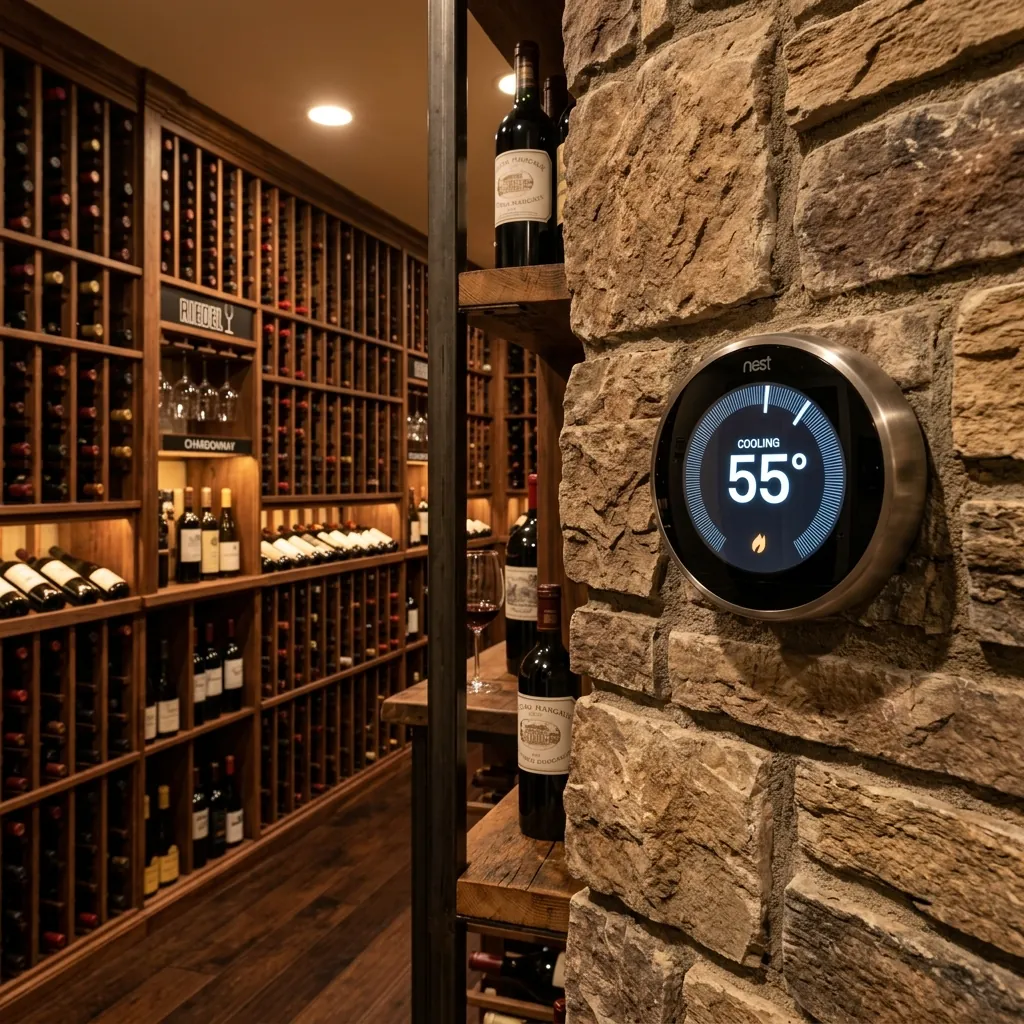
Protect every bottle, preserve every pour, and maintain ideal cellar conditions with expert commercial wine storage climate control designed for San Juan Capistrano businesses. From boutique restaurants to luxury hospitality spaces, VA Wine Cooling helps Orange County wine collections stay consistent, secure, and ready to impress.
Book a ConsultationCommercial wine storage is far more than placing bottles in a cool room and hoping for the best. In San Juan Capistrano, where warm Southern California temperatures, coastal humidity shifts, and active hospitality demands can all affect wine quality, reliable climate control becomes a business-critical investment. Restaurants, wine bars, private clubs, hotels, tasting rooms, and hospitality venues depend on stable storage conditions to protect inventory, preserve flavor integrity, and maintain the premium experience customers expect. A properly designed climate-controlled wine storage system helps prevent premature aging, cork failure, label damage, oxidation, and costly product loss. For businesses that rely on wine sales, presentation, and reputation, the right storage environment is not a luxury—it is a necessity that directly supports quality, profitability, and customer trust.
Commercial wine storage climate control systems are designed to maintain a consistent temperature range that protects wine from heat spikes, temperature swings, and seasonal changes common in Orange County. This stability helps preserve aroma, structure, and long-term value.
Proper humidity control reduces cork drying, label deterioration, and mold-related issues while supporting the long-term integrity of your wine inventory. Balanced humidity is especially important in commercial environments where bottles may be stored for months or years.
A dependable wine cooling system safeguards high-value inventory from spoilage and loss. For restaurants and hospitality businesses, this means fewer write-offs, better cellar turnover, and more confidence when serving premium wines to guests.
A climate-controlled wine storage space does more than protect bottles—it elevates the guest experience. Whether your collection is visible in a dining room display or tucked into a dedicated cellar, the right system supports a polished, upscale presentation that reinforces your brand.
Commercial wine storage climate control is built around one simple goal: protecting wine from environmental conditions that can compromise quality. Wine is highly sensitive to heat, light, vibration, and humidity fluctuations, which means even a visually impressive storage area can fail if the underlying environment is not properly engineered. In San Juan Capistrano, where businesses must account for warm afternoons, interior heat loads, and the demands of busy hospitality operations, a commercial wine cooling system must do more than cool the air. It must create a stable, carefully balanced microclimate that keeps bottles safe day after day.
The ideal wine storage environment typically centers on consistent temperature and humidity levels, with minimal fluctuation. Heat causes wine to age too quickly, while dramatic temperature changes can force liquid expansion and contraction that stresses corks and affects seal integrity. Low humidity can dry corks and allow oxygen to enter the bottle, while excessive humidity can damage labels and create maintenance concerns. This is why commercial wine storage climate control in San Juan Capistrano should be tailored to the specific size, layout, insulation, and operational use of the space. A restaurant cellar, for example, has very different needs than a hotel display room or a private tasting lounge.
For Orange County businesses, the challenge is not just selecting a cooling unit—it is designing an environment that supports the wine itself and the business around it. A successful system must account for door openings, foot traffic, lighting, glass exposure, and the heat generated by nearby kitchens or service areas. If the storage area is connected to a dining room or back-of-house corridor, the climate control solution must compensate for constant use without overworking. That is why professional planning matters. A well-designed system helps ensure that every bottle remains in optimal condition, even in a dynamic commercial setting.
Another important factor is long-term reliability. Commercial wine storage is often home to premium inventory, limited allocations, reserve bottles, and vintages that cannot be replaced easily. The cost of a failed cooling system can be substantial, not only in lost product but also in damaged reputation. Guests expect wine served from a properly maintained cellar to taste exactly as intended. By investing in the correct climate control setup, businesses in San Juan Capistrano can protect both their inventory and their brand identity.
Ultimately, commercial wine storage climate control is about consistency, preservation, and professionalism. When the environment is stable, wine can mature properly, labels stay attractive, and service teams can operate with confidence. Whether your business emphasizes fine dining, curated wine retail, or luxury hospitality, the right climate-controlled storage solution helps ensure that each bottle delivers the experience your customers deserve.
Essential Wine Cellar Engineering Resources:
Designing commercial wine storage climate control in San Juan Capistrano requires a thoughtful approach that goes beyond equipment selection. The room itself plays a major role in how well the system performs. Insulation, vapor barriers, door quality, glass exposure, ceiling height, and the amount of surrounding heat all influence the cooling load. If the enclosure is not built correctly, even a high-quality system may struggle to maintain stable conditions. That is why the first step in any commercial wine storage project should be a full evaluation of the space and how it will be used.
One of the most important design considerations is insulation. Wine storage rooms need well-sealed walls, ceilings, and floors to prevent unwanted heat transfer. In Orange County, where ambient temperatures can rise and fluctuate throughout the day, poor insulation can force the cooling system to run constantly, increasing wear and energy consumption. Proper insulation not only supports temperature stability but also improves efficiency and system longevity. For businesses that depend on uninterrupted operation, that efficiency translates into lower operating costs and fewer maintenance concerns over time.
Air circulation is another critical element. Wine cooling systems must distribute conditioned air evenly so that all bottles experience the same environment. Hot spots or dead zones can create inconsistent storage conditions, especially in larger rooms or custom display installations. In commercial settings, this becomes even more important because shelving, racks, and decorative features can affect airflow. A professionally planned system ensures that air moves in a controlled way without blasting directly onto bottles, which helps protect both the wine and the physical storage materials.
Noise and vibration also matter in a commercial environment. Restaurants, tasting rooms, and hospitality spaces often want wine storage to feel luxurious and refined, not mechanical or disruptive. The cooling equipment should operate quietly enough to preserve the atmosphere while still delivering dependable performance. Low-vibration design is especially important for wines intended for long-term storage, since excessive movement can disturb sediment and reduce the quality of delicate vintages. A well-balanced system supports both the sensory experience and the preservation goals of the business.
Finally, accessibility and aesthetics should not be overlooked. Commercial wine storage often serves as a visual feature that communicates quality and sophistication to guests. Whether the cellar is hidden behind the scenes or showcased in a dining area, the design should complement the brand. Proper lighting, thoughtful rack layout, and discreet mechanical integration all contribute to a polished result. In San Juan Capistrano, where businesses often aim to blend hospitality charm with modern luxury, the right wine storage climate control design can become a defining feature of the space.
When it comes to commercial wine storage climate control in San Juan Capistrano, working with a knowledgeable specialist can make all the difference. VA Wine Cooling focuses on helping businesses create reliable, efficient, and visually appealing storage environments that support wine quality and operational goals. From initial planning to system recommendations and installation considerations, professional guidance helps ensure that the final result is built for the realities of commercial use. That means taking into account the size of the collection, the structure of the room, the business type, and the long-term expectations of the owner or operator.
One of the biggest advantages of professional support is customization. No two wine storage spaces are exactly alike, and commercial environments often present unique challenges that standard off-the-shelf solutions cannot solve. A restaurant with a compact cellar needs a different approach than a hotel with an expansive display wall or a private club with high-end reserve inventory. By tailoring the climate control strategy to the specific application, VA Wine Cooling helps businesses avoid common issues such as overcooling, uneven humidity, excessive noise, and inefficient operation.
Another major benefit is long-term performance planning. Commercial wine storage systems are investments that should deliver dependable results for years, not just months. That is why proper sizing, quality components, and thoughtful installation matter so much. A system that is undersized may struggle during peak demand, while an oversized system can cycle inefficiently and create unstable conditions. Expert planning helps strike the right balance so the storage environment remains consistent even as seasons change and business activity increases.
Service and maintenance are also key parts of the equation. Commercial environments place higher demands on equipment than residential settings do, and regular attention helps keep systems operating at peak performance. Clean components, proper calibration, and prompt issue resolution can prevent small problems from becoming major disruptions. For businesses that rely on wine as an important part of their revenue and guest experience, dependable maintenance support can protect both inventory and peace of mind.
In the end, commercial wine storage climate control is about more than technology—it is about protecting the experience behind every bottle. Whether your business is serving collectors, diners, guests, or members, the right system helps ensure that each pour reflects the quality you intended. VA Wine Cooling brings the expertise needed to create a storage environment that works beautifully in San Juan Capistrano and throughout Orange County, helping businesses safeguard their wine and strengthen their reputation with every service.
Commercial wine storage is typically kept at a stable temperature in the ideal wine-preservation range, with consistency being more important than chasing a perfect number. Most professionals aim for a cool, steady environment that avoids heat spikes and rapid fluctuations, because wine is far more damaged by instability than by being slightly off a target point. In a commercial setting, the best temperature is the one your system can maintain reliably throughout the day, even with doors opening, guests moving through the space, and seasonal weather changes in San Juan Capistrano. A properly designed climate control system should hold the room within a narrow range so bottles remain protected, aromas stay intact, and the wine ages as intended.
Humidity control is essential because it helps protect both the wine and the physical condition of the bottles. If the air is too dry, corks can shrink and allow oxygen to enter the bottle, which can spoil the wine or shorten its lifespan. If humidity is too high, labels can wrinkle, peel, or develop mold-related issues, which is a major concern in commercial environments where presentation matters. Balanced humidity also helps preserve the overall appearance and market value of premium inventory. For restaurants, tasting rooms, and hospitality venues in Orange County, humidity control ensures that wine not only tastes right but also looks professional and remains ready for service or display.
Yes, regular maintenance is strongly recommended for commercial wine storage climate control systems because these systems often run continuously and support valuable inventory. Over time, dust, wear, calibration drift, and minor mechanical issues can reduce performance or cause temperature inconsistencies. Routine maintenance helps keep airflow clear, components functioning properly, and system settings accurate. It also gives business owners a chance to identify small concerns before they turn into expensive emergencies or product loss. In a commercial setting, maintenance is not just about equipment longevity—it is about protecting the wine collection, preserving the guest experience, and ensuring the storage environment remains dependable throughout the year.
Whether you need installation, service, or maintenance — our team is ready to help. Fill out the form below and we'll get back to you within 24 hours.
By submitting this form, you agree to our Privacy Policy. CSLB Lic#1055057
VA Wine Cooling engineers and maintains precision commercial and residential cooling systems across Southern California.