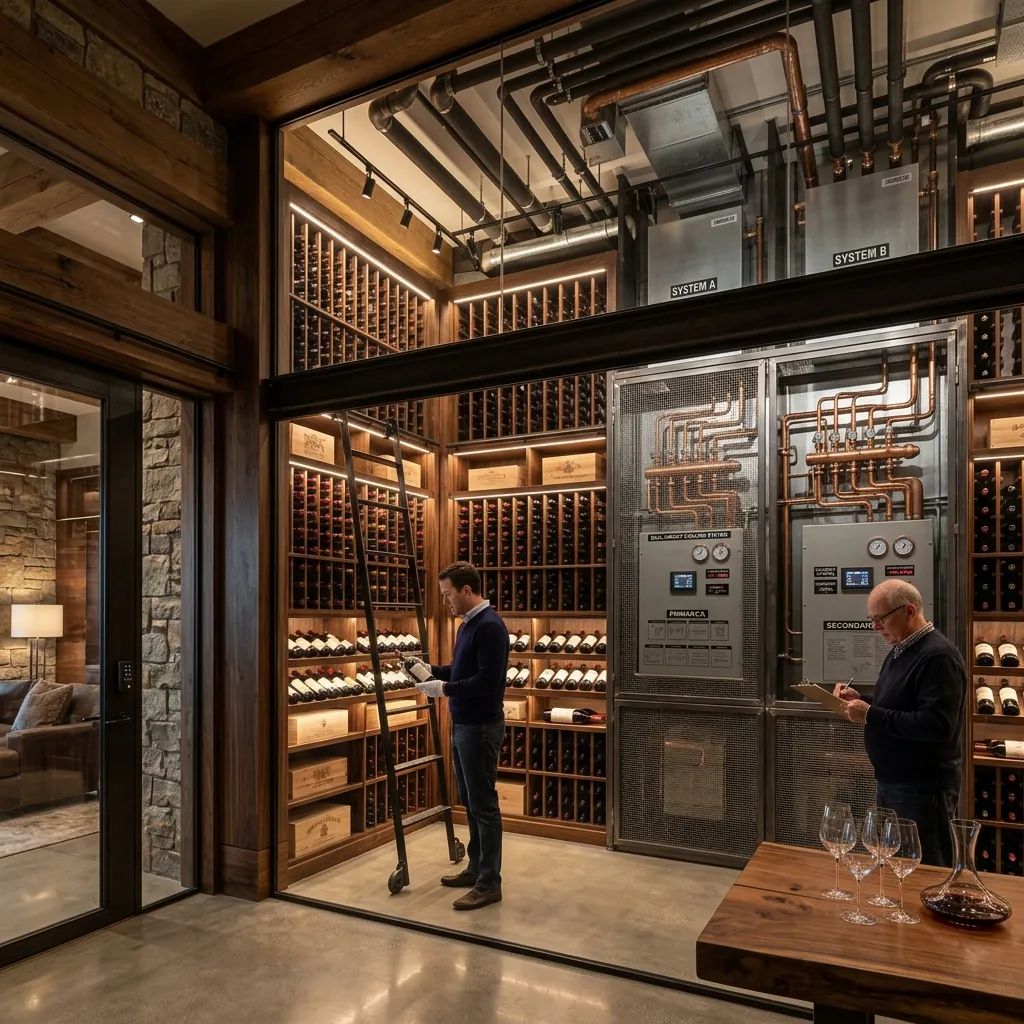
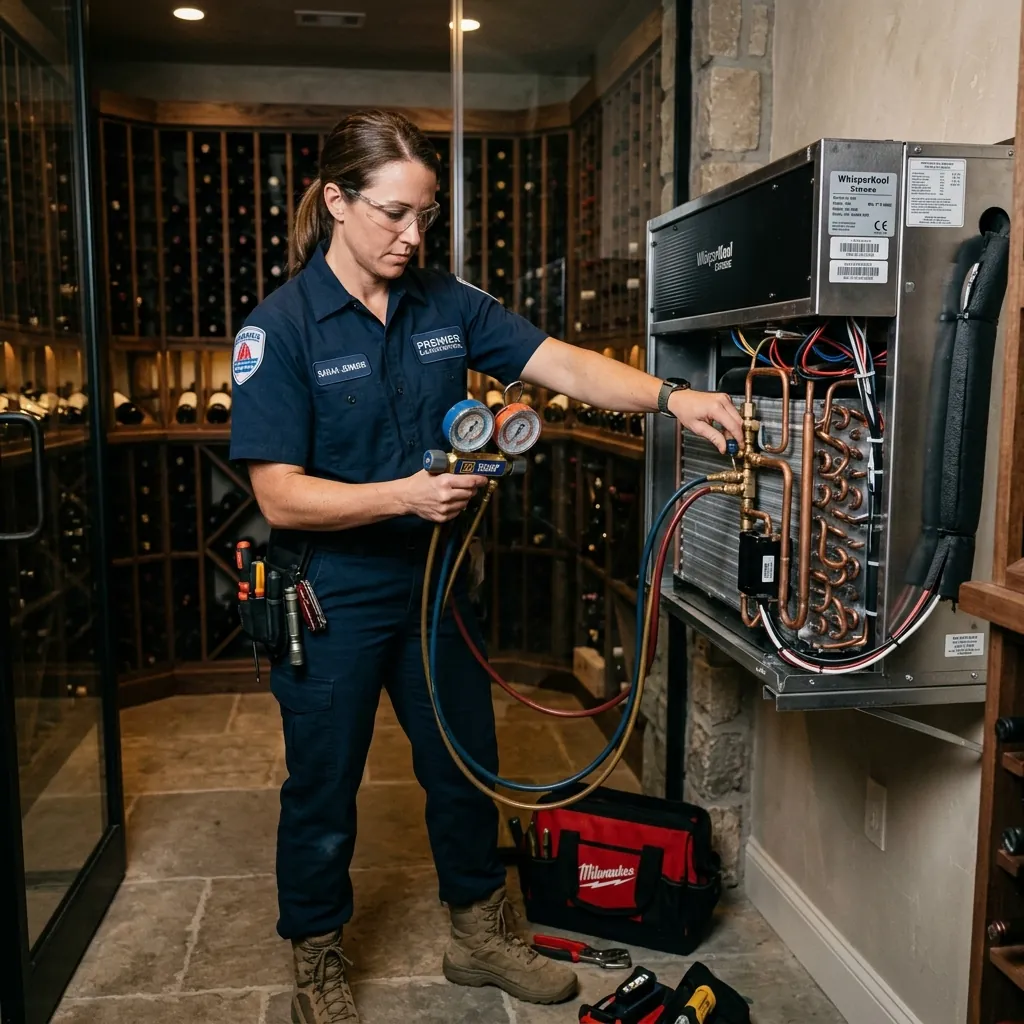
Discover how a properly engineered custom wine cellar cooling system protects your collection, preserves flavor, and performs reliably in Orange County’s warm, variable climate. Whether you are building a new cellar or upgrading an existing space, the right cooling solution makes all the difference.
Book a ConsultationA wine cellar is more than a beautiful design feature—it is a controlled environment built to safeguard bottles from heat, humidity swings, vibration, and light exposure. In Orange, Orange County, where temperatures can climb and indoor conditions often fluctuate from season to season, a custom wine cellar cooling system is essential for maintaining the ideal storage climate. The wrong system can lead to cork deterioration, premature aging, label damage, mold issues, and costly losses in a collection that may have taken years to assemble. A tailored cooling solution, designed specifically for your cellar’s size, insulation, layout, and usage, helps create the stable environment wine needs to mature gracefully and stay ready for enjoyment.
Custom wine cellar cooling systems are engineered to hold a consistent temperature, typically around 55°F, which is the widely accepted sweet spot for long-term wine storage. Precision matters because even small fluctuations can stress wine and affect its aging process. In Orange County homes, where ambient heat can vary dramatically between day and night, a standard HVAC system is not enough. A dedicated cooling unit monitors and regulates the cellar independently, ensuring your reds, whites, and sparkling wines are stored in a stable environment that supports quality and longevity.
Temperature is only part of the equation. Proper humidity levels are critical to keeping corks from drying out and preventing excess moisture that can encourage mold growth. A custom wine cellar cooling system helps balance humidity so bottles remain sealed and labels stay intact. This is especially important in custom cellars with premium wood finishes, racking, and insulation materials that can be damaged by poor moisture control. The right system protects both the wine and the craftsmanship of the cellar itself.
Wine is sensitive to vibration, which can disturb sediment and interfere with aging. Custom cooling systems are designed to operate quietly and with minimal movement, making them ideal for luxury homes, entertainment spaces, and display cellars. In a well-designed cellar, the cooling equipment works in the background without distracting from the ambiance. This is one of the major advantages of a specialized wine cellar solution over a general-purpose cooling setup.
No two wine cellars are exactly alike, and a one-size-fits-all cooling system often leads to inefficiency or failure. Custom systems are selected based on cellar dimensions, insulation quality, glass exposure, door sealing, bottle capacity, and whether the space is residential or commercial. In Orange, Orange County, where many homeowners incorporate wine storage into unique architectural designs, a custom approach ensures the cooling system matches the cellar—not the other way around. That means better performance, better energy efficiency, and better long-term protection for your collection.
A custom wine cellar cooling system is specifically designed to maintain the exact conditions needed for wine storage, rather than simply cooling a room like a standard air conditioner. These systems are built to control temperature, manage humidity, and circulate air evenly throughout the cellar so every bottle benefits from the same stable environment. The system may be ducted, ductless, self-contained, split, or remote, depending on the cellar’s architecture and the homeowner’s design goals. The key is that the equipment is sized and configured for the cellar’s unique requirements, which is why professional design and installation are so important.
In Orange, Orange County, environmental conditions make this level of precision especially valuable. Warm weather, sun exposure, and energy-efficient home construction can all affect how a cellar performs. A cooling system must do more than lower the temperature; it must compensate for heat gain from walls, ceilings, lighting, doors, and glass. If the cellar is poorly insulated or the system is undersized, the equipment may run constantly, struggle to maintain the target climate, and wear out prematurely. A properly engineered custom system accounts for these factors before installation ever begins, helping avoid expensive corrections later.
Another major advantage of a custom wine cellar cooling system is its ability to support long-term preservation rather than short-term comfort. Wine storage is not the same as human comfort cooling. A room that feels cool to people may still be too warm, too dry, or too inconsistent for wine. Custom systems are selected to create a controlled storage environment with minimal temperature swings and carefully balanced airflow. This stability is what allows wine to age properly, preserve aroma and structure, and remain enjoyable for years or even decades.
Installation quality also plays a huge role in system performance. Even the best cooling equipment can fail if it is not installed with proper drainage, insulation, vapor barriers, and airflow planning. In custom cellar projects, professionals evaluate the entire enclosure, including the door, walls, ceiling, flooring, and any windows or decorative glass. This holistic approach helps ensure the cooling system operates efficiently and reliably. In a market like Orange County, where homeowners often expect both beauty and performance, that attention to detail is essential.
Ultimately, a custom cooling system is the backbone of a successful wine cellar. It protects the collection, supports the cellar’s design, and gives the owner confidence that every bottle is stored under ideal conditions. Whether the cellar is a compact under-stair installation or a large showcase room, the cooling system must be tailored to the space to deliver dependable, long-lasting results.
Essential Wine Cellar Engineering Resources:
Selecting the right custom wine cellar cooling system begins with understanding the cellar itself. The size of the room, the quality of insulation, the type of wine being stored, and the overall design all influence which system will perform best. A small cellar with excellent insulation may do well with a self-contained unit, while a larger or more complex cellar may require a ducted or split system for better heat management and quieter operation. The goal is always the same: create a stable, efficient environment that protects the collection without overworking the equipment.
One of the most common mistakes homeowners make is choosing a cooling system based only on square footage. While room size is important, it is only one part of the equation. Glass walls, exterior-facing walls, recessed lighting, heat-producing appliances nearby, and even how often the cellar door is opened can all affect cooling load. In Orange, Orange County, where homes may experience strong afternoon heat and higher cooling demands, these details matter even more. A professional assessment helps determine the true requirements of the cellar so the system is neither undersized nor unnecessarily large.
Energy efficiency is another important consideration. A well-designed system should preserve wine without driving up utility costs or creating excessive wear on components. High-quality insulation, proper sealing, and the correct equipment type can significantly improve performance and reduce energy consumption. This is especially valuable for homeowners who want their cellar to operate continuously and discreetly in the background. When the system is matched correctly to the cellar, it can maintain ideal conditions with less strain, fewer service issues, and better long-term value.
Aesthetics also play a role in choosing a system. Many Orange County homeowners want a cellar that complements the home’s architecture and interior design. Some cooling systems are engineered to remain nearly invisible, with equipment hidden in adjacent spaces or mechanical areas. Others are selected for compact form factors that preserve the visual impact of the cellar. The best system is one that supports the design vision while still delivering dependable climate control. This balance between beauty and performance is what makes custom wine cellar cooling such a specialized service.
Professional guidance is invaluable during this process. A knowledgeable installer can evaluate the cellar’s construction, recommend the right equipment, and ensure the system is installed to manufacturer specifications. That expertise helps prevent common issues such as short cycling, uneven temperatures, condensation problems, and premature equipment failure. For homeowners in Orange, Orange County, working with a team that understands both wine storage and local climate conditions is the best way to protect the investment from the start.
Proper installation is the foundation of a dependable custom wine cellar cooling system. Even the highest-end equipment will not perform as intended if the cellar enclosure is not prepared correctly. Before installation, the space should be inspected for insulation quality, vapor barrier integrity, air sealing, and moisture control. Doors must close tightly, walls and ceilings should be properly insulated, and any penetrations should be minimized or sealed. In a climate like Orange County’s, where heat intrusion can be persistent, these details help the cooling system maintain a stable environment without unnecessary strain.
Maintenance is equally important once the system is in place. Wine cellar cooling systems are designed for continuous operation, which means filters, coils, drains, and sensors should be checked regularly to ensure optimal performance. Dust buildup, blocked airflow, or drainage issues can gradually reduce efficiency and lead to temperature instability. Routine service helps catch small problems before they become major services, protecting both the equipment and the wine collection. For homeowners who view their cellar as a long-term investment, preventative maintenance is one of the smartest ways to preserve value.
It is also important to remember that a wine cellar is a complete system, not just a cooling unit. Racking, lighting, insulation, door seals, and room finishes all contribute to the overall performance of the space. If one part of the enclosure fails, the cooling system may have to work harder to compensate. That is why custom wine cellar projects should be approached holistically. When all elements are designed to work together, the result is a cellar that is efficient, attractive, and capable of protecting a collection under demanding conditions.
For homeowners in Orange, Orange County, the benefits of a custom cooling system extend well beyond temperature control. A well-executed cellar adds sophistication to the home, supports entertaining, and provides confidence that prized bottles are stored correctly. Whether the collection includes everyday favorites or rare vintages, the right cooling solution helps ensure each bottle is preserved in a setting that supports its best expression. That combination of function, reliability, and visual appeal is what makes custom wine cellar cooling such a valuable upgrade.
Below are some frequently asked questions that help clarify the planning, installation, and maintenance process for custom wine cellar cooling systems. These answers can help you make informed decisions and better understand what to expect as you build or improve your cellar in Orange County.
A custom wine cellar cooling system should generally maintain a temperature close to 55°F, which is widely considered ideal for long-term wine storage. This temperature helps slow chemical reactions in the wine, allowing it to age gracefully without being exposed to excessive warmth that can damage flavor, aroma, and structure. In practice, a good system should hold the temperature steady with minimal fluctuation, because even repeated small swings can stress corks and affect the wine over time. While some collectors prefer slight variations depending on the type of wine being stored, consistency is more important than chasing a specific number. A professional wine cellar cooling design will account for the cellar’s insulation, occupancy, and usage patterns to keep the environment stable throughout the year.
Yes, even a small wine cellar can benefit greatly from a custom cooling system. In fact, smaller spaces can sometimes be more challenging than larger ones because a single heat source, poor insulation detail, or weak door seal can have a bigger impact on performance. A custom system ensures the equipment is properly sized for the exact dimensions and construction of the cellar, rather than relying on a generic unit that may not account for glass exposure, adjacent room temperatures, or ventilation needs. Small cellars in Orange, Orange County still face the same climate-related concerns as larger ones, including heat gain and humidity imbalance. A tailored solution helps protect the collection, improve efficiency, and prevent the short cycling or overcooling that can happen with an improperly matched unit.
A wine cellar cooling system should be inspected and serviced regularly, ideally at least once a year, though some high-use or more complex systems may benefit from more frequent checks. Routine maintenance typically includes cleaning filters and coils, checking refrigerant levels, inspecting drainage, verifying thermostat accuracy, and making sure airflow is unobstructed. Because these systems often run continuously, small issues can gradually affect performance if they are not addressed early. In Orange County, where warmer conditions can place additional demand on the system, preventative maintenance is especially important for keeping temperatures stable and avoiding unnecessary strain on the equipment. Regular service helps extend the life of the system, reduce the risk of breakdowns, and protect the long-term health of the wine collection.
Whether you need installation, service, or maintenance — our team is ready to help. Fill out the form below and we'll get back to you within 24 hours.
By submitting this form, you agree to our Privacy Policy. CSLB Lic#1055057
VA Wine Cooling engineers and maintains precision commercial and residential cooling systems across Southern California.