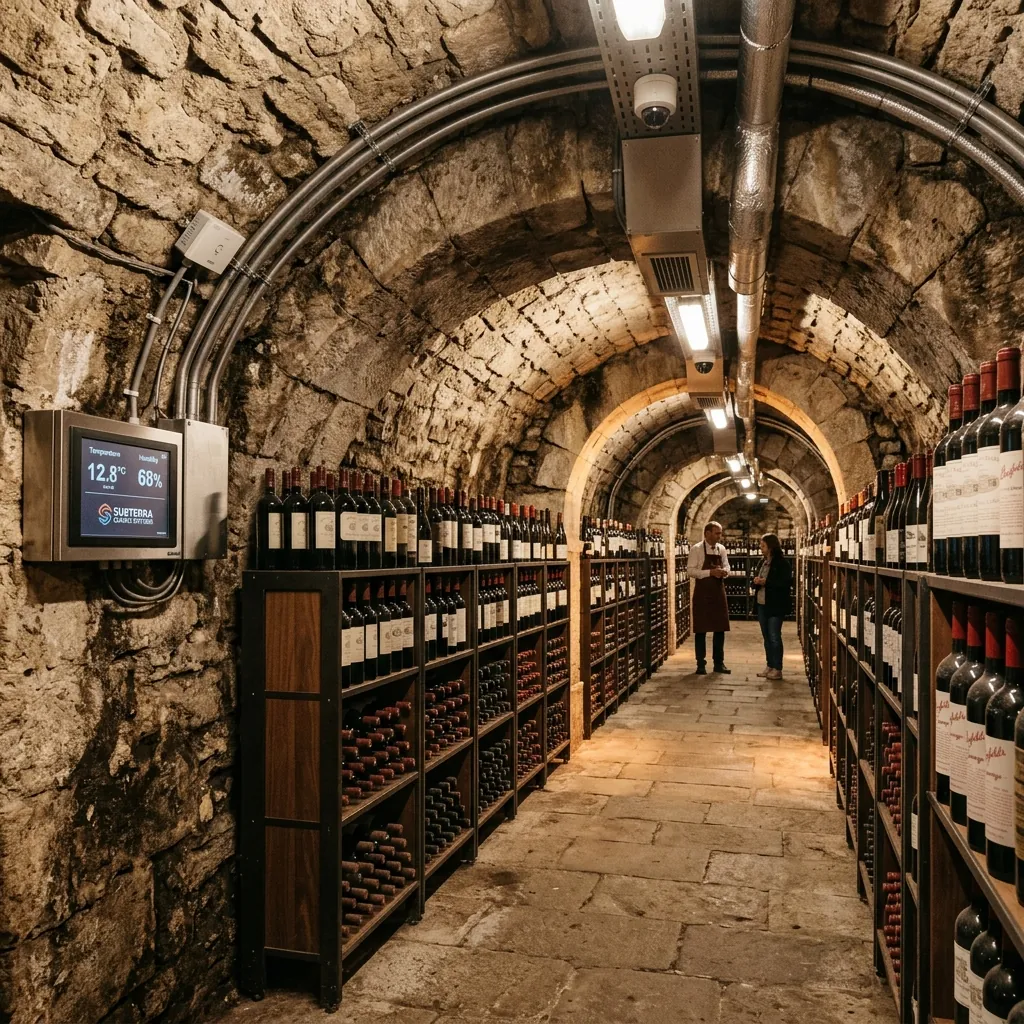
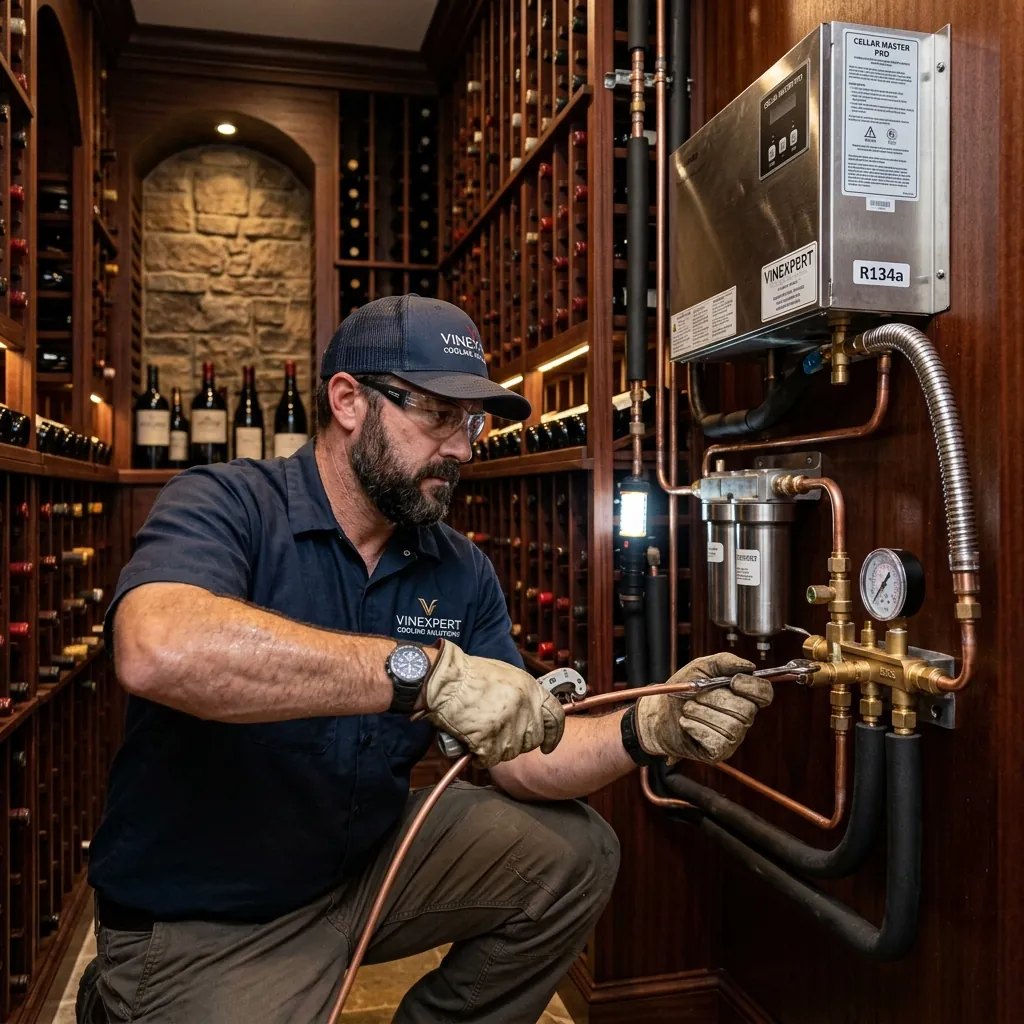
Protect your investment with a professionally designed wine cellar cooling system built for Newport Beach homes and Orange County conditions. Discover what it takes to achieve stable temperature, proper humidity, and long-term wine preservation with expert installation.
Book a ConsultationIn Newport Beach and throughout Orange County, wine collectors face a unique challenge: beautiful coastal living comes with warm days, humidity swings, and fluctuating indoor conditions that can quietly damage a wine collection over time. A properly installed wine cellar cooling system is not a luxury feature—it is the backbone of any serious storage space. Whether you are building a custom cellar in a luxury residence, converting a spare room, or upgrading an existing wine area, the cooling installation must be carefully matched to the room’s size, insulation, vapor barrier, and usage goals. VA Wine Cooling specializes in helping homeowners protect their bottles with systems engineered for performance, reliability, and precision.
Wine ages best in a stable environment, typically around 55 degrees Fahrenheit, with minimal temperature swings. A professionally installed cooling system keeps the cellar consistently within the ideal range, helping preserve flavor, structure, and long-term value.
Proper humidity helps protect corks from drying out and prevents oxidation. The right installation supports balanced moisture levels so your wines remain sealed, stable, and ready to age gracefully.
Every cellar is different. A cooling unit must be sized according to the room’s volume, insulation quality, glass exposure, and heat load. Correct sizing prevents short cycling, inefficiency, and premature system failure.
Luxury homes in Newport Beach demand a system that performs without disrupting the space. Professional installation ensures the cooling equipment blends into the design while operating quietly and efficiently behind the scenes.
Wine cellar cooling installation is far more involved than simply placing a cooling unit in a room and turning it on. A true wine storage environment requires a carefully balanced system that can maintain stable temperature and humidity day after day, even when the surrounding home experiences changes from HVAC use, sunlight, occupancy, and seasonal weather. In Newport Beach, where coastal moisture and warm interior temperatures can create unpredictable conditions, the installation process must account for every detail that affects performance. From the insulation package to the vapor barrier to the placement of the evaporator and condenser, every component plays a role in keeping your wine collection safe.
One of the most common mistakes homeowners make is assuming that a standard air conditioning system can substitute for a dedicated wine cellar cooling system. While home HVAC can help regulate general indoor comfort, it is not designed to hold the precise conditions required for long-term wine preservation. Wine reacts to temperature fluctuations, vibration, and excessive dryness or humidity, which means the cellar needs specialized equipment engineered specifically for that purpose. A professional installation ensures the system is matched to the room’s thermal load and that the environment remains stable enough for aging fine wine properly.
In Orange County homes, especially those with open layouts, large windows, or custom architecture, heat gain can be significant. That is why proper planning matters before installation begins. An expert will evaluate the cellar’s dimensions, construction materials, ceiling height, door seals, lighting, and even the number of bottles expected to be stored. This information is used to determine the right cooling capacity and the best type of system, whether that is a ducted split system, ductless split system, or self-contained unit. The goal is to create a controlled environment that performs efficiently without overworking the equipment.
Another essential part of installation is airflow management. A wine cellar cooling system must distribute conditioned air evenly so that no part of the room becomes too warm or too cold. Poor airflow can create hot spots near glass walls or corners, leading to uneven storage conditions. Professional installers understand how to position supply and return air paths to maintain balance throughout the cellar. This attention to detail is especially important in luxury homes where aesthetics matter as much as performance. The result is a wine room that not only protects the collection but also enhances the overall property.
Ultimately, the right wine cellar cooling installation is an investment in both peace of mind and long-term wine quality. When the system is designed correctly from the start, it reduces maintenance concerns, lowers the risk of costly services, and helps ensure that every bottle matures as intended. For Newport Beach homeowners who value craftsmanship and preservation, a professionally installed system is the foundation of a truly exceptional wine cellar.
Essential Wine Cellar Engineering Resources:
When you schedule a wine cellar cooling installation in Newport Beach, the process should begin with a detailed consultation and site evaluation. This step is essential because no two cellars are exactly alike. A skilled technician will assess the room layout, insulation, existing HVAC influences, and design goals to determine the most effective cooling solution. In Orange County, homes often feature custom architecture, large expanses of glass, or integrated entertainment spaces, all of which can influence heat load. By evaluating these factors early, the installer can recommend the right equipment and avoid expensive surprises later.
Once the system design is finalized, preparation begins. This may include verifying that the cellar has proper insulation in the walls, ceiling, and floor, along with a sealed vapor barrier to prevent moisture intrusion. If these elements are not already in place, the installer may recommend upgrades before the cooling unit is installed. These foundational components are just as important as the equipment itself because even the best system cannot perform properly in a poorly built room. In many cases, homeowners are surprised to learn that the success of their wine cellar depends as much on construction quality as it does on the cooling unit.
The actual installation process depends on the type of system selected. A self-contained unit may be installed directly through a wall or ceiling, while a split system requires careful placement of the evaporator inside the cellar and the condenser outside the room or home. Ducted systems involve additional planning to route conditioned air discreetly and efficiently. Regardless of the configuration, professional installers handle refrigerant lines, electrical connections, condensate management, and final calibration with precision. This ensures the system operates safely, quietly, and in accordance with manufacturer specifications.
After installation, testing and balancing are crucial. The technician will verify temperature performance, airflow, drainage, and control settings to make sure the cellar is functioning as intended. This stage is especially important in coastal communities like Newport Beach, where environmental conditions can vary more than homeowners expect. Fine-tuning the system helps prevent excessive cycling, uneven cooling, and humidity issues that can compromise the collection. A thorough commissioning process also gives the homeowner confidence that the cellar is ready for long-term use.
At VA Wine Cooling, the installation experience should feel organized, transparent, and tailored to the property. Homeowners deserve a system that fits their lifestyle and their collection, not a one-size-fits-all approach. From consultation to final testing, every step should be handled with the same care and professionalism that went into building the wine cellar itself.
Selecting the right cooling system is one of the most important decisions in the entire wine cellar installation process. The ideal choice depends on the size of the room, the surrounding climate, the desired noise level, and the overall design of the home. In Newport Beach, many wine cellars are located in premium residences where aesthetics and quiet operation are major priorities. That means the system must not only perform well but also integrate smoothly into the architecture. A knowledgeable installer will help compare options and identify the solution that offers the best balance of performance, efficiency, and visual appeal.
For smaller cellars or more straightforward installations, a self-contained cooling unit may be appropriate. These systems are often easier to install and can be a practical choice when the cellar is properly insulated and the heat load is moderate. However, for larger or more architecturally complex spaces, a split system or ducted system may provide better results. Split systems are popular because they separate the noisy condenser from the cellar interior, while ducted systems offer an even more discreet appearance. Each solution has advantages, and the right choice depends on the specific goals of the homeowner and the characteristics of the room.
Energy efficiency is another important factor to consider. A system that is too small will struggle to maintain temperature, while one that is too large may short cycle and wear out prematurely. Proper sizing and installation help the equipment run more efficiently, which can reduce operating costs and improve reliability over time. In a region like Orange County, where homeowners often expect both luxury and practicality, choosing an efficient system is a smart way to protect the collection without creating unnecessary utility expenses.
Noise control should also be part of the decision-making process. Wine cellars are often located near dining rooms, entertaining spaces, or private living areas, so a loud system can disrupt the ambiance of the home. Professional installation helps minimize vibration and operational noise through careful equipment placement, secure mounting, and proper line routing. For many Newport Beach homeowners, a quiet system is just as important as a powerful one because it allows the cellar to function as a refined part of the home rather than a noisy mechanical room.
In the end, the best cooling solution is the one that fits the cellar, the collection, and the lifestyle of the homeowner. A trusted specialist will evaluate all of these factors and recommend a system that supports both preservation and design. That level of customization is what transforms a simple storage room into a true wine sanctuary.
The right wine cellar cooling system depends on several factors, including the size of the cellar, the quality of insulation, the presence of glass walls or doors, the ambient temperature surrounding the room, and your long-term storage goals. In a coastal market like Newport Beach, humidity and heat gain must also be considered carefully. A professional evaluation is the best way to determine the correct system because it accounts for the full thermal load of the space rather than relying on guesswork. For some cellars, a self-contained unit may be enough. For larger or more refined installations, a split or ducted system may be the better solution. The most important thing is to avoid oversizing or undersizing the unit, since both can lead to poor performance and reduced equipment life. A proper consultation ensures the system is chosen for your specific room, not just for a general category of cellar.
Professional installation is essential because wine cellar cooling systems are highly specialized and must be integrated into a carefully controlled environment. Unlike standard HVAC equipment, these systems are designed to maintain a narrow temperature range and stable humidity conditions for long-term wine preservation. If the installation is done incorrectly, the cellar may experience hot spots, excessive condensation, short cycling, vibration, or inadequate cooling capacity. In Orange County homes, where architectural complexity and coastal climate conditions can add extra challenges, those risks are even greater. A professional installer understands how to evaluate insulation, vapor barriers, airflow, equipment placement, drainage, and electrical requirements. They also know how to test and balance the system after installation so it performs reliably from day one. That level of expertise protects your investment and helps ensure your wine ages properly for years to come.
A wine cellar cooling system should be inspected and maintained regularly to keep it operating at peak performance. In many cases, homeowners should schedule routine maintenance at least once a year, although more frequent service may be recommended depending on the system type, usage level, and environmental conditions. Maintenance typically includes checking refrigerant levels, cleaning coils, inspecting fans and filters, verifying drainage, testing controls, and confirming that the cellar is still holding the correct temperature and humidity range. In Newport Beach, where coastal moisture and salt air can affect mechanical systems, proactive maintenance is especially valuable. Regular service helps prevent minor issues from turning into expensive services and extends the lifespan of the equipment. It also ensures your wine remains protected by a stable, dependable environment. If the cellar is used heavily or the system shows signs of strain, such as unusual noise, temperature swings, or excess condensation, service should be scheduled immediately.
Whether you need installation, service, or maintenance — our team is ready to help. Fill out the form below and we'll get back to you within 24 hours.
By submitting this form, you agree to our Privacy Policy. CSLB Lic#1055057
VA Wine Cooling engineers and maintains precision commercial and residential cooling systems across Southern California.