Protect every bottle with a precision wine cellar cooling system designed to preserve flavor, stabilize humidity, and create the ideal long-term aging environment. Whether you are building a private cellar or upgrading an existing space, the right cooling solution is the foundation of serious wine storage.
Book a ConsultationA wine cellar is only as good as the environment you create inside it, and that environment depends heavily on the performance of your cooling system. Wine is remarkably sensitive to heat, humidity swings, vibration, and inconsistent airflow, which means even a beautifully designed cellar can fail to protect a collection if the temperature is not properly controlled. A dedicated wine cellar cooling system does far more than make the room feel cool; it maintains the stable, balanced conditions that allow wine to age gracefully, preserve its intended character, and remain valuable over time. For collectors, homeowners, restaurants, and designers, understanding how these systems work is the first step toward building a cellar that is both functional and worthy of the bottles stored within it.
Wine cellar cooling systems are engineered to hold a consistent temperature within the narrow range that wine needs for proper storage, usually around 55°F. Unlike standard HVAC equipment, which is designed for human comfort and often cycles too aggressively, a wine cellar cooling unit is built to reduce temperature fluctuations that can prematurely age wine, damage cork integrity, and compromise delicate aromas and flavors.
A quality wine cellar cooling system helps maintain the humidity levels needed to protect corks and labels while preventing mold and excess moisture. Too little humidity can dry out corks and invite oxidation, while too much humidity can encourage mildew and damage packaging. The best systems balance both temperature and moisture so the cellar remains stable year-round.
Wine benefits from stillness, and that is why specialized cellar cooling systems are designed to operate quietly with minimal vibration. Excessive noise or mechanical vibration can disturb sediment in aged wines and create an unpleasant environment in a home or commercial cellar. Purpose-built cooling systems help preserve the calm, undisturbed conditions that fine wine requires.
From self-contained through-the-wall units to ducted and split systems, wine cellar cooling solutions are available in multiple configurations to suit different cellar sizes, layouts, and aesthetic preferences. This flexibility makes it possible to design a system that fits the architecture of the space while delivering reliable performance, efficient operation, and long-term protection for the collection.
At the heart of every successful wine storage environment is a stable microclimate, and the job of a wine cellar cooling system is to create that microclimate with precision. Wine is not simply sensitive to heat; it is sensitive to change. When temperatures rise and fall repeatedly, the liquid expands and contracts, the cork can shift, oxygen exposure increases, and the wine ages in ways that are neither predictable nor desirable. This is why a true wine cellar cooling system is not just an appliance but a preservation tool, one that must be sized correctly, installed thoughtfully, and matched to the construction of the cellar itself. The goal is not to make the room cold in the conventional sense, but to keep it consistently cool, stable, and balanced so that every bottle rests in ideal conditions.
The science becomes even more important when humidity enters the conversation. Many people assume temperature alone determines wine storage quality, but humidity is equally critical because it directly affects the cork. A dry environment can cause corks to shrink, which allows air into the bottle and accelerates oxidation. On the other hand, excessive humidity can create an environment where mold thrives, labels deteriorate, and wood finishes suffer. The best wine cellar cooling systems are designed to support humidity control by avoiding overcooling and by working with the cellar’s insulation, vapor barrier, and sealing details. In other words, the cooling unit is only one part of a larger preservation ecosystem, and that ecosystem must function together for the cellar to perform properly.
Another important factor is airflow. Wine cellar cooling systems must distribute conditioned air evenly so that no hot spots or stagnant zones develop. Uneven airflow can create temperature gradients within the cellar, leaving some bottles warmer than others and causing inconsistent aging conditions. This is particularly important in larger cellars or spaces with custom racking, glass doors, or architectural features that alter air movement. A well-designed system will account for these variables and maintain uniform conditions from corner to corner. That consistency is what protects not only the wine itself but also the investment represented by the collection, especially for collectors storing rare vintages, imported wines, or bottles intended for long-term aging.
It is also worth understanding that wine cellar cooling systems are not interchangeable with ordinary room air conditioners. Standard AC units are made to cool occupied spaces and often remove too much humidity, cycle on and off too frequently, and fail to maintain the narrow temperature band needed for wine. They may also introduce vibration, noise, and airflow patterns that are unsuitable for a cellar environment. A specialized wine cooling system is designed from the ground up to operate differently, with components and controls that prioritize preservation rather than comfort. This distinction is essential for anyone serious about wine storage, because using the wrong equipment can create a false sense of security while quietly undermining the collection over time.
Proper sizing is another area where science and experience intersect. A cooling unit that is too small will struggle to maintain temperature, run constantly, and wear out prematurely. A unit that is too large may short cycle, creating temperature swings and failing to dehumidify properly. To size a wine cellar cooling system correctly, professionals consider cellar volume, insulation quality, ambient conditions, glass exposure, door construction, lighting load, occupancy, and even the surrounding climate. In Virginia and other regions with seasonal humidity changes, these calculations become especially important because the cellar must remain stable through both hot summers and cooler winter conditions. The right equipment is not simply the most powerful option; it is the one that matches the cellar’s actual thermal load and performs efficiently under real-world conditions.
For homeowners and commercial operators alike, the long-term value of a wine cellar cooling system lies in its ability to preserve quality without constant intervention. Once installed and tuned correctly, it becomes a quiet guardian of the collection, working in the background to prevent the kinds of environmental stress that can ruin wine before it ever reaches the glass. That reliability is why serious collectors view cooling as the foundation of cellar design, not an afterthought. Everything else in the cellar, from racking and lighting to flooring and insulation, supports the cooling system’s ability to do its job. When that relationship is respected, the result is a cellar that not only looks beautiful but also performs with professional-grade consistency.
Essential Wine Cellar Engineering Resources:
Choosing the right wine cellar cooling system begins with understanding the major types available and how each one performs in different cellar environments. The most common options include self-contained units, ducted systems, split systems, and fully concealed or remote configurations. Each has distinct advantages depending on the size of the cellar, the amount of heat generated by the surrounding space, the desired appearance, and the level of noise tolerance. A self-contained through-the-wall system can be an excellent choice for a smaller cellar with moderate cooling needs, while a split system may be preferable when the homeowner wants to keep mechanical components out of sight and reduce sound inside the room. The right decision is rarely about choosing the most expensive model; it is about selecting the system that aligns with the cellar’s structure, aesthetic goals, and environmental demands.
Self-contained cooling systems are often chosen for their simplicity and accessibility. These units typically install through a wall and place all major mechanical components in a single enclosure. Because they are relatively straightforward, they can be a practical solution for smaller cellars or for projects where installation space is limited. However, they do require careful planning because the heat they remove from the cellar must be vented properly, and the wall itself must be able to support the unit. They can also be more noticeable acoustically than remote systems, which makes them less ideal for cellars integrated into living areas or open-plan homes where quiet operation is a priority. Even so, for the right application, they remain a dependable and cost-effective wine cellar cooling solution.
Ducted systems offer a more discreet approach by placing the cooling equipment away from the cellar and delivering conditioned air through ductwork. This setup is attractive for collectors who want a clean interior aesthetic without visible machinery, and it can be especially useful in custom-designed cellars where architectural presentation matters. Ducted systems also allow for greater flexibility in equipment placement, which can help with heat rejection and service access. At the same time, duct runs must be designed carefully to preserve airflow efficiency, and the system must be sized to account for the additional resistance introduced by the ductwork. When properly engineered, a ducted wine cellar cooling system can provide excellent performance while maintaining a refined, unobtrusive appearance.
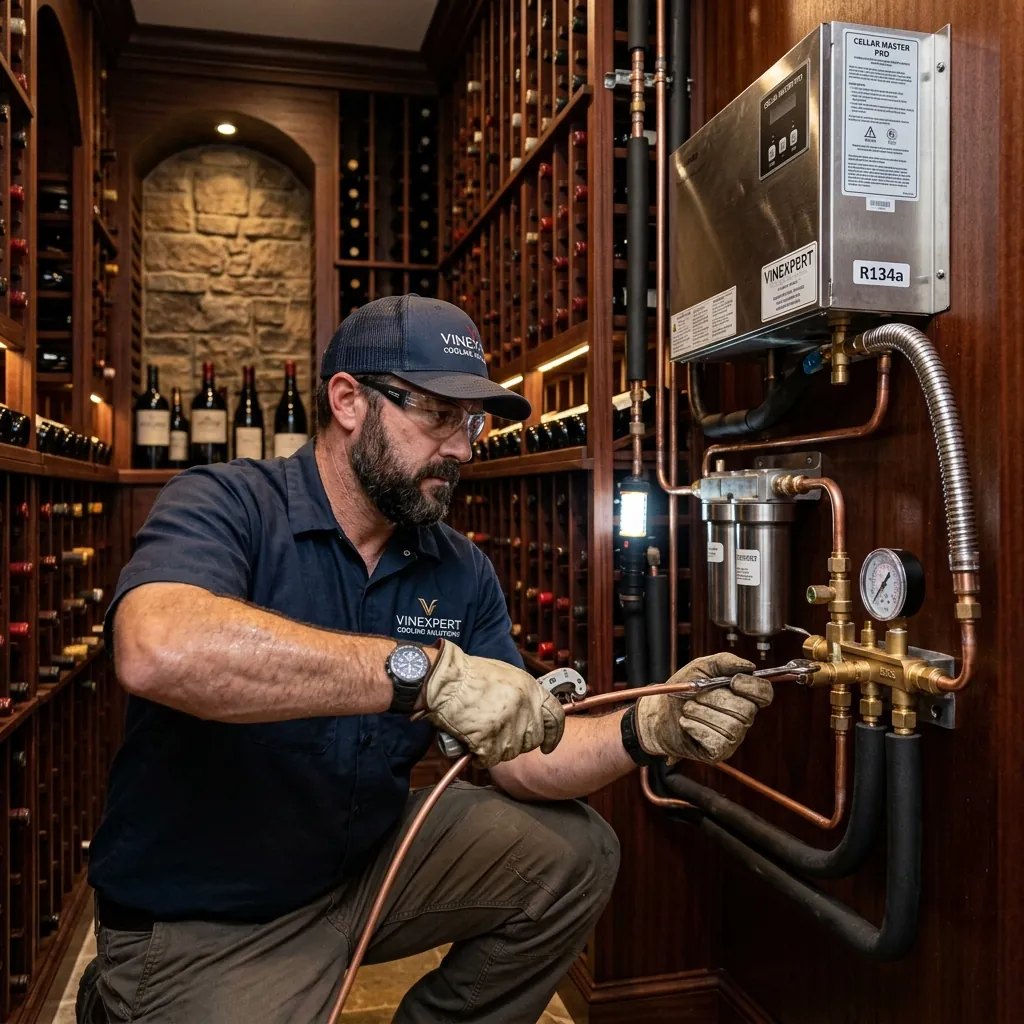
Split systems take the concept of remote installation even further by separating the evaporator and condenser components. This allows the noisy, heat-generating parts of the system to be installed outside the cellar or in another mechanical area, leaving only the quiet interior components within or near the wine room. For luxury cellars, restaurants, and high-end residential projects, split systems are often preferred because they combine strong performance with minimal visual impact. They also offer greater design flexibility in spaces where a standard through-the-wall unit would be impractical. However, split systems require professional design and installation, and their success depends on proper refrigerant line sizing, routing, and commissioning. In other words, they can be exceptional solutions, but only when the installation is executed with expertise.
Beyond the basic categories, there are also important features that influence system selection. Some cooling units are designed for higher ambient temperatures, making them better suited to spaces with significant external heat load. Others include advanced digital controls, remote monitoring, and enhanced humidity management. Some are optimized for smaller residential cellars, while others are built for large commercial collections or expansive custom installations. A buyer should think not only about today’s needs but also about future expansion, especially if the collection is likely to grow. A slightly larger or more adaptable system may be a smarter long-term investment than a unit that merely fits the current bottle count. This is particularly relevant for collectors who expect to add racking, upgrade doors, or finish adjacent spaces later on, because those changes can alter the cellar’s thermal load substantially.
Choosing the right wine cellar cooling system also means evaluating the building itself. Insulation quality, vapor barrier integrity, door seals, window exposure, and construction materials all affect performance. A cellar with poor insulation may need a more robust system than one with well-sealed walls and minimal glass. Likewise, a cellar located in a hot, sun-exposed area of a home will place different demands on the equipment than a basement cellar surrounded by cooler conditioned spaces. The best cooling system is one chosen after a careful review of the actual room conditions, not a guess based on square footage alone. This is where professional assessment becomes invaluable, because it ensures the system is matched to the true thermal profile of the cellar rather than to a generic assumption. When the system, the room, and the goals of the owner are all aligned, the result is dependable, efficient, and worthy of a serious wine collection.
Ultimately, the ideal wine cellar cooling system is the one that balances performance, aesthetics, noise control, serviceability, and long-term reliability. Some projects demand complete invisibility, others prioritize simple maintenance, and others require maximum cooling power in a challenging environment. By understanding the strengths of each system type, collectors can make decisions that support both the technical needs of the cellar and the emotional experience of owning a beautiful wine space. A thoughtfully chosen cooling system does more than preserve bottles; it enhances the entire cellar experience by making the room feel intentional, stable, and professionally built from the ground up.
Even the best wine cellar cooling system can underperform if installation and maintenance are treated casually. Proper installation begins long before the unit is mounted or the refrigerant lines are connected. It starts with the cellar envelope itself: insulation must be continuous, vapor barriers must be properly sealed, doors must close tightly, and any penetrations for lighting, wiring, or shelving must be addressed so that conditioned air does not escape and unwanted heat does not enter. If the room is not built as a true cellar, the cooling system will be forced to compensate for construction flaws, which can shorten its life and increase operating costs. This is why professional planning is so important. A cooling system should be matched to a well-prepared space, not asked to solve every structural problem on its own.
Installation quality also affects vibration, noise, and serviceability. A unit that is mounted improperly can transmit vibration into the walls or surrounding structure, undermining the calm environment that wine storage requires. Ductwork that is undersized or poorly insulated can restrict airflow and reduce efficiency. Refrigerant lines that are routed without enough attention to length, slope, or protection can create future maintenance headaches. In a premium wine cellar, these details matter because the system is expected to run quietly and consistently for years. Professional installation ensures that the equipment is not only operational on day one but also positioned for long-term reliability. It also helps protect warranties and gives the owner confidence that the cellar is being supported by a system designed to perform under real conditions.
Maintenance is equally important. A wine cellar cooling system is a mechanical device operating in a demanding environment, and like any precision equipment it benefits from regular attention. Filters should be cleaned or replaced according to manufacturer guidelines, coils should be inspected for dust and debris, condensate drainage should remain clear, and system controls should be checked periodically to confirm that temperature and humidity targets are being maintained. Small issues can develop slowly, and because a cellar is meant to be stable, even slight changes in performance can have outsized effects over time. Catching those issues early preserves both the equipment and the wine. For this reason, many collectors schedule routine service the same way they would schedule maintenance for a security system or a high-end appliance: not because something is visibly wrong, but because prevention is far less costly than remediation.
It is also wise to monitor the cellar environment independently. Digital thermometers and hygrometers provide a second layer of reassurance, allowing the owner to verify that the cooling system is maintaining the desired range. Some modern systems include remote monitoring or smart alerts, which can be especially useful when a cellar is located in a vacation home, restaurant, or secondary property. These tools can alert the owner to temperature drift, power interruptions, or abnormal system behavior before damage occurs. In a world where many people travel frequently or manage multiple properties, this kind of visibility is no longer a luxury; it is an essential part of responsible wine preservation. The more informed the owner is, the faster small problems can be addressed before they become serious threats to the collection.
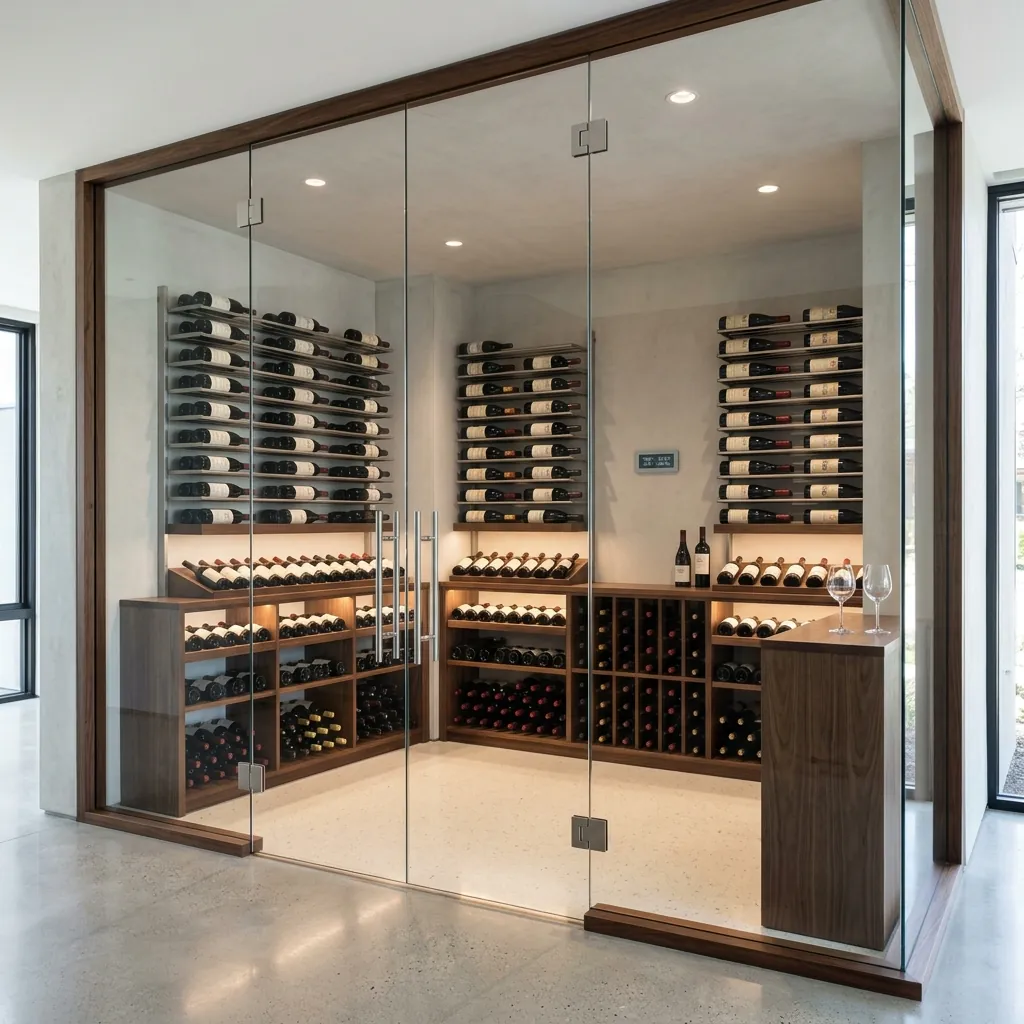
Long-term performance also depends on the relationship between the cooling system and the cellar design. If the cellar is expanded, if glass is added, if lighting is upgraded, or if the door is replaced, the thermal load may change enough to require recalibration or even a different system configuration. This is especially true in custom wine rooms where design choices can subtly affect performance. For example, decorative lighting can add heat, and glass walls can dramatically increase solar gain if they are not properly specified. As collections grow, racking density can also influence airflow patterns. A system that once performed perfectly may need adjustments as the room evolves. Recognizing this dynamic helps owners protect their investment and avoid the common mistake of assuming that a cooling system, once installed, will remain optimal forever without review.
Perhaps the most important maintenance principle is to treat the wine cellar cooling system as part of a broader preservation strategy. The unit works best when the room is sealed, the insulation is sound, the humidity is balanced, and the owner pays attention to seasonal changes. In Virginia, for example, summer humidity and heat can place additional stress on cellar systems, making spring and early summer a good time for inspection and preventive service. The payoff for this disciplined approach is significant: a cellar that remains quiet, efficient, and dependable, and a collection that can mature under ideal conditions for years or even decades. When installation and maintenance are handled with care, the cooling system becomes more than a machine. It becomes the invisible infrastructure that supports the entire purpose of the cellar, which is to protect wine at its best and allow each bottle to reach its full potential.
Most wine cellars are designed to maintain a steady temperature around 55°F, though a small range above or below that is generally acceptable depending on the collection and storage goals. The key is consistency rather than perfection. Wine responds poorly to repeated temperature swings, so the best cooling systems are those that hold a stable environment day after day, season after season. If you are storing wine for long-term aging, the objective is to minimize variation as much as possible while also keeping humidity in a healthy range. A professional assessment can help determine the ideal target based on your cellar construction, your climate, and the type of wine you collect.
In most cases, no. A regular air conditioner is not designed for the narrow environmental requirements of a wine cellar. Standard HVAC equipment is built to cool occupied living spaces, which means it often removes too much humidity, cycles too aggressively, and may create temperature fluctuations that are harmful to wine. It can also introduce vibration and airflow patterns that are not ideal for bottle storage. A dedicated wine cellar cooling system is engineered specifically to preserve wine by maintaining stable temperature, supporting proper humidity, and operating quietly. For serious collectors, using the correct equipment is one of the most important decisions in the entire cellar design process.
System sizing depends on much more than square footage. A proper calculation should consider the cellar’s total volume, insulation quality, vapor barrier integrity, door type, glass exposure, lighting load, surrounding ambient temperatures, and whether the space is in a basement, interior room, or above-grade location. A cellar with excellent insulation and minimal glass may need a smaller system than a similarly sized room with exterior walls and significant sun exposure. Because undersizing and oversizing both create problems, the safest approach is to have the space evaluated by a professional who understands wine cellar cooling load calculations. That ensures the system is matched to the real conditions of the room and can maintain stable, efficient performance over the long term.
Whether you need installation, service, or maintenance — our team is ready to help. Fill out the form below and we'll get back to you within 24 hours.
By submitting this form, you agree to our Privacy Policy. CSLB Lic#1055057
VA Wine Cooling engineers and maintains precision commercial and residential cooling systems across Southern California.