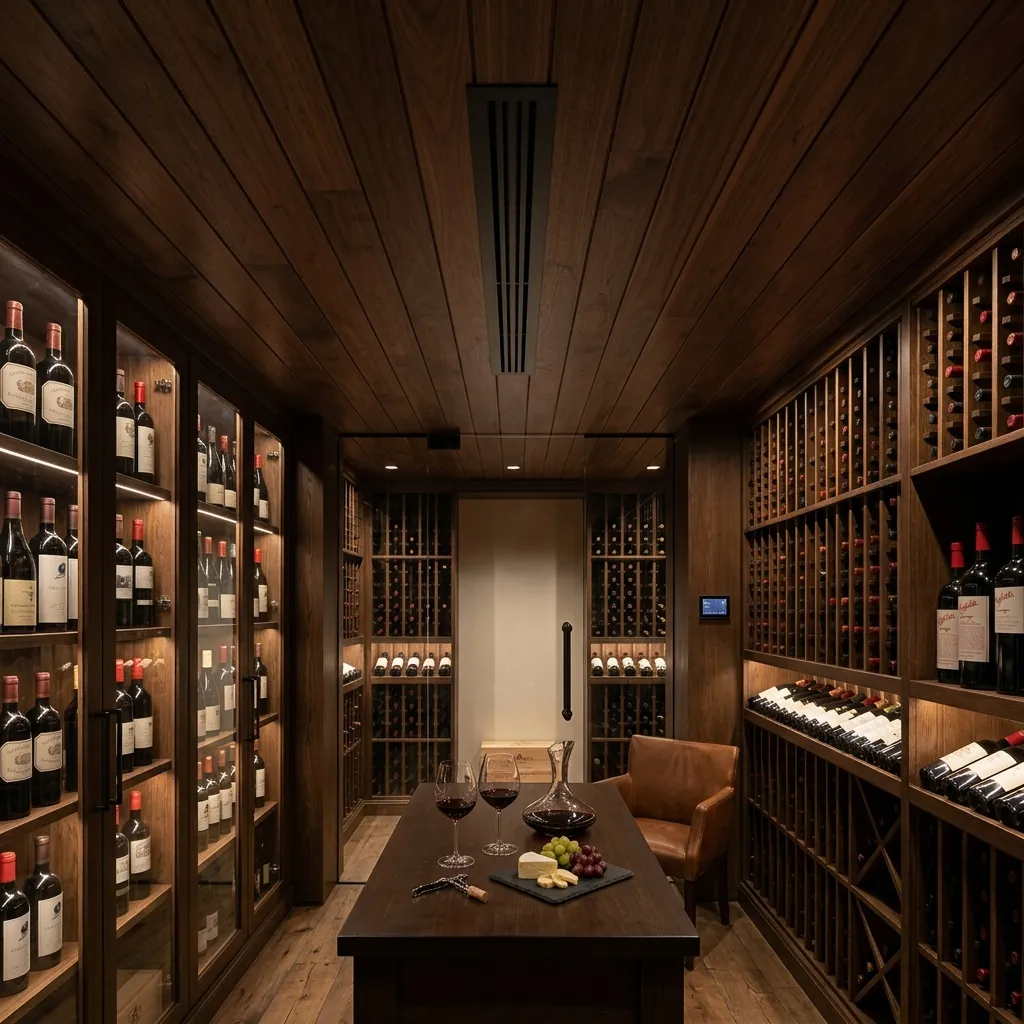
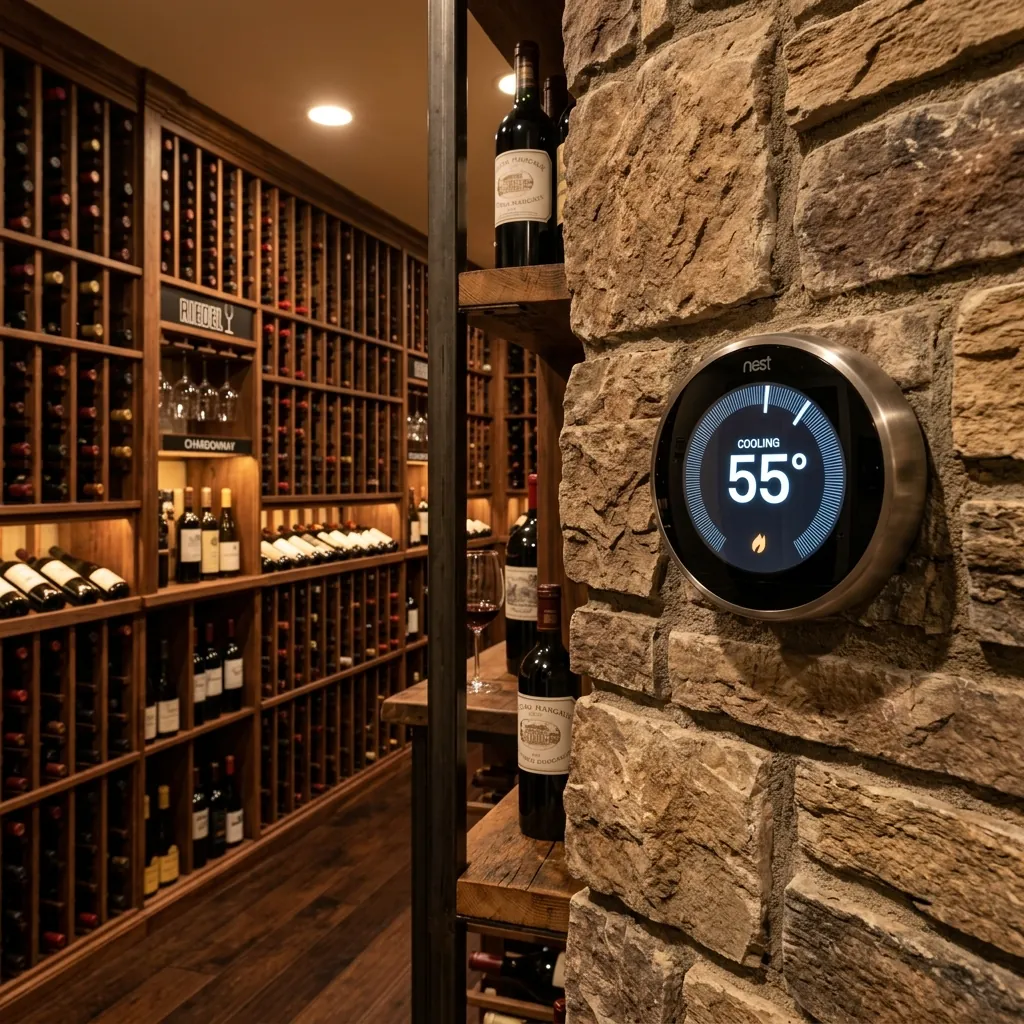
Build a wine cellar that protects every bottle from moisture, mold, and structural damage with a properly designed vapor barrier system. This comprehensive guide explains how vapor barriers work, where they belong, and why they are one of the most important elements in a long-lasting, properly cooled wine cellar.
Book a ConsultationA wine cellar is far more than a decorative room with racks and a cooling unit; it is a precision-controlled environment where temperature, humidity, insulation, and air sealing all work together to protect a valuable collection. Among these components, the vapor barrier is one of the most misunderstood and most critical. In a properly built wine cellar, the vapor barrier is the line of defense that helps prevent warm, moisture-laden air from infiltrating the enclosure, condensing inside the walls, and causing hidden damage that can compromise insulation performance, encourage mold growth, and shorten the life of the cooling system. Whether you are planning a custom residential cellar, converting a basement room, or upgrading an existing enclosure, understanding vapor barrier construction is essential to achieving stable conditions and preserving the integrity of both the cellar and the wine inside it. At VA Wine Cooling, we emphasize vapor barrier design because a wine cellar that is not sealed correctly may struggle to maintain consistent temperature and humidity, forcing the cooling equipment to work harder while increasing the risk of costly services and long-term structural issues.
A correctly installed vapor barrier helps control moisture migration through walls, ceilings, and floors, reducing the chance of condensation inside the enclosure and protecting insulation, framing, drywall, and finishes from hidden water damage.
By limiting unwanted moisture and air infiltration, a vapor barrier helps the wine cellar cooling system operate more efficiently, reducing runtime, stabilizing conditions, and supporting better long-term performance.
A sealed vapor barrier system helps eliminate the damp conditions that can lead to mold, mildew, and unpleasant odors, all of which can damage the cellar environment and threaten the quality of your wine collection.
Proper vapor barrier construction protects the building envelope from deterioration, helping preserve framing, insulation, and finishes while reducing the chance of expensive services caused by trapped moisture and air leaks.
The foundation of any successful wine cellar begins with understanding what a vapor barrier does and why it is different from ordinary insulation or drywall. In the simplest terms, a vapor barrier is a material layer designed to slow or stop the movement of water vapor from one side of a wall assembly to the other. In a wine cellar, this matters because the cellar is intentionally kept cooler than the surrounding home, and cool surfaces combined with humid air can create the perfect conditions for condensation. When warm air from adjacent rooms or exterior spaces reaches cooler cellar surfaces, moisture can form inside wall cavities, on framing members, or behind finishes. Over time, that moisture can damage insulation, weaken building materials, and create an environment where mold and mildew thrive. Proper vapor barrier construction is therefore not a luxury or an optional upgrade; it is a fundamental part of wine cellar design that helps protect the entire enclosure from invisible but persistent moisture problems.
To understand why wine cellar vapor barrier construction is so important, it helps to think of the cellar as a sealed system rather than a standard finished room. A conventional room can tolerate minor air leaks or moisture fluctuations because it is not designed to maintain a specific humidity range. A wine cellar, by contrast, must hold stable conditions in order to preserve cork integrity, reduce evaporation, and keep labels, racks, and finishes in good condition. That stability depends on a building envelope that resists vapor intrusion and limits thermal bridging. If the vapor barrier is incomplete, punctured, or placed on the wrong side of the assembly, moisture can penetrate the insulated cavity and condense where it cannot easily dry. Once that happens, the cooling system may begin to fight a losing battle against hidden humidity, leading to inconsistent cellar performance and higher energy use.
Another important concept in wine cellar construction is the difference between vapor barriers and air barriers. While the two are related, they are not identical. A vapor barrier is intended to reduce vapor diffusion, which is the slow movement of moisture through materials. An air barrier, on the other hand, prevents bulk air movement through cracks, seams, and penetrations. In practice, both are necessary in a wine cellar because air leakage often transports far more moisture than diffusion alone. If a cellar is not properly sealed around electrical boxes, framing joints, ceiling transitions, and door assemblies, humid air can enter the space and deposit moisture in places that are difficult to inspect. That is why effective wine cellar vapor barrier construction requires careful detailing, tape sealing, caulking, and continuity across every surface of the enclosure.
The climate around the cellar also influences how the vapor barrier should be designed. In many residential settings, the cellar is located in a basement or below-grade area where surrounding conditions are naturally cool and damp. In other cases, the cellar may be built in a conditioned interior room or near an exterior wall with significant temperature swings. Each scenario presents different moisture dynamics, but the need for a continuous vapor control layer remains the same. Basement wine cellars are especially vulnerable because concrete walls and slabs can transmit moisture, and seasonal humidity can rise dramatically in many regions. Without proper vapor barrier construction, the cellar may absorb moisture from surrounding materials even when the cooling unit is functioning correctly. This is one reason professional cellar design often begins with a moisture analysis and a careful review of the building envelope before any finishes are installed.
Material selection is also central to vapor barrier success. Not every plastic sheet or paint-on coating performs equally well in a wine cellar environment. The right choice depends on the wall assembly, local climate, and the overall design of the enclosure. In many cases, a high-quality vapor barrier membrane, properly sealed at seams and penetrations, provides reliable protection when paired with closed-cell foam insulation or other compatible materials. The key is not simply choosing a product, but integrating that product into a complete system that includes insulation, framing, ceiling treatment, floor detailing, and a properly sized cooling unit. When these elements are coordinated, the cellar can maintain stable conditions with less strain on equipment and fewer surprises over time.
For homeowners and builders alike, the biggest takeaway is that vapor barrier construction should be treated as a core engineering detail, not an afterthought. A beautiful wine cellar can still fail if moisture control is neglected behind the walls. Conversely, a cellar with modest finishes can perform exceptionally well when the envelope is built correctly. That is why experienced wine cellar specialists focus so much attention on sealing, layering, and compatibility during the planning stage. The right vapor barrier strategy protects your investment, supports efficient cooling, and creates the stable environment that fine wine requires for long-term storage and enjoyment.
Essential Wine Cellar Engineering Resources:
Building a reliable vapor barrier for a wine cellar begins with choosing the right location for the barrier within the wall assembly. In most wine cellar applications, the vapor barrier is installed on the warm side of the insulation, which is generally the side facing the surrounding home or exterior environment. This placement helps stop moisture from moving into the cooler cellar cavity where condensation is more likely to occur. However, the exact assembly can vary depending on the climate, the wall structure, and the materials being used. Because wine cellars are highly sensitive to moisture imbalance, it is important to design the wall system as a complete assembly rather than relying on a single product to solve the problem. The barrier, insulation, framing, and finish materials must all work together to create a durable, continuous seal.
One of the most common mistakes in wine cellar construction is assuming that standard residential building materials are sufficient without modification. In reality, a wine cellar requires a more disciplined approach. Drywall alone is not a vapor barrier. Standard fiberglass insulation can lose effectiveness if it becomes damp. Gaps around recessed lights, outlets, ducts, and trim can allow air to bypass the intended control layers. Even small penetrations can undermine the performance of the entire system if they are not carefully sealed. For this reason, professional wine cellar construction often uses closed-cell spray foam or rigid foam insulation combined with a high-performance vapor barrier membrane. These materials can be integrated to reduce thermal transfer and moisture intrusion while preserving the cellar’s ability to maintain consistent temperature and humidity.
Attention to seams and transitions is just as important as the barrier material itself. A vapor barrier is only as effective as its weakest point, and that means every overlap, corner, joint, and penetration must be sealed with care. Taped seams should be installed according to manufacturer specifications, and all transitions between walls, ceilings, and floors should be detailed to maintain continuity. Special consideration should be given to windows, doors, and mechanical penetrations, since these areas are common sources of air leakage. In a wine cellar, even a small gap around a door frame can allow enough humid air to enter the space to create condensation issues over time. That is why door seals, threshold details, and weatherstripping are often part of the vapor control strategy rather than separate finishing touches.
Floor construction deserves equal attention. Many wine cellars are built over concrete slabs, which can transmit moisture upward if not properly isolated. Depending on the project, the floor may require a vapor retarder, insulation, or a treated underlayment system to reduce moisture migration from below. If the cellar is located in a basement, the slab and foundation walls may already contain residual moisture from the surrounding soil. Ignoring this fact can lead to damp odors, warped finishes, and poor cooling performance. A carefully designed floor assembly helps complete the envelope and ensures that the cellar is protected from moisture entering through the base of the structure. In many cases, the floor detail is where the success or failure of the entire vapor barrier strategy becomes most apparent.
Ceilings also play a crucial role in wine cellar vapor barrier construction, especially when the cellar is located beneath another conditioned or unconditioned space. Heat rises, air moves, and moisture tends to seek out the path of least resistance. If the ceiling is not sealed correctly, warm air from upstairs or adjacent rooms can infiltrate the cellar envelope and create hidden condensation issues. This is particularly important when ducts, pipes, or wiring run through the ceiling cavity. Every penetration should be sealed, and the ceiling assembly should be designed to maintain continuity with the wall vapor barrier. In many wine cellar projects, the ceiling is one of the most overlooked areas, yet it can be one of the most vulnerable if not treated as part of the overall moisture control plan.
Quality control during installation is a major factor in long-term success. Even the best materials can fail if they are installed carelessly. Creases, tears, unsealed fasteners, and incomplete overlaps can compromise the integrity of the system. This is why experienced installers inspect the barrier at multiple stages during construction, not just after the room is finished. A professional approach includes checking for continuity before insulation is enclosed, verifying that all penetrations are sealed, and confirming that the barrier integrates properly with the cooling system design. At VA Wine Cooling, we view this process as essential craftsmanship. A wine cellar may look complete on the surface, but the real performance is determined by what happens behind the walls and above the ceiling line.
When all of these best practices are applied together, the result is a cellar that is more stable, more efficient, and more durable. Proper vapor barrier construction reduces the likelihood of hidden moisture problems, supports the performance of the cooling equipment, and helps preserve the aesthetic quality of the room over time. For collectors who want confidence in their cellar environment, there is no substitute for careful planning and disciplined installation. The investment in proper moisture control pays dividends every day the cellar remains clean, dry, and consistently cooled.
Even well-intentioned wine cellar projects can run into trouble when vapor barrier construction is treated casually or based on assumptions drawn from standard home remodeling. One of the most common mistakes is installing insulation without fully addressing air sealing. Another is placing a vapor barrier in a location that traps moisture rather than controlling it. Because wine cellars operate at lower temperatures than surrounding rooms, a poorly designed assembly can create a situation where moisture becomes trapped inside wall cavities with no effective path to dry. This can lead to soft drywall, stained finishes, musty odors, and mold growth that may not become visible until significant damage has already occurred. The hidden nature of these problems makes them especially frustrating, because the cellar may appear attractive while silently deteriorating behind the surfaces.
Another frequent issue is underestimating the role of the cooling system in the moisture balance of the cellar. A wine cellar cooling unit is not simply an air conditioner; it must manage both temperature and humidity within a tightly controlled range. If the vapor barrier is inadequate, the unit may be forced to remove excess moisture continuously, which can increase wear and reduce efficiency. In some cases, the system may struggle to keep up at all, leading to temperature swings or humidity levels that are too high for proper wine storage. This is why vapor barrier construction and cooling equipment selection should be planned together. A cellar that is sealed correctly can often be cooled more predictably, while a poorly sealed room may require larger or more expensive equipment to compensate for preventable losses.
Warning signs of vapor barrier failure can appear gradually. A persistent musty smell is often one of the first clues that moisture is present where it should not be. Condensation on surfaces, peeling paint, warped trim, or soft spots in drywall can all indicate that vapor is entering the assembly. In basements, efflorescence on concrete walls or dampness at the slab edge may point to moisture intrusion from the foundation. If labels begin to curl, corks dry out, or the cellar feels uneven from one area to another, the underlying cause may be related to envelope leakage rather than the cooling unit itself. These symptoms should never be ignored, because they often reflect a broader moisture control failure that can worsen with time.
Professional design offers a major advantage because it considers the cellar as a complete environmental system. A knowledgeable wine cellar specialist will evaluate the room’s location, surrounding construction, insulation strategy, vapor barrier placement, door selection, and cooling requirements before recommending a build approach. This level of planning helps avoid costly rework and ensures that the finished cellar can perform reliably under real-world conditions. It also allows the design to account for local climate, seasonal humidity changes, and the specific needs of the wine collection. In other words, professional design is not just about aesthetics or convenience; it is about building a space that can genuinely protect wine for years to come.
There is also long-term value in using the right materials from the beginning. A properly designed vapor barrier system can reduce maintenance needs, extend the life of finishes, and help the cooling system operate within its intended range. This can translate into lower energy use, fewer service issues, and greater peace of mind for the homeowner. When compared with the cost of serviceing moisture damage, replacing compromised insulation, or rebuilding a failed cellar enclosure, the expense of doing the vapor barrier correctly is modest. For serious collectors, that difference matters. The value of a wine collection can be substantial, and the enclosure that protects it should be built with the same level of care.
The best wine cellars are those that combine technical precision with beautiful craftsmanship. A vapor barrier may be hidden from view, but its effect is felt in every part of the cellar experience: stable temperatures, controlled humidity, clean air, and durable construction. By addressing moisture control early and thoroughly, you create the conditions for a cellar that performs well and remains attractive over time. That is the real payoff of professional vapor barrier construction. It protects the structure, supports the cooling system, and safeguards the wine collection with a level of reliability that cannot be achieved through shortcuts or guesswork.
For homeowners planning a new cellar or evaluating an existing one, the message is clear: do not treat the vapor barrier as a minor detail. It is one of the most important parts of the build, and it deserves the same attention as cooling, insulation, and cabinetry. When the envelope is built correctly, the cellar becomes a stable, efficient, and elegant environment for wine storage. When it is not, the problems may remain hidden until they become expensive. Choosing a careful, professional approach from the start is the most effective way to ensure lasting performance and protect your investment for years of enjoyment.
A vapor barrier helps control the movement of moisture into and through the wine cellar enclosure. Because wine cellars are maintained at cooler temperatures than surrounding spaces, humid air can condense inside wall and ceiling assemblies if the enclosure is not properly sealed. The vapor barrier reduces that moisture migration, helping protect insulation, framing, finishes, and the cooling system while also lowering the risk of mold, mildew, and structural damage.
The correct placement depends on the wall assembly, climate, and cellar location, but in many wine cellar applications the vapor barrier is installed on the warm side of the insulation, facing the surrounding home or exterior environment. The goal is to prevent moisture-laden air from reaching cooler areas where condensation could occur. Because every project is different, the barrier should be integrated into a complete envelope design that includes insulation, air sealing, and proper detailing at all seams and penetrations.
Standard residential materials are usually not enough on their own for a properly functioning wine cellar. Drywall does not act as a true vapor barrier, and common insulation can lose performance if moisture enters the wall cavity. A wine cellar typically requires a more specialized assembly that may include closed-cell foam, rigid foam, or a dedicated vapor barrier membrane, along with careful sealing around every transition and penetration. This helps the cellar maintain stable temperature and humidity and protects the structure over the long term.
Whether you need installation, service, or maintenance — our team is ready to help. Fill out the form below and we'll get back to you within 24 hours.
By submitting this form, you agree to our Privacy Policy. CSLB Lic#1055057
VA Wine Cooling engineers and maintains precision commercial and residential cooling systems across Southern California.