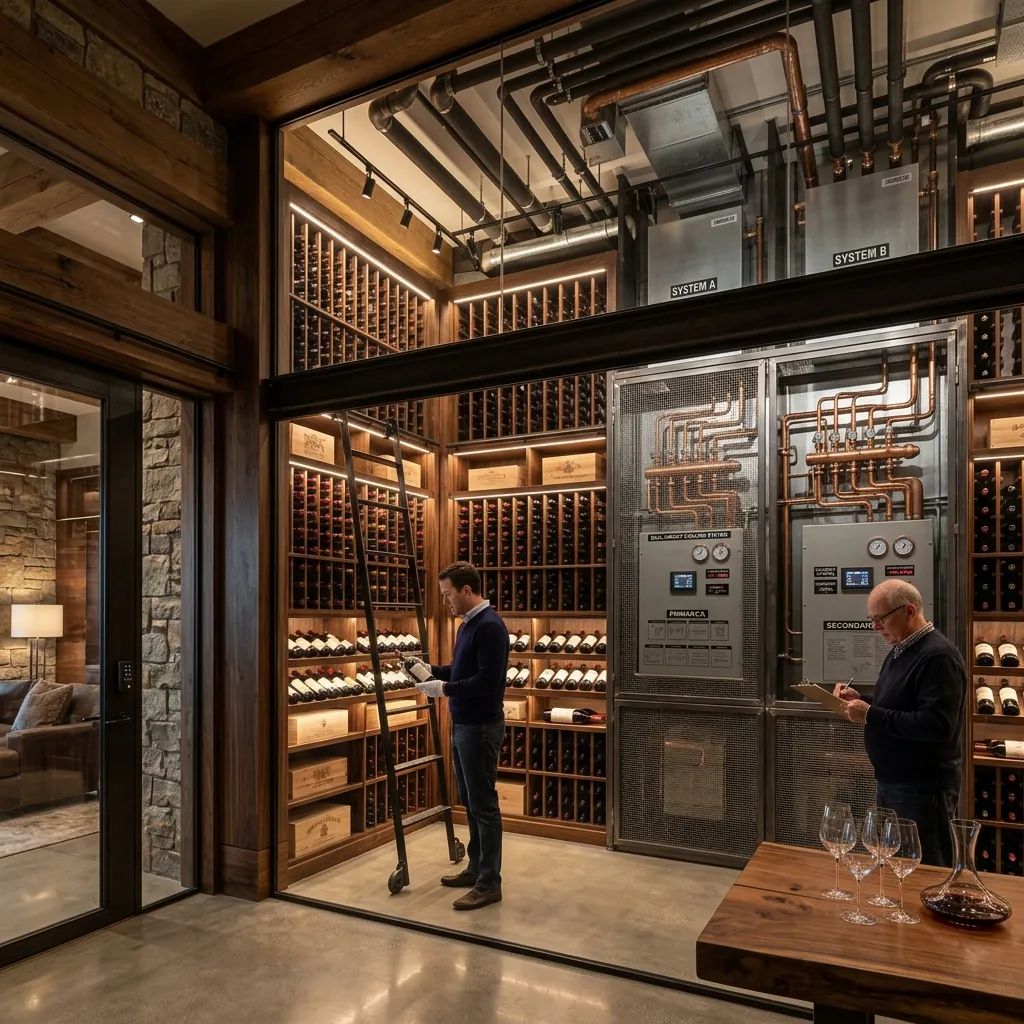
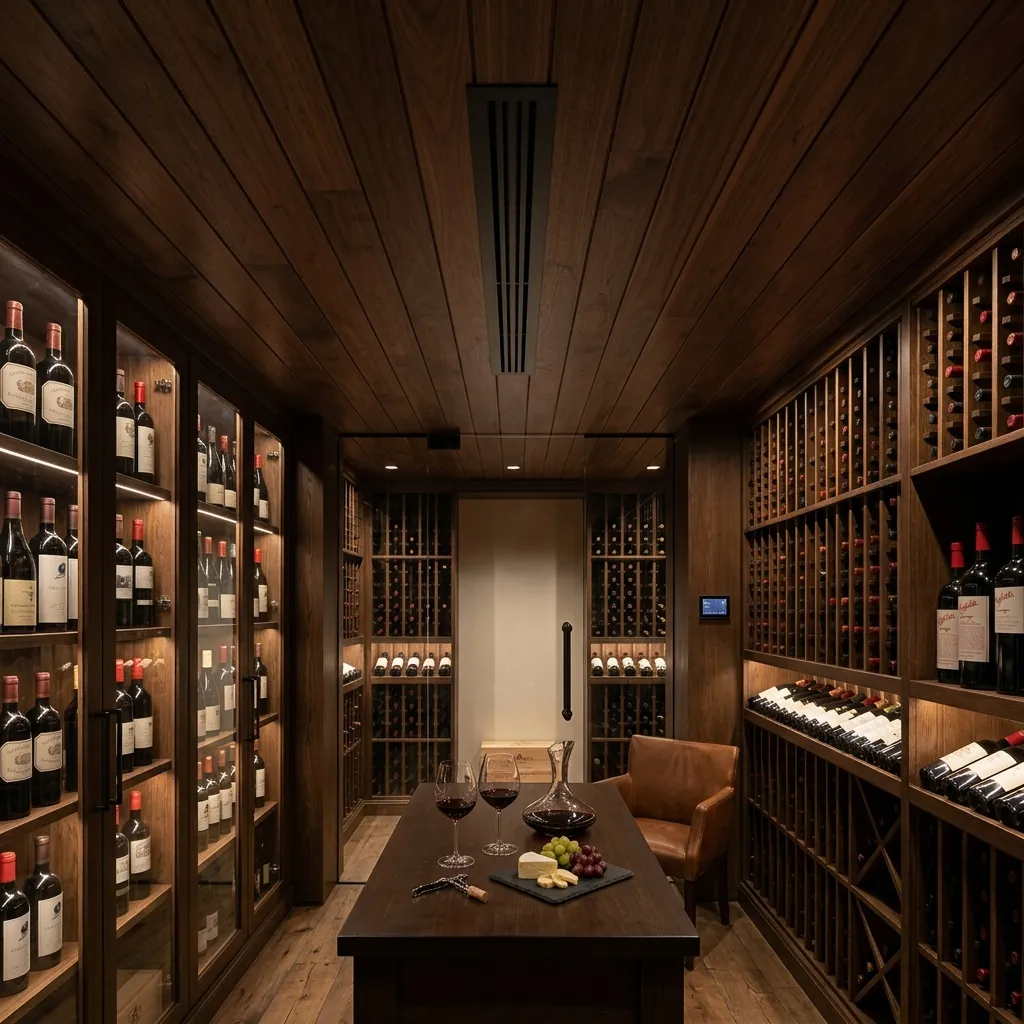
Vibration is one of the most overlooked threats to fine wine, quietly influencing how bottles mature, how aromas develop, and how long a collection can truly age with grace. Learn how stable, low-vibration wine storage protects both everyday bottles and investment-grade vintages.
Book a ConsultationWine aging is a delicate, slow-moving transformation in which chemistry, temperature, humidity, light exposure, and bottle position all play a role, but vibration can be especially disruptive because it introduces constant micro-movement into a process that depends on calm and consistency. When a wine bottle is repeatedly shaken, jostled, or exposed to compressor vibration from nearby appliances, the liquid inside never fully settles, and that disturbance can interfere with sediment formation, slow the integration of flavors, and accelerate the breakdown of subtle aromatic compounds that define a wine’s character. For collectors, restaurants, and serious enthusiasts, understanding the impact of vibration on wine aging is essential because even minor, repeated disturbances over months or years can change the trajectory of a bottle’s development. At VA Wine Cooling, we recognize that proper wine storage is about more than keeping bottles cold; it is about creating a stable environment where wines can mature naturally, preserving structure, complexity, and long-term value. Whether you are storing Bordeaux, Burgundy, Champagne, or a prized Napa Cabernet, minimizing vibration helps protect the integrity of the cork, the clarity of the wine, and the delicate balance that allows age-worthy bottles to evolve into their best expression.
A stable storage environment reduces unnecessary movement, helping wine rest in the calm conditions it needs to age properly and consistently over time.
Low-vibration storage helps sediment settle naturally, which is especially important for older reds and bottles intended for decanting and long maturation.
By limiting agitation, you help preserve delicate aromas and flavor compounds that can be diminished when wine is repeatedly disturbed.
Proper vibration control supports the aging potential and market value of collectible wines by protecting them from avoidable storage stress.
To understand the impact of vibration on wine aging, it helps to begin with the fundamental chemistry of what happens inside a bottle over time. Wine is not a static liquid; it is a living, evolving composition of acids, tannins, phenolic compounds, esters, alcohol, water, and dissolved gases that slowly interact as the wine matures. In a quiet, stable cellar or wine cabinet, these components gradually move toward equilibrium, allowing harsh edges to soften, aromas to integrate, and sediment to form naturally. Vibration interrupts this process by constantly disturbing the liquid, forcing the molecules inside the bottle to remain in motion and preventing the wine from settling into the stillness it needs for proper development. While the effect may seem subtle in the short term, long-term exposure to vibration can influence the way a wine ages, especially in bottles designed for extended cellaring.
One of the most important ways vibration affects wine aging is by interfering with sediment formation and consolidation. Many red wines, particularly those made from structured, tannic grapes such as Cabernet Sauvignon, Syrah, Merlot, Nebbiolo, and Bordeaux blends, naturally develop sediment as they age. This sediment is not a flaw; it is a normal byproduct of maturation, and its gradual separation from the liquid is a sign that the wine is evolving. If the bottle is frequently shaken or exposed to continuous mechanical vibration, the sediment may remain suspended longer than it should, creating a cloudy appearance and making the wine less predictable when opened. For collectors who value both presentation and purity, this matters because a stable bottle is more likely to pour cleanly, decant properly, and showcase the wine’s intended structure.
Vibration can also influence the delicate balance of dissolved compounds that contribute to aroma and flavor. Aromatic molecules are highly sensitive to environmental changes, and repeated motion may accelerate the loss of some volatile compounds while disrupting the slow integration that gives aged wine its complexity. Instead of developing layered notes of fruit, earth, spice, leather, tobacco, or floral nuance, a wine stored in a high-vibration environment may age less gracefully and appear flatter, less harmonious, or prematurely tired. This is one reason why serious wine storage systems are engineered not only to maintain temperature and humidity, but also to reduce compressor vibration and external movement. A wine cellar that is cool but unstable is still not ideal for long-term storage, because wine needs a calm environment as much as it needs a controlled one.
The cork itself can be affected by vibration as well, especially when combined with temperature fluctuations. A cork is designed to create a gentle seal that allows extremely small amounts of oxygen exchange over time, supporting slow maturation without excessive oxidation. When vibration repeatedly shifts the bottle, it can place stress on the cork and disturb the seal, particularly if the bottle is also being exposed to heat or dryness. Over time, this can increase the risk of seepage, premature oxidation, or inconsistency from bottle to bottle. For high-value wines, that risk is unacceptable. This is why proper wine storage design pays close attention to shelf construction, compressor isolation, and cabinet engineering, ensuring that bottles remain as undisturbed as possible from the moment they are placed into storage until the day they are enjoyed.
It is also important to recognize that wine aging is not only about preserving what is already in the bottle; it is about allowing transformation to occur in a controlled way. The best wines change slowly and intentionally, revealing new layers over years rather than months. Vibration disrupts that slow transformation by creating a kind of environmental noise that prevents the bottle from resting. In practical terms, that means a wine may reach a less refined version of maturity, with aromas that are less expressive and textures that are less integrated than they would have been in a truly stable environment. For anyone building a cellar, investing in proper wine cooling technology is not just a luxury feature; it is a core requirement for protecting the aging potential of the collection.
Another overlooked aspect of vibration is how it interacts with storage position. Bottles stored horizontally are already in a delicate balance, with wine in contact with the cork to keep it from drying out. If that bottle is also constantly vibrating, the liquid repeatedly moves against the closure, which can contribute to tiny shifts in pressure and long-term instability. While the movement may not be visible, wine is remarkably sensitive to environmental stress over time. A well-designed storage solution minimizes this stress by using insulated, low-vibration systems and sturdy racks that keep bottles secure. In this sense, vibration control is not an isolated consideration; it is part of a broader strategy to create ideal aging conditions that support every bottle in the cellar, from everyday drinkers to rare collectibles.
Ultimately, the chemistry of wine aging depends on patience, and vibration is the opposite of patience. It introduces repeated disruption where stillness is needed, making it harder for sediment to settle, aromas to integrate, and the wine’s structure to unfold naturally. For collectors and enthusiasts who care about quality, the message is clear: if a bottle is meant to age, it should be stored in a place where movement is minimized and stability is prioritized. That is the foundation of proper wine preservation, and it is exactly why low-vibration wine cooling systems are so valuable for long-term cellaring.
Essential Wine Cellar Engineering Resources:
Many wine lovers assume vibration only comes from obvious sources such as earthquakes, construction, or moving a bottle from one place to another, but in reality, the most damaging vibration is often the kind that happens quietly and continuously in the background. One of the most common sources is the compressor in a standard refrigeration unit. Unlike dedicated wine cooling systems, many household appliances cycle on and off in ways that create persistent mechanical vibration, and if a wine rack is located nearby, that movement can travel through floors, walls, shelving, or cabinetry. Over time, even small vibrations can become significant when they are repeated thousands of times, making the storage environment less suitable for long-term aging. This is why a true wine cellar solution must be designed with vibration reduction in mind from the start, not added as an afterthought.
Foot traffic and structural movement are another underestimated source of vibration. In a busy home, restaurant, tasting room, or retail environment, people walking across floors can create subtle but continuous oscillation, especially if the wine storage area is located on an upper level or near a high-traffic corridor. Heavy doors closing, appliances running, speakers playing bass-heavy music, laundry equipment operating, or even nearby HVAC systems can all transmit low-level vibration into the storage area. While these disturbances may be imperceptible to the human body, wine bottles can feel them constantly. For short-term storage, this may not be catastrophic, but for bottles intended to age over years or decades, the cumulative effect matters. The best wine storage environments are designed to isolate the collection from daily life as much as possible.
Another major source of vibration is improper shelving or racking. If bottles are stored on flimsy racks, unstable wood, or metal structures that flex under weight, each minor movement in the room can be amplified. This is especially problematic when racks are overloaded or poorly anchored, because the resulting micro-movements may create a chain reaction that affects every bottle in the system. High-quality wine cellar design places a premium on structural stability, using materials and configurations that keep bottles secure and still. A well-built rack should not wobble, rattle, or transfer vibration from one shelf to another. Instead, it should act as a protective foundation that supports the collection with minimal disturbance.
Construction activity and seasonal home maintenance can also have a surprisingly large impact. Renovations, drilling, hammering, flooring installation, or even nearby roadwork can send vibrations through a building’s framework. In some cases, collectors may not realize the effect until they notice sediment that is unusually disturbed or bottles that seem to have aged less gracefully than expected. Because wine aging happens slowly, the damage from vibration may not be immediately obvious. That delayed visibility is part of what makes vibration such a dangerous storage issue: by the time the problem is noticed, the wine may already have spent months or years in a suboptimal environment. This is why proactive design is so important for anyone serious about wine preservation.
Transportation is another critical factor. Bottles that are frequently moved, delivered, rearranged, or carried long distances experience vibration far more intensely than bottles that remain at rest. While occasional movement is unavoidable, repeated transportation can disrupt the natural aging process and should be minimized wherever possible. Retailers, restaurants, and collectors who transfer inventory often should pay close attention to how bottles are handled, stored, and acclimated after movement. Even after a bottle arrives safely, it should be given time to rest before opening, allowing the wine to settle and any disturbed sediment to resuspend or fall naturally. This simple practice can make a noticeable difference in the final experience.
Finally, it is worth noting that vibration is often paired with other storage problems such as temperature swings, humidity imbalance, and light exposure. These factors can compound one another, making a bottle even more vulnerable. For example, a wine stored near a vibrating appliance in a warm room may age faster than intended, losing freshness and balance before its time. A bottle exposed to both vibration and dryness may face increased cork stress and a greater chance of oxidation. In other words, vibration rarely acts alone; it is part of the larger environment, and the best wine cellars are built to reduce all the stressors that can compromise aging. At VA Wine Cooling, our focus is on creating storage conditions where vibration, temperature, and humidity are carefully controlled so your wines can mature in peace.
When evaluating a storage space, it helps to think like a wine bottle: where is the movement coming from, how often does it happen, and how long will the wine be exposed to it? A room that seems perfectly fine for short-term use may be unsuitable for aging if it sits above a garage door opener, beside a laundry room, or on a floor with constant foot traffic. Identifying these sources early allows collectors to make smarter decisions about placement, racking, and cooling equipment. In the end, the goal is simple: create a quiet, stable home for your wine collection so each bottle has the best possible chance to reach its full potential.
The most effective way to protect wine from vibration is to design storage around stability from the beginning, rather than trying to correct problems after they appear. That starts with selecting a dedicated wine cooling system that is specifically engineered for low-vibration performance. Unlike conventional refrigeration, quality wine cooling units are built to maintain precise temperature and humidity while minimizing compressor movement and mechanical noise. This matters because a wine cellar is not simply a cold room; it is a preservation environment where every component should work together to reduce stress on the bottles. When the cooling system is properly chosen and installed, it becomes the backbone of long-term wine protection, allowing the collection to age in a calm, controlled setting that supports both flavor development and bottle integrity.
Equally important is the choice of racking and shelving. The best racks for wine aging are sturdy, secure, and designed to hold bottles without wobble or flex. Materials matter, but so does construction quality. Bottles should rest in a way that prevents shifting, rattling, or contact with moving surfaces. In larger cellars, modular racking systems can be configured to reduce vibration transfer across the room, while in smaller spaces, wall anchoring and proper load distribution help maintain stability. A well-designed rack is not only a storage solution; it is a preservation tool that protects the bottle from unnecessary motion. For collectors who store rare or valuable vintages, this structural stability is just as important as temperature control.
Placement within the home or business also plays a major role. Ideally, wine should be stored in a location away from high-traffic areas, heavy machinery, speakers, washers, dryers, and exterior walls exposed to road vibration. Basements and interior rooms often provide better stability because they are naturally insulated from daily movement, though they still require proper climate control. If a cellar or cabinet must be placed in a busier part of the building, vibration isolation becomes even more critical. This may include anti-vibration feet, insulated enclosures, reinforced cabinetry, or specialized cooling systems designed to limit mechanical transfer. The objective is to create as much separation as possible between the wine and the disturbances of everyday life.
Another best practice is to minimize unnecessary handling. Every time a bottle is picked up, moved, rotated, or rearranged, it experiences some degree of agitation. While occasional access is unavoidable, especially in active collections, the goal should be to reduce repeated movement to the extent possible. Organizing bottles thoughtfully, labeling inventory clearly, and planning cellar layouts strategically can help prevent frequent handling. This is especially beneficial for older wines that already contain sediment and for bottles intended to remain untouched for long periods. If a bottle must be moved, it should be done carefully and then allowed to rest before opening so the contents can resettle. Simple handling discipline can make a meaningful difference in the quality of the wine when it is finally poured.
Monitoring and maintenance are also essential. A wine storage environment should be checked regularly for signs of excessive vibration, unusual noise, or changes in how the equipment operates. If a cooling unit begins to rattle, hum more loudly, or transmit movement into the cabinetry, it may need service or adjustment. Likewise, if new appliances, renovations, or layout changes alter the surrounding environment, the cellar should be reassessed to ensure the bottles remain protected. Wine storage is not a one-time setup; it is an ongoing commitment to consistency. The more attentive you are to the environment, the better your wines will age over time.
For collectors seeking the highest level of protection, professional wine cellar design offers the most reliable solution. A custom cellar can incorporate vibration reduction into every stage of planning, from insulation and equipment placement to racking, lighting, and climate zoning. This holistic approach is especially valuable for larger collections or for anyone storing investment-grade wines that must age over many years. By combining low-vibration cooling systems with thoughtful architecture and durable storage materials, a custom cellar creates the quiet, stable conditions that fine wine needs to evolve properly. It is one of the smartest investments a serious collector can make, because it protects not just the bottles you own today, but the future drinking experience those bottles are meant to deliver.
In practical terms, protecting wine from vibration comes down to a simple principle: give the bottle the stillness it deserves. Fine wine ages best when it is left alone in a carefully controlled environment where temperature is steady, humidity is balanced, light is limited, and movement is reduced to the absolute minimum. That combination preserves the wine’s structure, supports the cork, protects sediment, and allows the bottle to mature naturally. At VA Wine Cooling, our solutions are designed with those priorities in mind, helping collectors create storage conditions that respect the craftsmanship of the wine and the patience required to age it properly.
Yes. Temperature control is essential, but it does not solve every storage problem. Wine aging depends on a combination of stable conditions, and vibration is one of the most important factors because it can continuously disturb sediment, stress the cork, and interfere with the slow chemical evolution that allows wine to mature gracefully. A bottle kept at the right temperature but exposed to repeated vibration may still age less elegantly than one stored in a quiet, stable environment. That is why serious wine storage solutions address both climate and vibration together, rather than treating them as separate concerns.
Wines intended for long-term aging are generally the most sensitive to vibration, especially structured red wines such as Bordeaux, Cabernet Sauvignon, Syrah, Nebbiolo, and Burgundy, as well as older vintages that naturally contain sediment. These wines benefit most from calm storage because their development depends on slow integration over time. However, vibration can affect many styles, including Champagne and other sparkling wines, because agitation may influence pressure stability and overall bottle condition. Even wines meant for shorter-term storage can benefit from low-vibration environments, since protecting the bottle early helps preserve quality and consistency.
Signs of excessive vibration may include rattling shelves, audible humming from nearby equipment, bottles that shift slightly when doors close or people walk by, or visible movement in the racking when appliances cycle on. In some cases, the issue is not obvious to the eye, which is why it is helpful to think about the surrounding environment: laundry machines, HVAC systems, garage doors, heavy traffic, construction, and standard refrigeration units can all contribute to hidden vibration. If you are storing valuable or age-worthy wine, it is wise to evaluate the space carefully and consider a low-vibration wine cooling solution, reinforced racking, or a professionally designed cellar to ensure the collection is truly protected.
Whether you need installation, service, or maintenance — our team is ready to help. Fill out the form below and we'll get back to you within 24 hours.
By submitting this form, you agree to our Privacy Policy. CSLB Lic#1055057
VA Wine Cooling engineers and maintains precision commercial and residential cooling systems across Southern California.