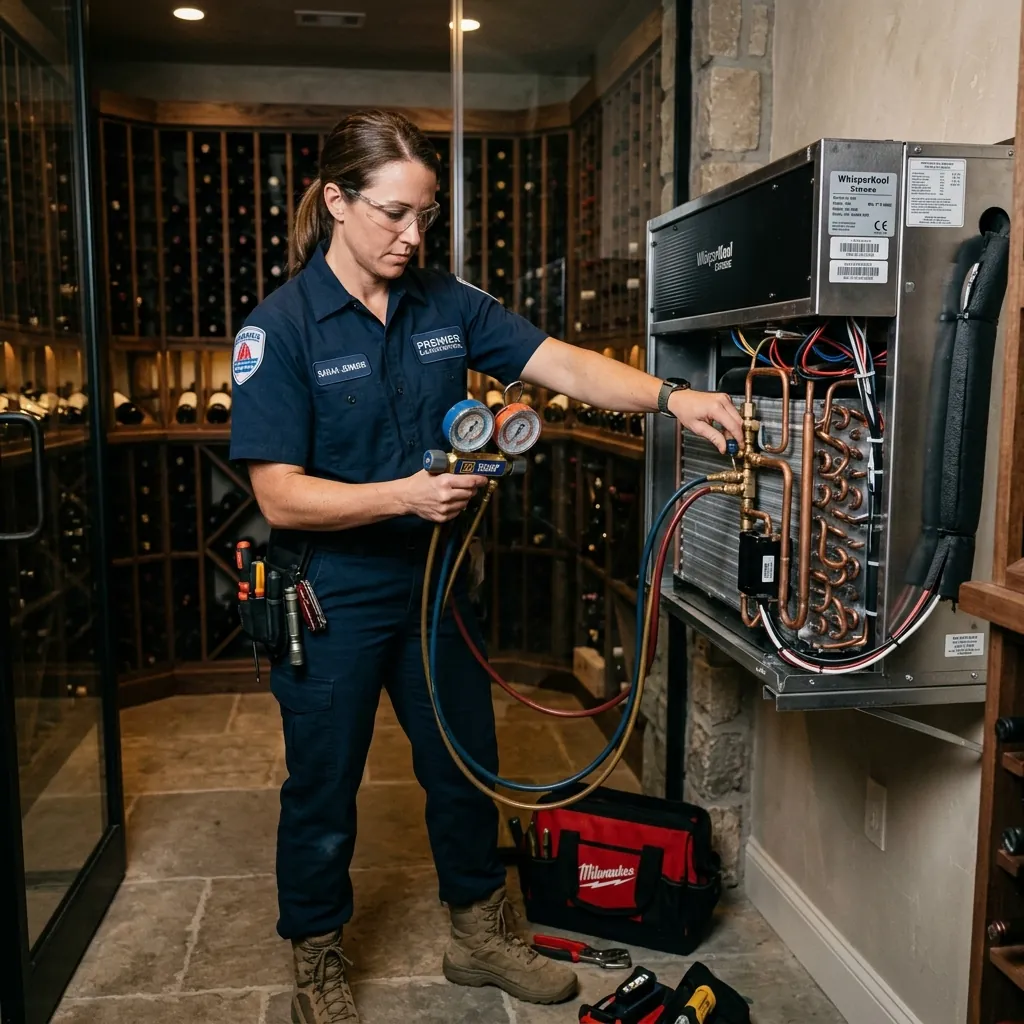
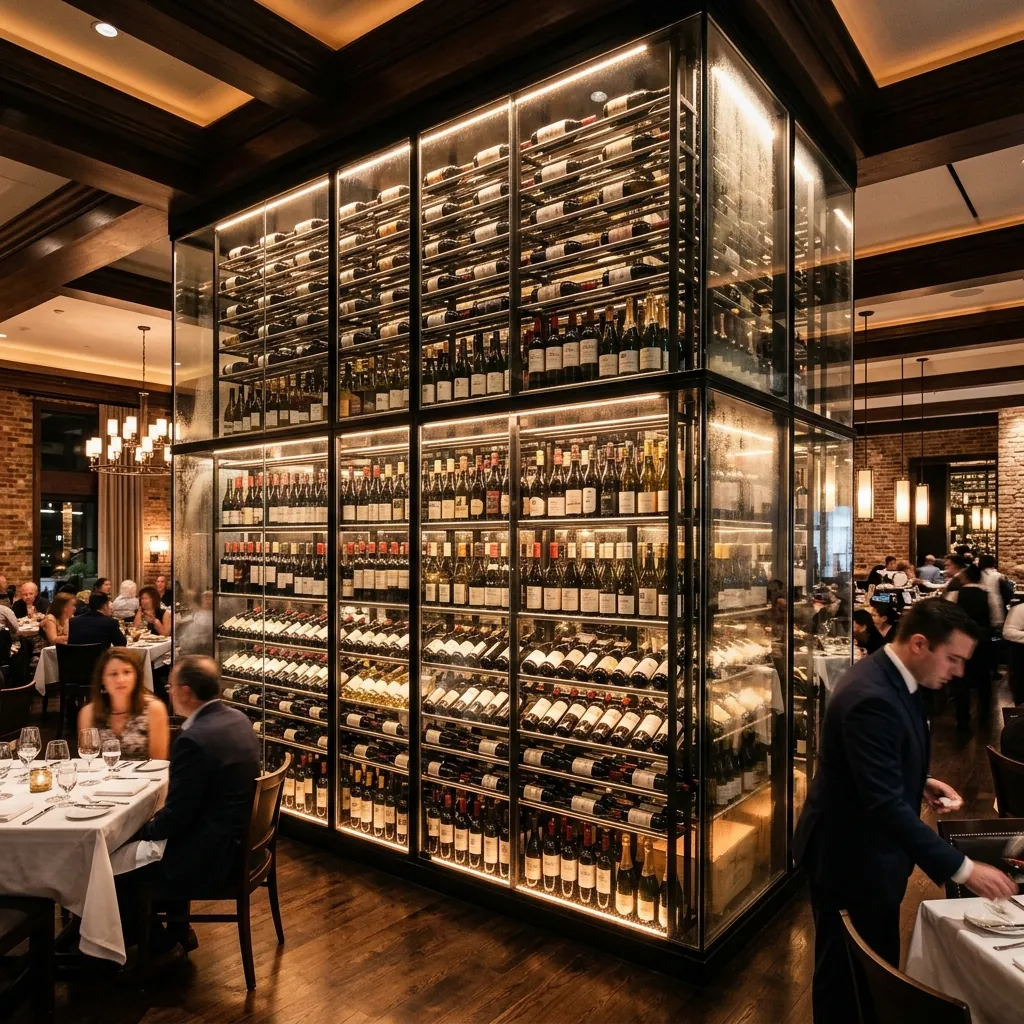
Design a wine cellar that performs flawlessly in scorching summers, freezing winters, high humidity, or arid desert conditions. This comprehensive guide explains how to build a stable, elegant, and energy-efficient wine storage space in even the most demanding climates.
Book a ConsultationDesigning a wine cellar in an extreme climate is not simply a matter of adding insulation and installing a cooling unit; it is a carefully engineered process that must account for the surrounding environment, the structure of the home, the long-term behavior of materials, and the delicate needs of fine wine. Whether the cellar is being built in a desert region with relentless heat, a mountain home with harsh winter swings, a coastal property with high humidity, or a location where seasonal temperature changes are dramatic, the design must anticipate stress from every direction. Wine is highly sensitive to temperature fluctuation, humidity imbalance, vibration, and air leakage, and the more severe the climate, the more unforgiving those risks become. A successful cellar in these conditions begins with a deep understanding of thermal control, vapor management, insulation performance, and equipment sizing, because each of these elements works together to preserve a stable environment that protects the cork, label, and flavor profile of every bottle. At VA Wine Cooling, the goal is not just to cool a room, but to create a dependable storage environment that can maintain ideal wine conditions year-round, even when the outside world is doing everything possible to disrupt them. This guide explores the critical decisions, design principles, and technical details that matter most when building a wine cellar in an extreme climate, so you can approach the project with confidence and avoid the costly mistakes that often lead to premature wine spoilage, excessive energy use, or equipment failure.
Every extreme-climate cellar should begin with a design strategy tailored to the specific environmental pressure of the region, including heat load, humidity, seasonal swings, and building exposure.
High-performance insulation, sealed vapor barriers, and properly detailed framing assemblies are essential to prevent temperature drift, condensation, and moisture damage.
The cooling equipment must be sized and configured for the actual heat load of the cellar, not just the room’s square footage, especially in severe climates.
A well-designed cellar balances preservation performance with energy efficiency, serviceability, and durability to ensure dependable wine storage for years to come.
Extreme climates create a unique set of challenges that can overwhelm a wine cellar if the design is even slightly underbuilt or improperly detailed. In hot, dry regions, the primary concern is relentless heat gain through walls, ceilings, floors, and doors, which forces the cooling system to work harder and longer than it would in a temperate environment. In cold climates, the threat often shifts to heat loss, freezing conditions in adjacent spaces, and seasonal thermal cycling that can cause the cellar envelope to expand, contract, and leak. Coastal and tropical climates introduce another layer of complexity by loading the room with ambient humidity, which can promote condensation, mold growth, and finish deterioration if the enclosure is not properly vapor-managed. The challenge is not only to maintain a stable temperature but to maintain it with consistency, because wine is damaged more by repeated fluctuation than by a single slightly imperfect reading. A cellar that swings between warm and cool conditions can accelerate cork movement, increase oxygen exposure, and compromise the aging process, even if the average temperature appears acceptable on paper.
One of the most common misconceptions about wine cellar design is that climate control begins and ends with the cooling unit. In reality, the cooling system is only one part of a larger environmental envelope that must be engineered from the ground up. The walls, ceiling, floor, door, lighting, glass, framing, and even the adjacent rooms all contribute to the cellar’s thermal performance. In an extreme climate, every weak point becomes magnified. A poorly sealed door in a hot climate can introduce enough heat infiltration to overwork the system. A thinly insulated ceiling beneath an attic can create a major heat load. An uninsulated slab floor in a cold region can pull warmth out of the cellar, while an improperly detailed vapor barrier in a humid environment can trap moisture inside wall cavities. When these issues are addressed early in the design process, the cellar becomes far more stable, efficient, and reliable over time.
Another important factor is the relationship between the cellar and the rest of the home. Wine cellars are often built in basements, under staircases, converted closets, garages, or additions, but each location behaves differently depending on the climate zone. A basement in a cold region may already offer some thermal buffering, but it can also introduce dampness or foundation moisture. A garage cellar in a desert climate can be exposed to extreme daytime heat and nighttime cooling, creating massive thermal swings. An interior closet may seem easier to condition, but if it sits beside an exterior wall or under a sunlit roofline, it may still require robust insulation and a carefully selected cooling solution. Understanding the building context is essential because the climate outside the home is only part of the equation; the surrounding structure determines how much work the cellar must do to maintain stability.
Wine storage also demands attention to humidity, and extreme climates often push humidity to one end of the spectrum or the other. Dry climates can desiccate corks if the cellar is not controlled properly, allowing oxygen to seep into bottles and degrade the wine. Humid climates can make the cellar feel more forgiving at first, but excess moisture can encourage mold, rust, and label damage if ventilation and vapor control are neglected. The ideal wine cellar environment generally targets a stable temperature range and moderate humidity, but achieving that balance in an extreme climate requires more than a standard HVAC approach. It calls for a system that can remove heat without stripping the room of essential moisture or overloading the enclosure with condensation. That balance is why professional design matters so much: the goal is not simply cold air, but a preservation environment that supports wine over the long term.
Material selection also becomes more important as climate severity increases. Wood, stone, drywall, insulation, sealants, and adhesives all respond differently to heat and moisture. In a hot climate, certain finishes may warp or dry out, while in a humid climate, poorly selected materials may swell or degrade. The cellar must be assembled with products that can tolerate stable, controlled conditions and resist failure when the surrounding environment tries to push them out of range. This includes using insulation with strong thermal resistance, vapor barriers placed correctly for the climate zone, and door assemblies that seal tightly enough to prevent infiltration. When the materials are chosen as part of a system rather than as isolated components, the cellar becomes more resilient and far more predictable in performance.
Ultimately, designing a wine cellar in an extreme climate is about respecting the physics of the space. Heat moves, moisture migrates, air leaks, and equipment cycles. The more severe the outside environment, the more carefully each of those forces must be managed. A beautiful cellar that ignores these realities may look impressive on day one but fail quietly over time through temperature drift, condensation, mold, or inefficient operation. A properly designed cellar, by contrast, performs invisibly: the bottles remain protected, the environment stays consistent, and the owner gains confidence that the collection is aging in the best possible conditions regardless of what the weather outside is doing. That is the standard every extreme-climate wine cellar should strive to meet.
Essential Wine Cellar Engineering Resources:
The cellar envelope is the foundation of performance in any wine storage project, but in an extreme climate it becomes the difference between dependable preservation and constant operational strain. The envelope includes every barrier between the conditioned cellar and the unconditioned environment: framing, insulation, drywall or finishing surfaces, vapor barriers, flooring assemblies, the ceiling, the door, and any penetrations for wiring, lighting, or mechanical systems. If even one of these elements is underdesigned, the cooling system will have to compensate for the weakness, which can lead to higher energy consumption, shorter equipment life, and unstable cellar conditions. For that reason, the best wine cellar designs are built from the outside in, with each layer selected and installed to control heat transfer and moisture movement as effectively as possible. In hot climates, the emphasis is on stopping heat from entering the cellar. In cold climates, the emphasis shifts toward retaining conditioned air and preventing cold bridging that can create condensation or uneven temperatures. Either way, the principle is the same: the envelope must perform as a continuous protective shell.
Insulation is one of the most critical components of that shell, but not all insulation performs equally in a wine cellar. The R-value, installation method, moisture resistance, and long-term stability of the insulation all matter. In extreme heat, high-performance rigid foam or spray foam systems are often used to reduce thermal bridging and create a more airtight assembly. In cold regions, insulation must also prevent interior surfaces from falling below dew point, which can otherwise lead to condensation inside the wall cavity. The key is to match the insulation strategy to the climate and the construction method. A cellar built in a basement may benefit from different detailing than one built in a second-story room or a garage conversion. What matters most is continuity: insulation must cover the envelope without gaps, compression, or unsealed joints that allow heat and moisture to bypass the intended barrier.
Vapor control is equally important, particularly in humid or highly variable climates. A vapor barrier is not just a sheet of plastic thrown behind drywall; it is a carefully positioned layer that helps regulate moisture migration based on the direction of vapor drive in the local climate. If installed incorrectly, it can trap moisture where it does not belong, creating hidden damage over time. In a humid region, the cellar may need more aggressive vapor management to prevent damp ambient air from infiltrating the enclosure and condensing on cool surfaces. In a cold region, the assembly may need to prevent indoor moisture from moving outward and condensing within the wall. These details are often invisible once the cellar is finished, which is why they should be planned meticulously before construction begins. When vapor control is handled correctly, the cellar remains cleaner, drier, and more structurally sound.
Doors and access points deserve special attention because they are common failure points in extreme climates. A standard interior door is rarely sufficient for a wine cellar that must hold a stable environment against severe external conditions. Instead, the cellar should use a properly insulated, tightly sealed door with weatherstripping, threshold protection, and hardware that supports a consistent closure. If the cellar includes glass, the glazing must be selected with preservation in mind. In hot or sunny climates, low-emissivity insulated glass and minimal glass exposure are often necessary to reduce solar gain and thermal transfer. Every opening in the envelope should be treated as a potential source of heat load, which is why design professionals often recommend limiting unnecessary penetrations and keeping the envelope as simple and continuous as possible.
Flooring and slab conditions also influence the cellar’s thermal behavior. In a basement or on-grade installation, the floor can either help stabilize the room or become a major source of temperature imbalance. In cold climates, an uninsulated slab may draw heat away from the cellar and create uncomfortable surface temperatures that affect the room’s overall stability. In hot climates, the slab may still transmit heat from the surrounding structure if the cellar is exposed to warm mechanical rooms or sun-heated spaces. Proper underlayment, insulation where feasible, and attention to moisture migration through the slab are essential. If the cellar is being built over a garage, crawlspace, or exterior-grade space, the floor assembly may require even more careful engineering to avoid thermal loss and condensation issues.
Air sealing is one of the most overlooked yet powerful ways to improve cellar performance in extreme climates. Even with excellent insulation, a wine cellar can fail if conditioned air escapes through gaps around outlets, recessed fixtures, framing joints, duct penetrations, or trim details. Air leakage allows unconditioned air to enter the room and can transport humidity, dust, odors, and thermal instability. A truly high-performing cellar envelope is airtight as well as insulated, which means every seam, joint, and penetration must be sealed with appropriate materials. This is especially important in homes with fluctuating pressure conditions, such as those with strong mechanical systems, attached garages, or open-plan layouts. When the envelope is airtight, the cooling system can do its job more efficiently and predictably, and the wine receives the stable environment it requires.
For homeowners building a cellar in an extreme climate, it is wise to think of the envelope as a system of protection rather than a list of materials. The best results come from integrating insulation, vapor control, air sealing, and structural detailing into a cohesive plan that matches the specific climate zone and room use. This is where professional guidance can make a remarkable difference, because experienced wine cellar specialists understand how materials behave over time and how small construction details can affect the entire storage environment. A well-engineered envelope reduces stress on the cooling equipment, minimizes maintenance, and creates the foundation for a cellar that performs beautifully for decades instead of merely looking complete when construction ends.
Choosing the right cooling equipment is one of the most decisive steps in designing a wine cellar for an extreme climate, because the system must be capable of handling not only the room’s internal needs but also the relentless external pressures imposed by the environment. A cooling unit that might perform well in a mild region can be completely inadequate in a hot desert, a humid coastal area, or a home with severe seasonal temperature swings. The most important rule is that equipment should never be selected based on square footage alone. The actual heat load depends on insulation quality, glass area, ceiling height, door performance, lighting, occupancy, nearby mechanical rooms, and climate severity. A properly sized system will cycle appropriately, maintain stable conditions, and avoid the strain associated with running constantly at the edge of its capacity. An undersized unit may never catch up, while an oversized unit may short cycle, creating temperature instability and poor humidity management. In extreme climates, precision in sizing is not optional; it is the foundation of reliability.
Different cellar configurations call for different cooling solutions, and the climate often determines which type is most appropriate. Self-contained systems can work in smaller, well-insulated spaces with moderate loads, but remote systems are often preferred when heat rejection, noise control, or serviceability are major concerns. In very hot climates, remote cooling systems can be especially beneficial because they move the heat-producing components away from the cellar, reducing the thermal burden inside the room. In cold climates, the system must be able to operate effectively even when surrounding areas are cool, and in humid climates, it should support stable moisture conditions without over-drying the cellar. The best choice is the one that matches the room’s design, the home’s mechanical layout, and the environmental demands of the region. This is why a one-size-fits-all approach rarely succeeds in extreme conditions.
Control systems are just as important as the equipment itself because they govern how the cellar responds to changing conditions. A reliable wine cellar thermostat or integrated control system should provide accurate sensing, easy monitoring, and the ability to maintain narrow environmental tolerances. In severe climates, smart controls and remote monitoring can offer additional peace of mind by alerting the owner to temperature deviations before they become serious problems. This is especially valuable for collectors with significant investments or for cellars in vacation properties, where immediate physical oversight may not always be possible. Some systems also allow for detailed configuration of humidity support, fan operation, and cycle timing, which can help fine-tune performance based on the specific needs of the cellar. The more demanding the climate, the more valuable it becomes to have control over how the system behaves rather than relying on basic on-off operation.
Noise and vibration are often overlooked when selecting equipment, but they matter greatly in a wine cellar because the storage environment should remain calm and undisturbed. In extreme climates, larger or more powerful systems are often required, and these can generate more noise if not properly isolated. Remote placement, vibration-dampening mounts, and thoughtful duct design can reduce the sensory impact of the system while improving overall performance. This is particularly important in residential settings where the cellar may be near living spaces, entertainment areas, or bedrooms. A wine cellar should feel like a quiet sanctuary, not a mechanical room, and the right equipment strategy helps preserve that atmosphere.
Maintenance access must also be considered from the start. Extreme climates place greater demands on equipment, which means filters, coils, fans, sensors, and drainage paths may require more frequent inspection. A cellar designed without service access can become frustrating and expensive to maintain, especially if the cooling unit is buried behind finished walls or installed in a difficult-to-reach location. Professional design should always account for how the system will be serviced over time, because the best cooling equipment is only as good as its long-term maintainability. If components can be inspected and serviceed without damaging the finished cellar, the owner benefits from lower downtime and more dependable preservation.
Ultimately, cooling system selection for an extreme-climate wine cellar is about matching capacity, configuration, and control to the real-world demands of the space. That means thinking beyond the brochure and evaluating the full heat load, the room construction, the climate zone, and the owner’s expectations for performance. When the system is properly sized and integrated into a well-built envelope, it operates efficiently and quietly, preserving the cellar with minimal drama. When the system is chosen carelessly, even the most beautiful cellar can become a constant source of frustration. For that reason, investing in expert planning and quality equipment is not a luxury; it is the practical path to protecting both the wine and the cellar itself.
The most important factor is creating a complete environmental system rather than focusing on a single component. In extreme climates, the cellar must be designed as a tightly integrated assembly that controls heat transfer, moisture movement, air leakage, and mechanical performance. That means the insulation, vapor barrier, door, floor, ceiling, cooling equipment, and controls all need to work together. If any one of those elements is weak, the cellar becomes vulnerable to temperature swings, condensation, or excessive energy use. A well-designed envelope reduces the burden on the cooling system and helps maintain the stable conditions that wine requires for proper aging. In practice, this means starting with the climate, evaluating the room’s exposure, and selecting materials and equipment that are specifically suited to those conditions rather than relying on a generic cellar plan.
Sometimes a standard cooling unit can work, but only if the cellar is very well insulated, carefully sealed, and relatively small. In many extreme climates, however, a standard system may not provide enough capacity or flexibility to handle the environmental load over time. Hot regions often require systems that can manage significant heat gain without running continuously, while cold regions may need equipment and controls that remain stable despite surrounding temperature drops. Humid climates may also demand more thoughtful moisture management than a basic unit can provide. The key is not to assume that a unit will work simply because it is rated for the room’s size. Instead, the full heat load, construction quality, climate severity, and installation conditions should be evaluated before selecting equipment. In many cases, a remote or more robust system is the better long-term choice for performance and reliability.
Preventing condensation and mold in a humid climate starts with a properly detailed cellar envelope that limits moisture infiltration and controls where vapor can move. The room must be sealed tightly, insulated appropriately, and built with materials that can withstand controlled humidity without deteriorating. The vapor barrier should be positioned and installed according to the climate and assembly design so that moisture does not become trapped inside wall cavities. In addition, the cooling system should be selected to maintain stable conditions without overcooling or creating cold surfaces that encourage condensation. It is also important to avoid unnecessary penetrations, use a properly sealed door, and ensure that any drainage or mechanical components are functioning correctly. Regular monitoring helps catch problems early, but the most effective strategy is always prevention through good design. When the cellar is built correctly from the beginning, the risk of mold and condensation drops dramatically, and the wine remains protected in a cleaner, more stable environment.
Whether you need installation, service, or maintenance — our team is ready to help. Fill out the form below and we'll get back to you within 24 hours.
By submitting this form, you agree to our Privacy Policy. CSLB Lic#1055057
VA Wine Cooling engineers and maintains precision commercial and residential cooling systems across Southern California.