Protect every bottle with precision climate control designed for commercial wine storage in Laguna Niguel, Orange County. From temperature stability to humidity management, the right system helps preserve flavor, value, and presentation in every wine-focused business.
Book a ConsultationCommercial wine storage is about far more than keeping bottles cool. In Laguna Niguel and throughout Orange County, businesses that store, display, or serve wine need dependable climate control that protects inventory from heat swings, dryness, vibration, and inconsistent humidity. Whether you operate a restaurant, wine shop, tasting room, private cellar, or hospitality venue, the wrong storage environment can damage wine quality, shorten shelf life, and reduce the customer experience. VA Wine Cooling understands that commercial wine storage climate control must be engineered for real-world conditions, local weather patterns, and the demands of high-value inventory.
Consistent temperature is the foundation of commercial wine storage climate control. Wine should be kept within a narrow range that minimizes expansion, contraction, and premature aging. A properly designed system helps preserve structure, aroma, and taste while preventing the costly damage caused by spikes and drops in ambient temperature.
Humidity control is essential for protecting cork integrity and reducing the risk of oxidation. If the air is too dry, corks can shrink and allow oxygen to enter the bottle. If it is too humid, labels can deteriorate and mold may become a concern. The right commercial wine storage climate control system keeps humidity in a safe, stable range.
Wine is sensitive to unnecessary movement, especially during long-term storage. Commercial-grade cooling systems should operate quietly and with minimal vibration so sediment remains settled and wine develops properly. This is especially important for premium collections, vintage bottles, and display installations in customer-facing spaces.
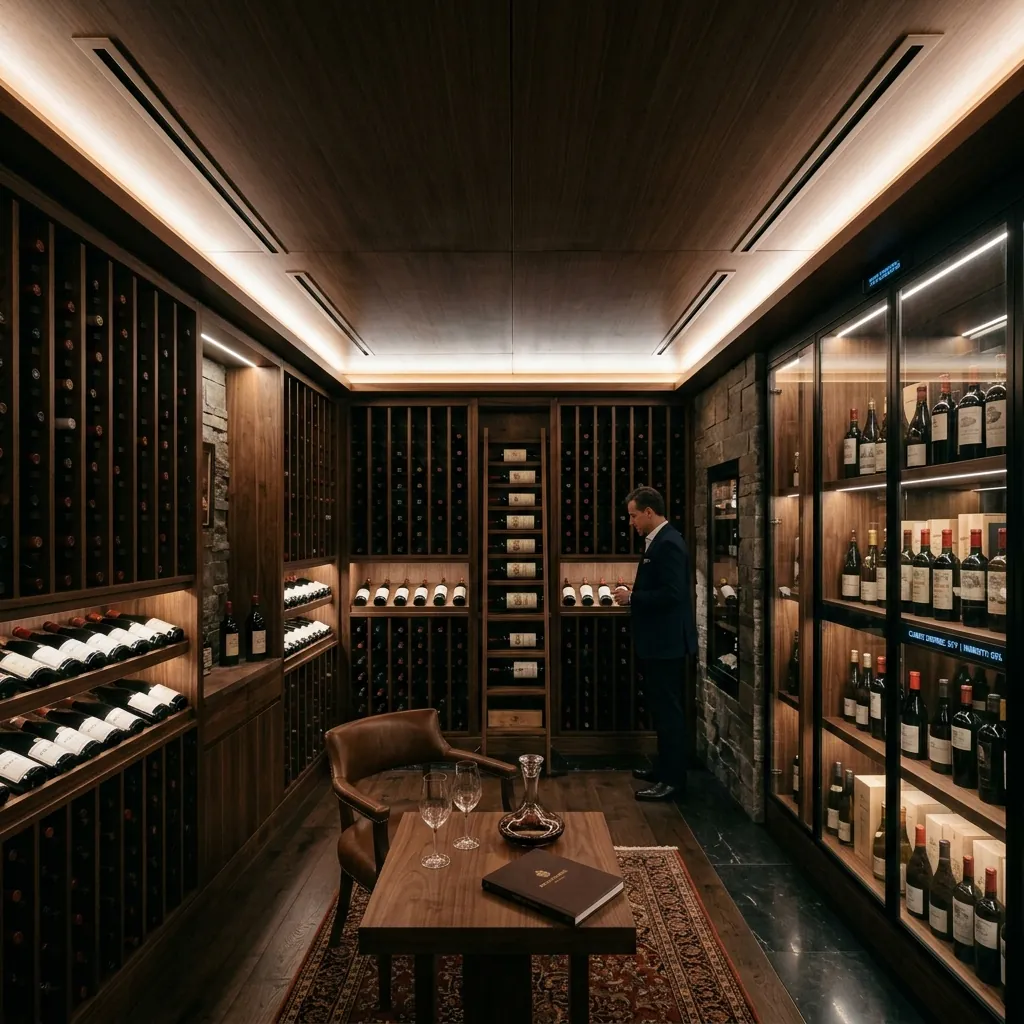
Every business has different storage goals, square footage, bottle counts, and aesthetic requirements. A custom commercial wine storage climate control solution can be tailored for walk-in cellars, glass-enclosed displays, back-of-house storage rooms, or mixed-use hospitality areas, ensuring both performance and visual appeal.
Commercial wine storage climate control is a specialized discipline that combines refrigeration, insulation, airflow design, humidity regulation, and system reliability into one carefully balanced solution. In a place like Laguna Niguel, where businesses must account for warm Southern California conditions and varying indoor environments, a generic cooling approach is rarely enough. Wine is a living product, and every bottle responds to its surroundings. That means a commercial cellar, display cabinet, or storage room must be designed to protect wine from heat exposure, excessive dryness, and sudden environmental changes that can compromise quality.
The most important principle is consistency. Wine does not need to be frozen or chilled like food service products; it needs a stable environment that allows it to mature gracefully. In commercial settings, that consistency becomes even more important because inventory may be larger, more valuable, and more visible to customers. A restaurant wine wall, for example, must preserve bottles while also presenting them beautifully. A retail wine room must maintain optimal conditions while encouraging sales through an inviting display. VA Wine Cooling helps businesses achieve both goals by designing systems that support preservation and presentation at the same time.
Temperature is only one part of the equation. Humidity plays a major role in long-term storage, especially for cork-sealed wines. If the air is too dry, corks can contract and allow oxygen to enter, which can lead to spoilage. If the air is too moist, condensation and label damage may become serious concerns. Commercial wine storage climate control systems should therefore be engineered to manage both temperature and humidity together rather than treating them as separate issues. This is especially valuable in Orange County, where indoor conditions can vary significantly depending on building type, sun exposure, occupancy, and HVAC load.
Air circulation and insulation are equally critical. A well-insulated wine room reduces the workload on the cooling system and helps prevent temperature fluctuations caused by outside air infiltration. Proper airflow ensures that all areas of the storage space are maintained evenly, avoiding hot spots near glass walls, doors, or ceilings. In commercial environments, where doors may open frequently and foot traffic can be heavy, system design must anticipate real use patterns. That is why professional planning matters: the best commercial wine storage climate control solution is not just a machine, but a complete environmental strategy.
Finally, reliability and serviceability should never be overlooked. A commercial wine storage system must be robust enough to operate continuously, often with minimal downtime. Businesses depend on these systems to protect high-value inventory day and night. When a system is selected and installed correctly, it becomes a quiet safeguard in the background, allowing owners, managers, sommeliers, and staff to focus on the customer experience rather than worrying about spoilage or equipment failure.
Essential Wine Cellar Engineering Resources:
Laguna Niguel is an ideal place for refined hospitality, upscale dining, and wine-focused retail, but the local climate and business environment create unique challenges for storage. Orange County weather can be warm, dry, and highly variable depending on the season and the building’s exposure to sunlight. Commercial spaces with large windows, open floor plans, or frequent door traffic can experience rapid temperature shifts that are hard on wine. A tailored commercial wine storage climate control solution accounts for these realities from the beginning, reducing risk and improving long-term performance.
One of the biggest mistakes businesses make is assuming a standard HVAC system can handle wine storage. Traditional air conditioning is designed for comfort, not preservation. It may cool a space to a comfortable room temperature, but it often fails to regulate humidity, maintain narrow temperature tolerances, or address the insulation needs of a dedicated wine room. In commercial applications, this mismatch can lead to inconsistent conditions that gradually damage inventory. A purpose-built wine cooling system is designed to do one job exceptionally well: protect wine under controlled, stable conditions.
Customization also matters because commercial wine storage spaces vary widely. A fine dining restaurant may need a back-of-house cellar for reserve bottles and a front-of-house display that enhances ambiance. A boutique wine shop may require a temperature-controlled retail room that encourages browsing while preserving product integrity. A hotel or private club may need a larger installation that stores multiple varietals, sparkling wines, and rare vintages. Each of these scenarios demands different cooling loads, humidity targets, airflow patterns, and aesthetic considerations. VA Wine Cooling works with businesses to match the system to the space, not the other way around.
Another important factor is energy efficiency. Commercial operations are sensitive to utility costs, and a poorly designed system can become expensive to run. When a wine storage system is properly sized and installed, it operates more efficiently, cycles less frequently, and maintains conditions with less stress on the equipment. That can extend the life of the system while helping businesses manage overhead. In a competitive market like Orange County, efficiency is not just a technical benefit; it is a business advantage.
The customer experience should also be considered. Wine storage is often part of the brand story. Guests notice the glow of a glass-enclosed cellar, the orderly presentation of bottles, and the confidence that comes from knowing the wine has been stored correctly. In a hospitality setting, climate control is invisible to the guest, but its impact is visible in the quality of the wine being served. That is why tailored commercial wine storage climate control is so valuable: it protects the product while enhancing the atmosphere and reputation of the business.
Selecting the right partner for commercial wine storage climate control in Laguna Niguel is just as important as choosing the equipment itself. A successful project requires planning, technical expertise, and an understanding of how wine storage functions in a commercial environment. The ideal provider does more than install a cooling unit. They evaluate the room, review insulation and vapor sealing, consider the type of wine being stored, and design a solution that supports the business’s operational goals. This level of attention helps prevent costly mistakes and ensures the system performs as expected from day one.
Experience matters because commercial projects often involve more complexity than residential cellars. There may be larger glass surfaces, higher occupancy, stricter aesthetic requirements, and greater expectations for uptime. A knowledgeable team can recommend the right equipment capacity, identify potential problem areas, and coordinate the installation with other contractors when needed. They can also help businesses think ahead about expansion, future bottle counts, and changing storage needs so the system remains useful for years to come. For many Orange County businesses, that long-term planning is essential.
Maintenance and support are another major consideration. Even the best climate control system needs periodic inspection to remain efficient and reliable. Filters, coils, drainage, sensors, and controls all require attention over time. In a commercial environment, proactive maintenance helps reduce the chance of emergency failures that could threaten valuable inventory. Businesses should look for a partner who offers ongoing service, clear communication, and responsive support. That kind of relationship turns a one-time installation into a long-term asset.
It is also wise to prioritize system integration and aesthetics. In many commercial wine spaces, the cooling equipment must blend seamlessly with the architecture and branding of the property. Glass displays, custom millwork, metal racking, and lighting all contribute to the final look. A strong partner understands how to hide or integrate mechanical components without compromising performance. This balance of form and function is one of the hallmarks of a truly professional commercial wine storage climate control installation.
Ultimately, the best choice is a partner who understands both wine and business. They should be able to explain how temperature, humidity, insulation, and airflow work together, while also respecting the practical realities of budgets, timelines, and customer expectations. VA Wine Cooling brings that combination of technical knowledge and commercial insight to every project, helping Laguna Niguel businesses protect their inventory and elevate their brand with confidence.
Commercial wine storage is typically kept in a stable range around 55°F, though the ideal setting can vary slightly depending on the wine type, storage duration, and business goals. The most important factor is consistency. Sudden temperature swings can damage wine more quickly than a slightly imperfect but stable environment. For commercial applications, the system should be designed to maintain a narrow range with minimal fluctuation, especially in spaces that hold premium, collectible, or long-term inventory. A professional assessment can determine the best target temperature based on your specific storage conditions and the wines you carry.
Humidity control protects the cork and helps preserve the wine inside the bottle. If the air is too dry, corks can shrink and allow oxygen to enter, which increases the risk of oxidation and spoilage. If the air is too humid, labels may peel, condensation may form, and mold can become an issue in poorly ventilated areas. In commercial wine storage, humidity should be managed as carefully as temperature because both directly affect wine quality and presentation. A properly designed system keeps humidity in a stable, safe range so bottles remain protected and visually appealing for customers and staff alike.
In most cases, no. Standard HVAC systems are built for general comfort, not the precise requirements of wine preservation. They usually do not control humidity with enough accuracy, and they may not maintain the narrow temperature range needed for long-term storage. They also often fail to address insulation, vapor barriers, and airflow patterns that are critical in wine rooms. For commercial wine storage in Laguna Niguel and Orange County, a dedicated climate control solution is the better choice because it is engineered specifically for wine protection, operational reliability, and the unique demands of a commercial setting. Choosing the right system helps prevent damage, reduces maintenance issues, and supports a more professional presentation.
Whether you need installation, service, or maintenance — our team is ready to help. Fill out the form below and we'll get back to you within 24 hours.
By submitting this form, you agree to our Privacy Policy. CSLB Lic#1055057
VA Wine Cooling engineers and maintains precision commercial and residential cooling systems across Southern California.