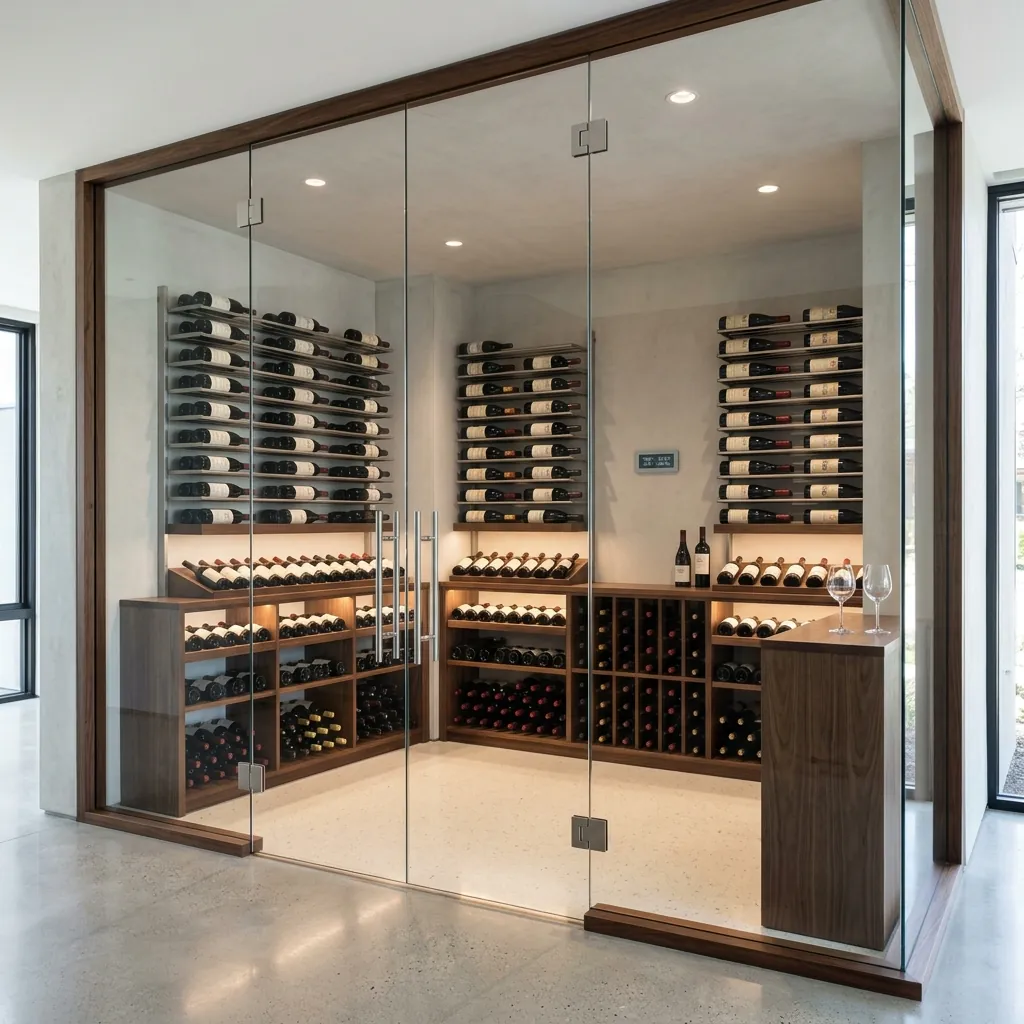
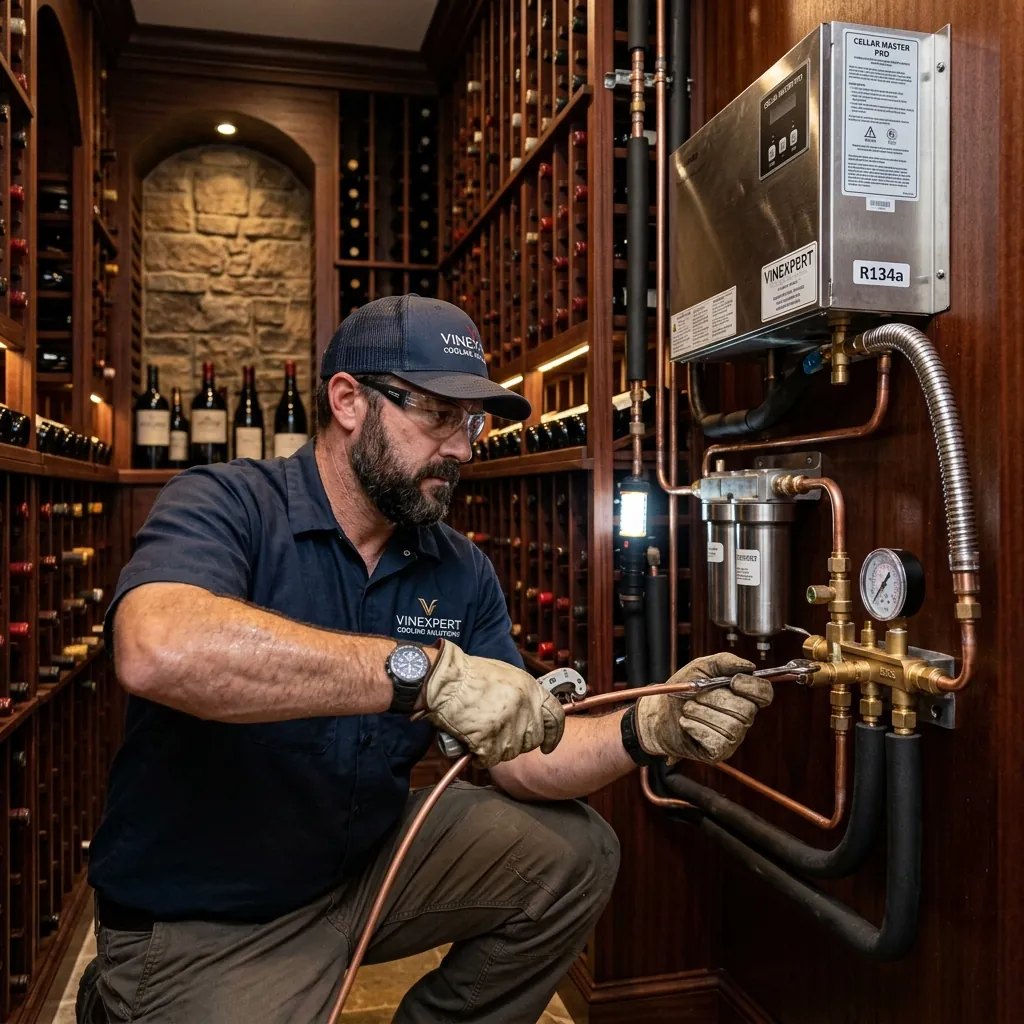
Dual-circuit wine cooling is the gold standard for collectors who want stable temperatures, built-in redundancy, and long-term peace of mind. Discover how a properly designed dual-circuit system protects every bottle, every cellar, and every investment.
Book a ConsultationDual-circuit wine cooling is more than a premium feature; it is a strategic approach to preserving wine under consistently ideal conditions while reducing the risk of catastrophic failure. In a traditional single-circuit setup, one refrigeration path is responsible for the entire cooling operation, which means that if a compressor, control board, fan, sensor, or refrigerant pathway experiences a fault, the whole system can be compromised. For collectors with modest bottle counts, that may be an inconvenience. For serious enthusiasts, restaurants, hospitality environments, and custom cellars housing valuable vintages, it can become an expensive emergency. A dual-circuit wine cooling system is designed to distribute responsibility across two independent cooling pathways or zones, allowing the system to maintain performance more reliably, support different temperature requirements, and continue functioning even if one circuit experiences strain. This architecture is especially valuable in spaces where wine is stored for long periods, where temperature swings can damage cork integrity, accelerate aging, or dull flavor profiles. At VA Wine Cooling, we view dual-circuit systems as an investment in resilience, not just refrigeration. They help stabilize the cellar environment, improve service readiness, and minimize the likelihood that a single point of failure will threaten your collection. Whether you are building a dedicated wine room, upgrading an older cooling unit, or designing a high-capacity storage environment from the ground up, understanding dual-circuit wine cooling is essential to making a decision that supports the long-term health of your bottles and the performance of your cellar.
Dual-circuit systems are engineered with redundancy in mind, meaning the cooling load is not dependent on a single pathway alone. If one circuit encounters a malfunction or temporary performance issue, the other circuit can help maintain the cellar environment, reducing the risk of rapid temperature rise and protecting the wine inside.
Because the system can balance cooling demand across two circuits, temperature fluctuations are minimized. That stability is critical for aging wine properly, preserving cork condition, and preventing the kind of micro-variations that can slowly degrade a collection over time.
Many dual-circuit wine cooling designs support separate zones or more precise control over different parts of the cellar. This makes it easier to store reds, whites, and sparkling wines under optimal conditions, or to manage large rooms with uneven load patterns and varying thermal exposure.
By reducing stress on any one component and allowing the system to operate more efficiently, dual-circuit cooling can extend equipment life and improve dependability. The result is a more resilient cellar with lower risk of downtime, fewer emergency interventions, and better protection for your investment.
At its core, a dual-circuit wine cooling system is designed to divide cooling responsibility into two coordinated pathways so the unit can deliver more dependable performance under real-world cellar conditions. In practice, this may mean two refrigeration circuits working together to manage a single larger space, or two independently controlled circuits serving separate zones within the same cellar. The exact configuration depends on the design, the manufacturer, and the goals of the installation, but the underlying principle remains the same: by spreading the workload across two circuits, the system avoids the limitations of a single-path design and gains a meaningful layer of operational resilience. This matters because wine cellars are not static environments. They are influenced by ambient room temperature, insulation quality, door openings, lighting loads, bottle mass, shelving layout, and the thermal behavior of surrounding walls and ceilings. A dual-circuit wine cooling system is better equipped to handle those variables because it can respond to changing demand with greater balance and consistency.
In a well-designed installation, each circuit may have its own compressor, evaporator coil, fan assembly, control logic, or refrigerant route, depending on the platform. That separation creates redundancy and gives the system an advantage when one side is under greater stress. For example, if one circuit is working harder because a section of the cellar is exposed to more heat gain, the second circuit can help share the burden, smoothing out performance and preventing excessive strain. This is especially beneficial in larger cellars, custom rooms with architectural complexity, or storage spaces that experience fluctuating occupancy and service patterns. Instead of relying on a single machine to do everything at once, the dual-circuit approach distributes load in a way that is more forgiving and more stable, which is exactly what wine requires over the long term.
Another important part of understanding dual-circuit wine cooling is recognizing the role of control precision. Wine is sensitive to both temperature and humidity, and while the ideal conditions vary slightly depending on the collection and the owner’s priorities, stability is always the primary objective. A dual-circuit system can help achieve that stability by reducing sharp on-off cycling and by maintaining a more even thermal profile throughout the cellar. That means less stress on the compressor, fewer abrupt temperature changes near the bottles, and a quieter, more refined operating experience overall. In premium cellars, where aesthetics and performance must coexist, this kind of consistency is invaluable. It allows the cooling system to become a reliable background element rather than a source of noise, vibration, and concern.
From an installation perspective, dual-circuit systems also offer advantages in design flexibility. Because the cooling load is split, the installer can often tailor the system more effectively to the geometry of the room, the insulation package, and the expected usage. This is especially important for cellars that include glass walls, high ceilings, adjacent living spaces, or mixed-use storage and display areas. A single-circuit system may struggle to compensate for uneven heat gain in such environments, but a dual-circuit solution can be better matched to the space. That alignment between system capacity and room demands is one of the main reasons high-end cellar designers often recommend dual-circuit configurations for serious collectors who want not just adequate cooling, but truly reliable performance that supports the value and longevity of the wine collection.
It is also worth noting that dual-circuit wine cooling is not simply about having two pieces of equipment instead of one. The real benefit comes from system architecture, load management, and the ability to continue operating effectively when conditions are less than ideal. A properly engineered dual-circuit system should be viewed as part of a broader cellar strategy that includes insulation, vapor barriers, door sealing, airflow planning, and consistent maintenance. When all of those elements work together, the cooling system can do its job with far greater efficiency and reliability. That is why collectors who take wine preservation seriously often move beyond basic cooling and invest in a solution that is designed to protect their cellar from the kinds of failures that can quietly erode quality over time.
Essential Wine Cellar Engineering Resources:
Reliability is the defining advantage of dual-circuit wine cooling, and it is the reason many collectors choose this architecture when the stakes are high. Wine does not need dramatic refrigeration; it needs dependable, controlled conditions that remain steady for months and years at a time. Any interruption, whether caused by a mechanical issue, a clogged filter, a sensor drift, or an unexpected increase in heat load, can compromise the environment and place the collection at risk. Dual-circuit systems are built to reduce that risk by adding resilience to the cooling strategy. If one circuit becomes less efficient, the other can continue contributing to the overall performance, buying valuable time and helping prevent the rapid temperature climbs that often occur when a single-circuit system fails unexpectedly. That margin of protection can make the difference between a minor service event and a major loss.
Efficiency is another major advantage, and it is often misunderstood. Some people assume that two circuits automatically mean higher energy use, but in a properly designed wine cooling system, redundancy and efficiency work together. Because the load is shared, each circuit may operate under less intense stress, which can improve cycling behavior and reduce the wear that comes from constant overwork. In many cases, the system can maintain better performance with fewer extreme peaks and valleys, which is beneficial not only for the equipment but also for the cellar environment. Efficient operation is not just about utility bills; it is about preserving the mechanical health of the cooling unit so it can remain dependable for years. For collectors who value continuity, the ability to avoid premature component fatigue is a meaningful long-term benefit.
Dual-circuit cooling also improves performance in challenging installation environments. Large wine rooms often have hot spots, cooler corners, varying wall exposures, and different airflow needs depending on shelving density and room use. A single-circuit system may be forced to compensate unevenly, which can lead to overcooling in one area and undercooling in another. Dual-circuit designs can mitigate that issue by creating a more balanced distribution of cooling capacity. This is particularly useful in cellars with display sections, tasting areas, or irregular floor plans. The more the system can match output to actual conditions, the more consistent and efficient the result will be. That consistency is essential for aging wine gracefully, because long-term storage depends on predictability rather than brute-force cooling.
Another practical advantage of dual-circuit wine cooling is serviceability. In many installations, redundancy can make troubleshooting more manageable because technicians can evaluate one circuit at a time and isolate issues more effectively. This can shorten service time and reduce the uncertainty that comes with diagnosing a complete shutdown. For property owners, that means fewer disruptive emergencies and a clearer path to restoration if maintenance is ever required. In high-end homes, restaurants, or commercial cellars where uptime is important, serviceability is just as valuable as raw cooling capacity. A system that is easier to diagnose and protect is a system that is more likely to serve the collection well over the long haul.
Redundancy also provides peace of mind, and while that may sound intangible, it is one of the most important benefits of all. Wine collectors invest not only money but also time, passion, and trust in their cellars. They want to know that a cooling issue will not jeopardize bottles that may have been acquired over decades. Dual-circuit wine cooling offers a more reassuring foundation because it is designed with failure resistance in mind. The system is not dependent on a single vulnerable pathway, and that structural advantage translates into confidence. For many clients, that confidence is what justifies choosing a more advanced solution. They are not simply buying cooling; they are buying stability, continuity, and a better safeguard for their collection’s future.
Selecting the right dual-circuit wine cooling system begins with a clear understanding of your cellar’s size, insulation quality, usage pattern, and long-term goals. A solution that works beautifully in a small private cellar may be inadequate for a large custom room, while a system that excels in a commercial environment may be unnecessarily robust for a compact residential installation. The key is to match the cooling architecture to the actual thermal demands of the space rather than relying on assumptions or generic capacity ratings. This is where professional assessment becomes essential. Factors such as ceiling height, wall construction, vapor barrier integrity, ambient climate, glass exposure, and bottle density all influence how much cooling power is needed and how that power should be delivered. Dual-circuit systems are versatile, but they perform best when they are designed around the room instead of forced into it.
Another important consideration is the distinction between redundancy and zoning. Some dual-circuit wine cooling systems are intended primarily to provide backup capability and load sharing, while others are optimized for separate temperature zones. If you store a diverse collection that includes reds, whites, sparkling wines, and bottles intended for immediate service, zoning can be a major advantage because it allows each category to be held at a more appropriate temperature. On the other hand, if your main objective is to preserve a large investment-grade collection under stable long-term conditions, redundancy and smooth load distribution may matter more than multi-zone control. The best system is the one that aligns with your priorities and your cellar’s physical realities. This is why a thoughtful consultation is so valuable: it helps prevent overbuilding, underbuilding, or choosing a configuration that looks impressive on paper but does not actually support the way the cellar will be used.
Insulation and enclosure quality also play a major role in determining whether a dual-circuit system will deliver the expected results. Even the most advanced cooling unit cannot compensate for a poorly sealed room, inadequate insulation, or uncontrolled infiltration. Before installation, the cellar should be evaluated as a complete thermal envelope. That means checking the door, sealing penetrations, verifying insulation thickness, and ensuring that vapor management has been properly addressed. A dual-circuit wine cooling system can provide excellent resilience, but it should not be asked to solve structural problems that belong to the room itself. When the enclosure is properly built, the cooling system can perform at its intended level and maintain the steady conditions that wine requires. This relationship between enclosure and equipment is one of the most overlooked aspects of cellar design, yet it is often the difference between a system that merely functions and one that truly excels.
Maintenance planning is equally important. Dual-circuit systems are designed for reliability, but like any precision equipment, they need periodic inspection, cleaning, and calibration to remain at peak performance. Filters should be checked, coils should be kept clear, airflow should be verified, and control settings should be reviewed to ensure the cellar is operating within the desired range. In a sophisticated wine environment, small issues can gradually become larger problems if they are ignored. A proactive maintenance approach helps preserve the advantages of dual-circuit design and extends the life of the system. For owners who view their cellar as a long-term asset, this kind of care is not optional; it is part of responsible ownership and the best way to protect both the equipment and the wine it serves.
Ultimately, choosing the right dual-circuit wine cooling solution is about aligning engineering with intention. Are you trying to safeguard a legacy collection, create a beautiful display cellar, support frequent service, or build a stable aging environment that will perform for decades? The answer to that question should shape every decision, from system capacity to zoning strategy to maintenance planning. At VA Wine Cooling, we believe the most successful installations are those that treat cooling as a foundational design element rather than an afterthought. When the system is selected carefully and installed correctly, dual-circuit wine cooling becomes a powerful tool for preserving quality, protecting value, and delivering the kind of reliability that serious collectors expect.
The main advantage is reliability. A dual-circuit wine cooling system splits the cooling workload across two pathways, which helps reduce stress on individual components and provides a layer of redundancy if one circuit experiences a problem. That means the cellar is less likely to experience a sudden, complete loss of cooling, which is especially important for valuable collections that need consistent temperatures over long periods. In addition to redundancy, dual-circuit systems often improve temperature stability, support better zoning options, and create a more balanced operating profile for larger or more complex cellars. For collectors who want maximum protection and long-term peace of mind, that combination of stability and resilience is often the deciding factor.
Not necessarily. While dual-circuit wine cooling is often recommended for larger cellars because of the higher thermal load and greater need for balanced performance, smaller cellars can also benefit depending on the installation goals. If the room has challenging conditions, such as glass walls, high ambient heat, frequent door openings, or a need for separate temperature zones, a dual-circuit approach may still be worthwhile even in a compact space. The real question is not just cellar size, but how much reliability, flexibility, and redundancy the owner wants. A smaller cellar with high-value bottles may deserve the same level of protection as a larger one, especially if the collection is irreplaceable or intended for long-term aging. The best way to determine suitability is through a proper evaluation of the room’s insulation, layout, and cooling demand.
A good candidate for dual-circuit wine cooling is usually a cellar that needs either enhanced redundancy, more precise temperature control, or better performance across a large or uneven space. Signs that your cellar may benefit include inconsistent temperatures, high ambient exposure, a complex layout, a large bottle count, mixed wine storage needs, or a desire for extra protection against equipment failure. If your current system runs constantly, struggles during hot weather, or creates noticeable hot and cold spots, that may also indicate the need for a more advanced configuration. The most reliable way to determine suitability is to assess the room as a complete environmental system, including insulation, sealing, airflow, and expected usage. When those factors are reviewed together, it becomes much easier to decide whether dual-circuit wine cooling is the right investment for your cellar and your collection.
Whether you need installation, service, or maintenance — our team is ready to help. Fill out the form below and we'll get back to you within 24 hours.
By submitting this form, you agree to our Privacy Policy. CSLB Lic#1055057
VA Wine Cooling engineers and maintains precision commercial and residential cooling systems across Southern California.