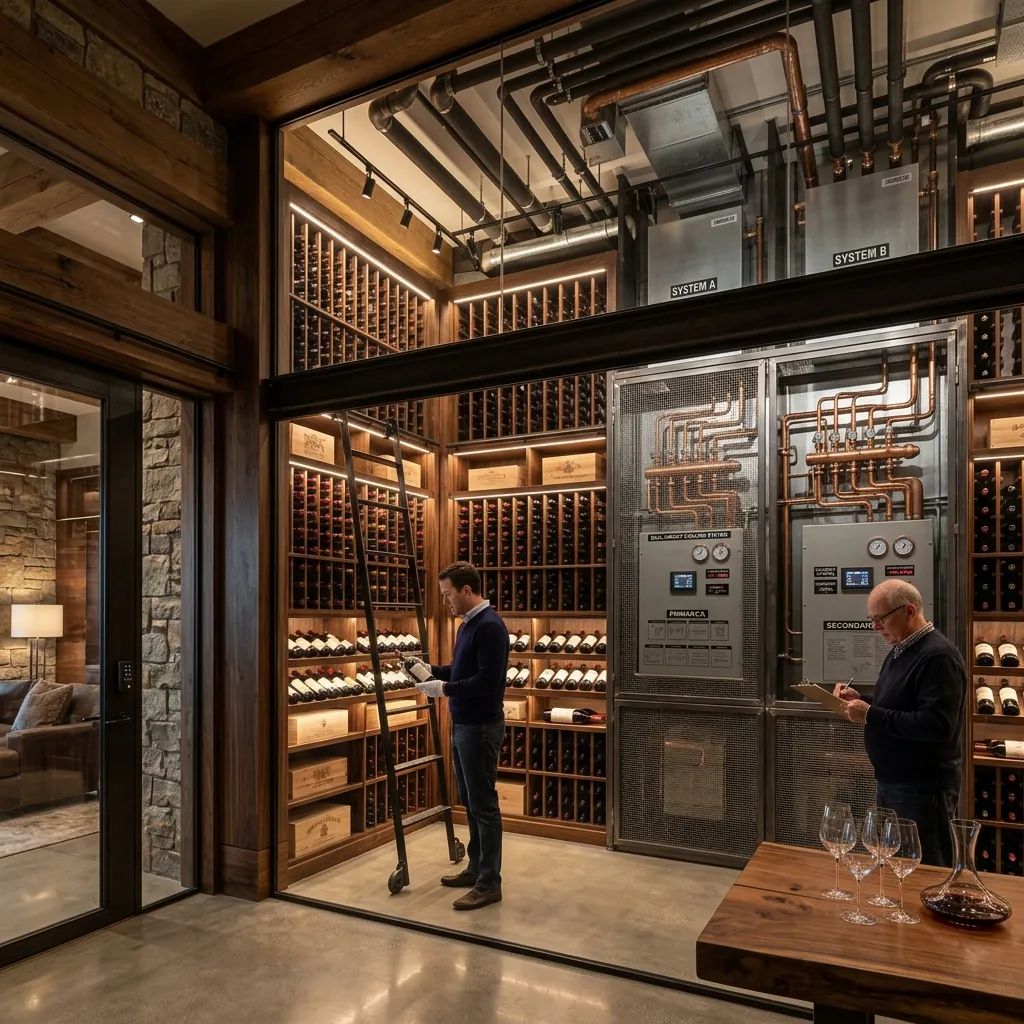
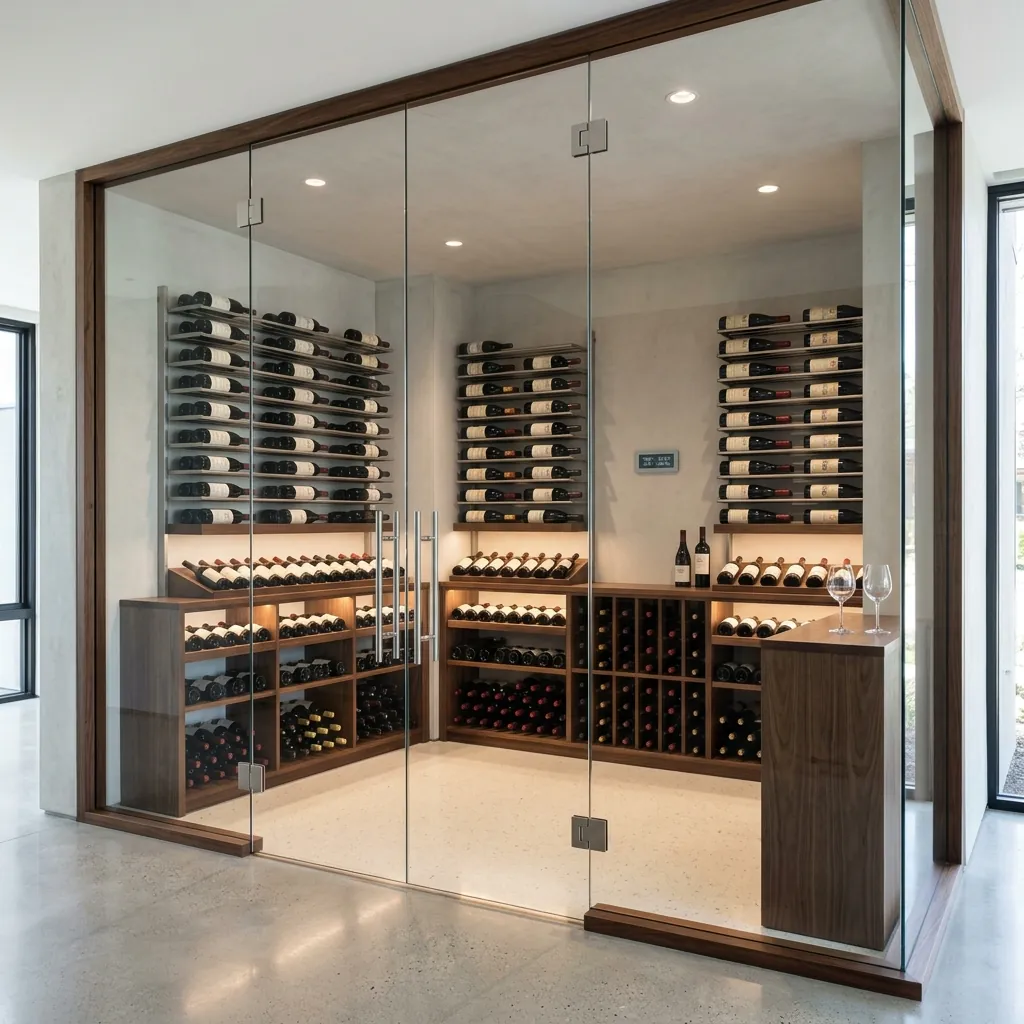
Protect your investment with a custom wine cellar cooling system designed for Fullerton’s warm Orange County climate. Discover how the right cooling solution preserves flavor, stabilizes humidity, and keeps every bottle in ideal aging conditions.
Book a ConsultationA wine cellar is more than a storage space—it is a carefully controlled environment that protects the quality, character, and long-term value of every bottle inside. In Fullerton, Orange County, where temperatures can rise quickly and seasonal fluctuations can challenge indoor comfort, a standard HVAC system is not enough to maintain ideal wine storage conditions. Custom wine cellar cooling systems are engineered specifically for these demands, helping homeowners and collectors maintain consistent temperatures, proper humidity levels, and the kind of stability that wine requires to age gracefully. Whether you are building a new cellar, upgrading an existing one, or trying to solve issues like condensation, temperature swings, or excessive compressor cycling, the right cooling strategy makes all the difference.
Every wine cellar has different dimensions, insulation levels, door seals, and bottle capacity, which is why custom sizing is essential. A cooling system that is too small will struggle to hold temperature, while one that is too large may short cycle and create moisture and performance problems.
Wine needs more than cold air—it needs balanced humidity to keep corks from drying out and labels from deteriorating. A properly designed system helps stabilize moisture levels so your collection remains protected over time.
A well-planned wine cellar cooling system should preserve your wine without disrupting your home. Modern systems are designed to operate quietly and efficiently, making them ideal for residential spaces, entertainment rooms, and luxury custom cellars.
The real value of a custom cooling system is found in long-term preservation. By maintaining stable conditions year-round, your system protects the integrity of fine wines, supports proper aging, and helps preserve the investment you have made in your collection.
A custom wine cellar cooling system is designed to do one job exceptionally well: create a stable environment where wine can be stored and aged under ideal conditions. Unlike a standard air conditioner, which is built to cool living spaces for human comfort, a wine cellar cooling unit focuses on precision temperature control, humidity balance, and steady operation. This distinction is especially important in Fullerton, where warm daytime temperatures, interior heat gain, and seasonal changes can place extra strain on a cellar that is not properly engineered. The goal is not simply to make the room cold. The goal is to maintain a consistent climate that protects the chemistry of wine over months and years.
In a properly designed system, the cooling equipment is selected based on the exact specifications of the cellar. That includes the room’s size, insulation quality, glass exposure, vapor barrier performance, ceiling height, and the amount of heat generated by nearby rooms or lighting. A custom wine cellar cooling system can be ducted, ductless, split, or through-the-wall depending on the layout of the home and the design goals of the cellar. This flexibility is one of the biggest advantages of working with a specialist, because no two wine collections or cellar spaces are exactly alike. The system is matched to the environment rather than forcing the environment to adapt to a generic unit.
Temperature consistency is one of the most critical factors in wine preservation. Wines are sensitive to fluctuations, and repeated swings can accelerate aging, damage flavor profiles, and compromise cork integrity. A custom system helps reduce those variations by cycling in a controlled manner that avoids abrupt changes. In Fullerton homes, where interior spaces can heat up quickly during the day and cool down at night, this kind of stability is especially valuable. Even a beautifully finished cellar with expensive woodwork and insulation can fail to protect wine if the cooling system is not properly sized and installed. That is why professional planning is so important from the very beginning of the project.
Humidity management is equally important. If the air becomes too dry, corks can shrink and allow oxygen to enter the bottle. If the space becomes too damp, mold, mildew, and label damage can become serious concerns. A custom wine cellar cooling system helps maintain a balanced environment that supports both the wine and the cellar itself. This is particularly relevant in Southern California, where indoor humidity levels can vary depending on the season, the home’s construction, and the amount of exterior exposure. By addressing both temperature and humidity together, the cooling system becomes a true preservation tool rather than a simple appliance.
For homeowners in Fullerton, the best cooling solution is one that blends performance with discretion. Many wine cellars are integrated into living spaces, dining areas, or entertainment rooms where noise and aesthetics matter. Custom systems can be engineered to run quietly and efficiently, with components placed to minimize visual impact while still delivering powerful climate control. This is one reason custom wine cellar cooling systems have become the preferred choice for serious collectors and design-conscious homeowners alike. They offer the precision of commercial-grade technology with the refined appearance and performance expected in a luxury residence.
Essential Wine Cellar Engineering Resources:
Selecting the right wine cellar cooling system is one of the most important decisions you will make during the cellar design or renovation process. In Orange County, where homes range from compact modern builds to expansive custom estates, the ideal system depends on both the cellar’s physical structure and the homeowner’s long-term goals. Some cellars are tucked beneath staircases or built into interior rooms with limited ventilation, while others are designed as showpiece spaces with glass walls, specialty lighting, and high-end finishes. Each of these environments creates different thermal loads and airflow challenges, which means a one-size-fits-all approach simply does not work.
One of the first factors to consider is insulation. A wine cellar cooling system can only perform as well as the envelope around it. If the walls, ceiling, floor, and door are not properly insulated and sealed, the unit may run excessively and still fail to maintain stable conditions. This can lead to higher energy use, unnecessary wear on the equipment, and inconsistent storage conditions for the wine. A custom installation takes all of these factors into account, ensuring that the cooling system is not compensating for avoidable construction issues. In many cases, the most effective solution starts with a carefully reviewed cellar design rather than the equipment alone.
Another important consideration is the type of cooling configuration. Ductless systems are often a strong choice for smaller cellars or spaces where installation simplicity matters. Split systems are ideal when noise reduction and flexibility are priorities, since the condenser can be located away from the cellar itself. Ducted systems offer a clean, concealed look and are frequently used in larger or more architecturally refined wine rooms. Through-the-wall systems can be cost-effective and space-saving, but they must be selected carefully to ensure the room can support their performance requirements. A knowledgeable wine cellar cooling professional will help determine which configuration is best for the space, the collection, and the home’s mechanical layout.
Energy efficiency should also be part of the conversation. A system that is too large or poorly matched to the cellar can waste energy and create unstable conditions. On the other hand, a properly designed cooling system will operate in a balanced, efficient way that supports the wine without overworking the equipment. This matters in Fullerton and across Orange County, where homeowners often want solutions that are both effective and practical over the long term. Efficiency is not just about utility bills; it is also about reducing maintenance issues and extending the life of the system itself.
Finally, aesthetics and serviceability should not be overlooked. Many wine cellars are designed to be admired, so the cooling system should integrate seamlessly into the overall design. At the same time, it should remain accessible for maintenance and inspection. The best installations are those that are thoughtfully planned from the start, allowing the equipment to perform reliably without distracting from the beauty of the room. That balance of form and function is what makes custom wine cellar cooling systems such a smart investment for homeowners who value both preservation and presentation.
Homeowners often have important questions before investing in a custom wine cellar cooling system, especially when the project involves a significant collection or a newly built cellar. The following FAQs address some of the most common concerns from Fullerton and Orange County property owners who want to protect their wine with confidence. Understanding how these systems work, what they require, and what to expect during installation can make the process far less overwhelming and far more rewarding. When the right system is chosen and professionally installed, it becomes a dependable part of the home that quietly safeguards your collection every day.
One common question is whether a wine cellar cooling system can be installed in an existing room. In many cases, the answer is yes, but the room must be evaluated carefully before equipment is selected. Existing construction may need upgrades to insulation, sealing, or vapor barriers to support stable conditions. Another frequent concern is whether a wine cellar cooling system needs regular maintenance. The answer is absolutely yes, because even the best equipment performs better with periodic inspection, cleaning, and servicing. Preventive maintenance helps identify issues before they become expensive problems and ensures that the system continues to protect your wine collection without interruption.
Many homeowners also ask how cold a wine cellar should be. While the exact target can vary depending on the collection and storage preferences, most wine cellars are maintained around the ideal range for long-term preservation rather than serving temperatures. The key is consistency, because wine is far more vulnerable to fluctuations than to a slightly adjusted but stable temperature. Another question is whether humidity control is really necessary in Southern California. Even in a relatively dry climate, indoor conditions can vary enough to affect corks, labels, and overall cellar health. That is why a properly engineered system should be evaluated as a complete climate solution, not just a cooling appliance.
Finally, homeowners frequently want to know whether custom systems are worth the investment. For anyone who values their wine collection, the answer is usually yes. A custom wine cellar cooling system protects bottles from premature aging, flavor loss, and storage damage while also preserving the craftsmanship of the cellar itself. It adds peace of mind, supports long-term collection growth, and enhances the overall enjoyment of wine ownership. In a market like Fullerton, where custom homes and premium finishes are common, the right cooling system is both a practical necessity and a luxury upgrade that pays dividends in performance and protection for years to come.
The right size depends on far more than just the square footage of the cellar. A proper sizing calculation should account for the room’s height, insulation quality, door type, glass exposure, lighting, nearby heat sources, and the number of bottles stored. A cellar with excellent insulation and minimal exterior exposure may need less cooling capacity than a similarly sized room with glass walls or poor sealing. In Fullerton, where ambient temperatures can rise significantly, accurate sizing is essential to prevent short cycling, excessive wear, and unstable storage conditions. The best approach is to have the cellar evaluated by a professional who can calculate the total heat load and recommend a system that will maintain consistent temperature and humidity without overworking the equipment.
Yes, and this is one of the biggest advantages of a properly designed system. Wine cellars need balanced humidity to protect corks, labels, and the overall integrity of the storage environment. If the air is too dry, corks can shrink and allow oxygen to enter the bottle, which can prematurely age or spoil the wine. If the space is too humid, mold, mildew, and label damage can become serious concerns. A custom wine cellar cooling system is designed to support both temperature control and humidity stability, helping create the kind of environment wine needs to age properly. In Orange County homes, where indoor conditions can vary from room to room, this balance is especially important for collectors who want long-term protection and peace of mind.
A wine cellar cooling system should be inspected and maintained regularly to ensure reliable performance. Typical maintenance may include cleaning coils, checking refrigerant levels, inspecting fans and motors, verifying thermostat accuracy, reviewing drainage components, and confirming that the room itself remains properly sealed and insulated. Preventive maintenance is important because even small issues can affect temperature stability over time, and wine collections are highly sensitive to climate fluctuations. Routine service also helps extend the life of the equipment and reduce the risk of unexpected breakdowns. For homeowners in Fullerton, scheduling maintenance before the hottest months of the year can be especially helpful, since the system will be under greater demand when outdoor temperatures climb.
Whether you need installation, service, or maintenance — our team is ready to help. Fill out the form below and we'll get back to you within 24 hours.
By submitting this form, you agree to our Privacy Policy. CSLB Lic#1055057
VA Wine Cooling engineers and maintains precision commercial and residential cooling systems across Southern California.