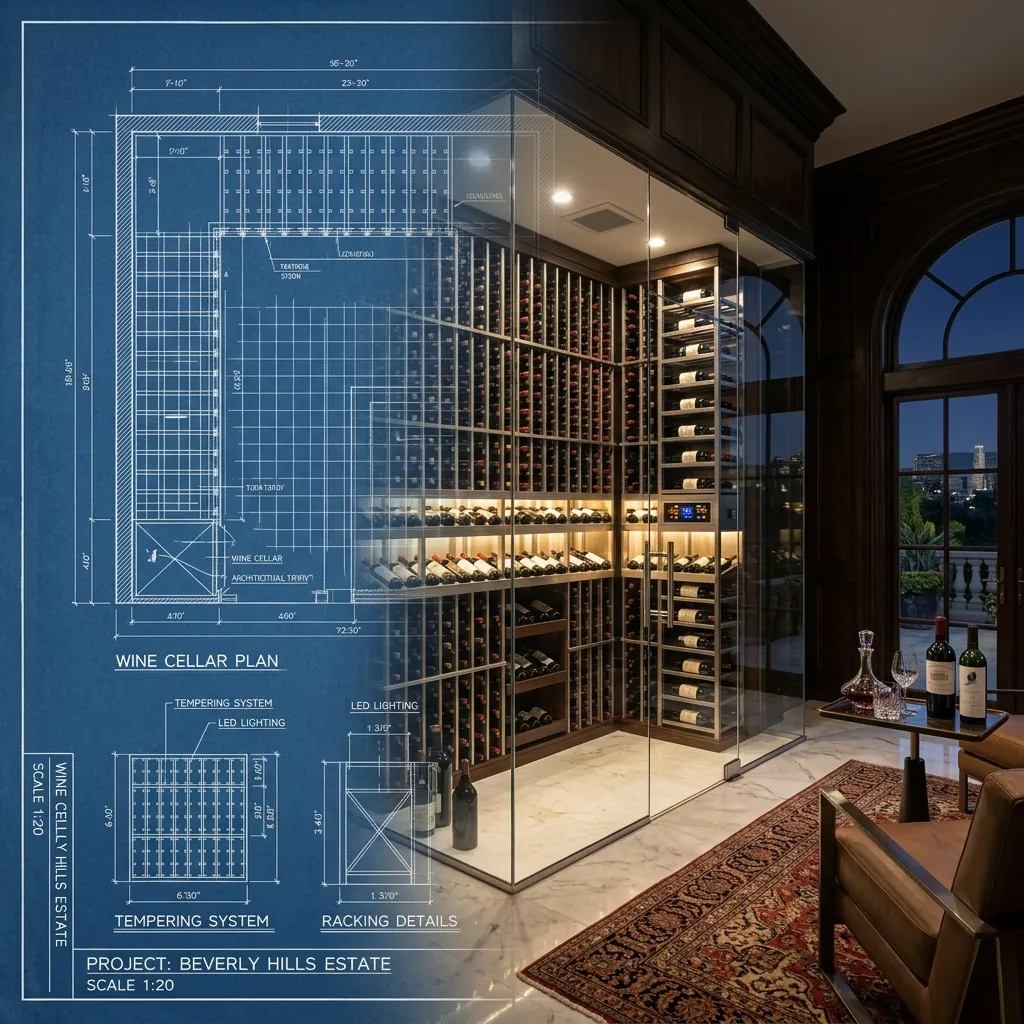
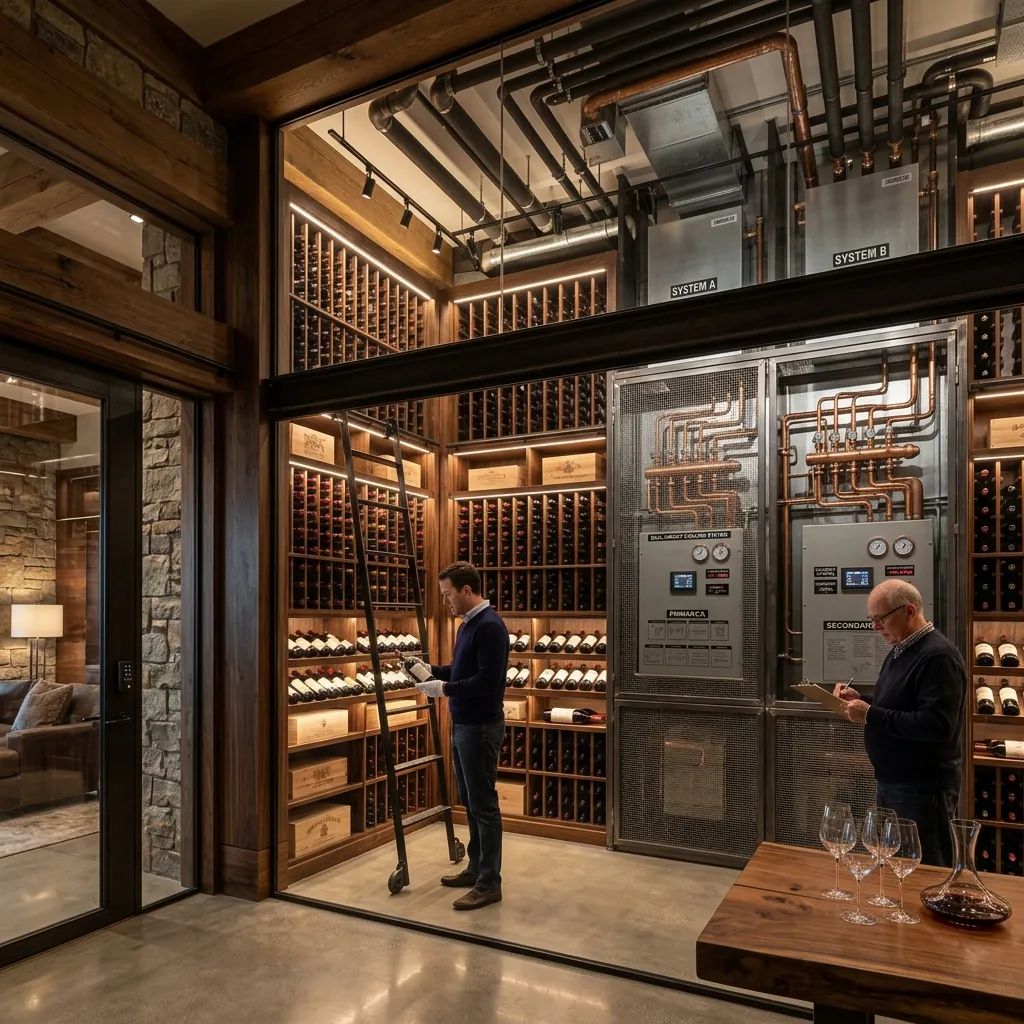
Discover how the right custom wine cellar cooling system protects your collection, enhances performance, and delivers long-term peace of mind in Laguna Hills and throughout Orange County. From design considerations to installation best practices, this guide covers everything homeowners need to know.
Book a ConsultationA wine cellar is more than a storage space—it is a carefully controlled environment designed to preserve the flavor, structure, and aging potential of every bottle in your collection. In Laguna Hills, where warm Southern California temperatures and seasonal fluctuations can challenge indoor climate stability, a custom wine cellar cooling system is essential. Whether you are building a compact residential cellar or a large showcase installation, the cooling system must be tailored to the room’s size, insulation, glass exposure, usage patterns, and the types of wine you collect. VA Wine Cooling helps homeowners in Orange County protect their investment with systems engineered for precision, reliability, and long-term efficiency.
Custom cooling systems maintain the ideal wine storage temperature, typically around 55°F, helping prevent premature aging, oxidation, and cork damage.
Balanced humidity is critical for preserving cork integrity and minimizing evaporation, and a properly designed system helps keep conditions in the optimal range.
Every cellar is different, so custom systems are sized and configured based on insulation, layout, glass surfaces, bottle capacity, and ambient heat load.
Modern wine cellar cooling systems are built to run efficiently and quietly, preserving the ambiance of your home while protecting your collection around the clock.
A custom wine cellar cooling system is not simply an appliance that lowers the temperature in a room. It is a specialized climate-control solution designed to create the stable, wine-friendly environment that fine bottles require. Wine is highly sensitive to heat, humidity swings, vibration, and inconsistent airflow, which means even a beautifully designed cellar can fail to protect a collection if the cooling system is poorly matched to the space. In Laguna Hills and across Orange County, the combination of warm weather, sun exposure, and modern home layouts makes custom design especially important.
Unlike a standard air conditioner, a wine cellar cooling system is engineered to maintain both temperature and humidity within specific ranges. This matters because wine ages best when conditions remain steady. If the room becomes too warm, the wine may mature too quickly and lose balance. If it becomes too dry, corks can shrink and allow oxygen to enter the bottle. If humidity is too high, labels can deteriorate and mold can become a concern. A properly designed system addresses all of these factors together, which is why professional planning is so important for homeowners who want lasting results.
In many Laguna Hills homes, wine cellars are built as part of a larger luxury remodel, custom entertainment space, or dedicated tasting room. These spaces often include glass doors, decorative lighting, stone finishes, or open architectural features that add beauty but also create heat gain. A custom cooling system accounts for those variables from the beginning. That means calculating the cooling load, understanding how insulation and vapor barriers affect performance, and selecting the right equipment type for the room’s unique demands. This level of precision is what separates a true wine cellar cooling solution from a generic cooling approach.
Another key benefit of a custom system is longevity. Wine collectors often invest years, sometimes decades, in building a meaningful cellar. A system that is properly sized and professionally installed reduces the risk of breakdowns, temperature spikes, and costly bottle loss. It also tends to operate more efficiently, because it does not have to overwork to compensate for poor planning. For homeowners in Orange County who want dependable protection and a refined cellar experience, custom design is the smartest path forward.
At VA Wine Cooling, the focus is on matching the cooling equipment to the cellar—not forcing the cellar to conform to the equipment. That approach results in better performance, more consistent storage conditions, and a more enjoyable ownership experience. Whether your goal is to preserve a small curated collection or a large investment-grade inventory, the right cooling system is the foundation of success.
Essential Wine Cellar Engineering Resources:
Designing a custom wine cellar cooling system begins long before the equipment is installed. The room itself must be evaluated carefully, because every detail influences how much cooling power is needed and how the system should be configured. In Laguna Hills, for example, homes may feature open floor plans, sunlit interiors, exterior-facing walls, or integrated wine rooms near kitchens and living spaces. Each of these conditions can increase heat load and affect the system’s ability to maintain stable conditions. A professional assessment considers square footage, ceiling height, insulation quality, door construction, and the amount of glass used in the space.
Insulation and vapor barriers are especially important in Southern California. A wine cellar must be sealed properly so that warm air and moisture do not infiltrate the room. Even the most advanced cooling system will struggle if the enclosure is poorly built. That is why custom wine cellar projects should be approached as a complete system, not just an equipment installation. The room envelope, door seals, lighting, and shelving layout all work together to support climate control. If one element is weak, the cooling system may need to work harder, which can reduce efficiency and increase wear over time.
Another major consideration is the type of cooling system best suited to the cellar. Some installations benefit from self-contained units, while others require ducted or split systems for better noise control and flexible placement. Each option has advantages depending on the room’s design and the homeowner’s goals. For instance, a visible tasting room may prioritize quiet operation and hidden equipment, while a smaller enclosed cellar may need a compact, direct solution. The right choice depends on both technical requirements and aesthetic preferences, which is why custom planning is so valuable.
Air circulation also plays a crucial role in performance. Wine cellars need even temperature distribution from top to bottom and corner to corner. Poor airflow can lead to hot spots, moisture issues, or inconsistent bottle storage conditions. A well-designed cooling system circulates air in a way that supports uniform conditions across the room, helping every bottle age under the same stable environment. This is particularly important for larger cellars or spaces with elaborate shelving, display walls, or multiple zones.
Homeowners in Orange County often want their wine cellars to feel like a luxury feature rather than a mechanical room, and that is entirely possible with thoughtful design. By combining proper insulation, the right cooling equipment, and expert installation, a cellar can become both visually impressive and highly functional. The result is a space that not only showcases your collection but also preserves it with confidence for years to come.
Homeowners often have important questions when planning a custom wine cellar cooling system, especially if they are investing in a new build or upgrading an existing cellar. Understanding the basics can make the process smoother and help you make informed decisions about equipment, installation, and long-term maintenance. The answers below address some of the most common concerns we hear from wine collectors in Laguna Hills and throughout Orange County.
One of the first questions many clients ask is how to know whether their cellar needs a custom system rather than a standard cooling unit. The answer usually comes down to the room’s construction and goals. If the space is intended for long-term wine storage, includes glass features, has irregular dimensions, or requires quiet operation, a custom solution is often the best choice. Custom systems are also ideal when the cellar is part of a larger luxury home design and must blend seamlessly with the surrounding architecture. In these cases, precision and aesthetics matter just as much as temperature control.
Another common concern is maintenance. A high-quality cooling system should be supported by routine inspection and basic upkeep, including filter changes, coil cleaning, and periodic performance checks. While modern systems are built for durability, regular maintenance helps prevent unexpected issues and extends equipment life. This is especially important in a climate like Orange County’s, where systems may run consistently throughout the year. Proactive care protects your collection and can help avoid costly services later.
Homeowners also want to know whether a cooling system can be upgraded if the cellar changes over time. In many cases, the answer is yes. As collections grow, shelving is reconfigured, or the room is remodeled, the cooling load may change. A professional evaluation can determine whether the current system still meets the space’s needs or whether a larger or differently configured solution would be more effective. This flexibility is one of the advantages of working with a company that understands both wine storage science and custom installation requirements.
Finally, many clients ask how to choose the right partner for the job. Look for a company with specialized experience in wine cellar cooling, not just general HVAC knowledge. Wine storage demands a more precise, preservation-focused approach, and the installer should understand how to design for temperature stability, humidity control, and long-term reliability. VA Wine Cooling brings that specialized expertise to every project, helping Laguna Hills homeowners create wine cellars that perform beautifully and protect valuable collections with confidence.
For anyone considering a new cellar or upgrading an existing one, the key takeaway is simple: the cooling system is the heart of the room. When it is designed correctly, the entire cellar becomes more dependable, more efficient, and more enjoyable to use. That is the kind of value a custom solution delivers.
Most wine cellars are ideally maintained at around 55°F, with very small variations depending on the collection and the cellar’s design. The most important factor is consistency, because repeated temperature swings can cause wine to age prematurely, expand and contract inside the bottle, and lose its intended character. A custom wine cellar cooling system is designed to hold the room near that target temperature while also managing humidity and airflow, giving your bottles the stable environment they need for proper aging. In Laguna Hills, where ambient temperatures can rise significantly, a properly sized system is especially important to prevent heat intrusion and maintain dependable performance year-round.
A custom cooling system is usually the best choice when the cellar has unusual dimensions, significant glass exposure, limited insulation, open-adjacent living areas, or a design goal that requires quiet and discreet operation. It is also recommended when you are storing valuable wine long term and want the most stable conditions possible. If the room is part of a luxury remodel, tasting area, or showcase installation, a custom solution can be tailored to the exact heat load and architectural layout of the space. This approach reduces the risk of undercooling, overcooling, or uneven airflow, all of which can compromise wine quality and system efficiency.
Wine cellar cooling systems generally require periodic maintenance to stay efficient and reliable. Common tasks include checking and replacing filters, cleaning coils, inspecting drain lines, verifying refrigerant levels when applicable, and ensuring that the thermostat or control system is functioning properly. It is also wise to have the cellar enclosure inspected for air leaks, because even a well-maintained cooling unit can struggle if the room is no longer properly sealed. Routine service helps catch minor issues before they become major problems, protects your collection from temperature fluctuations, and extends the life of the equipment. For homeowners in Orange County, regular maintenance is a smart investment in both peace of mind and long-term wine preservation.
Whether you need installation, service, or maintenance — our team is ready to help. Fill out the form below and we'll get back to you within 24 hours.
By submitting this form, you agree to our Privacy Policy. CSLB Lic#1055057
VA Wine Cooling engineers and maintains precision commercial and residential cooling systems across Southern California.