Protect your wine collection with expert HVAC maintenance strategies designed for Costa Mesa’s coastal climate. Learn how to keep your wine room stable, efficient, and ready to preserve every bottle at its best.
Book a ConsultationA wine room is only as reliable as the HVAC system supporting it, and in Costa Mesa, Orange County, that reliability matters more than ever. Warm days, coastal humidity, and seasonal temperature swings can place constant stress on wine cooling equipment, making routine maintenance essential for protecting both the system and the collection inside. Whether your wine room is a small private cellar or a custom-designed showcase space, consistent HVAC care helps preserve ideal storage conditions, reduce operating costs, and prevent costly breakdowns that can put valuable wine at risk.
Regular HVAC maintenance helps your wine room maintain the precise temperature range needed for long-term wine preservation, preventing harmful fluctuations that can age wine too quickly or compromise flavor.
A properly serviced system supports balanced humidity levels, protecting corks from drying out while also preventing excess moisture that can lead to mold, mildew, or label damage.
Clean coils, calibrated components, and unrestricted airflow allow your wine cooling system to operate more efficiently, lowering utility costs and reducing strain on critical parts.
Routine inspections and preventive service extend the life of compressors, fans, sensors, and other components, helping you avoid premature replacement and unexpected downtime.
Wine room HVAC systems are not the same as standard residential cooling systems, and that difference becomes especially important in Costa Mesa’s climate. A wine cellar or wine display room requires a highly controlled environment where temperature, humidity, insulation, and airflow all work together to protect the integrity of the collection. Unlike a typical living space, a wine room cannot tolerate dramatic temperature swings or inconsistent performance. Even a short period of instability can negatively affect aging, aroma, and overall wine quality. That is why HVAC system maintenance for wine rooms in Costa Mesa, Orange County is more than a routine chore—it is a critical part of safeguarding a serious investment.
In a coastal region like Orange County, the environment adds another layer of complexity. Salt air, humidity, and warm afternoon temperatures can all influence how hard the HVAC system must work to maintain ideal storage conditions. If the system is not properly maintained, components may accumulate dirt faster, drainage issues may develop, and sensors may begin to drift out of calibration. Over time, these small problems can create larger concerns such as uneven cooling, excessive compressor runtime, or inadequate humidity control. For wine collectors, that can mean a higher risk of label deterioration, cork failure, and unnecessary wear on the cooling equipment itself.
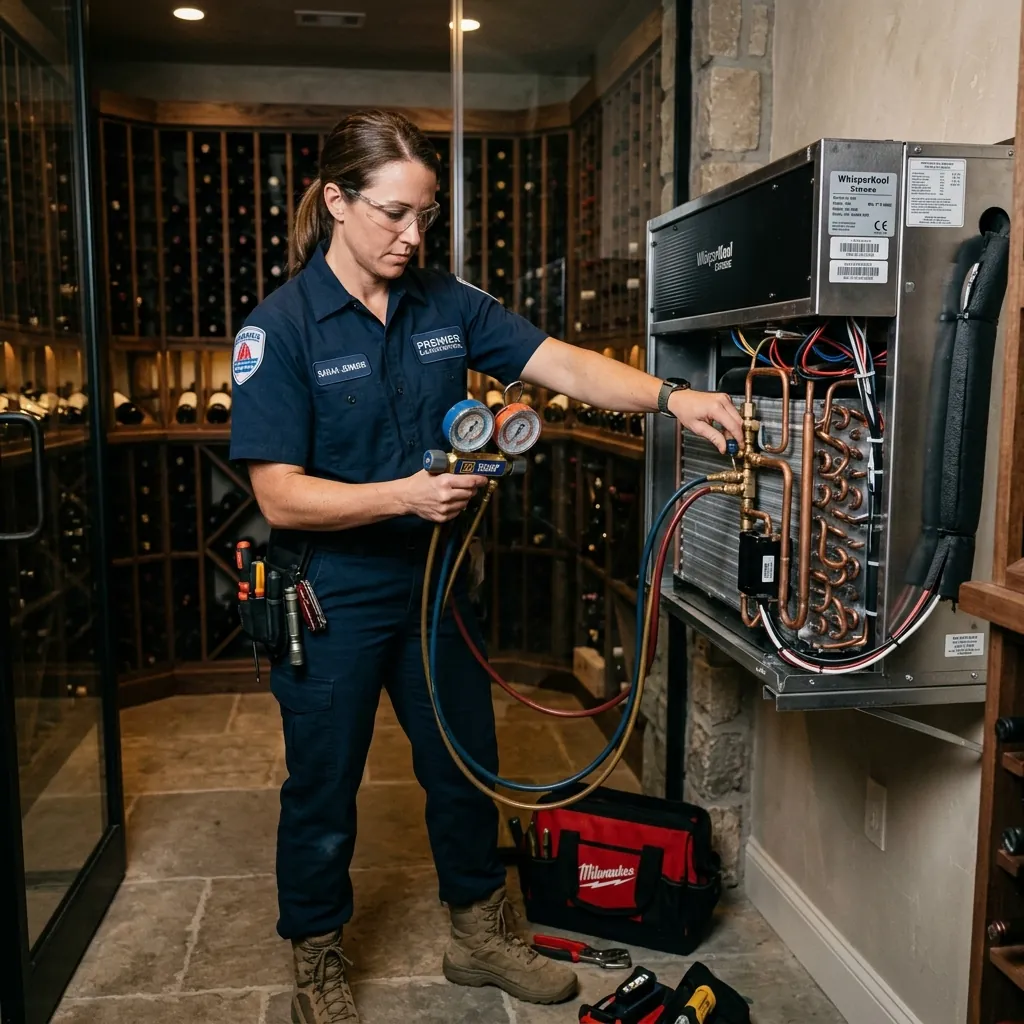
Preventive maintenance helps address these challenges before they become expensive problems. A well-maintained wine room HVAC system is better able to respond to environmental changes, maintain consistent operation, and protect the collection from invisible damage that can occur when conditions are not ideal. In practical terms, this means checking refrigerant levels, inspecting electrical connections, cleaning filters, verifying thermostat accuracy, and ensuring airflow remains unobstructed. These tasks may sound simple, but together they form the foundation of reliable wine storage performance in a demanding climate.
Another important consideration is insulation and vapor barrier integrity. Even the best HVAC system will struggle if the wine room itself is not sealed properly. Maintenance should therefore include a review of the room’s envelope, because air leaks, poor insulation, and moisture intrusion can all force the equipment to work harder than necessary. In Costa Mesa homes and commercial properties alike, wine room maintenance should be viewed as a whole-system strategy that includes both mechanical service and environmental protection. That approach helps ensure the room remains efficient, quiet, and stable year-round.
For homeowners, restaurateurs, and collectors who want lasting performance, the value of ongoing maintenance cannot be overstated. A wine room is not just a luxury feature; it is a controlled environment designed to preserve craftsmanship, memory, and value. By keeping the HVAC system in peak condition, you protect every bottle and reduce the likelihood of emergency services that could disrupt your collection. In a place like Orange County, where climate conditions can shift and demand on cooling systems can be significant, proactive care is the smartest path forward.
Essential Wine Cellar Engineering Resources:
When it comes to HVAC system maintenance for wine rooms in Costa Mesa, Orange County, consistency is the key to success. The most effective maintenance programs are built around regular inspections and careful attention to the components that directly affect performance. One of the first tasks is checking and replacing air filters as needed. Dirty filters restrict airflow, force the system to work harder, and can create uneven temperature distribution throughout the room. In a wine environment, even minor airflow issues can lead to hot spots or cold zones that interfere with proper storage conditions.
Coil cleaning is another essential maintenance step. Evaporator and condenser coils play a major role in heat transfer, and when dust, grime, or coastal residue accumulates on their surfaces, efficiency drops quickly. A system that struggles to transfer heat will run longer and may fail to keep the wine room within its target range. Regular cleaning supports better performance, lowers energy consumption, and helps prevent unnecessary strain on the compressor. In Orange County, where many properties experience a blend of inland heat and coastal moisture, clean coils are especially important for long-term reliability.
Humidity management should also be part of every maintenance visit. Wine rooms need stable humidity levels to protect corks and labels, but too much moisture can create condensation and mold concerns. Technicians should inspect drain lines, verify proper drainage, and confirm that humidification or dehumidification accessories are functioning as intended. If the system is producing excess condensation or the room feels damp, that may indicate a blocked drain, poor insulation, or a component that is no longer operating correctly. Addressing these issues early prevents damage to both the HVAC system and the wine collection.
Electrical and control checks are equally important. Loose connections, worn contactors, sensor drift, and thermostat inaccuracies can all undermine system performance. Because wine rooms depend on precise control, even a small calibration problem can make a noticeable difference. Maintenance should include verifying that the thermostat reads correctly, that safety controls are working, and that the system cycles properly. For owners who rely on their wine room daily, these checks provide peace of mind and reduce the risk of sudden failures during hot weather or peak usage periods.
Finally, airflow and insulation should be reviewed during maintenance appointments. Registers, fans, and ducting must remain clear and properly balanced so the system can distribute conditioned air evenly. At the same time, the room itself should be examined for gaps, moisture intrusion, or compromised seals. A high-performance HVAC system can only do so much if the room is leaking conditioned air. By combining mechanical service with room integrity checks, you create a stable environment that supports wine preservation and reduces operating stress on the equipment.
The ideal maintenance schedule for a wine room HVAC system depends on the size of the room, the type of equipment installed, and the property’s environmental conditions, but in Costa Mesa and greater Orange County, a proactive schedule is strongly recommended. At minimum, professional inspections should be performed twice a year, with additional checks during periods of heavy use or extreme weather. Because wine rooms are designed for precision, waiting until a problem becomes obvious is often too late. A system can lose efficiency gradually, and those small changes may go unnoticed until wine quality or room comfort is already affected.
For many wine collectors, a spring and fall maintenance routine works well. Spring service prepares the system for warmer months, when cooling demand rises and the unit may run more frequently. Fall service helps ensure the system remains ready for seasonal changes and any holiday entertaining or increased access to the wine room. During these visits, a technician can inspect refrigerant charge, evaluate component wear, clean critical parts, and verify that the room is holding temperature and humidity at the desired levels. This type of schedule is especially valuable in Orange County, where weather patterns can shift quickly and place varying demands on the cooling system.
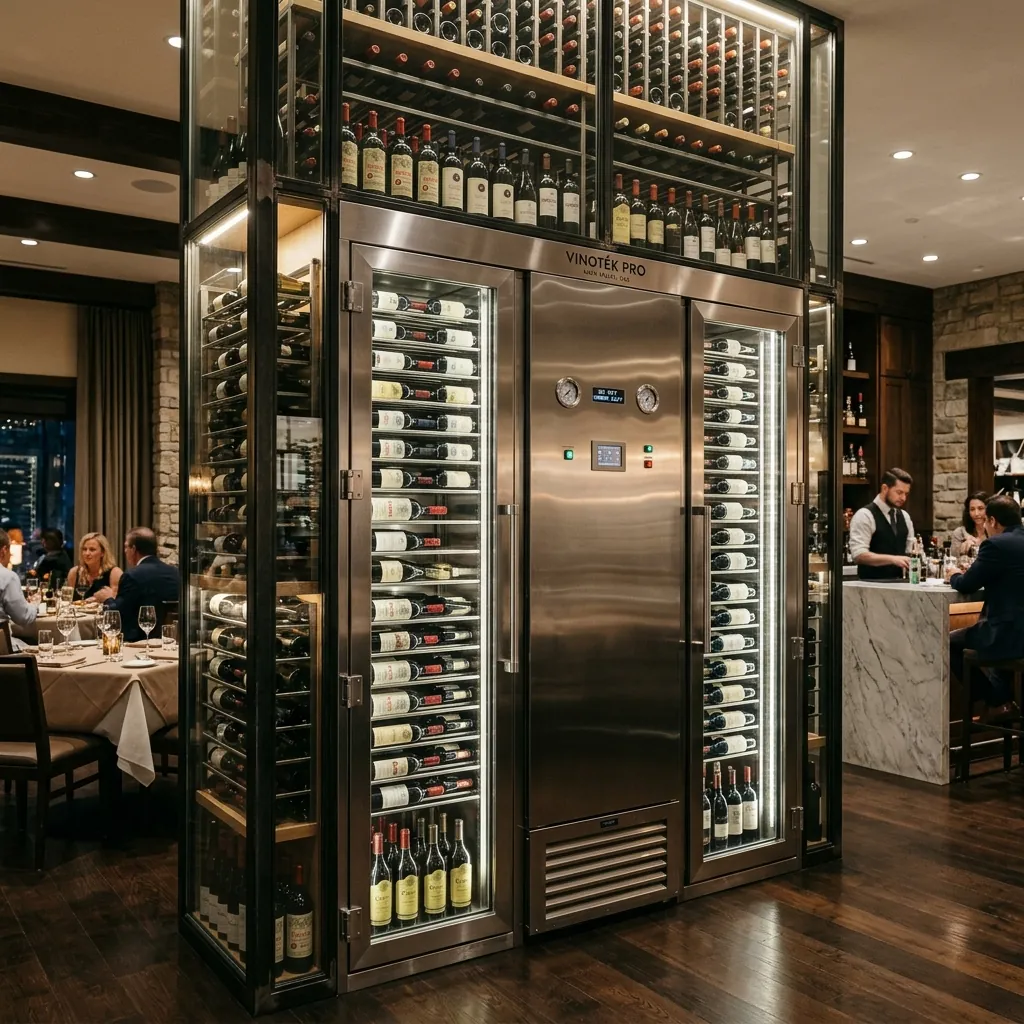
Some wine rooms may require more frequent attention. Commercial wine displays in restaurants, tasting rooms, and hospitality spaces often experience heavier door traffic, more heat gain, and greater fluctuations in internal conditions. Likewise, custom residential cellars with complex controls or high-value collections may benefit from quarterly service checks. If the room has experienced previous issues such as condensation, inconsistent cooling, or compressor strain, a tighter maintenance schedule can help prevent recurrence. The goal is not simply to react to problems, but to create a consistent maintenance rhythm that supports stable performance over time.
Homeowners should also pay attention to warning signs between service visits. If the system seems louder than usual, runs continuously, struggles to reach the set temperature, or produces visible moisture, those are indicators that maintenance or service may be needed sooner rather than later. In a wine room, every day of unstable conditions matters. Prompt attention can protect the collection, reduce service costs, and keep the system from suffering avoidable damage. A reliable maintenance plan is one of the simplest and most effective ways to preserve both wine quality and equipment lifespan.
Ultimately, HVAC maintenance should be treated as part of the overall stewardship of the wine room. Just as collectors monitor bottles, vintages, and storage conditions, the cooling system deserves the same level of care. In Costa Mesa, where climate and coastal exposure can challenge even well-designed systems, scheduled maintenance is not optional—it is the foundation of dependable wine preservation.
Wine room HVAC maintenance is far more precise than standard residential or commercial HVAC care because the system must protect a highly sensitive environment. A typical comfort-cooling system is designed to keep people comfortable, but a wine room system is designed to preserve wine by maintaining stable temperature and humidity conditions with very little variation. That means maintenance must focus on accuracy, consistency, and environmental control rather than just cooling capacity. Technicians should inspect refrigerant levels, airflow, humidity management, thermostat calibration, insulation, drain systems, and the overall integrity of the room. In Costa Mesa and throughout Orange County, this specialized approach is particularly important because coastal humidity and ambient heat can place extra stress on the system. If maintenance is handled like a standard HVAC tune-up, subtle issues may be overlooked, and those issues can have a direct impact on wine quality and long-term equipment performance.
There are several warning signs that indicate your wine room HVAC system may need immediate attention. If you notice temperature swings, the system running longer than usual, unusual noises, excess condensation, musty odors, or humidity levels that seem too high or too low, it is time to schedule service. Another common sign is a system that struggles to recover after the wine room has been opened frequently, which can suggest airflow problems, weak cooling performance, or a sensor issue. In some cases, owners may not notice a problem directly, but wine labels begin to peel, corks dry out, or the room feels damp. These are all signs that the environment is no longer as stable as it should be. Because wine storage depends on precise conditions, it is better to address these symptoms early rather than wait for a full breakdown. A professional inspection can identify whether the issue is minor, such as a clogged filter or dirty coil, or more serious, such as a refrigerant leak or failing component.
Yes, regular maintenance can have a significant impact on both energy efficiency and system longevity. When filters are clean, coils are free of buildup, airflow is balanced, and controls are properly calibrated, the system does not have to work as hard to maintain the desired environment. That reduced strain often translates into lower energy consumption and more consistent performance. Over time, preventive care also helps protect major components like compressors, fans, and electrical parts from excessive wear. In a wine room, where the system may run for long periods to maintain exact conditions, this matters even more. A neglected system tends to cycle inefficiently, overheat, or operate under unnecessary stress, which can shorten its lifespan and increase the likelihood of expensive services. For Costa Mesa property owners, regular maintenance is one of the most cost-effective ways to preserve both the wine collection and the equipment supporting it. It is not just about fixing problems; it is about preventing them while keeping the room stable, quiet, and efficient year-round.
Whether you need installation, service, or maintenance — our team is ready to help. Fill out the form below and we'll get back to you within 24 hours.
By submitting this form, you agree to our Privacy Policy. CSLB Lic#1055057
VA Wine Cooling engineers and maintains precision commercial and residential cooling systems across Southern California.