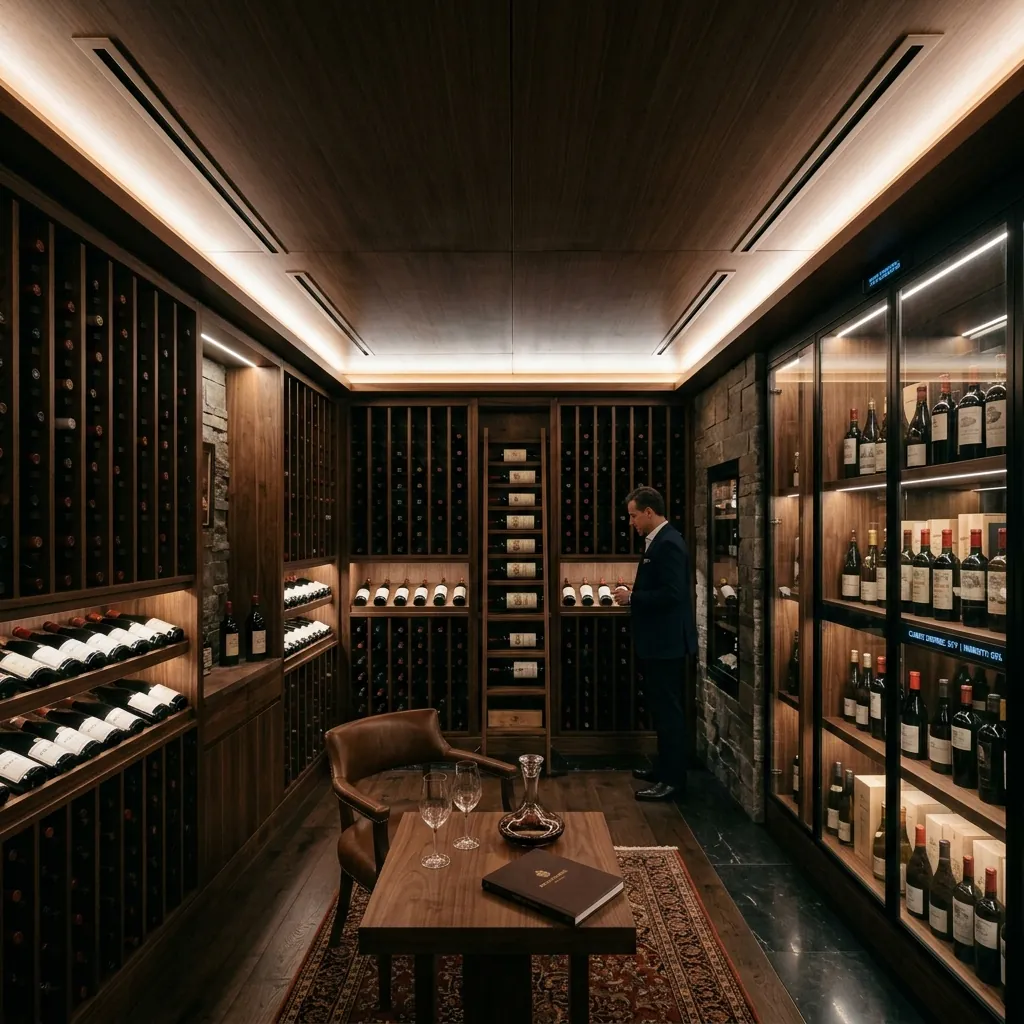
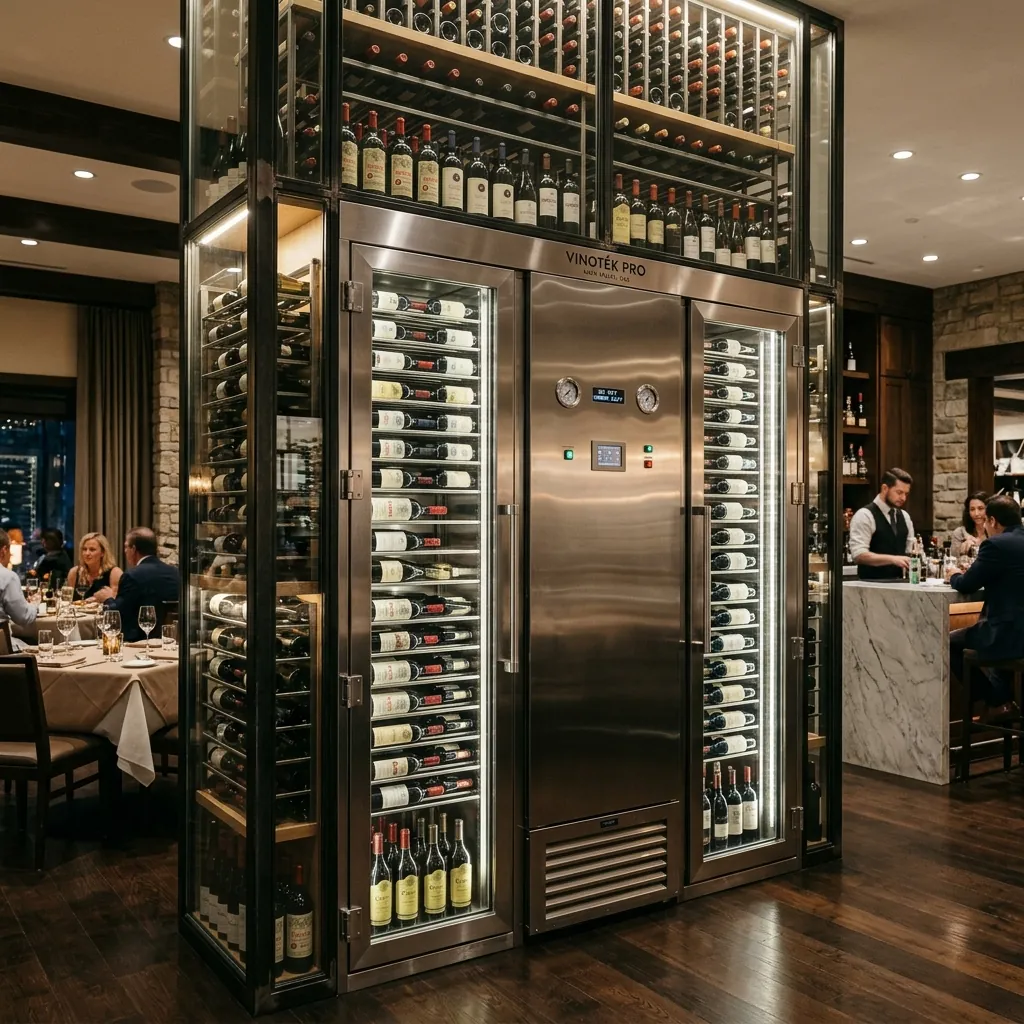
Protect your wine collection with expert HVAC maintenance designed for the unique demands of wine rooms in Irvine and throughout Orange County. Learn how consistent care, precise climate control, and professional service help preserve both your investment and your peace of mind.
Book a ConsultationA wine room is not just another conditioned space—it is a precision environment where temperature, humidity, airflow, and equipment reliability all work together to protect every bottle. In Irvine and across Orange County, where warm weather, seasonal shifts, and coastal influences can place extra pressure on cooling systems, regular HVAC maintenance becomes essential for preserving wine quality and preventing costly damage.
Wine is highly sensitive to temperature swings, and even small fluctuations can accelerate aging, damage labels, and compromise flavor. Proper HVAC maintenance helps your wine room hold a consistent, ideal temperature year-round.
A well-maintained wine cooling system supports the right humidity levels to protect corks from drying out while preventing excess moisture that can lead to mold, mildew, and structural damage.
Routine inspections, cleaning, and tune-ups reduce strain on compressors, fans, coils, and controls, helping your wine room HVAC system run efficiently and last longer with fewer breakdowns.
Your wine collection represents both passion and financial value. Maintenance safeguards that investment by reducing the risk of spoilage, system failure, and emergency services that can threaten an entire cellar.
Wine rooms require a level of climate precision that far exceeds what most residential or commercial HVAC systems are designed to deliver. Unlike a standard living area, a wine room must maintain a narrow and stable temperature range, typically around 55 degrees Fahrenheit, while also controlling humidity to preserve cork integrity and prevent oxidation. In Irvine, Orange County, where ambient temperatures can rise quickly and homes often feature expansive glass, open layouts, and high-performance construction, wine room HVAC systems must work harder to offset heat gain and environmental changes. That makes proactive maintenance not just helpful, but absolutely necessary for reliable performance.
One of the biggest misconceptions among wine collectors is that once a wine cooling system is installed, it will continue performing at peak efficiency with minimal attention. In reality, wine room HVAC systems are specialized machines that depend on clean coils, proper refrigerant levels, unobstructed airflow, calibrated controls, and well-sealed enclosures. Any weak point in that chain can lead to temperature drift, uneven cooling, or excessive cycling. When that happens, the consequences can be immediate and expensive, especially for collectors who store rare vintages, large-format bottles, or long-term aging selections that require ideal conditions over many years.
Orange County’s climate adds another layer of complexity. While Irvine is known for its relatively stable weather compared with inland areas, the region still experiences warm afternoons, seasonal heat waves, and coastal humidity shifts that can challenge climate systems. If a wine room is located near an exterior wall, under a sunlit roofline, or adjacent to a kitchen or entertainment area, the cooling load can increase significantly. Regular HVAC maintenance helps your system adapt to those demands by ensuring the equipment is clean, efficient, and responsive. That means fewer surprises, lower operating stress, and a much better chance of maintaining the exact environment your wine needs.
Maintenance also protects the physical structure of the wine room itself. Excess humidity can damage drywall, woodwork, insulation, and finishes, while insufficient humidity can dry out corks and lead to premature oxidation. A neglected system may appear to be functioning, but if the controls are drifting or the drainage components are clogged, the room can slowly move out of spec without obvious warning signs. For homeowners and business owners in Irvine who value craftsmanship and long-term performance, HVAC maintenance is the difference between a wine room that merely looks impressive and one that truly performs at a professional level.
Essential Wine Cellar Engineering Resources:
Professional maintenance for a wine room HVAC system should be far more comprehensive than a quick visual inspection. It begins with evaluating the overall operation of the unit, including temperature performance, humidity management, airflow, refrigerant charge, electrical integrity, and control accuracy. Because wine rooms rely on precision, even a system that seems to be cooling adequately can still have hidden issues that affect long-term reliability. A trained technician will look for subtle signs of inefficiency, such as short cycling, inconsistent supply air, noisy operation, or condensation problems that may indicate deeper mechanical or installation concerns.
Cleaning is another critical part of maintenance. Over time, evaporator and condenser coils accumulate dust, dirt, and debris, which reduces heat transfer and forces the system to work harder to maintain target conditions. Filters also need to be checked and replaced regularly, especially in homes or commercial properties with higher dust levels, pet dander, or construction activity. In a wine room, restricted airflow can create hot spots, temperature layering, and uneven humidity distribution, all of which can undermine the environment that preserves wine quality. Keeping the system clean is one of the simplest ways to improve performance and extend equipment life.
Drainage and moisture management are equally important. Wine cooling systems often produce condensation, and if drain lines become clogged or poorly sloped, water can back up into the system or surrounding structure. That can lead to leaks, mold growth, and damage to cabinetry, flooring, or insulation. A proper maintenance visit should include checking condensate pans, drain lines, pumps, and any areas where moisture may accumulate. In a high-value wine room, these details matter because water intrusion can be just as destructive as temperature failure. Preventive care keeps the room dry, clean, and structurally sound.
Technicians should also verify the accuracy of thermostats, humidistats, and any smart controls connected to the wine room system. If sensors are misreading the environment, the system may overcool, undercool, or fail to maintain the proper humidity range. This is especially important in modern Irvine homes that rely on integrated building automation or remote monitoring. Calibration ensures the equipment is responding to real conditions rather than inaccurate readings. For collectors who travel frequently or manage multiple properties, this kind of precision provides confidence that the wine room is protected even when no one is on site.
Finally, professional maintenance should include a complete performance review and recommendations for service or optimization. A thorough service provider will not only clean and inspect the system, but also explain any emerging issues, identify worn components, and suggest improvements before a failure occurs. That might include replacing aging parts, improving insulation, sealing air leaks, or adjusting system settings to better match the room’s actual load. In other words, maintenance is not just about fixing what is broken; it is about preserving a stable, efficient wine storage environment for the long haul.
The ideal maintenance schedule for a wine room HVAC system depends on the size of the room, the type of equipment installed, the age of the system, and the environmental demands of the property. As a general rule, most wine room cooling systems benefit from at least two professional service visits per year, with additional attention during periods of heavy use or extreme weather. In Irvine and throughout Orange County, where cooling demand can rise sharply in warmer months, a seasonal maintenance plan is one of the smartest ways to avoid breakdowns and keep the room within its ideal range. Waiting until a problem appears often means the system has already been underperforming for some time.
For homeowners with smaller private wine rooms, semiannual maintenance may be enough if the system is newer and the enclosure is well insulated. However, larger cellars, commercial wine storage spaces, and custom installations with more complex controls may require more frequent inspections. Systems that run nearly continuously or serve rooms with frequent door openings, higher occupancy, or challenging placement conditions should be monitored closely. The more the system works, the more important it becomes to check for wear, airflow restrictions, and efficiency loss. A preventive schedule helps catch problems early and reduces the likelihood of emergency service calls at the worst possible time.
It is also wise to pay attention to warning signs between scheduled visits. If the room feels warmer than usual, if condensation appears on walls or glass, if the system cycles on and off too often, or if you notice unusual noises or odors, those are all indicators that maintenance or service may be needed sooner than expected. Wine room HVAC systems are designed to operate quietly and consistently. When they begin acting differently, that change is often the first clue that something is off. Prompt attention can prevent a minor issue from becoming a major failure that jeopardizes the entire collection.
Another factor to consider is the age of the equipment. Older systems may require more frequent checks because components naturally wear down over time. Fans lose efficiency, refrigerant lines can develop leaks, and controls may drift out of calibration. In contrast, newer systems still need routine maintenance, but they may be more forgiving if the room is properly built and sealed. Regardless of age, the goal remains the same: keep the wine room stable, efficient, and protected from environmental swings. A well-planned maintenance schedule is one of the best investments a collector can make.
At VA Wine Cooling, we understand that wine rooms are about more than equipment—they are about preserving a lifestyle, a collection, and often years of careful selection. That is why HVAC maintenance should be treated as an essential part of ownership, not an optional extra. Whether you are maintaining a private tasting room in Irvine, a custom cellar in a luxury home, or a commercial wine storage environment, consistent service is the key to dependable performance and long-term peace of mind.
Most wine rooms are designed to maintain a temperature around 55 degrees Fahrenheit, though the ideal range can vary slightly depending on the type of wine being stored and the preferences of the collector. The most important factor is consistency. Wine does not respond well to frequent swings, so a system that holds a stable temperature day after day is far more valuable than one that simply cools aggressively. In Irvine, where outdoor temperatures can fluctuate and heat gain can be significant, a properly maintained HVAC system is essential for keeping the room within the correct range. If the system is struggling to hold temperature, that may indicate a maintenance issue, poor insulation, or an equipment mismatch that should be evaluated by a professional.
Humidity control is critical because wine corks need the right moisture level to stay expanded and form a reliable seal. If the air becomes too dry, corks can shrink, allowing oxygen to enter the bottle and accelerate spoilage. If humidity is too high, it can encourage mold growth, damage labels, and create problems for the room’s finishes and structure. A well-maintained wine room HVAC system helps balance both temperature and humidity so the storage environment remains stable. For collectors in Orange County, this is especially important because climate conditions can shift with weather patterns, indoor occupancy, and seasonal usage. Proper maintenance ensures the system is not only cooling the room, but also supporting the moisture balance necessary for long-term wine preservation.
Common warning signs include temperature fluctuations, excessive condensation, unusual odors, louder-than-normal operation, short cycling, and visible moisture around the unit or enclosure. You may also notice that the system seems to run longer than usual or that the room no longer feels as consistently cool as it once did. These symptoms can point to dirty coils, clogged drain lines, refrigerant issues, sensor problems, or airflow restrictions. Because wine rooms depend on precision, even subtle changes should be taken seriously. If you suspect a problem, it is best to schedule service quickly rather than wait for a full breakdown. Early intervention can protect your wine collection, reduce service costs, and help restore the system to proper performance before damage occurs.
Whether you need installation, service, or maintenance — our team is ready to help. Fill out the form below and we'll get back to you within 24 hours.
By submitting this form, you agree to our Privacy Policy. CSLB Lic#1055057
VA Wine Cooling engineers and maintains precision commercial and residential cooling systems across Southern California.