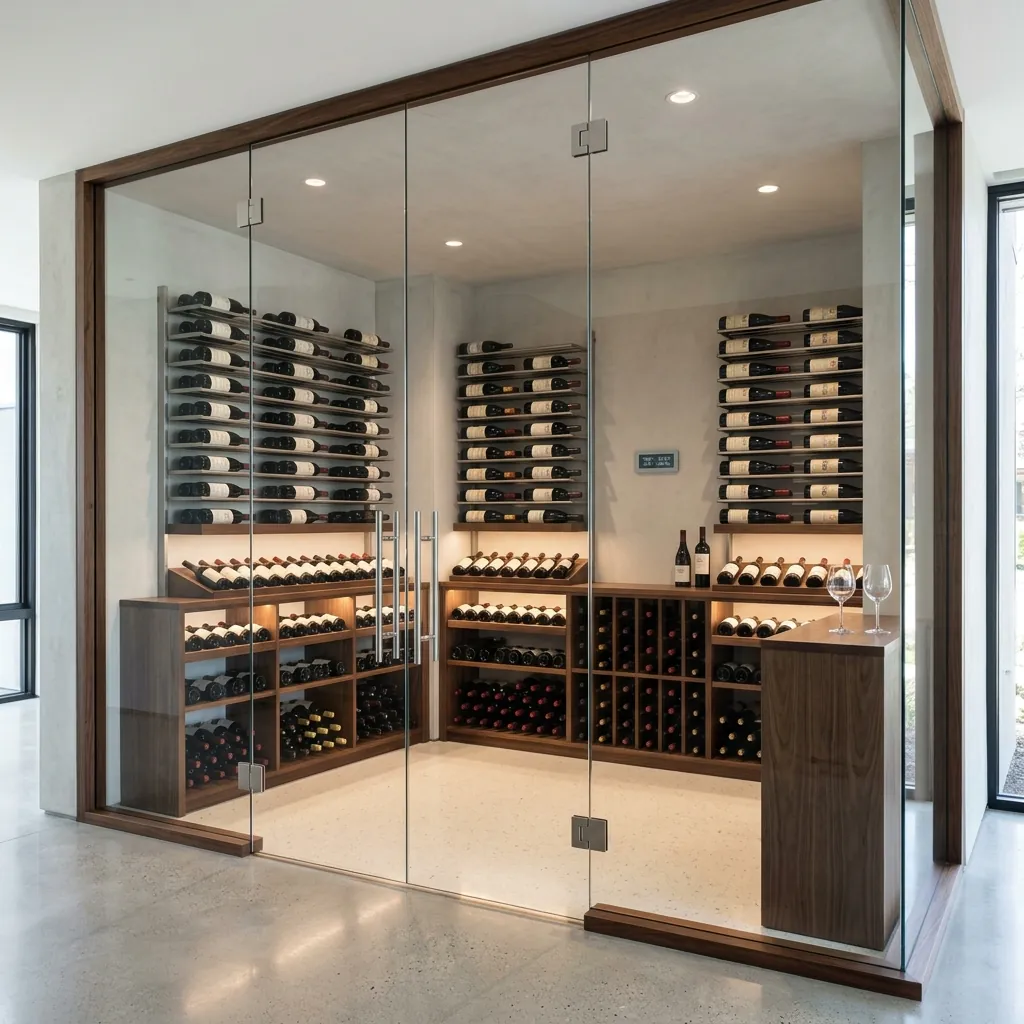
Protect your underground wine collection with precision climate control engineered for the unique demands of subterranean caves. From temperature stability and humidity management to airflow, insulation, and equipment selection, this guide covers everything you need to know to preserve wine at its best.
Book a ConsultationA subterranean wine cave may seem naturally ideal for storage, and in many ways it is: the earth provides insulation, buffers temperature swings, and helps create a quiet, protected environment for aging wine. But a cave is not automatically a perfect cellar. Underground spaces can still experience humidity spikes, stagnant air, condensation, mold growth, uneven temperature zones, and seasonal changes that compromise both the wine and the structure itself. That is why subterranean wine cave climate control must be approached as a complete system rather than a single piece of equipment. The goal is not simply to cool the room; it is to maintain a stable, balanced microclimate that supports long-term wine preservation, protects labels and corks, prevents excessive dryness or dampness, and preserves the integrity of the cave architecture. Whether your wine cave is carved into limestone, built into a hillside, or tucked beneath a residence, the challenges are highly specific and require a tailored strategy that accounts for thermal mass, vapor movement, insulation performance, and the load created by doors, lighting, and occupancy. VA Wine Cooling understands that a subterranean wine cave is both a storage environment and a statement space, which means climate control must be invisible, reliable, and engineered for consistency. In this guide, we’ll explore the essential principles, equipment options, and design considerations that define successful subterranean wine cave climate control, so you can create a cellar environment that protects your investment and elevates the entire experience of collecting wine.
The foundation of wine preservation is a consistent temperature range, ideally maintained without dramatic fluctuations that can accelerate aging or stress cork integrity. Subterranean wine caves benefit from the earth’s natural thermal buffering, but they still need purpose-built cooling systems to keep conditions steady year-round.
Proper humidity helps prevent corks from drying out while also reducing the risk of excess moisture that can damage labels, encourage mold, and affect finishes. A well-designed subterranean climate system balances humidity within a range that protects both the wine and the cave itself.
Even in an underground environment, air cannot remain stagnant. Strategic airflow helps distribute temperature evenly, reduce hot and cold pockets, and control odor, moisture, and stale air buildup. Ventilation is a critical part of a safe and stable subterranean wine cave.
No two wine caves are exactly alike. Depth, construction materials, insulation, entry points, and bottle capacity all affect climate performance. Custom-sized cooling systems, vapor barriers, and ducting solutions ensure the equipment matches the cave’s real-world load and layout.
Subterranean wine caves offer one of the most naturally favorable environments for long-term wine storage, but their advantages can only be fully realized when the space is engineered with precision. The earth surrounding the cave helps moderate temperature changes, but underground does not mean climate-neutral. In fact, the very properties that make a cave appealing—its enclosure, thermal mass, and isolation—also create unique challenges that can be difficult to manage without specialized subterranean wine cave climate control. Temperature may remain relatively stable at a broad level, yet localized hot spots can develop near lighting, equipment, or entryways. Humidity may seem naturally high, but it can fluctuate due to groundwater conditions, ventilation patterns, or the introduction of outside air whenever the door is opened. These subtle variations matter because wine is sensitive to both heat and dryness, and the structural materials in a cave are equally vulnerable to persistent moisture or poor air circulation.
One of the most common misconceptions about underground wine storage is that the cave itself will do all the work. While the earth certainly provides a head start, a wine cave is still influenced by the surrounding soil temperature, the cave’s depth, the quality of insulation, and the amount of heat introduced by people, lighting, and equipment. A subterranean space can also trap humidity in ways that are beneficial for corks but harmful to walls, ceilings, electrical components, and wood finishes if not controlled correctly. Over time, condensation can form on surfaces when warm air meets cooler stone or concrete, creating conditions that encourage mold growth and deterioration. This is why climate control in a wine cave is not just about preserving wine; it is about protecting the entire environment that supports the collection.
Another factor that makes subterranean wine cave climate control distinct is the role of thermal inertia. Underground structures respond slowly to temperature changes, which can be an advantage because they resist rapid swings. However, once a cave drifts out of range, it can also take longer to recover. This makes system sizing and placement especially important. An undersized unit may struggle to remove heat generated by occupancy or lighting, while an oversized system may short cycle and fail to dehumidify properly. The result is a cave that appears cool enough on the surface but still experiences instability at the bottle level. Successful design requires understanding how the cave breathes, where air moves, how moisture migrates, and how the interior layout affects cooling performance from one end of the cellar to the other.
In addition, subterranean wine caves often serve as architectural showpieces. Many are designed with tasting areas, display walls, decorative stone, custom millwork, and integrated lighting that elevate the space far beyond a standard storage room. These design elements introduce additional thermal and moisture loads that must be accounted for from the beginning. A beautiful wine cave can only remain beautiful if the climate system supports it. That means selecting equipment with enough capacity to handle the actual load, planning for quiet operation, and using materials that resist moisture damage. The best subterranean wine cave climate control systems are discreet, robust, and custom-fit to the space, allowing the cave to function as both a preservation environment and a refined hospitality setting.
Because wine caves are often built into homes, estates, or commercial hospitality properties, they must also be designed for long-term reliability. A climate failure underground can be more difficult to detect and more damaging by the time it is noticed. A small leak, an insulation gap, or a ventilation issue can create hidden problems that slowly compromise the bottles and the structure. This is why professional planning, proper system selection, and routine maintenance are essential. When all of these elements are addressed, a subterranean wine cave becomes one of the most effective and elegant ways to store wine, delivering the stability collectors want with the visual impact they desire.
Essential Wine Cellar Engineering Resources:
Creating a truly stable subterranean wine cave begins with selecting the right climate control components and integrating them into a system that responds to the cave’s specific conditions. At the center of this system is the cooling equipment itself, which may be a ducted split system, self-contained unit, or custom-engineered solution depending on the cave’s size, layout, and design goals. The primary purpose of the cooling unit is to maintain a consistent target temperature, typically within the ideal wine storage range, while operating efficiently and quietly enough to preserve the ambiance of the cave. But cooling alone is only part of the equation. A subterranean wine cave also requires humidity management, proper insulation, vapor control, and thoughtful air distribution to ensure that every bottle experiences the same stable environment.
Humidity is particularly critical in underground settings because moisture naturally behaves differently below grade. Soil conditions, drainage, groundwater, and the cave’s construction materials can all influence moisture levels. If humidity is too low, corks can dry out and shrink, allowing oxygen to enter the bottle and accelerate spoilage. If humidity is too high, labels can peel, mold can develop, and finishes can deteriorate. The ideal subterranean wine cave climate control system therefore includes strategies to maintain balanced humidity, whether through integrated humidification, dehumidification, or a carefully calibrated cooling system that manages latent moisture as part of its operation. The objective is a stable, protective environment rather than a dry or damp cave. This balance is especially important in premium collections where label preservation and presentation are as important as the wine itself.
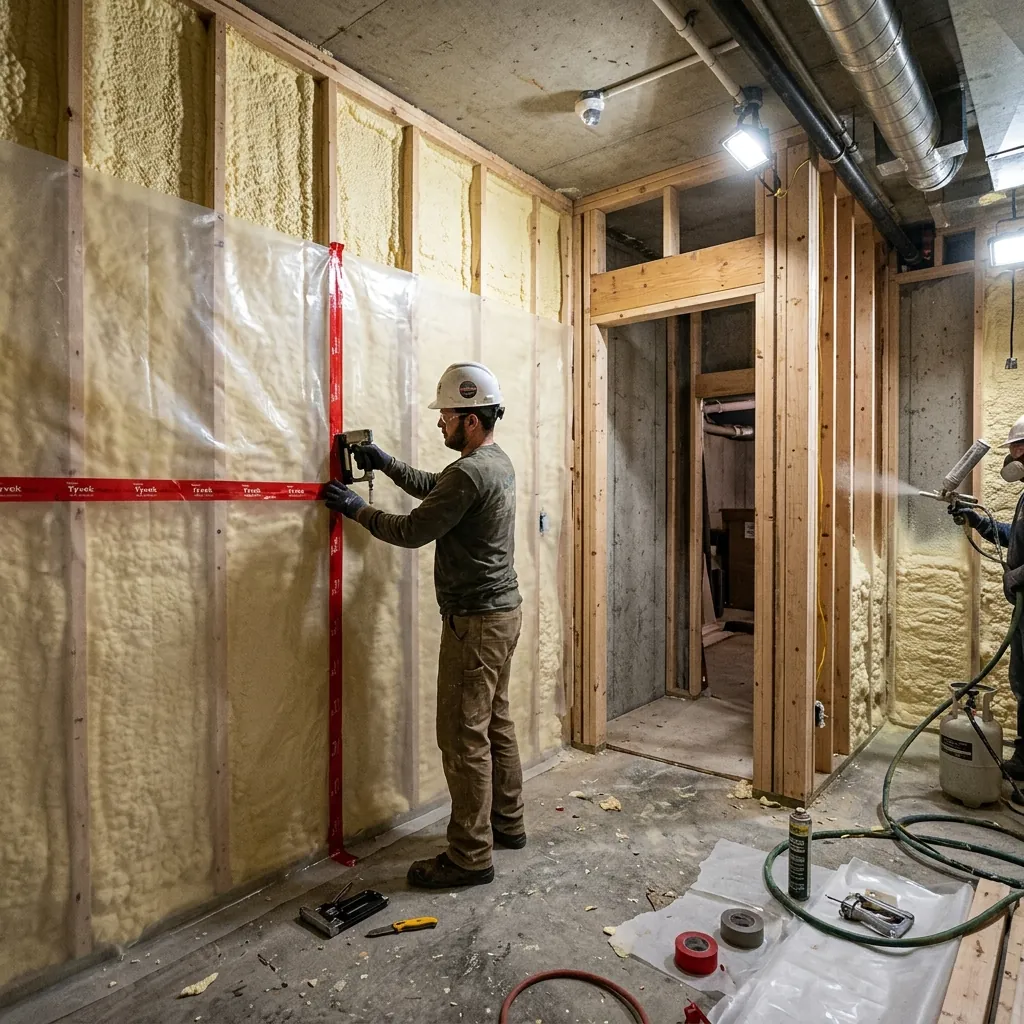
Insulation and vapor barriers are equally important because they define how the cave interacts with the surrounding earth and the outside environment. In a subterranean space, insulation must be selected and installed carefully to avoid thermal bridging, moisture intrusion, and uneven surface temperatures. A vapor barrier helps prevent moisture from migrating into the cellar envelope where it could condense and cause damage. When these layers are installed correctly, the climate control system can work efficiently without being overburdened by external heat or humidity loads. This not only improves performance but also reduces wear on the equipment, lowering the risk of failure and extending the life of the system.
Airflow design is another essential component that is often underestimated. In a wine cave, air must circulate gently and consistently to prevent stratification, where warm air rises and cool air settles in different pockets. Without proper circulation, the bottles near the ceiling may experience different conditions than those near the floor, and display areas may be warmer than storage zones. Good airflow also helps prevent stale odors and reduces the chance of localized condensation. Depending on the cave design, this may involve ducting, return air placement, concealed fans, or strategic equipment positioning to encourage balanced movement without creating drafts that disturb labels or create noise. The best subterranean wine cave climate control systems distribute air in a way that feels invisible while delivering measurable stability.
Controls and monitoring technology complete the system by allowing owners and service professionals to track conditions in real time. Digital thermostats, remote monitoring, humidity sensors, and alerts can help detect problems before they become serious. This is especially valuable in underground cellars where issues may not be immediately visible. If a door seal fails, a drain line clogs, or a sensor drifts out of calibration, the system can begin to lose efficiency long before the wine is visibly affected. Smart monitoring tools help maintain confidence and allow for proactive maintenance. For collectors who invest heavily in rare vintages, this layer of protection is not optional; it is a practical safeguard for both value and peace of mind.
Ultimately, a successful subterranean wine cave climate control system is not one product but a coordinated set of solutions working together. Cooling, humidity control, insulation, vapor management, airflow, and monitoring all shape the final environment. When engineered as a unified system, the cave becomes a dependable aging space where wine can mature gracefully and the room itself can remain clean, dry, and structurally sound for years to come.
The most successful subterranean wine cave climate control projects begin long before equipment is installed. They start with a careful assessment of the cave’s structure, intended use, bottle capacity, and environmental exposure. A small private cellar and a large commercial wine cave may both be underground, but they will not have the same cooling load, airflow requirements, or humidity challenges. The depth of the cave, the type of soil surrounding it, the insulation value of the walls and ceiling, the size and sealing quality of the entry door, and the amount of glass or decorative lighting all influence how the system should be designed. A professional approach evaluates all of these factors together so that the final solution is properly sized and able to maintain stable conditions without excessive cycling or energy waste.
Installation quality is just as important as equipment selection. Even the best climate system will underperform if ducts are poorly routed, sensors are placed in the wrong location, or the vapor barrier is compromised by gaps and penetrations. In subterranean environments, small installation mistakes can have outsized consequences because moisture and temperature issues often develop slowly and remain hidden until damage is already underway. Proper installation should account for service access, condensate management, noise reduction, and airflow balance. The goal is to create a system that is not only effective on day one but also easy to maintain and service over time. In a wine cave, reliability is everything, and reliability begins with workmanship.
Long-term maintenance is the final piece of the puzzle. A wine cave is a controlled environment, but it is not a set-it-and-forget-it space. Filters need to be checked and replaced, drains need to remain clear, sensors should be verified, and the system should be inspected for signs of wear, corrosion, or moisture intrusion. Because subterranean conditions can mask developing issues, routine maintenance helps ensure that minor problems are corrected before they affect the wine. For example, a slight drop in humidity may not be obvious in the short term, but over months it can dry corks and compromise the entire collection. Regular service also helps preserve equipment efficiency, keeping operating costs lower and extending the life of the system.
Owners should also think about how the wine cave will be used day to day. Frequent access, tastings, entertaining, and loading new bottles all introduce heat and moisture. Lighting choices matter as well, since some fixtures generate more heat than others. Even the choice of shelving can influence airflow and thermal consistency. Dense, solid storage systems may look elegant, but they can also restrict circulation if not designed thoughtfully. A well-planned cave balances beauty, accessibility, and performance so that the space feels luxurious while still protecting the collection. This is where custom design becomes invaluable, because a one-size-fits-all approach rarely delivers the level of control needed for a premium subterranean cellar.
For collectors and property owners who want the highest level of protection, working with a specialist like VA Wine Cooling provides a major advantage. Expertise in subterranean wine cave climate control means understanding not just refrigeration, but the full environment underground: moisture behavior, structural integrity, thermal loading, ventilation, acoustics, and aesthetic integration. When these elements are addressed together, the result is a wine cave that performs beautifully, supports the aging process, and stands the test of time. That kind of performance does more than preserve wine; it protects an investment, enhances the property, and transforms a cellar into a lasting centerpiece of the home or venue.
Most subterranean wine caves are best maintained in the general wine storage range of about 55°F, with very small fluctuations over time. The exact target can vary depending on the type of collection, the cave’s construction, and whether the space is used strictly for storage or also for entertaining. The key is consistency. Wine is far more sensitive to swings in temperature than to a single degree difference, so a stable environment is more important than chasing a precise number. A properly designed subterranean wine cave climate control system should keep the space within a narrow range while avoiding short cycling, excessive dryness, or temperature layering between shelves and ceiling areas.
Yes. Even though underground spaces often feel naturally humid, that does not mean the humidity level is automatically ideal for wine storage. In fact, subterranean environments can swing between too dry and too damp depending on soil moisture, ventilation, drainage, and seasonal conditions. Too little humidity can dry out corks and damage wine over time, while too much can encourage mold, label damage, and deterioration of finishes or structural materials. The best subterranean wine cave climate control systems manage humidity as carefully as temperature, aiming for a balanced range that protects both the bottles and the cave itself. In many projects, humidity management is one of the most important parts of the design because it determines long-term preservation quality and structural health.
A subterranean wine cave differs from a standard above-grade wine cellar because it interacts with the earth, groundwater, thermal mass, and buried structural materials in a much more complex way. While a traditional cellar typically depends heavily on insulation and active cooling to overcome external heat, a subterranean cave benefits from natural buffering but must still manage hidden moisture, airflow limitations, and thermal stratification. The cave may also have decorative stone, custom architecture, or hospitality features that introduce extra loads and require more advanced planning. Because of these factors, subterranean wine cave climate control must be tailored to the cave’s actual conditions rather than relying on a standard cellar formula. The best systems account for insulation, vapor barriers, humidity, ventilation, and equipment placement in a way that supports both preservation and the unique character of the underground space.
Whether you need installation, service, or maintenance — our team is ready to help. Fill out the form below and we'll get back to you within 24 hours.
By submitting this form, you agree to our Privacy Policy. CSLB Lic#1055057
VA Wine Cooling engineers and maintains precision commercial and residential cooling systems across Southern California.