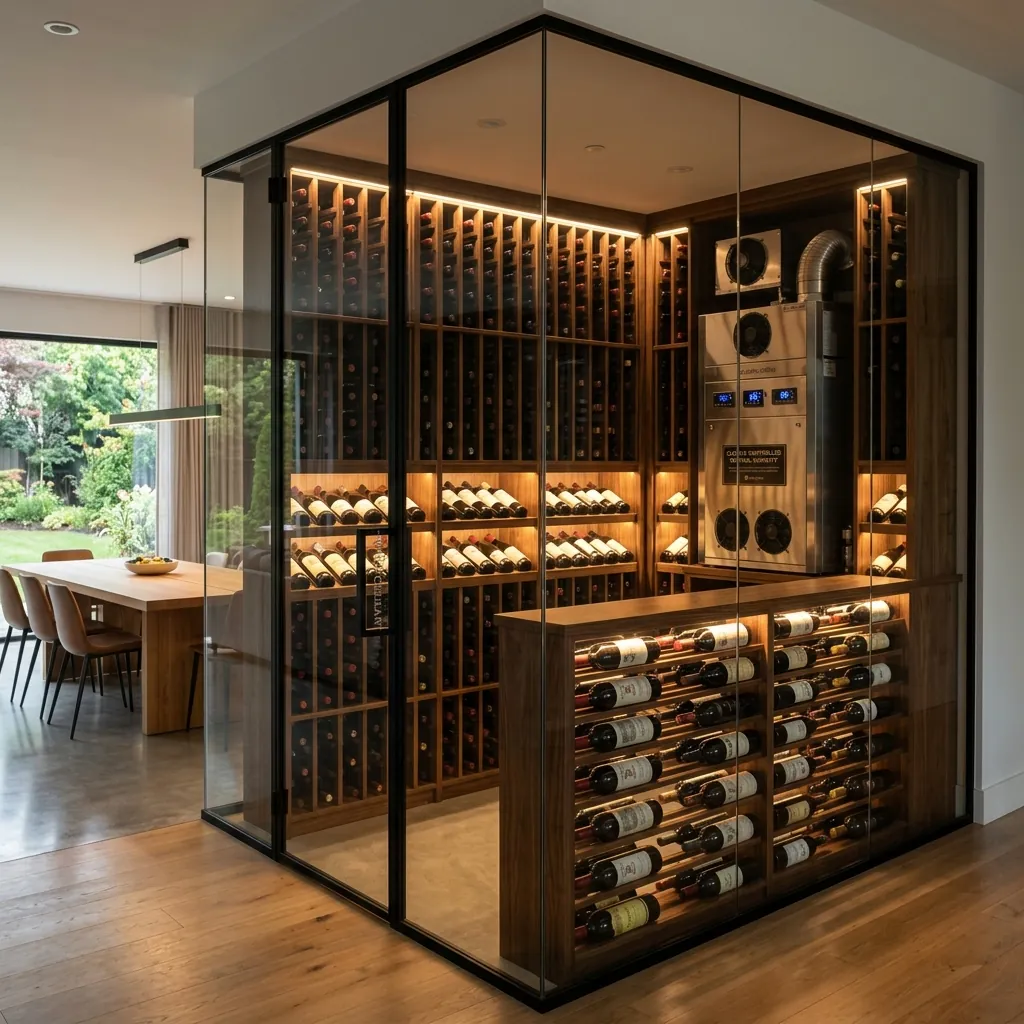
Protect your wine collection with a properly designed condensate drain line system that keeps your cellar dry, efficient, and free from costly moisture problems. Learn how professional wine cellar drainage supports long-term cooling performance, preserves ideal storage conditions, and prevents damage before it starts.
Book a ConsultationA wine cellar cooling system does far more than lower the temperature in a room full of bottles. It also manages humidity, removes excess moisture from the air, and keeps the environment stable enough to protect corks, labels, racks, insulation, drywall, and finished flooring. When a cooling unit pulls moisture out of the air, that water has to go somewhere, and that is where the condensate drain line becomes one of the most important yet overlooked components of the entire wine cellar system. Without a properly installed and maintained drain line, condensate can back up into the cooling equipment, overflow into the cellar, create hidden water damage, encourage mold growth, and reduce the efficiency of the cooling unit itself. For homeowners, collectors, and builders who want a reliable cellar that performs year after year, understanding condensate drainage is not optional; it is a core part of protecting the investment. VA Wine Cooling emphasizes this because a beautiful cellar can be compromised by something as simple as a poorly pitched line, a clogged trap, or a drain routed to the wrong location. The complete guide below explains how condensate drain lines work, why they matter, what can go wrong, and how to design a drainage solution that supports both the cooling system and the wine collection it protects.
A well-designed condensate drain line continuously carries away water produced during normal cooling operation, preventing overflow and helping the cellar maintain consistent humidity levels.
Proper drainage reduces the risk of leaks, standing water, stained finishes, warped materials, and hidden moisture intrusion that can affect insulation, cabinetry, and structural components.
When condensate exits the system correctly, the cooling unit can operate as intended without unnecessary strain, backup, or reduced performance caused by trapped water or blockages.
Professional condensate management supports the stable temperature and humidity conditions that wine requires, helping preserve labels, cork integrity, and the overall health of the cellar environment.
Condensate is a natural byproduct of the cooling process, and in a wine cellar it is especially important because the system is working to hold a very specific temperature range while also preserving a controlled level of humidity. As warm air passes over the cooling equipment’s evaporator coil, moisture in the air condenses into liquid water, much like droplets forming on a cold glass on a humid day. That water must be removed efficiently and safely, which is why every properly engineered wine cellar cooling installation needs a dependable condensate drain line. In many cases, the amount of water produced may seem small at first glance, but over time it can add up to significant volume, especially in climates with high ambient humidity, in cellars that are opened frequently, or in systems that run for long cycles during hot seasons. If that moisture is not directed away from the unit and away from the cellar envelope, it can create a chain reaction of problems that affect the room’s finishes, the equipment’s lifespan, and the stability of the wine storage environment.
The exact amount of condensate generated depends on several factors, including the size of the cellar, the insulation quality, the vapor barrier installation, the outside climate, the number of times the door is opened, and the efficiency of the cooling unit itself. A well-sealed cellar with proper insulation and a correctly sized cooling system will usually produce manageable and predictable condensation, while a poorly insulated space can create excessive moisture load and force the system to work harder than it should. That is why condensate drainage should never be treated as an afterthought. It is part of the larger engineering strategy that keeps the cellar balanced. When the drain line is installed correctly, the water leaves the system quietly and continuously, allowing the unit to focus on temperature control rather than fighting internal moisture buildup. This helps maintain steady operation and reduces the likelihood of nuisance alarms, shutoffs, or maintenance issues that can interrupt the cellar’s performance.
In many wine cellar cooling applications, the condensate drain line must be planned during the design phase rather than improvised after the unit is mounted. The route of the line, the slope, the termination point, and the presence of traps or other components all influence whether drainage will be dependable over the long term. Gravity drainage is often preferred when the layout allows it because it is simple, quiet, and low-maintenance. However, not every cellar has the luxury of a direct downhill route to a suitable drain location, which is why some installations require a condensate pump or a carefully engineered discharge path. Regardless of the method used, the goal is the same: remove water efficiently without allowing it to back up, stagnate, freeze, leak, or migrate into areas where it can cause damage. For wine cellar owners, understanding this process is the first step toward recognizing why professional drainage design matters so much.
Another reason condensate formation deserves attention is that the cellar environment is intentionally different from a typical living space. Wine cellars are often built to maintain cooler temperatures and moderate humidity, which means the cooling system is continuously interacting with air that may already be moisture-sensitive. In a room containing wood racks, label-forward bottle storage, cork-sealed bottles, and decorative finishes, even small amounts of excess water can have outsized consequences. A leak that might seem minor in a mechanical room can become a major issue in a wine cellar because the environment is designed to be tightly controlled. Proper condensate drainage helps preserve that control. It protects the cellar from the hidden costs of moisture intrusion, including mold remediation, finish service, rack replacement, and structural drying. For anyone investing in a premium wine storage space, condensate management should be viewed as part of the cellar’s protective infrastructure, not just a plumbing detail.
At VA Wine Cooling, the emphasis on condensate drain lines comes from experience with how wine cellars actually perform over time. A system can be beautifully installed and still fail to deliver lasting results if the drainage path is undersized, poorly pitched, or vulnerable to clogging. Condensate issues often reveal themselves slowly, beginning with dampness, a musty smell, or intermittent water near the unit, and then escalating into more serious damage if left unaddressed. This is why a complete understanding of condensate formation is essential for homeowners, contractors, and designers alike. The better the drainage strategy, the more stable the cellar, and the more confidently the owner can trust that the cooling system is doing its job without creating new problems behind the scenes.
Essential Wine Cellar Engineering Resources:
Designing a condensate drain line for a wine cellar is not simply a matter of attaching a tube and letting gravity do the rest. It requires a careful understanding of the cooling unit’s configuration, the physical layout of the cellar, the surrounding construction, and the destination where the condensate will ultimately be discharged. The most reliable systems begin with proper planning, because the line must move water consistently while also resisting the common failures that occur in damp, enclosed environments. A good installation will account for slope, line length, material choice, accessibility, and maintenance needs. If the line is too flat, water can pool and create sludge or algae growth. If it is routed through a hot or unconditioned area without protection, the line may sweat, degrade, or become vulnerable to blockage. If it is hidden behind finished walls without access points, even a small clog can become a major service challenge. In short, the best condensate drain lines are designed with both performance and serviceability in mind.
One of the most important principles is maintaining a proper downward pitch wherever gravity drainage is used. Condensate should move naturally away from the cooling unit without relying on improvised dips, loops, or upward sections that can trap water. Even a small section of poorly pitched line can create standing water, which increases the chances of microbial growth, odors, and eventual blockage. In a wine cellar environment, where humidity is already part of the equation, a stagnant drain line can become a hidden source of trouble. Professional installers pay close attention to the slope of the line from the moment it leaves the unit all the way to the termination point. They also consider how the line will behave over time as the building settles, materials expand and contract, and maintenance access is needed. This attention to detail is one of the clearest differences between a quick installation and a durable cellar solution.
Material selection matters just as much as routing. Condensate drain lines should be made from durable components that can withstand repeated exposure to moisture and resist deterioration in enclosed spaces. Flexible tubing may be acceptable in some applications, but it must be supported properly and protected from kinks or compression. Rigid piping can offer excellent flow characteristics and durability, but it must be installed with precision to avoid stress on fittings and connections. In either case, the transition points between the cooling unit and the drain line should be secure and leak-resistant. A loose connection or poorly sealed joint can release moisture into the cellar structure where it may not be visible until damage has already occurred. For that reason, professional-grade installation often includes careful fastening, sealing, and testing before the system is put into full service.
Another best practice is to think ahead about the discharge location. Condensate should be directed to an approved drain destination that will not create secondary problems. Depending on the installation, that may be a floor drain, a plumbing drain, a condensate pump discharge, or another appropriate collection point. What matters is that the water leaves the cellar environment safely and does not re-enter the space, pool near the foundation, or create a nuisance in adjacent rooms. In some custom homes, the drainage route must be coordinated with other trades so that the condensate line integrates smoothly with electrical, HVAC, and finish carpentry work. This is one reason cellar drainage benefits from experienced planning. A well-integrated solution prevents the common mistake of treating the drain as an isolated component rather than part of the cellar’s broader environmental system.
Maintenance access is another critical consideration that often gets overlooked until a problem arises. Even the best condensate drain line can eventually accumulate dust, debris, mineral deposits, or biological growth. If the line is completely inaccessible, cleaning it becomes difficult and sometimes impossible without damaging finished surfaces. A smart design includes accessible service points, removable sections where appropriate, and a clear understanding of how the line can be flushed or inspected. This is especially important in wine cellars because the environment is intentionally enclosed and often finished to a high aesthetic standard. The goal is to create drainage that works reliably without sacrificing appearance or making future maintenance a major project. When the line can be inspected and serviced easily, the owner is far more likely to keep the system in peak condition for years to come.
Finally, proper installation should always be tested before the cellar is considered complete. Water flow should be verified, connections should be checked for leaks, and the entire path should be evaluated under real operating conditions. Testing can reveal issues such as a slow drain, an improper trap, an airlock, or a hidden obstruction that may not be obvious during installation. This final step is essential because condensate problems often appear only after the cooling system has been running for a while. By identifying and correcting issues early, installers help ensure that the cellar remains protected from the start. For homeowners and builders seeking long-term reliability, these best practices are not optional extras; they are the foundation of a successful wine cellar cooling installation.
Even a carefully designed wine cellar cooling system can run into trouble if the condensate drain line is neglected, undersized, or installed without enough attention to long-term performance. One of the most common problems is clogging, which can occur when dust, algae, mold, mineral buildup, or construction debris accumulates inside the line. Because condensate lines often carry slow-moving water, they are more susceptible to deposits than larger plumbing runs. In a wine cellar, where the environment is cool and humid, those conditions can be ideal for biological growth if the line is not periodically checked. A clog may start as a minor restriction that only slows drainage, but over time it can force water to back up into the cooling unit or overflow into the cellar. Preventing this issue requires a combination of good installation practices, proper line routing, and routine maintenance.
Another frequent issue is improper slope or sagging in flexible lines. A drain line that dips in the middle can trap water and create a standing pool that becomes the perfect breeding ground for debris and microbial growth. Over time, these low spots can also lead to odor problems and reduced flow. In some cases, a sagging line may not fail immediately, which makes the problem especially deceptive. The system appears to be working, but drainage is slowly becoming less reliable until an overflow or backup finally occurs. This is why professional installers are careful to support the line at appropriate intervals and avoid unnecessary bends or loops. In a wine cellar, where the cooling equipment is often concealed and the finishes are intended to look seamless, hidden sagging can be difficult to detect without a deliberate inspection.
Poor termination points are another source of trouble. If the condensate is discharged into an unsuitable location, the water may cause damage outside the cellar even if the line itself is functioning. For example, draining into an area without proper drainage capacity can lead to pooling, staining, or moisture intrusion into adjacent materials. In some installations, the line may terminate where pests, odors, or backflow risks become a concern. A successful condensate system must therefore be evaluated not only from the perspective of moving water out of the cooling unit, but also from the perspective of where that water ends up and what it interacts with along the way. This broader view helps prevent hidden failures that can undermine the performance of the entire cellar.
Freezing is less common in conditioned wine cellar environments than in outdoor or unconditioned spaces, but it can still become an issue if the condensate line runs through a cold area or is exposed to temperature swings. If water freezes inside the line, it can block flow and potentially damage fittings or tubing. Similarly, if the line is exposed to physical stress from construction movement, maintenance activity, or accidental impact, it may crack or loosen. These issues are especially frustrating because they often happen behind finished walls or above ceilings, where the first visible sign is water damage rather than the actual source of the problem. Preventing this type of failure means planning the route carefully, protecting vulnerable sections, and avoiding unnecessary exposure to harsh conditions.
Another common challenge is the absence of a proper trap or air management strategy where one is needed. Depending on the cooling equipment and the configuration of the drain, a trap may be necessary to help maintain proper drainage behavior and prevent air from interfering with flow. If the system is not engineered correctly, the line may gurgle, drain slowly, or fail to move water consistently. This kind of issue is often mistaken for a small nuisance, but in reality it can indicate a deeper design problem. The solution is not to ignore it or simply add more water management after the fact; it is to identify the cause and correct the line design so the system functions as intended. A wine cellar should never rely on guesswork when it comes to moisture control.
The best way to prevent condensate drain line problems is to treat the drainage system as a critical part of cellar engineering rather than a minor accessory. That means using quality materials, installing the line with proper support and slope, choosing a sensible discharge point, and building in access for maintenance. It also means recognizing early warning signs such as dampness near the unit, musty odors, slow drainage, or repeated system shutoffs. When these signs appear, prompt action can prevent far more expensive damage later. For wine cellar owners, the lesson is clear: condensate issues are easiest and least costly to solve when they are addressed early, ideally before the cellar is fully finished and before the first bottle is ever placed on the rack.
In most cases, yes. Any wine cellar cooling system that removes moisture from the air will produce condensate that must be managed somehow. Some systems rely on gravity drainage, while others use a condensate pump or another discharge method, but the water still needs a safe path away from the unit and away from the cellar. The exact setup depends on the cooling equipment, the cellar layout, and the available drainage options. Even when the amount of water seems minimal, it should never be allowed to collect inside the cooling unit, drip into the cellar, or migrate into surrounding building materials. A dependable drain solution is part of what keeps the cellar dry, efficient, and protected over the long term.
Common warning signs include water pooling near the cooling unit, damp spots on nearby finishes, a musty or stale odor, visible algae or debris around the drain, reduced cooling performance, or repeated shutdowns triggered by moisture-related issues. In some cases, the first clue is not visible water but a subtle increase in humidity or an unusual sound such as gurgling or slow dripping. Because wine cellars are designed to be tightly controlled environments, even a small drainage problem can create noticeable changes in performance. If any of these signs appear, the line should be inspected promptly so the issue can be corrected before it develops into a larger leak or hidden moisture problem.
That depends on the nature of the problem. Many condensate drain line issues can be resolved through cleaning, re-securing fittings, correcting slope, or replacing a damaged section of tubing or piping. If the line is clogged, a thorough flush or cleaning may restore proper flow. If a section has cracked, sagged, or been installed in a way that makes it unreliable, replacement of that section may be the best option. In more complex cases, especially where the line is hidden behind finished surfaces or tied into a problematic drainage design, a more complete redesign may be necessary. The key is to diagnose the root cause rather than simply treating the symptom, because a wine cellar needs a drainage solution that will remain dependable for years, not just until the next service call.
Whether you need installation, service, or maintenance — our team is ready to help. Fill out the form below and we'll get back to you within 24 hours.
By submitting this form, you agree to our Privacy Policy. CSLB Lic#1055057
VA Wine Cooling engineers and maintains precision commercial and residential cooling systems across Southern California.