Protect every bottle with a precisely engineered ducted wine cellar cooling system designed for quiet performance, consistent temperature control, and long-term cellar preservation. This comprehensive guide explains how ducted cooling works, why it matters, and what to consider when planning a premium wine storage environment.
Book a ConsultationA ducted wine cellar cooling system is one of the most sophisticated and visually discreet ways to protect a wine collection, especially when the cellar is part of a luxury home, custom entertainment space, or architecturally refined renovation. Unlike self-contained cooling units that are mounted directly through a wall or visible inside the room, ducted systems move the mechanical noise, heat rejection, and bulky equipment away from the cellar itself, allowing the storage space to remain serene, attractive, and uninterrupted. This means the cellar can be designed as a true showcase environment, with custom millwork, glass enclosures, stone finishes, and lighting features that are not compromised by exposed machinery. For collectors who care as much about presentation as preservation, ducted wine cellar cooling offers the rare combination of performance and aesthetics. It is also a practical choice for homeowners who want stable temperature and humidity control without the visual clutter of a standard through-the-wall unit. Because the cooling equipment is separated from the cellar, the system can often be tailored to fit more demanding architectural layouts, longer duct runs, and remote installation needs, making it especially useful in custom homes, high-end basements, and commercial wine rooms where silence, design flexibility, and reliable climate control are equally important.
The primary advantage of ducted wine cellar cooling is that the noisy mechanical components are located away from the cellar, typically in an adjacent mechanical room, attic, utility area, or concealed service space. This remote placement dramatically reduces audible vibration and compressor noise inside the wine room, creating a calmer atmosphere that feels more like a private gallery than an appliance-equipped storage area. It also makes it easier to integrate the cellar into living spaces without disrupting nearby rooms.
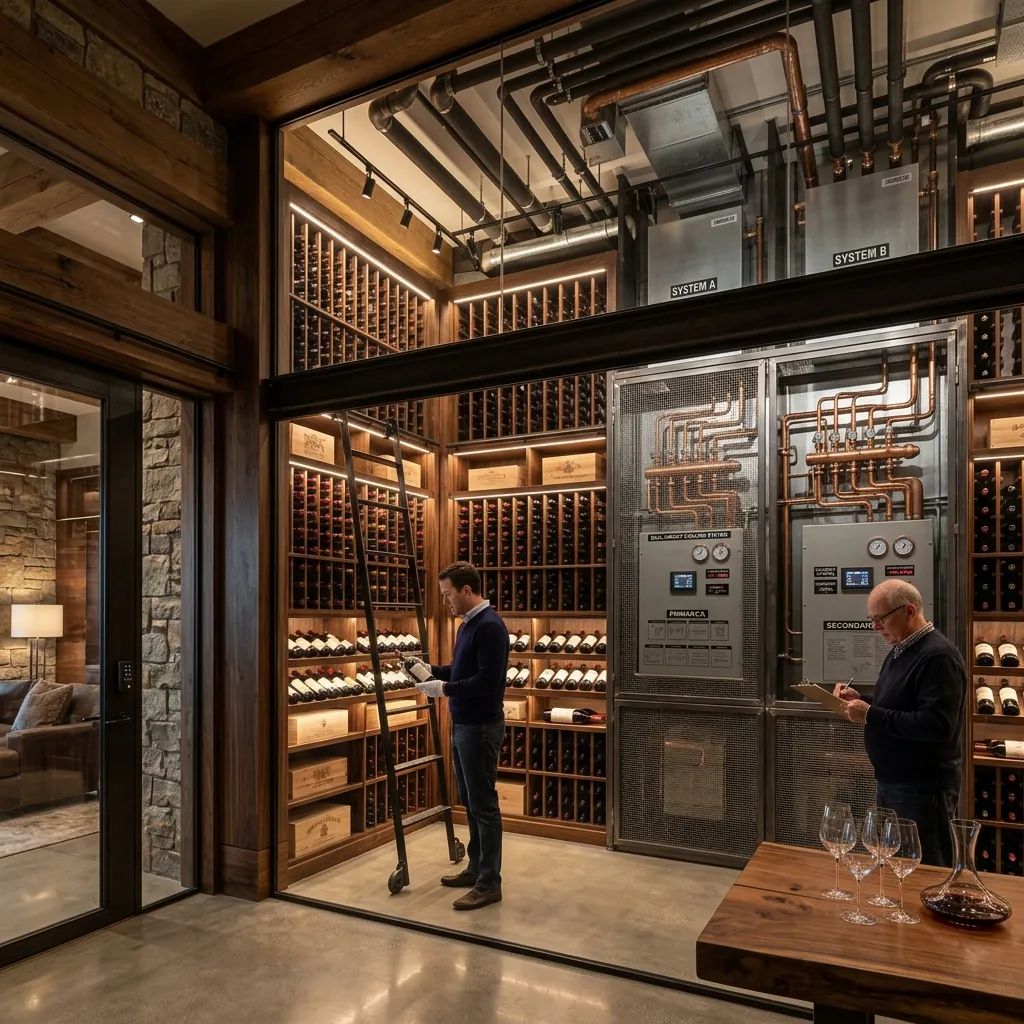
Because the equipment is not mounted directly into the cellar wall, ducted systems give architects, builders, and designers far more freedom when planning the room. The cellar can feature glass walls, intricate racking, decorative ceilings, and custom lighting without needing to account for a visible cooling unit. This flexibility is especially valuable in luxury projects where the cellar is intended to be a focal point and every visible element must contribute to a polished, intentional design.
Wine is highly sensitive to environmental fluctuations, and ducted systems are engineered to maintain the steady conditions needed for long-term storage. By continuously circulating conditioned air through the cellar and returning it to the remote cooling unit, the system helps prevent temperature swings, excessive dryness, and the kinds of heat buildup that can damage corks, labels, and flavor integrity. The result is a more dependable storage environment for both everyday drinking wines and rare collectibles.
Ducted cooling is often the best solution for larger wine rooms, custom cellars with complex layouts, and projects where a traditional self-contained unit would be insufficient or aesthetically intrusive. The system can be sized to match the cellar’s insulation, volume, and usage patterns, making it a scalable choice for serious collectors. When properly designed and installed, it delivers the refined performance expected in high-value storage environments while supporting a clean, upscale appearance.
A ducted wine cellar cooling system works by separating the visible cellar environment from the refrigeration machinery that actually creates the cooled air. Instead of placing the unit directly in the room, the system uses supply and return ductwork to deliver conditioned air into the cellar and draw warmer air back to the remote cooling equipment. This method allows the cellar to maintain the precise temperature range required for wine storage while keeping the mechanical components out of sight and out of earshot. The concept sounds simple, but the engineering behind it is highly specialized. Every part of the system must be matched to the cellar’s size, insulation quality, vapor barrier integrity, glass exposure, ceiling height, and the amount of heat generated by surrounding spaces. If any of those variables are ignored, the result can be uneven cooling, excessive runtime, or a system that struggles to maintain stable conditions during seasonal temperature changes. That is why ducted wine cellar cooling is not simply a product choice; it is a design strategy that depends on careful planning from the beginning.
One of the most important reasons ducted systems are so effective is that they allow the refrigeration equipment to be placed in an area where heat and noise can be managed more efficiently. In many homes, the best location for the mechanical portion of the system is a utility room, attic, or service space that can handle airflow and drainage without affecting the cellar’s appearance. The system then uses insulated ductwork to move air between the cellar and the remote unit. This separation improves aesthetics and can also improve serviceability because technicians can access the equipment without entering the wine room. However, the duct path must be designed correctly. Long duct runs, excessive bends, undersized ducts, or poor insulation can reduce airflow and make the system less efficient. In a wine cellar, even small losses in performance matter because the goal is not just to cool the room, but to preserve a narrow and stable climate over long periods of time.
Temperature consistency is the central mission of any wine cellar cooling system, and ducted designs excel when they are properly matched to the cellar envelope. Wine ages best when it is protected from heat spikes, cold drops, and rapid fluctuations that can expand and contract corks or accelerate chemical changes in the wine. A ducted system helps avoid those issues by circulating conditioned air in a controlled pattern, preventing stagnant hot spots and helping the entire room remain balanced. This is particularly important in cellars with glass doors, exterior walls, or adjacent mechanical spaces that introduce extra thermal load. In those environments, a system that is too small or poorly designed may run constantly and still fail to keep up, while an oversized system may short-cycle and reduce humidity control. A professionally engineered ducted solution accounts for those realities and aims for smooth, steady operation rather than aggressive bursts of cooling.
Humidity control is another critical reason ducted wine cellar cooling deserves careful attention. Wine corks need a properly balanced environment to remain intact and effective, and a cellar that becomes too dry can cause cork shrinkage and premature oxidation. On the other hand, excessive humidity can encourage mold, damage labels, and create a musty storage environment. A well-designed ducted system helps maintain the ideal balance by conditioning the air in a way that supports both temperature and moisture stability. The cellar itself should also be built as a sealed envelope with insulation and a vapor barrier, because the cooling system can only perform as well as the room it serves. If the enclosure leaks air, the unit must work harder to compensate, which can lead to inconsistent performance and unnecessary wear. In other words, the ducted system is only one part of the preservation equation; the room construction, insulation strategy, and sealing details are equally important to success.
For homeowners and designers, one of the biggest benefits of ducted wine cellar cooling is the way it supports creative freedom. Because the equipment is hidden, the cellar can be treated as a true architectural feature rather than a utility space. That opens the door to custom racking, dramatic lighting, frameless glass, floating display shelves, and premium finishes that would otherwise be interrupted by a visible cooling unit. This makes ducted systems especially popular in luxury basements, wine rooms adjacent to dining spaces, and showcase cellars designed for entertaining. The room becomes more than storage; it becomes part of the home’s identity. Yet the visual appeal should never overshadow the technical requirements. A beautiful cellar that lacks proper climate control is still a poor wine storage environment. The best ducted installations combine visual sophistication with engineering precision so that the cellar performs as beautifully as it looks.
Another advantage of ducted systems is their adaptability to complex projects. Not every cellar has a convenient wall for mounting a self-contained unit, and not every home offers a straightforward path for cooling equipment. Ducted systems can often be configured around those challenges by using flexible routing options and remote placement. This makes them especially useful in custom homes where the cellar is located in a central living area, beneath a staircase, or in a space where noise isolation is a priority. For larger cellars, the ability to distribute conditioned air through ductwork can also help create a more even environment from corner to corner. That said, this flexibility should not be mistaken for simplicity. Ducted systems demand accurate load calculations, thoughtful duct design, and a clear understanding of how the room will be used. The more ambitious the cellar, the more important it becomes to work with specialists who understand both wine preservation and HVAC principles.
Ultimately, ducted wine cellar cooling matters because wine is a living product that responds to its environment over time. The system must do more than just cool the air; it must preserve a stable, balanced, and quietly controlled microclimate that supports the long-term health of the collection. When the design is done correctly, the cellar feels effortless. Bottles rest in a calm environment, the room remains visually uninterrupted, and the cooling system operates in the background without drawing attention to itself. That invisible performance is what makes ducted cooling so appealing to serious collectors, designers, and builders who want the highest level of refinement in both function and form.
Essential Wine Cellar Engineering Resources:
Successful ducted wine cellar cooling begins long before the equipment is installed. The planning phase is where the entire project is either set up for long-term success or saddled with avoidable problems. The first step is understanding the actual cooling load of the cellar, which means evaluating not only the room’s dimensions but also its insulation quality, vapor barrier, glass exposure, door type, ceiling height, and the temperature of surrounding spaces. A cellar located below grade with minimal glass and properly insulated walls will have a very different cooling requirement than a showcase room with extensive glazing or a cellar adjacent to a warm mechanical area. This is why generic sizing estimates are risky. A system that is too small may never fully stabilize the room, while one that is too large may cycle too frequently, reducing dehumidification and creating uneven conditions. Proper sizing is the foundation of dependable performance, and it is one of the most important reasons to involve experienced wine cooling professionals early in the design process.
Insulation and vapor barrier construction are just as important as the cooling equipment itself. A ducted system can only maintain a stable environment if the cellar envelope is built to resist heat gain and moisture intrusion. High-quality insulation limits thermal transfer through walls, ceilings, and floors, while a continuous vapor barrier helps prevent humid air from entering the room and condensing inside the structure. In a wine cellar, these details are not optional. Even small air leaks can force the cooling system to work harder, shorten equipment life, and compromise humidity levels. Builders and homeowners should pay special attention to penetrations around lighting, electrical boxes, glass framing, and door assemblies, because those are common weak points. The best ducted wine cellar cooling installation starts with a well-sealed room, because the system is intended to preserve a carefully controlled environment, not compensate for poor construction.
Duct design is another area where expertise makes a major difference. Since the cooling unit is remote, the conditioned air must travel through ductwork before it reaches the cellar. That means duct length, diameter, insulation, and layout all influence how efficiently the system performs. Smooth airflow is essential, and that requires minimizing sharp turns, unnecessary restrictions, and heat loss along the duct path. Supply and return air should be balanced so the cellar receives consistent circulation without creating drafts that could affect wine storage conditions. In addition, the location of the supply registers and return grilles should encourage even air distribution throughout the room. Poorly placed duct outlets can lead to cold spots near the ceiling, warm pockets near the floor, or stagnant zones behind racking. A well-planned system avoids those problems by treating airflow as part of the cellar’s architecture rather than an afterthought.
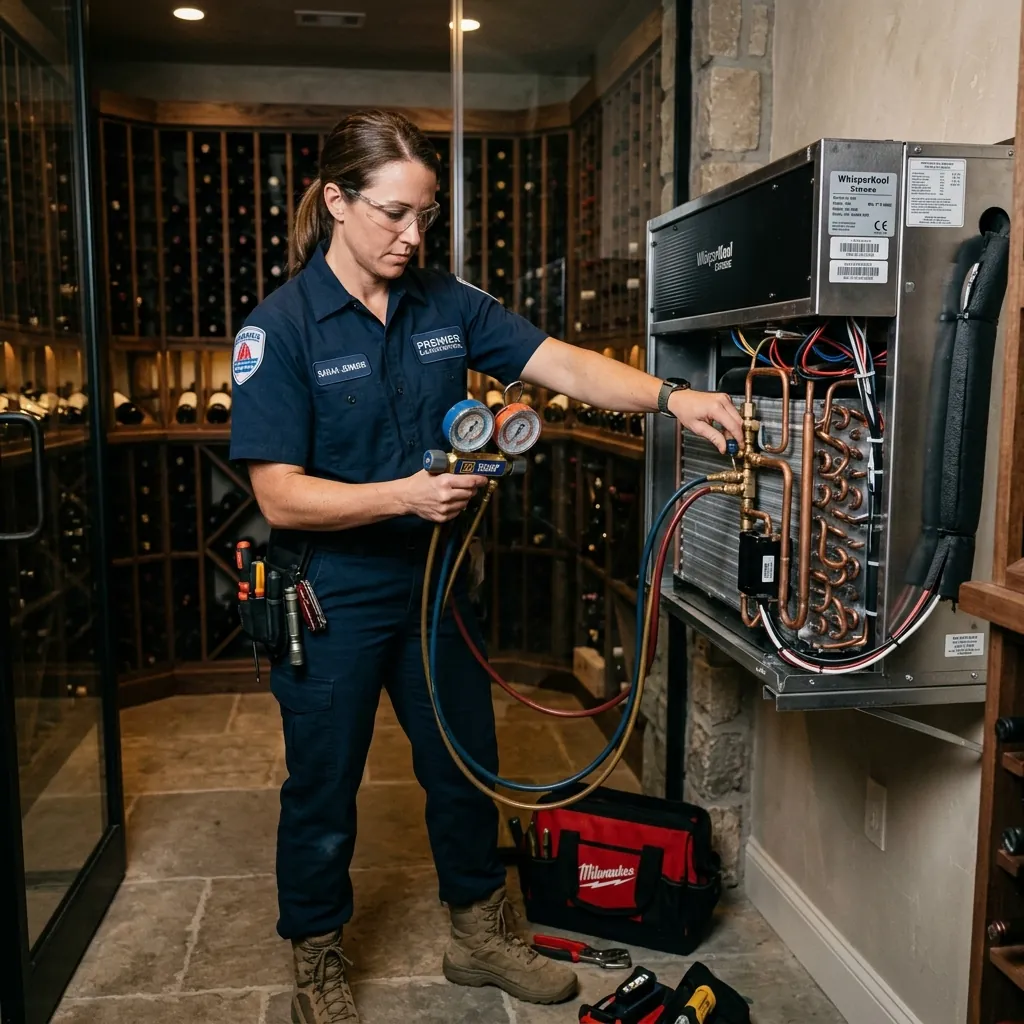
Installation quality also matters immensely because ducted systems are more complex than simple through-the-wall units. The mechanical unit must be mounted securely, with attention to vibration isolation, service access, drainage, and airflow clearance. The ductwork must be properly sealed and insulated to prevent condensation and energy loss. Electrical connections must be configured to support the equipment safely and reliably. If the system includes condensate management, that too must be installed with care so that moisture is removed efficiently without creating leaks or maintenance headaches. In many projects, the cooling equipment is hidden in an attic or utility space, which can make service access more challenging if it is not planned correctly. That is why a thoughtful installation includes room for technicians to inspect, clean, and maintain the system over time. A hidden system should not become an inaccessible system.
Noise control is one of the subtle but important benefits of ducted wine cellar cooling, and it should be preserved through proper installation. Even though the compressor and fans are located remotely, vibration can still travel through framing, ductwork, or mounting surfaces if the system is not isolated correctly. This is particularly relevant in luxury homes where the cellar may sit near living spaces, media rooms, or dining areas. Mounting hardware, flexible connections, and duct supports should all be selected to reduce the transmission of mechanical noise. The goal is for the cellar to feel tranquil and refined, with no audible reminder that a refrigeration system is running in the background. When done well, the only thing noticeable about the system is the absence of distraction.
Another major planning consideration is the relationship between the cooling system and the cellar’s intended use. A private collector who opens the cellar occasionally will have different airflow and access needs than a hospitality venue or commercial wine room with frequent traffic. Door openings, lighting loads, and occupancy patterns all affect how much heat enters the room and how often the system must respond. If the cellar will be used for entertaining, the design should account for more frequent door openings and the temporary introduction of warm air. If the cellar is intended for long-term archival storage, the design may prioritize absolute stability and minimal disturbance. These use-case differences influence not only equipment sizing but also duct placement, thermostat strategy, and control settings. The most effective ducted wine cellar cooling systems are tailored to the real-world habits of the space, not just the dimensions on a blueprint.
For homeowners and builders, the best approach is to treat ducted cooling as part of the cellar design from the beginning, not as a final accessory added after construction. When the system is integrated early, the walls, ceiling, insulation, and mechanical routing can all be coordinated for optimal performance. That reduces the chance of costly revisions and helps ensure the cellar is both beautiful and technically sound. In a premium wine room, every detail matters, from the seal on the door to the path of the ductwork above the ceiling. Ducted wine cellar cooling rewards that level of attention by delivering quiet, reliable, and elegant climate control that supports the collection for years to come.
Once a ducted wine cellar cooling system is installed, the focus shifts from design and construction to long-term performance and preservation. Like any precision climate-control system, it benefits from regular maintenance, periodic inspection, and a clear understanding of how the cellar behaves throughout the year. The purpose of maintenance is not simply to keep the equipment running; it is to protect the collection by ensuring that temperature and humidity remain stable over time. Filters should be checked and replaced according to the manufacturer’s recommendations, airflow pathways should be kept clear, and the remote mechanical components should be inspected for signs of wear, debris buildup, or drainage issues. Because the equipment is often hidden away from the cellar itself, it is easy to forget that it needs attention. Yet the best wine storage environments are those where the system is cared for proactively rather than reactively. Preventive maintenance helps avoid unexpected failures, improves efficiency, and extends the useful life of the equipment.
Monitoring performance is also important because wine cellars are not static environments. Seasonal weather changes, shifts in household HVAC usage, and changes in cellar contents can all affect how the cooling system behaves. A cellar that performs well in winter may face higher loads in summer, especially if nearby spaces become warmer or if the home’s overall humidity changes. Owners should pay attention to temperature consistency, condensation patterns, unusual noise, and any signs that the cellar is struggling to maintain its target conditions. If the system begins to run longer than usual, cycles too frequently, or fails to hold humidity within an acceptable range, those are signs that something in the environment or equipment may need to be adjusted. In many cases, small corrections such as sealing a leak, improving airflow, or servicing the unit can restore performance. The key is to treat the cooling system as part of a living environment that deserves ongoing care.
Long-term value is one of the strongest arguments for ducted wine cellar cooling, especially in homes where the cellar is intended to be both a functional storage space and a design feature that adds prestige to the property. A properly executed ducted system supports the quality of the wine collection, protects the investment in the cellar build itself, and enhances the overall experience of using the space. Buyers and guests alike notice when a wine room feels quiet, polished, and professionally controlled. That impression can elevate the perceived value of the entire home. More importantly, the system helps preserve the actual contents of the cellar, which may include rare vintages, collectible bottles, and wines intended for long-term aging. The financial and emotional value of those bottles can be significant, making reliable climate control far more than a convenience. It is a form of asset protection.
There is also a practical efficiency benefit to well-maintained ducted systems. When the equipment is clean, correctly sized, and operating in a sealed cellar, it does not need to work as hard to achieve the desired conditions. That can translate into more predictable energy use, less mechanical strain, and a quieter overall operation. Efficiency is not just about lowering utility costs; it is about reducing wear so the system remains dependable year after year. In a wine cellar, reliability is everything. A brief failure during a heat wave or a prolonged period of high humidity can put the collection at risk. That is why ongoing care matters so much. The system should be viewed as a preservation tool, not a set-it-and-forget-it appliance.
For collectors considering future upgrades, ducted wine cellar cooling also offers a strong platform for refinement. As the cellar evolves, the system can often be adjusted or upgraded to better suit changing needs, whether that means accommodating a larger collection, refining control strategies, or integrating more advanced monitoring. Because the equipment is separated from the room, the visible cellar design can remain intact even if mechanical improvements are made later. This is a major advantage over more intrusive cooling solutions, where upgrades can disrupt the appearance of the room. In this way, ducted systems support both present-day performance and future adaptability, which is especially valuable in custom homes and long-term collector spaces.
Ultimately, the long-term success of ducted wine cellar cooling comes down to discipline: disciplined design, disciplined installation, and disciplined maintenance. When those elements are in place, the system becomes nearly invisible in the best possible way. The cellar stays cool, quiet, and balanced. The bottles remain protected. The room retains its beauty. And the owner gains peace of mind knowing that the environment supporting the collection is built to perform. For anyone serious about wine preservation, that combination of elegance and reliability is difficult to beat.
At VA Wine Cooling, this is the standard we believe a premium wine cellar should meet. A ducted system is not just a technical choice; it is a commitment to preserving wine in a way that respects both the collection and the architecture surrounding it. Whether the project is a private cellar, a showcase installation, or a sophisticated renovation, the right cooling strategy can make all the difference between a room that simply stores wine and a cellar that truly protects it for the future.
The biggest advantage is that the cooling equipment is hidden away from the cellar itself, which creates a quieter, cleaner, and more elegant wine room. Instead of seeing and hearing the refrigeration system inside the storage space, the cellar can be designed as a true showcase environment with custom finishes, glass walls, and refined lighting. Ducted systems are especially valuable when aesthetics, noise reduction, and design flexibility are top priorities. They also allow the mechanical components to be placed in a remote location that may be easier to service, which can improve long-term convenience. In short, ducted cooling delivers the performance needed for wine preservation while keeping the cellar visually uninterrupted and architecturally polished.
A cellar is often a strong candidate for ducted cooling if the design calls for a quiet environment, a hidden mechanical system, or a high-end presentation that would be disrupted by a visible through-the-wall unit. These systems are especially well suited to custom wine rooms, larger cellars, glass enclosures, and projects where the cooling equipment must be located outside the cellar due to space or aesthetic constraints. That said, suitability depends on more than style alone. The room must be properly insulated, sealed with a vapor barrier, and sized correctly for the intended cooling load. Ducted systems can be highly effective, but they require careful planning, accurate load calculations, and thoughtful duct routing. If those conditions are met, ducted cooling can be an excellent choice for both residential and commercial wine storage.
A ducted wine cellar cooling system should be maintained regularly to preserve both performance and wine safety. Basic maintenance usually includes checking or replacing filters, inspecting ductwork for leaks or restrictions, confirming that drainage is working properly, and ensuring the remote mechanical components are clean and operating within specification. Because the equipment is often hidden in a utility space, attic, or mechanical room, it is easy to overlook until a problem becomes noticeable, so scheduled inspections are important. Owners should also monitor the cellar for changes in temperature consistency, humidity levels, condensation, or unusual noise. Preventive maintenance helps avoid breakdowns, improves efficiency, and extends the life of the system, which is especially important when the cellar contains valuable bottles that depend on stable environmental control.
Whether you need installation, service, or maintenance — our team is ready to help. Fill out the form below and we'll get back to you within 24 hours.
By submitting this form, you agree to our Privacy Policy. CSLB Lic#1055057
VA Wine Cooling engineers and maintains precision commercial and residential cooling systems across Southern California.