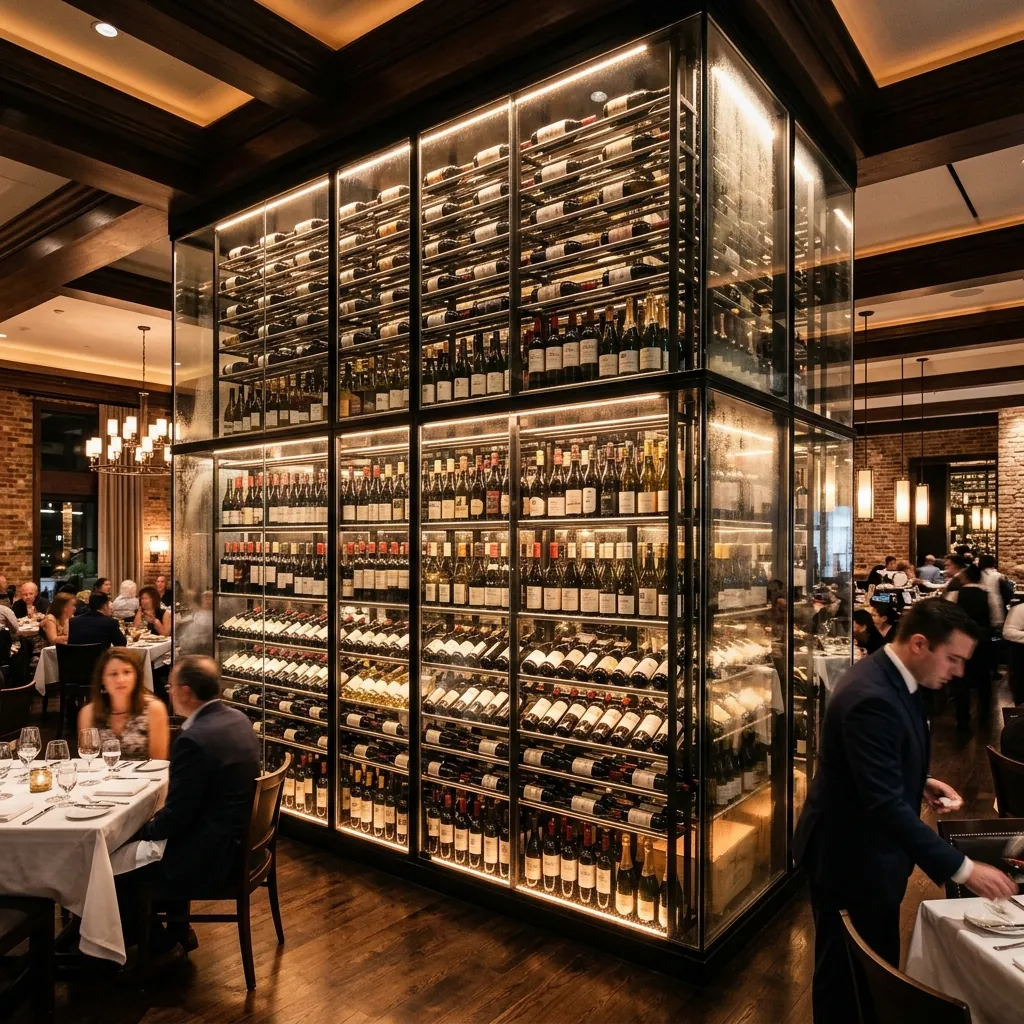
Protect your wine collection, preserve ideal cellar temperatures, and stop costly cooling failures before they damage your investment. This comprehensive guide explains how Freon leaks happen, how to detect them early, and why expert service matters for long-term wine storage performance.
Book a ConsultationFreon leaks are one of the most serious issues a wine cooling system can develop because even a small refrigerant loss can reduce cooling capacity, increase runtime, and gradually push your cellar out of its safe temperature range. In a wine storage environment, temperature stability is everything: the difference between a properly maintained cellar and a compromised one can mean the difference between preserving a bottle at peak quality and allowing it to age prematurely. When a refrigerant leak begins, the system may still appear to be running normally at first, but the compressor, evaporator, and condenser are forced to work harder to produce the same results. That extra strain can lead to higher energy use, uneven cooling, excessive wear, and eventually complete system failure. Understanding the signs, causes, and service process is essential for any homeowner, collector, or business owner who depends on reliable wine refrigeration.
Early detection helps prevent temperature swings, compressor damage, and expensive emergency services by identifying refrigerant loss before the system loses its ability to maintain cellar conditions.
A trained technician uses specialized tools, pressure testing, and leak-search methods to pinpoint the exact source of the problem instead of guessing or replacing unnecessary parts.
Proper service involves sealing the leak, restoring the system to the correct refrigerant charge, and verifying performance so the cooling unit can operate efficiently and reliably again.
Comprehensive service not only fixes the immediate issue but also helps protect your wine collection by reducing future failures and supporting stable cellar humidity and temperature.
Freon leaks in wine cooling equipment can develop for several reasons, and the root cause is often tied to age, vibration, corrosion, installation issues, or general wear and tear over time. Wine cooling systems operate continuously for long periods, and that constant cycling places stress on joints, fittings, coils, and line sets. In many cases, leaks begin as microscopic openings that are not immediately visible to the naked eye. These tiny breaches can slowly release refrigerant until the system no longer performs as designed. Because wine cellars rely on precise environmental control, even a gradual loss of refrigerant can become a major issue long before the owner realizes anything is wrong.
One of the most common contributors to refrigerant loss is vibration. A cooling unit that runs frequently will naturally create movement in its components, and if the system was not installed with proper support or if mounting hardware loosens over time, that vibration can cause joints to weaken. Copper tubing, flare fittings, brazed connections, and service valves are all potential weak points. In addition, systems installed in tight mechanical spaces or areas with limited airflow may experience additional stress because the equipment runs hotter and longer than intended. Over time, that added strain can accelerate deterioration and create conditions that make leaks more likely.
Corrosion is another major culprit, especially in environments with humidity, salt air, or airborne contaminants. While wine cellars are designed to manage humidity, surrounding mechanical rooms or attic spaces may expose refrigerant lines and components to moisture that slowly breaks down the metal. Corrosion can create pinhole leaks in coils or line sets, and those leaks are often difficult to locate without professional tools. In some cases, the problem is not the refrigerant itself but the environment around the unit. A system placed in an area with poor drainage, condensation buildup, or chemical exposure may be more vulnerable to premature failure than one installed in a clean, dry, well-ventilated location.
Installation errors can also lead to future refrigerant leaks. If a wine cooling system is not properly charged, if fittings are over-tightened, or if line sets are bent too sharply during installation, the system may develop weaknesses that only become apparent after months or years of operation. Poor workmanship during the original setup often causes recurring problems because the underlying flaw remains hidden until the refrigerant begins to escape. This is one reason professional installation and maintenance are so important. A properly installed system is far less likely to suffer from avoidable Freon leak issues, and when a problem does arise, it is easier to identify and correct.
Age is also a factor. As wine cooling systems mature, seals dry out, metal expands and contracts repeatedly, and components naturally lose integrity. Older units may still function, but they often become more susceptible to leaks as the system approaches the end of its service life. In these situations, service decisions should be based not only on the leak itself but also on the overall condition of the unit. A single leak on an aging system may be a warning sign that other parts are nearing failure as well. That is why a thorough inspection is always recommended before deciding whether to service or replace the equipment.
Finally, refrigerant leaks can sometimes be connected to prior service work. If a system was recharged without properly addressing the source of the leak, the refrigerant may escape again, creating a cycle of repeated performance problems. This is frustrating for owners and harmful to the equipment because the compressor continues operating under stress while the real issue remains unresolved. A complete approach to Freon leak detection and service must therefore focus on root cause analysis, not just short-term restoration. For wine cooling systems, reliability is not optional; it is essential to preserving the quality, value, and longevity of the collection inside the cellar.
Essential Wine Cellar Engineering Resources:
Detecting a Freon leak early is one of the most valuable things you can do to protect a wine cellar, because refrigerant loss often begins quietly and progresses gradually before the system shows obvious signs of trouble. The earliest clue is frequently a change in performance rather than a visible problem. A cellar that once held a steady temperature may begin to drift warmer than usual, or the cooling unit may seem to run longer and more frequently to maintain the same setting. These symptoms are easy to overlook at first, especially if the change is subtle. However, in a wine storage environment, even small fluctuations can have meaningful consequences over time, making early recognition critical.
One of the most common warning signs is reduced cooling output. If the unit is running but the cellar is not reaching the desired temperature, refrigerant loss should be considered a possible cause. Low refrigerant reduces the system’s ability to absorb and transfer heat, which means the compressor works harder while delivering less effective cooling. You may also notice that the evaporator coil is not behaving normally. In some cases, parts of the coil may frost unevenly, or the airflow may feel weaker than expected. These signs can indicate that the refrigerant charge is no longer sufficient to support proper heat exchange. Because wine cooling units are designed for consistency, any noticeable change in cooling behavior deserves attention.
Another important indicator is unusual compressor activity. When a system is low on refrigerant, the compressor may cycle more often, run continuously, or sound different than it did before. Some owners describe the unit as sounding strained, louder, or simply more active than normal. This happens because the system is trying to compensate for lost refrigerant by operating longer and harder. If the compressor is forced to work under these conditions for too long, the risk of overheating and mechanical failure increases significantly. At that point, the cost of service can rise quickly, and in severe cases the entire cooling system may need replacement.
Physical signs can also help identify a leak, although they are not always present. Oil residue around fittings, valves, or coil connections may suggest refrigerant is escaping from that area. Since refrigerant often carries lubricating oil with it, the leak point may appear slightly greasy or discolored. In some situations, a technician may detect a faint hissing sound, especially if the leak is active and the opening is relatively small but still pressurized. However, many leaks are too minor to hear, which is why professional leak detection tools are often required. Relying on sight and sound alone is rarely enough to identify the full extent of the issue.
Professional detection methods are far more precise than visual inspection. Technicians may use electronic leak detectors, pressure testing, nitrogen testing, ultraviolet dye, or soap bubble testing depending on the system design and suspected leak location. Electronic detectors are especially useful for finding very small leaks in hard-to-reach places, while pressure testing can confirm whether the system is losing pressure over time. UV dye may help reveal slow leaks that are otherwise invisible. The goal is not simply to confirm that refrigerant is missing, but to determine exactly where and why it is escaping so the service can be permanent and effective. This matters because adding refrigerant without fixing the leak only delays the problem and risks further damage.
For wine cellar owners, the most important lesson is that refrigerant leaks should never be ignored or treated as a minor inconvenience. A cooling system that is losing Freon is not operating safely or efficiently, and the longer the issue continues, the more likely it is to affect cellar temperature, humidity control, and equipment longevity. If you suspect a leak, prompt professional evaluation is the best way to prevent a small issue from becoming a major failure. In a wine storage setting, fast action protects both the cooling unit and the collection it serves.
Professional Freon leak service is essential because wine cooling systems are precision appliances, and serviceing a refrigerant leak requires more than simply adding gas back into the line. The first reason professional service matters is accuracy. A skilled technician must identify the exact location of the leak, assess the condition of the surrounding components, and determine whether the system can be safely restored. This process often involves specialized equipment and a detailed understanding of refrigeration mechanics. Without that expertise, a homeowner may end up spending money on temporary fixes that do not solve the underlying issue. For a wine cellar, where stable temperatures are non-negotiable, that kind of uncertainty is simply too risky.
Another reason professional service is so important is system protection. When refrigerant levels drop, the compressor and other components are exposed to additional strain. If the system is recharged before the leak is serviceed, the equipment may continue operating under abnormal conditions, which can shorten its lifespan and create secondary failures. A professional technician will not only stop the refrigerant loss but also inspect the unit for damage caused by the leak, including overheating, restricted airflow, frozen coils, or electrical stress. This broader evaluation helps ensure the service actually restores dependable operation rather than merely masking the symptoms.
There is also a safety and compliance aspect to consider. Refrigerants must be handled properly, recovered responsibly, and reintroduced into the system according to manufacturer specifications and applicable regulations. Incorrect handling can damage the environment, create safety risks, and lead to improper system performance. Professional technicians understand the correct procedures for recovery, evacuation, leak testing, and recharging. They also know how to verify that the system is operating at the right pressure and temperature after service. This level of precision is especially important in wine cooling applications, where even small performance errors can affect long-term storage conditions.
Professional service also saves time and money in the long run. While it may be tempting to use a quick patch or simply top off the refrigerant, those shortcuts often result in repeated service calls and continued performance loss. A proper service may require brazing, replacing a valve, sealing a joint, or addressing a damaged coil section, but once the source is fixed, the system can return to efficient operation. That efficiency matters because a healthy wine cooling unit uses less energy, runs less often, and places less stress on expensive components. Over the life of the system, a well-executed service can significantly reduce operating costs and help avoid premature replacement.
For collectors, restaurants, and homeowners alike, the value of professional leak service extends beyond the equipment itself. Wine is sensitive to heat, vibration, and environmental inconsistency, so a compromised cooling system can affect the quality of an entire collection. A temperature spike that lasts only a short time may still have consequences for aging, flavor, and preservation. That is why leak service should be viewed as a form of collection protection, not just mechanical maintenance. When the cooling system is restored properly, the cellar regains the stable environment required for proper wine storage, and the owner gains peace of mind knowing the investment is being protected by a reliable, efficient system.
Ultimately, professional Freon leak service is the best path because it addresses the problem at every level: diagnosis, correction, recharge, and verification. It prevents recurring leaks, reduces the chance of compressor failure, and helps ensure that the cooling unit continues to support ideal cellar conditions. In a specialized environment like a wine cellar, that comprehensive approach is not a luxury. It is the standard required to preserve both equipment performance and the integrity of the wine collection itself.
The most common signs include rising cellar temperatures, longer compressor run times, reduced cooling output, frosting on the evaporator coil, and unusual sounds or oil residue around the unit. Because these symptoms can also overlap with other mechanical issues, a professional inspection is the best way to confirm whether refrigerant loss is the real cause. Technicians use leak detectors, pressure testing, and other diagnostic tools to locate the source accurately and determine whether the system can be serviceed safely and effectively.
No, adding refrigerant without serviceing the leak is only a temporary measure and can lead to repeated failure, higher operating costs, and possible compressor damage. A proper service must identify and seal the leak first, then restore the system to the correct refrigerant charge. This ensures the unit can operate efficiently and helps prevent ongoing damage. In a wine cellar, where temperature stability is critical, a short-term fix is not a reliable solution.
The decision depends on the age of the unit, the severity of the leak, the condition of the compressor and coils, and the overall reliability of the system. If the leak is isolated and the equipment is otherwise in good shape, service is often the best option. However, if the system is older, has repeated refrigerant losses, or shows signs of broader wear, replacement may be more cost-effective over time. A qualified technician can inspect the unit and recommend the most practical path based on performance, service history, and long-term value.
Whether you need installation, service, or maintenance — our team is ready to help. Fill out the form below and we'll get back to you within 24 hours.
By submitting this form, you agree to our Privacy Policy. CSLB Lic#1055057
VA Wine Cooling engineers and maintains precision commercial and residential cooling systems across Southern California.