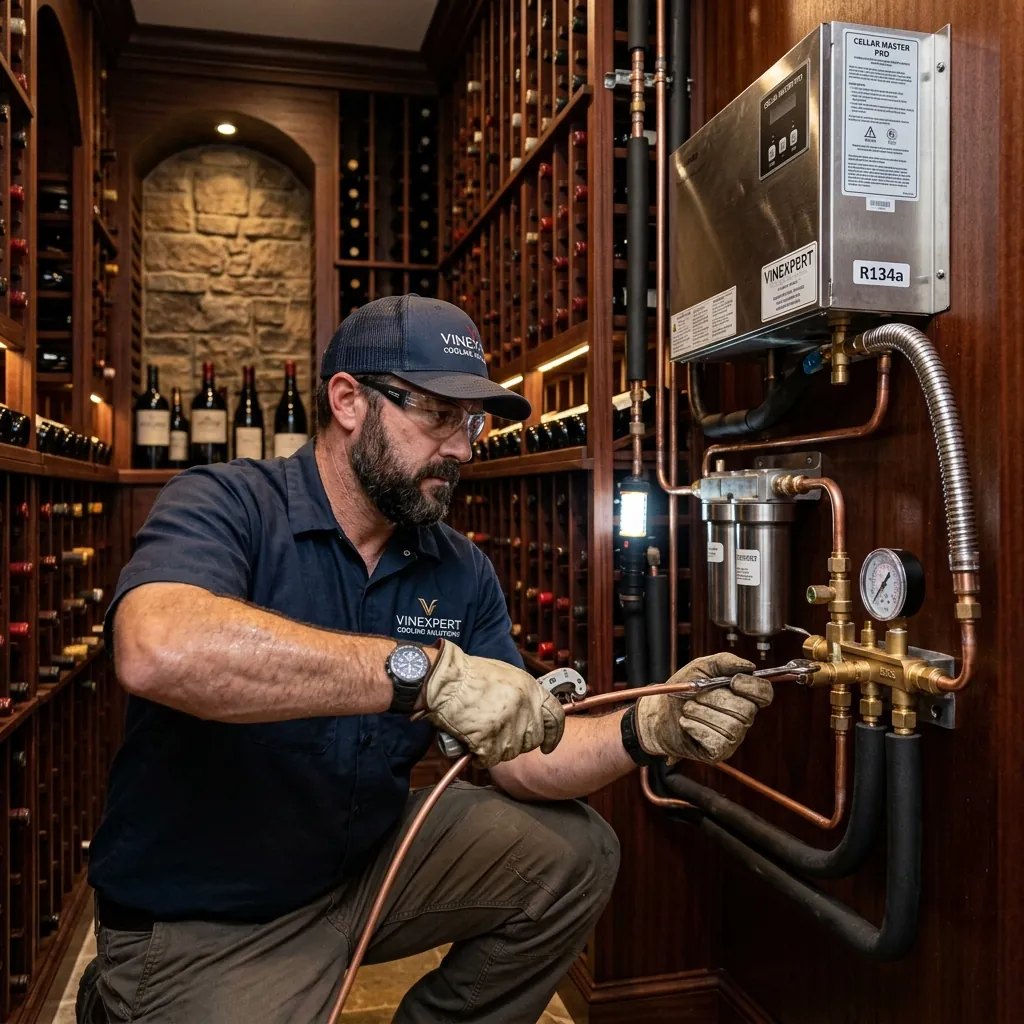
Discover how whisper-quiet wine cooling systems protect every bottle in your collection without disrupting the peace of your home, tasting room, or entertainment space. From advanced compressor engineering to vibration control and installation best practices, this guide explains what truly makes a wine cellar cooling system quiet, reliable, and worthy of your finest vintages.
Book a ConsultationA wine cellar is more than a storage room; it is a carefully controlled environment where temperature, humidity, vibration, and airflow all work together to preserve the character, structure, and aging potential of every bottle. For homeowners, collectors, and hospitality professionals alike, the ideal wine cooling system must do more than maintain a precise climate. It must do so discreetly, efficiently, and consistently, without introducing unnecessary noise that can distract from the ambiance of a living space or signal mechanical stress inside the system. Whisper-quiet wine cooling systems have become the preferred choice for discerning wine enthusiasts because they combine advanced engineering with a low-profile acoustic footprint, allowing the cellar to function as a true sanctuary for wine. Whether the cellar is integrated into a dining room, built beneath a staircase, housed in a basement, or designed as a showpiece behind glass, quiet operation is not a luxury; it is an essential part of preserving both the wine and the experience of enjoying it.
Modern whisper-quiet systems use refined compressor designs, isolation mounts, and balanced internal components to reduce operational noise at the source, helping the cooling unit run smoothly while minimizing hum, vibration, and start-stop disruption.
From anti-vibration mounting to carefully engineered airflow paths, quiet wine cooling systems are designed to prevent mechanical vibration from traveling into racking, walls, and bottles, protecting sediment and supporting long-term wine stability.
A premium quiet cooling system does not simply run softly; it also maintains accurate, even temperatures with fewer fluctuations, which is critical for preserving wine quality and reducing strain on the equipment over time.
Whisper-quiet wine cooling solutions are available in ducted, split, self-contained, and through-the-wall configurations, making it easier to match the system to the cellar’s layout, aesthetic goals, and acoustic requirements.
When people search for a whisper-quiet wine cooling system, they often assume the term refers only to the decibel rating listed on a product sheet. In reality, quiet performance is the result of a much broader set of design decisions, each one contributing to how a system sounds, feels, and behaves once installed. A truly quiet wine cellar cooling system is engineered from the compressor outward, with attention to fan speed, refrigerant flow, cabinet insulation, vibration isolation, airflow management, and the way the unit integrates with the cellar envelope. The goal is not simply to lower sound output in a lab; it is to create a cooling solution that remains unobtrusive in the real world, where walls, ceilings, duct runs, cabinetry, and neighboring rooms can amplify even a modest amount of mechanical noise. For that reason, the quietest wine cooling systems are often the ones that balance performance and acoustics rather than chasing one at the expense of the other.
One of the most important factors in quiet operation is compressor quality. The compressor is the heart of the system, and if it is undersized, overworked, or poorly isolated, it can generate resonance that travels through the entire installation. High-end whisper-quiet systems typically use components selected for smooth cycling and reduced mechanical chatter. They may also incorporate soft-start behavior, improved refrigerant routing, and mounting systems that absorb vibration before it reaches the structure. This matters because a wine cellar cooling unit that sounds like a small appliance in a quiet home can quickly become intrusive, especially in open-concept spaces where the cellar is visible and audible from gathering areas. The best systems are designed to disappear into the background, allowing the room itself to remain the focal point.
Fan design is another major contributor to acoustic performance. Air movement is essential in a wine cellar because it distributes cooled air evenly and helps prevent hot spots, but airflow can become noisy if fans spin too fast, are poorly balanced, or push air through restrictive paths. Whisper-quiet wine cooling systems use optimized fan blades, variable-speed controls, and airflow channels that reduce turbulence while still delivering the volume of air needed to stabilize the cellar. This is especially important in larger cellars or custom spaces where the unit must work harder to maintain stable conditions. A system that is quiet at idle but noisy under load is not truly whisper-quiet; it must maintain a low acoustic profile throughout the full operating range, including peak demand periods during warm weather or after the cellar door has been opened repeatedly.
Insulation and cabinet construction also play a critical role. A cooling unit may have excellent internal components, but if the housing transmits vibration or allows sound to escape freely, the acoustic advantage is lost. Premium systems often use insulated panels, tightly fitted enclosures, and materials chosen to dampen resonance. In ducted or split systems, the mechanical section can be located away from the cellar entirely, which dramatically reduces the sound experienced inside the room. This is one reason whisper-quiet wine cooling solutions are so popular in luxury homes and hospitality settings: they allow the cellar to function as both a technical environment and a visual feature without the audible presence of machinery dominating the experience. The result is a more refined space where guests can focus on the wine, the design, and the moment rather than the hum of equipment.
Installation quality is just as important as product design. Even the quietest wine cellar cooling system can become noisy if it is mounted improperly, connected to rigid ducting that transmits vibration, or installed in a way that causes the unit to strain against poor airflow conditions. Proper clearances, correct insulation, sealed vapor barriers, and professional calibration all help ensure that the system performs as intended. This is why homeowners and wine collectors often work with specialists who understand both the mechanical and environmental demands of wine storage. A whisper-quiet system is not simply purchased; it is matched, designed, and installed as part of a complete cellar strategy. When done correctly, the cooling system supports the wine collection silently in the background for years, preserving not only the bottles but also the atmosphere of the space.
For many clients, the value of quiet operation becomes obvious only after installation. A cellar that once felt mechanical and utilitarian can suddenly feel elegant, calm, and integrated into the home. The absence of disruptive sound changes how the room is used and appreciated. It becomes a place where a collector can browse labels in peace, where guests can enjoy a tasting without distraction, and where the cellar itself can be showcased as a luxury feature rather than hidden as an appliance closet. Whisper-quiet wine cooling systems therefore serve both a functional purpose and an experiential one. They protect the wine, but they also protect the mood, making them one of the most important investments in any serious cellar project.
Essential Wine Cellar Engineering Resources:
The relationship between silence and wine preservation is often underestimated, yet quiet performance is closely tied to the stability that fine wine requires. Wine is sensitive to temperature swings, excessive vibration, and inconsistent humidity, all of which can be influenced by the way a cooling system operates. A whisper-quiet wine cooling system is usually quiet because it is running efficiently, and that efficiency often translates into better environmental control. When the unit cycles smoothly, avoids unnecessary strain, and distributes air evenly, the cellar experiences fewer abrupt changes in temperature and humidity. For wine, that stability is invaluable because it supports gradual aging, protects cork integrity, and reduces the risk of premature oxidation or spoilage. In other words, the same engineering that makes a system quieter also helps make it better for the wine.
Temperature consistency is one of the most important benefits of a well-designed cooling system. Fine wine ages best in an environment that remains steady over time, typically around 55 degrees Fahrenheit, though exact preferences can vary based on the collection and cellar design. A cooling unit that is noisy because it is constantly ramping up, struggling to recover, or short cycling may be signaling inefficiency and instability. By contrast, a whisper-quiet system often indicates more controlled operation, with the ability to maintain set points without dramatic fluctuations. This steadiness helps protect the chemical balance of the wine and prevents repeated expansion and contraction of the liquid and cork, which can compromise long-term storage conditions. Quiet performance, then, is not merely a comfort feature; it is frequently a sign of thoughtful climate management.
Vibration control is equally important because wine bottles are not inert objects. Sediment in older wines can be disturbed by repeated shaking, and even subtle vibration over long periods may interfere with the delicate aging process. Whisper-quiet cooling systems are typically designed to suppress the mechanical movement that causes this disturbance. Anti-vibration mounts, flexible connectors, and remote compressor placement all help isolate the cellar from mechanical energy. This is especially relevant in display cellars, where bottles are stored on open shelving or custom racks that can transmit vibration more easily than enclosed cabinetry. When the system is quiet, it is often because it is also gentler on the collection. Collectors who invest in older vintages, rare bottles, or wines intended for long-term aging should view vibration reduction as a core preservation feature rather than an optional bonus.
Humidity management also benefits from quiet system design. Although the cooling unit’s primary job is to regulate temperature, the way it moves and conditions air affects moisture levels inside the cellar. Excessively aggressive airflow can dry out the environment, while poor airflow can lead to condensation and uneven climate zones. Whisper-quiet systems often use more refined fan control and ducting layouts, which help maintain a balanced environment without overcorrecting. This matters because corks need appropriate humidity to remain supple, labels need protection from mold and condensation, and the cellar itself must remain free from the dampness that encourages structural damage. A quieter system is often one that is working more intelligently, reducing unnecessary cycling and helping preserve the broader health of the cellar envelope.
Energy efficiency is another indirect advantage. A cooling system that operates smoothly and quietly is often consuming energy in a more measured way than a unit that is constantly fighting against poor design or installation. Over time, that can reduce wear on the compressor, lower utility costs, and extend the service life of the equipment. For wine collectors who view their cellar as a long-term investment, this matters because a cooling system should be dependable over many years, not just impressive on day one. Efficient operation also means fewer service interruptions, fewer emergency services, and less risk of temperature excursions that could harm the collection. In a serious cellar, reliability is inseparable from quietness; a system that sounds strained is often a system that is underperforming in ways that may not be immediately obvious.
Finally, quiet wine cooling systems contribute to the overall psychology of wine storage. A cellar that is calm and stable encourages better habits, from more deliberate bottle selection to more mindful inventory management. It becomes easier to enjoy the space when it feels serene rather than mechanical. For homeowners who entertain, the cellar can serve as a conversation piece without competing with background noise. For collectors, it becomes a trusted preservation environment where the focus stays on the wine itself. This combination of functional stability and sensory comfort is what makes whisper-quiet cooling systems such a valuable part of modern cellar design. They support the wine at every level, from the preservation of structure and aroma to the simple pleasure of opening the cellar door and hearing almost nothing at all.
Selecting the right whisper-quiet wine cooling system begins with understanding the cellar itself. Every wine storage environment has unique requirements based on its size, insulation, location, bottle capacity, door construction, glass exposure, and surrounding ambient temperature. A system that performs beautifully in a small basement cellar may be completely inappropriate for a large glass-enclosed showcase room or a cellar located near a hot mechanical space. This is why the selection process should always begin with a detailed assessment of the room rather than a generic product search. The quietest and most effective systems are those that are sized correctly, matched to the cellar’s heat load, and installed in a configuration that supports both performance and acoustic comfort. When the system fits the room properly, it does not need to overcompensate, which helps keep noise levels low and climate control precise.
One of the first decisions is whether to choose a self-contained, split, or ducted cooling solution. Self-contained systems can be effective for smaller cellars or spaces with straightforward installation requirements, but because the mechanical components are in or near the cellar, they may produce more audible sound than remote alternatives. Split systems separate the evaporator from the condensing unit, allowing the noisier components to be placed elsewhere, which can dramatically improve acoustic comfort inside the cellar. Ducted systems go even further by moving the mechanical noise away from the room and using ductwork to deliver conditioned air discreetly. These options are especially appealing in homes where the cellar is adjacent to living areas or designed as part of an open-plan interior. The best choice depends on the architecture of the space, the desired visual presentation, and the level of quietness required.
Cellar insulation and vapor sealing are equally important because a well-insulated space reduces the workload on the cooling system. If the room leaks conditioned air or allows heat and moisture to enter freely, even the best whisper-quiet wine cooling system will have to run more often and for longer periods, which can increase noise and wear. Proper insulation in the walls, ceiling, and door, along with a correctly installed vapor barrier, helps the system maintain temperature with less effort. This is one of the most overlooked factors in cellar design. Many noise complaints are not caused by a defective unit at all, but by a cellar that is forcing the cooling system to compensate for structural inefficiencies. By addressing insulation first, homeowners can often achieve a quieter, more stable, and more economical installation overall.
Placement and service access should also be considered early in the planning process. A whisper-quiet system can only remain that way if it has enough space to breathe, enough clearance for maintenance, and a route for airflow that does not create restriction or turbulence. Compressors placed too close to walls, fans obstructed by cabinetry, or duct runs with sharp turns can all contribute to excess sound. Likewise, if the unit is difficult to service, maintenance may be delayed, which can lead to dust buildup, reduced efficiency, and louder operation over time. A well-planned installation prioritizes both immediate silence and long-term serviceability. This is one reason many wine cooling specialists recommend designing the cellar around the system rather than trying to retrofit a system into a finished space without considering its acoustic needs.
Aesthetic integration is another important consideration, especially in luxury homes and custom builds. Many clients want the cellar to look as elegant as it performs, and a whisper-quiet system supports that goal by staying out of sight and out of mind. Ducted or remote solutions can preserve the visual purity of glass walls, custom millwork, and architectural lighting while still providing reliable climate control. Even in more traditional basements, the absence of visible machinery can make the room feel more refined and intentional. For collectors who view their cellar as part of the home’s design language, quiet cooling is a crucial ingredient in the overall experience. It allows the bottles, racking, and finishes to take center stage without the distraction of a noisy appliance dominating the room.
Ultimately, the right system is the one that aligns with the cellar’s technical demands and the owner’s expectations for comfort, longevity, and presentation. Whisper-quiet performance should not be treated as a standalone feature, but as the result of a complete design process that includes load calculation, equipment selection, installation quality, and ongoing maintenance. When all of these elements are handled carefully, the result is a wine cellar that feels effortless to use and exceptionally protective of the collection. That is the real promise of whisper-quiet wine cooling systems: they create a controlled environment so seamless that the only thing you notice is how well your wine continues to age, year after year, in a space that remains calm, elegant, and nearly silent.
A truly whisper-quiet wine cooling system is the result of multiple acoustic improvements working together, not just a low decibel rating on a specification sheet. The compressor must be carefully selected and mounted to reduce vibration, the fan system must move air efficiently without turbulence, and the housing or ducting must be designed to prevent sound from escaping or resonating through the structure. In many cases, the quietest systems also place the noisiest components away from the cellar entirely, as with split or ducted designs. Just as important, the cellar itself must be properly insulated and sealed so the system does not have to overwork. If a unit is quiet because it is efficient, balanced, and correctly installed, that is the hallmark of a whisper-quiet system. If it is merely less loud than a standard appliance, it may still be intrusive in a luxury home or tasting space. The distinction matters because wine cellars are often located near living areas, dining rooms, or entertainment spaces where even moderate noise can disrupt the experience.
Yes, in many cases they are, though the real advantage comes from the engineering that makes them quiet. A whisper-quiet wine cooling system typically maintains more stable temperatures, produces less vibration, and cycles more efficiently than a poorly designed or overstrained unit. Those qualities are highly beneficial for wine preservation because fine wine responds best to consistency. Temperature swings can stress corks and alter aging conditions, while vibration can disturb sediment and interfere with the natural development of older bottles. Quiet systems also often indicate better airflow design, which helps distribute cooled air evenly and reduces hot spots or excessive dryness. However, quietness alone is not a guarantee of preservation; the system must still be properly sized for the cellar, installed correctly, and maintained over time. The best outcome is a cooling system that is both acoustically discreet and environmentally precise, giving the collection the stable conditions it needs to mature gracefully.
The quietest installation is usually one that keeps the mechanical components as far from the cellar as practical while still delivering reliable climate control. For many projects, that means choosing a split or ducted system rather than a self-contained unit. Split systems separate the evaporator and condensing sections, allowing the louder compressor to be placed outside the cellar or in a remote mechanical area. Ducted systems can reduce noise even further by routing conditioned air through ducts and locating the mechanical equipment away from the room entirely. That said, the best installation depends on the cellar’s size, construction, and location. A small cellar with limited access may still benefit from a self-contained unit if it is properly isolated and the room is well insulated, while a large showcase cellar will often justify a more advanced remote setup. Regardless of the system type, professional installation is critical. Proper clearances, vibration isolation, duct design, and sealing all influence how quiet the system will be in daily use. In short, the best installation is the one that combines the right equipment with the right room design and the right level of expert planning.
Whether you need installation, service, or maintenance — our team is ready to help. Fill out the form below and we'll get back to you within 24 hours.
By submitting this form, you agree to our Privacy Policy. CSLB Lic#1055057
VA Wine Cooling engineers and maintains precision commercial and residential cooling systems across Southern California.