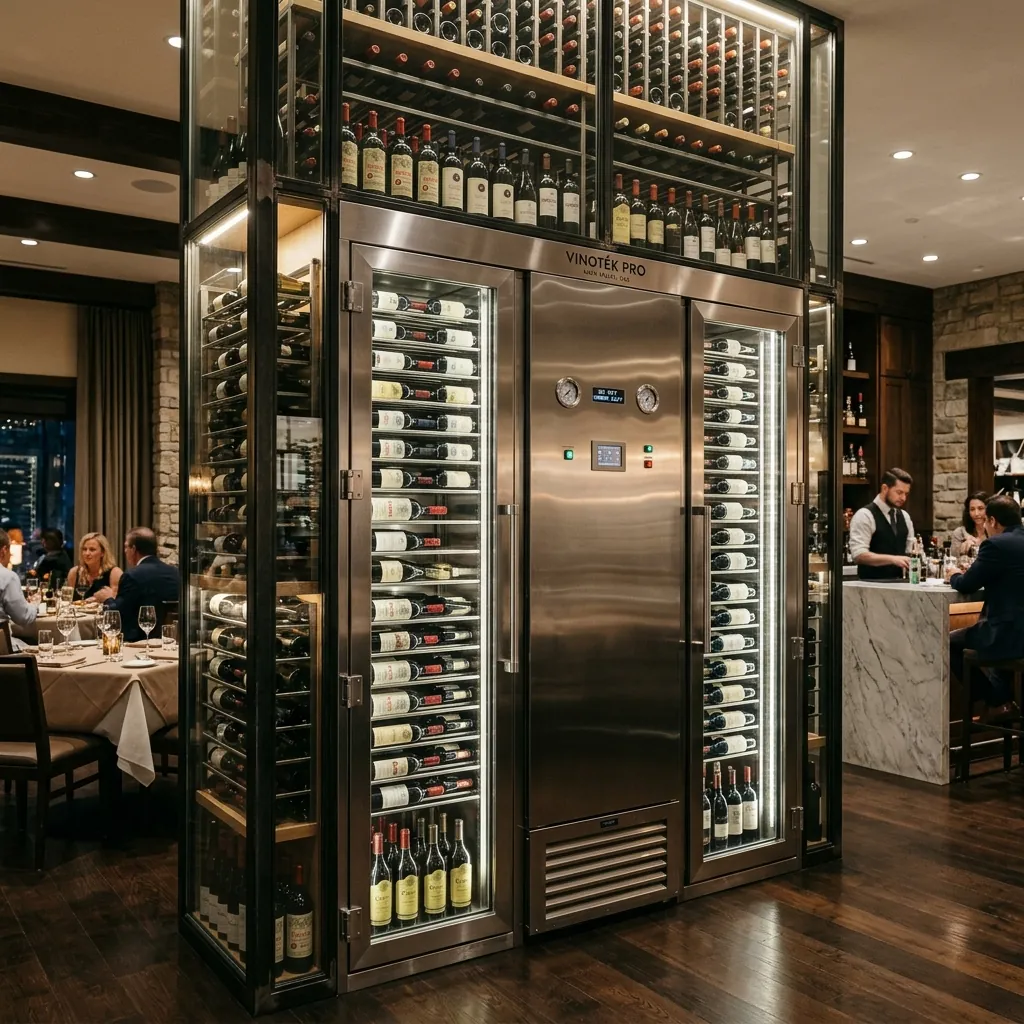
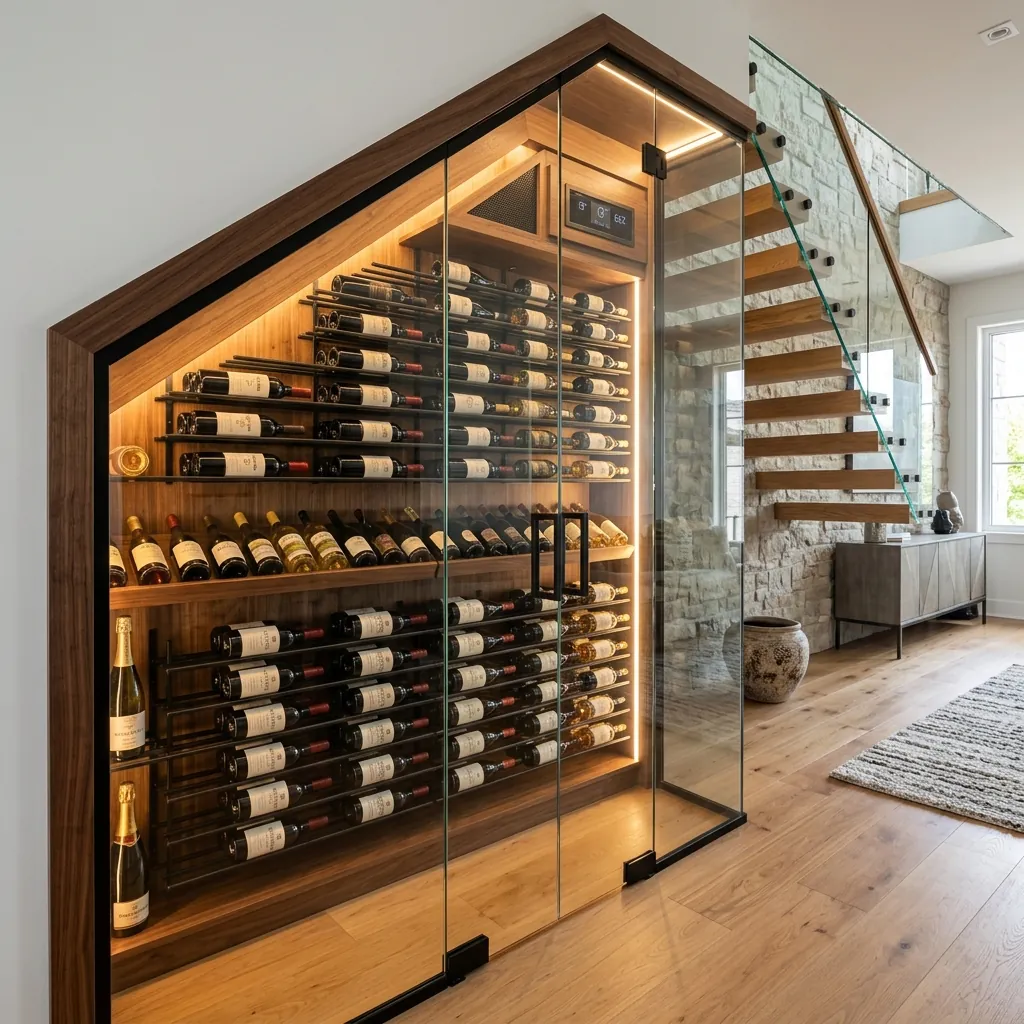
Discover how to maximize wine cellar cooling efficiency with the right design, equipment, and maintenance strategies. This definitive guide helps protect every bottle, reduce energy waste, and create the stable storage environment your collection deserves.
Book a ConsultationWine cellar cooling efficiency is not just about lowering utility bills; it is about preserving the integrity, flavor, and long-term value of every bottle in your collection. A properly engineered wine cellar cooling system maintains precise temperature and humidity conditions with minimal energy waste, preventing the damaging fluctuations that can dry out corks, accelerate aging, or spoil delicate vintages. Whether you are building a private cellar, upgrading a commercial storage room, or replacing an underperforming unit, efficiency should be treated as a core performance metric rather than an afterthought. The most successful wine storage environments are those where insulation, vapor barriers, airflow, refrigeration capacity, and maintenance all work together as a complete system. When each component is optimized, the cooling equipment does less work, lasts longer, runs more quietly, and delivers more consistent results. For homeowners and collectors alike, that means fewer headaches, lower operating costs, and better protection for valuable wine. At VA Wine Cooling, we understand that efficiency is not a single feature; it is the result of careful planning, expert installation, and ongoing care that keeps your cellar performing at its best year after year.
Consistent temperature is the foundation of wine preservation, and an efficient cooling system is designed to hold the cellar within a narrow, stable range without excessive cycling. This reduces stress on the compressor, prevents hot and cold spots, and helps wine age gracefully.
Efficiency is not only about temperature. A well-designed system also supports proper humidity levels, helping protect corks and labels while avoiding excess moisture that can lead to mold, mildew, and unnecessary strain on the cooling equipment.
An efficient wine cellar cooling setup uses less power to achieve the same or better results. Better insulation, correct sizing, and optimized airflow all contribute to reduced runtime, which can meaningfully lower long-term operating costs.
When a cooling system operates efficiently, it experiences less wear and tear. That means fewer breakdowns, reduced service calls, and a longer lifespan for the unit, making your investment more reliable and cost-effective over time.
Wine cellar cooling efficiency begins with understanding that the cooling unit is only one part of a larger environmental system. A cellar can have a premium refrigeration unit and still perform poorly if the room is not properly insulated, sealed, or protected from external heat loads. In practical terms, efficiency means that the system can maintain the desired storage conditions while using the least amount of energy possible and without overworking itself. This is why professional wine cellar design always starts with the structure of the room, not the equipment alone. Walls, ceilings, floors, doors, lighting, and even adjacent spaces all influence how hard the cooling system must work to keep the cellar stable.
One of the most important factors in wine cellar cooling efficiency is insulation. High-quality insulation reduces heat transfer from surrounding spaces into the cellar, allowing the cooling unit to operate more predictably and with shorter run times. Without adequate insulation, the system may cycle constantly, struggling to compensate for temperature gain through walls or ceilings. This not only increases energy consumption but also creates temperature swings that can be harmful to wine. Proper insulation should be paired with a continuous vapor barrier to control moisture migration, because hidden moisture can undermine insulation performance and create conditions where the cooling unit must work harder than necessary.
Another key component is air sealing. Even small gaps around doors, electrical penetrations, trim, or framing can allow warm air to enter the cellar and conditioned air to escape. Over time, this leakage forces the refrigeration system to compensate continuously, reducing efficiency and increasing wear. A truly efficient cellar is carefully sealed from the outside environment, with special attention paid to the door assembly, weather stripping, and any points where pipes, wires, or ducts pass through the envelope. In many cases, improving air sealing can deliver a noticeable boost in performance without changing the cooling unit at all.
Equipment sizing is equally critical. A cooling system that is too small will run constantly and still fail to maintain stable conditions, while an oversized system may short cycle, turning on and off too frequently and creating uneven temperature and humidity control. The most efficient solution is one that is properly matched to the cellar’s cubic footage, insulation quality, glass exposure, ambient climate, and desired storage conditions. This is where professional design makes a major difference, because accurate load calculations account for the real-world variables that determine how much cooling capacity is actually needed.
Air circulation inside the cellar also plays a major role in efficiency. Wine should be stored in an environment where cool air moves gently and evenly, not in a room with stagnant pockets or harsh drafts. Proper circulation helps distribute conditioned air throughout the space, ensuring that bottles stored near the ceiling, floor, or back wall all experience similar conditions. Efficient systems are designed to move air in a controlled way that supports stable temperatures without creating unnecessary turbulence or overcooling certain areas. When airflow is balanced correctly, the unit can maintain consistent performance with less runtime and fewer adjustments.
Finally, maintenance is a major part of efficiency. Dust buildup on filters or coils, blocked vents, and neglected drainage systems can all reduce the effectiveness of a wine cellar cooling system. Over time, these issues force the unit to work harder to achieve the same results, increasing energy use and the risk of mechanical failure. Routine inspections, cleaning, and timely service help preserve optimal performance and ensure that the system continues to operate as designed. In other words, efficiency is not something you install once and forget; it is a long-term standard that must be protected through good design and disciplined upkeep.
Essential Wine Cellar Engineering Resources:
Designing a wine cellar for maximum cooling performance requires a holistic approach that considers the room as a controlled environment rather than a simple storage space. The most efficient cellars are built with the understanding that every surface, opening, and material choice affects how much work the cooling system must do. That means selecting insulation with the right thermal properties, using a continuous vapor barrier, and minimizing thermal bridging through framing and structural elements. When the building envelope is designed correctly from the start, the cooling equipment can maintain stable conditions with far less energy input, which is especially important in climates with large seasonal temperature swings.
Door selection is one of the most overlooked but impactful design decisions. A standard interior door is not adequate for a wine cellar because it allows too much heat transfer and air leakage. An efficient wine cellar door should be insulated, well sealed, and fitted with quality weather stripping and thresholds that reduce infiltration. Glass doors, while attractive, can add a substantial heat load if they are not properly specified with insulated glazing and UV protection. In many cases, the aesthetic benefit of glass must be balanced with the operational cost of increased cooling demand. The goal is not simply to make the cellar look impressive, but to ensure that every design choice supports stable, efficient performance over time.
Lighting also deserves careful attention. Traditional incandescent or poorly placed lighting can introduce unnecessary heat into the cellar, forcing the cooling system to compensate. Efficient cellar design typically relies on low-heat lighting options such as LEDs, which deliver excellent visibility without significantly raising the room’s temperature. Placement matters as well: fixtures should be arranged to illuminate the space effectively while avoiding hotspots near the cooling return or directly above sensitive bottle storage. This kind of detail may seem minor, but in a tightly controlled environment, small sources of heat add up quickly and can affect long-term efficiency.
The location of the cooling unit itself influences performance too. A system placed in a poorly ventilated mechanical area, a hot attic, or a cramped enclosure may struggle to reject heat efficiently, which reduces its overall effectiveness. For self-contained and split systems alike, the condenser side must have appropriate clearance and airflow to function properly. If heat cannot be exhausted effectively, the compressor works harder, consumes more energy, and experiences greater wear. This is why professional installation is so important: it ensures that the equipment is positioned in a way that supports both immediate performance and long-term reliability.
Another design principle that improves efficiency is zoning and load management. If a cellar is connected to adjacent spaces or includes architectural features such as large glass walls, exterior-facing surfaces, or irregular ceiling heights, the cooling load becomes more complex. In those cases, the system may need to be selected or configured with those conditions in mind. A thoughtful design may include additional insulation, upgraded sealing, or a different equipment strategy to compensate for unique load conditions. The objective is always the same: reduce the amount of energy required to maintain the ideal wine storage environment while protecting the cellar from environmental instability.
Perhaps most importantly, efficient design anticipates future use. A cellar built to the minimum standard may function adequately at first, but if the collection grows or the surrounding home changes, the system can quickly become underpowered. An efficient cellar is designed with realistic headroom, allowing it to handle normal variations in load without operating at maximum capacity all the time. This reserve capacity helps the system run more smoothly, avoids premature wear, and provides a more forgiving environment for your wine collection. In this way, efficiency is not about squeezing the most out of the smallest unit; it is about creating a stable, durable, and intelligently balanced storage space.
Even the best-designed wine cellar cooling system will lose efficiency over time if it is not maintained properly. Regular upkeep is essential because cooling equipment operates in a demanding environment where dust, moisture, vibration, and temperature fluctuations can gradually reduce performance. A system that once maintained perfect conditions with ease may begin to cycle more frequently, run longer, or struggle to hold target temperature if coils are dirty, airflow is obstructed, or drainage is compromised. Long-term efficiency depends on catching these issues early and addressing them before they become costly services or cause damage to the wine collection.
One of the simplest but most important maintenance tasks is keeping filters and coils clean. When dust accumulates on filters, airflow becomes restricted, and the system must work harder to move conditioned air through the cellar. Similarly, dirty evaporator or condenser coils reduce heat transfer efficiency, making it harder for the unit to remove heat from the room. These problems may develop gradually, which is why they are often overlooked until the system begins to show obvious signs of strain. Routine inspection and cleaning can restore performance, reduce energy use, and extend the life of the equipment. For wine cellar owners, this is one of the most cost-effective ways to protect both the system and the collection it serves.
Drainage is another area that has a direct impact on efficiency. If condensate cannot drain properly, moisture may accumulate in the unit or surrounding area, creating operational issues and potentially increasing humidity in the cellar. Excess moisture can lead to mold growth, damage to finishes, and added strain on the cooling system as it attempts to manage both temperature and latent heat. A well-maintained drainage path ensures that the unit can operate as intended without unnecessary resistance. During service visits, it is wise to confirm that drain lines are clear, properly sloped, and free from blockage or buildup.
Monitoring environmental conditions is equally valuable. Temperature and humidity should be checked regularly to ensure the cellar remains within the desired range. If readings begin to drift, that can indicate a developing efficiency problem such as insulation failure, a door seal issue, or a refrigerant-related concern. Modern monitoring tools make it easier than ever to track cellar performance over time, and even simple thermometers and hygrometers can reveal patterns that help identify trouble early. The key is to treat changes in performance as signals, not inconveniences, because small deviations can quickly become larger problems if ignored.
It is also important to understand when a cooling system may be undersized or no longer suited to the cellar’s conditions. A room that was once well balanced may become harder to cool after renovations, changes in occupancy, or the addition of glass, lighting, or shelving that alters the thermal load. In those cases, the issue may not be poor maintenance but a mismatch between the equipment and the current environment. Upgrading to a more appropriate system, improving insulation, or reworking airflow can restore efficiency and eliminate chronic strain. Professional evaluation is especially helpful here, because experienced technicians can identify whether the problem lies in the equipment, the enclosure, or both.
Long-term strategy should also include periodic reassessment of the cellar as a whole. Efficient wine storage is not static; it evolves with the space, the collection, and the surrounding building. Seasonal changes in ambient temperature, shifts in humidity, and normal wear on seals and finishes all influence performance. By reviewing the cellar on a regular basis, owners can make small adjustments that preserve efficiency and avoid major failures. This proactive mindset is what separates a merely functional cellar from one that operates at a consistently high level for years. In the end, the most efficient wine cellar cooling systems are those supported by thoughtful design, careful installation, and a commitment to ongoing care that respects the value of what is being stored.
Most wine cellars perform best when maintained in a stable range around 55°F, though the exact target can vary slightly depending on the wine being stored and the cellar’s design. The most important factor is consistency rather than chasing a specific number. An efficient cooling system should hold temperature with minimal fluctuation, because repeated swings force the unit to work harder and can negatively affect wine quality over time. If your cellar is staying within a narrow, reliable range and the system is not running excessively, that is usually a strong sign that efficiency is being achieved. A professional assessment can help confirm whether the setpoint, insulation, and equipment capacity are working together properly.
Common signs of inefficiency include frequent cycling, unusually long run times, uneven temperatures within the cellar, excessive noise, rising energy costs, or visible moisture problems such as condensation or mold. You may also notice that the system struggles during hot weather or fails to recover quickly after the door is opened. In some cases, the problem is not the cooling unit itself but the cellar envelope—poor insulation, air leaks, or an inadequate vapor barrier can make any system seem underperforming. If the cellar is no longer holding stable conditions, it is worth evaluating both the equipment and the room construction to identify the true source of the inefficiency.
In many cases, improving the cellar structure first delivers the best return on investment because insulation, sealing, and vapor control reduce the cooling load and allow the existing system to work more efficiently. If the room is poorly built, even a high-end unit may struggle to perform properly. However, if the current system is clearly undersized, damaged, or incompatible with the cellar’s needs, an equipment upgrade may also be necessary. The best approach is usually to evaluate the entire environment together so you can determine whether the issue is primarily structural, mechanical, or a combination of both. A professional wine cellar cooling specialist can help you prioritize the changes that will produce the greatest efficiency gains and the most reliable long-term results.
Whether you need installation, service, or maintenance — our team is ready to help. Fill out the form below and we'll get back to you within 24 hours.
By submitting this form, you agree to our Privacy Policy. CSLB Lic#1055057
VA Wine Cooling engineers and maintains precision commercial and residential cooling systems across Southern California.