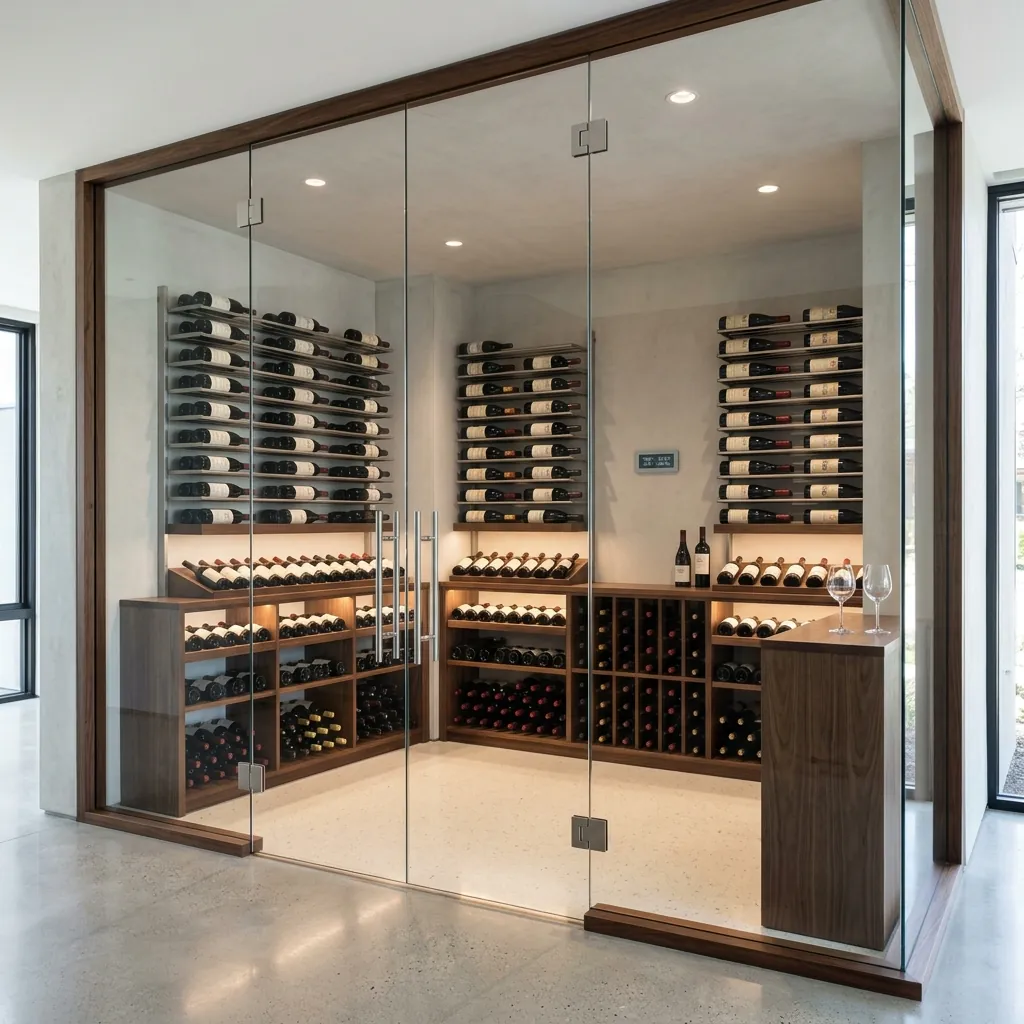
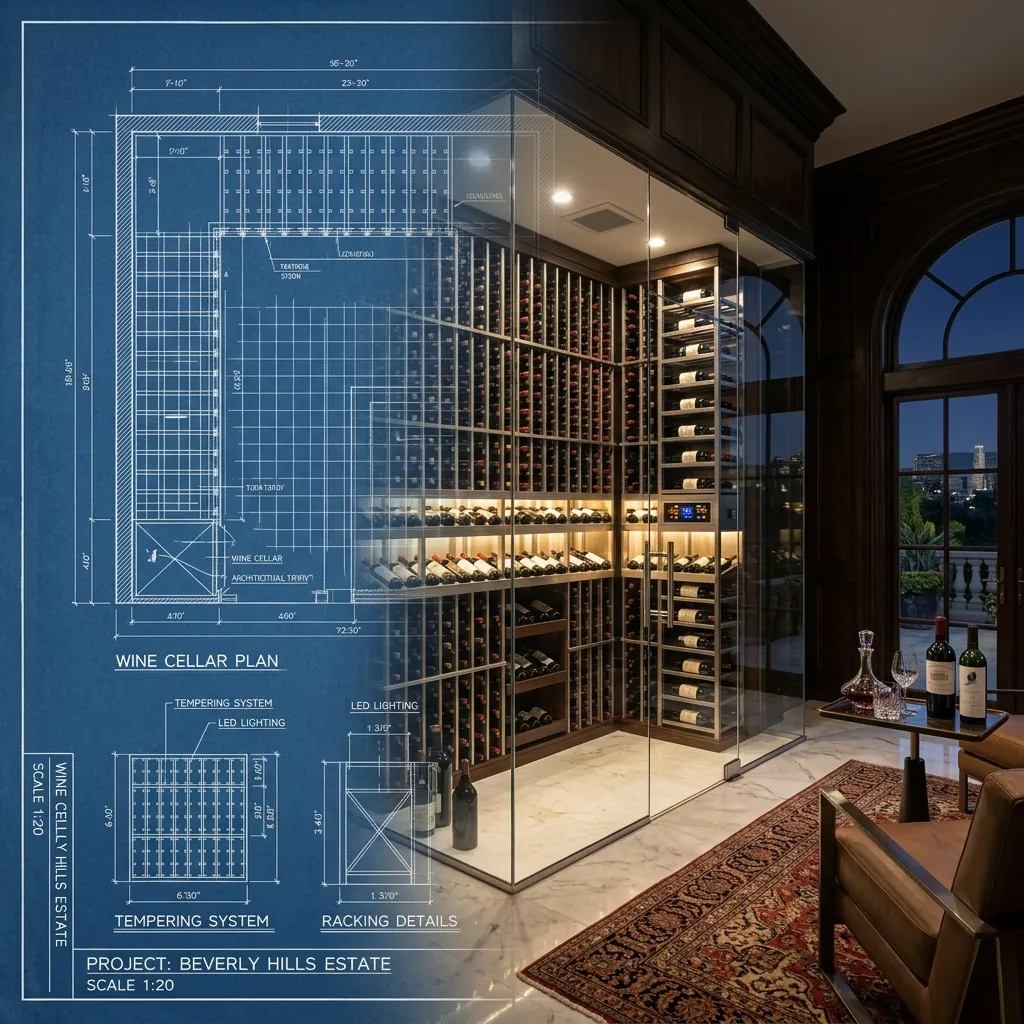
Protect your investment, preserve every bottle, and keep your cellar performing at its best with expert wine cellar maintenance strategies designed for long-term reliability, ideal storage conditions, and true peace of mind.
Book a ConsultationA wine cellar is far more than a finished room with racks and a cooling unit. It is a carefully balanced preservation environment where temperature, humidity, airflow, insulation, vapor control, lighting, and equipment performance all work together to protect the character, value, and aging potential of every bottle you own. When one of those elements drifts out of range, the effects are often gradual at first, then suddenly expensive. A cellar that is not maintained regularly can develop hidden condensation, inconsistent temperatures, odor absorption, mold growth, premature cork failure, label damage, or compressor strain that shortens the life of your cooling system. For collectors, homeowners, and hospitality professionals alike, proper wine cellar maintenance is not an optional chore—it is the foundation of cellar longevity and wine preservation. At VA Wine Cooling, we understand that the best wine cellars are built not only with quality components, but with ongoing care that keeps those components performing year after year. This guide breaks down the essential maintenance practices that help your cellar stay efficient, stable, and dependable, while also protecting the wines inside from the subtle environmental shifts that can quietly compromise an entire collection.
Consistent temperature is the single most important factor in wine preservation. Proper maintenance helps ensure your cooling system maintains steady conditions without dangerous spikes, short cycling, or uneven zones that can stress wine and equipment alike.
Balanced humidity protects corks, labels, and bottle integrity. Routine upkeep helps prevent air that is too dry, which can dry out corks, or too damp, which can encourage mold and mildew in the cellar environment.
A well-maintained cooling system runs more efficiently and lasts longer. Cleaning, inspection, and timely service reduce strain on compressors, fans, coils, and drains, helping avoid costly premature replacement.
Maintenance safeguards the wine itself by preserving the cellar’s stability, minimizing environmental fluctuations, and reducing the risk of vibration, odors, leaks, and humidity problems that can damage bottles over time.
Wine cellar maintenance begins with a simple truth: even the most advanced cellar is only as reliable as the care it receives after installation. Many owners focus heavily on design, racking, and cooling capacity during the build phase, but long-term performance depends on the small, repeated actions that keep the environment stable. Regular inspection of temperature and humidity readings should become a habit, because these numbers reveal how well the cellar is actually functioning, not just how it was designed to function. A digital display may show that the room is within range today, but the real value comes from tracking patterns over time, noticing drift before it becomes damage, and responding quickly when performance begins to change. In a properly maintained wine cellar, consistency is the goal, and consistency only happens when the system is monitored with care.
One of the most overlooked maintenance tasks is cleaning. Dust, debris, and residue accumulate on evaporator coils, condenser components, vents, and filters, reducing efficiency and forcing the system to work harder than necessary. That extra strain can lead to higher energy use, louder operation, uneven cooling, and eventually component failure. A dirty coil may not seem urgent in the short term, but over months and years it can significantly shorten the lifespan of a cooling unit. Likewise, blocked airflow around racks, bottles, or return vents can create hot spots and cold spots that make the cellar less predictable. Keeping the cellar clean is not just about appearance; it is a practical safeguard for performance, efficiency, and long-term reliability.
Humidity management is equally important. Wine corks rely on a stable environment to remain elastic and effective, and the cellar itself must support that balance. If the air becomes too dry, corks can shrink, allowing oxygen to enter the bottle and accelerate oxidation. If the room becomes too humid, condensation can appear on walls, ceilings, or bottles, creating conditions that encourage mold growth and unpleasant odors. Maintenance should therefore include regular checks for leaks, excessive condensation, and any signs that the vapor barrier or insulation is not performing as intended. A wine cellar is a controlled environment, and controlled environments require continuous attention to the details that most people do not notice until something goes wrong.
Another essential practice is inspecting seals, doors, and insulation integrity. A cellar door with a weak gasket or a wall assembly with compromised insulation can allow outside air to infiltrate the room, undermining temperature control and forcing the cooling system to compensate constantly. This not only increases operating costs but also creates more wear on the equipment. Over time, even minor air leaks can produce noticeable instability, especially in climates with extreme seasonal swings. Maintenance should include checking weatherstripping, examining door alignment, and confirming that the vapor barrier remains intact. These are small details, but they are the difference between a cellar that merely looks finished and one that truly performs as a preservation-grade space.
Vibration and noise are also worth monitoring. Wine benefits from a calm, stable resting environment, and while a cooling system naturally creates some mechanical movement, excessive vibration can be a sign of trouble. Loose mounting hardware, failing fans, or compressor issues can all introduce unnecessary movement into the cellar. Routine maintenance helps identify these concerns early, before they become disruptive or damaging. The same principle applies to lighting and electrical components. Heat-producing bulbs, poorly placed fixtures, or aging wiring can affect both the cellar climate and the safety of the space. A maintenance plan should therefore include a periodic review of all electrical and lighting elements to ensure they support the cellar rather than interfere with it.
Perhaps the most valuable habit of all is documentation. Keeping a maintenance log allows you to record temperature readings, humidity levels, service dates, filter changes, and any unusual observations. This creates a history of the cellar’s behavior and makes it easier to identify trends, diagnose issues, and communicate effectively with service professionals. When a problem arises, a log can reveal whether it developed suddenly or gradually, which often points directly to the cause. For serious collectors and homeowners who view their cellar as a long-term asset, documentation transforms maintenance from guesswork into a strategic process. It is one of the simplest ways to protect both the cellar and the collection inside it.
Essential Wine Cellar Engineering Resources:
The longevity of a wine cellar depends on more than the quality of the original installation; it depends on how well the environment is protected over time. Cooling systems are mechanical assets, and like any mechanical asset, they last longer when they are not forced to compensate for preventable problems. When filters are changed on schedule, coils are cleaned, drains are cleared, and fans are kept unobstructed, the unit can move air efficiently without overworking. That efficiency matters because a cooling system that runs under unnecessary strain is more likely to experience compressor failure, refrigerant issues, sensor inaccuracies, and excessive wear on moving parts. Proper maintenance does not simply prevent breakdowns—it preserves the operational life of the entire system, allowing the cellar to function as intended for many years.
Equally important is the relationship between the cooling unit and the building envelope. A wine cellar is a controlled space, but it can only remain controlled if the surrounding structure is sound. Insulation, framing, drywall, sealants, and vapor barriers all contribute to the cellar’s ability to hold temperature and humidity. If any of those layers degrade, the cooling system must work harder to offset the loss. That extra demand can be subtle at first, showing up as slightly longer run times or minor temperature swings, but over time it can create significant inefficiency. Maintenance should therefore include not only the equipment itself, but also the structural components that support the cellar’s performance. A small crack, gap, or water intrusion point can become a major problem if it is ignored long enough.
Drainage is another critical area that often receives too little attention. Condensate management is essential in a wine cellar because moisture generated by the cooling process must be removed safely and consistently. If drain lines become blocked, kinked, or dirty, water can back up into the system or leak into the cellar structure. That can lead to mold, damaged finishes, warped materials, and unpleasant odors that are difficult to eliminate once established. Regular drain inspection is a straightforward but highly effective way to protect both the cooling equipment and the cellar surfaces. When moisture is managed properly, the cellar remains cleaner, safer, and more stable, and the equipment is less likely to fail from avoidable water-related issues.
Air circulation also plays a major role in longevity. A wine cellar should never feel stagnant, but it should also not experience excessive airflow that causes temperature turbulence. The goal is controlled circulation that distributes conditioned air evenly without creating drafts or hot pockets. Maintenance should include checking that fan blades are clean, vents are clear, and rack placement is not blocking the designed airflow pattern. Over time, a cellar’s contents may change as the collection grows, and those changes can alter how air moves through the room. A maintenance routine should adapt accordingly, because a cellar that was perfectly balanced when first built may become less efficient if the storage layout changes significantly.
Humidity-related deterioration can also affect the structure of the cellar itself. Excess moisture may cause paint failure, wood swelling, corrosion of hardware, and deterioration of finishes. Too little moisture can create dryness that affects corks and may also contribute to cracking in certain materials over time. Maintaining the right balance protects both the collection and the room. In practical terms, this means watching for condensation on surfaces, checking for musty smells, and ensuring the cellar insulation and vapor barrier are performing as designed. These signs often appear before serious damage becomes visible, making them important early warning indicators. A wine cellar that is structurally protected is far more likely to remain dependable for the long term.
Ultimately, extending the life of a wine cellar is about reducing stress on every part of the system. Stress comes from heat gain, moisture intrusion, poor airflow, neglected equipment, and inconsistent monitoring. When those stressors are controlled, the cellar ages gracefully, the cooling system operates more efficiently, and the overall cost of ownership stays lower. This is why maintenance should be seen as an investment rather than an expense. Every cleaning, inspection, and adjustment helps preserve the environment that preserves the wine. For collectors who care about longevity, that is the most important return of all.
Professional service can further improve longevity by identifying issues that may not be obvious during routine owner checks. A trained technician can evaluate refrigerant performance, electrical connections, sensor calibration, compressor health, and airflow balance with a level of precision that helps prevent future failures. In many cases, a small service visit can uncover a problem that would otherwise have become a major service later. That proactive approach is one of the smartest ways to protect a cellar, especially when the collection has significant monetary or sentimental value. The longer the cellar remains in top condition, the more confidently it can protect the wine inside it.
The best wine cellar maintenance strategy is one that is consistent, realistic, and tailored to the specific cellar you own. There is no single schedule that fits every installation perfectly, because cellar size, climate, equipment type, collection volume, and usage patterns all influence how often certain tasks should be performed. That said, every successful routine begins with the same principle: do not wait for visible problems before taking action. A wine cellar is designed to protect delicate inventory over years and decades, which means the maintenance plan should also be long-term in mindset. Short-term convenience often leads to long-term expense, while regular attention to the cellar’s condition helps preserve both performance and peace of mind.
A practical routine often starts with weekly or biweekly checks of the most visible indicators: temperature, humidity, door seals, unusual noise, and any signs of condensation or odor. These quick observations take very little time but can reveal a great deal about the cellar’s health. Monthly maintenance may include cleaning accessible surfaces, confirming that air pathways are unobstructed, inspecting the cooling unit for dust buildup, and reviewing whether the cellar has been exposed to any unusual external conditions, such as a power outage or extreme weather. Seasonal maintenance can go deeper, especially before summer heat or winter dryness places additional pressure on the system. This is the ideal time to assess whether the cellar is still responding properly under changing environmental loads.
Annual service is often the point where professional evaluation becomes especially valuable. A qualified technician can perform a more thorough inspection of the cooling equipment, verify performance metrics, test controls, and address issues that are not obvious to the eye. This kind of service is particularly important for high-value collections or cellars with complex systems, because small inefficiencies can compound over time. An annual review also gives you a chance to reassess whether your cellar still matches your storage needs. If your collection has expanded, the room may need airflow adjustments, upgraded cooling capacity, or revised storage organization to maintain ideal conditions. Maintenance is not only about preserving what exists; it is also about adapting the cellar to support future growth.
Organization matters as much as mechanical care. A cluttered cellar can restrict airflow, make it harder to inspect bottles, and create stress points around the cooling system. Racks should be arranged with both accessibility and circulation in mind. Bottles should not be packed so tightly that they block vents or prevent you from seeing early warning signs of moisture or damage. Labeling and inventory management also support maintenance by allowing you to rotate bottles thoughtfully, identify any that may be at risk, and reduce unnecessary handling. The less often bottles are disturbed, the more stable their aging environment remains. In this sense, organization is a form of preservation.
It is also wise to think about the cellar as part of a larger home or building system. Power reliability, surrounding room temperature, insulation quality, and even nearby plumbing can influence cellar performance. If the home experiences frequent electrical issues, surge protection and backup planning become important. If the cellar is located near an exterior wall or mechanical room, additional monitoring may be needed. A long-term maintenance routine should account for these external variables so that the cellar remains resilient in real-world conditions. The more proactively you manage the environment around the cellar, the less likely it is that outside factors will compromise the interior climate.
For many owners, the most successful maintenance routine is the one they can actually sustain. That means building a schedule that is detailed enough to be effective but simple enough to follow consistently. A checklist can help, as can reminders for filter changes, service appointments, and periodic inspections. Over time, these habits become part of the rhythm of cellar ownership. Instead of reacting to emergencies, you begin to anticipate needs and prevent problems before they start. That shift is what transforms a wine cellar from a fragile luxury into a durable, reliable asset. When maintained properly, a cellar can support a collection for decades, preserving not just the bottles, but the confidence that they are being cared for in the best possible environment.
At VA Wine Cooling, we encourage owners to view maintenance as an ongoing relationship with the cellar itself. The room communicates through temperature stability, humidity balance, sound, and performance. Learning to recognize those signals is one of the most valuable skills a cellar owner can develop. With the right routine, the right equipment, and the right support, your cellar can remain a dependable preservation space that protects every bottle with precision and consistency.
In most cases, a wine cellar should receive professional service at least once a year, though some systems and environments benefit from more frequent attention. Annual service allows a qualified technician to inspect the cooling unit, verify temperature and humidity performance, clean components, check drainage, test electrical connections, and identify early signs of wear before they turn into costly failures. If your cellar is in a hot climate, supports a large collection, or uses a system that runs heavily throughout the year, semiannual service may be a smarter choice. Professional maintenance is especially valuable because it can uncover problems that are not obvious during routine owner checks, such as refrigerant issues, sensor drift, airflow imbalance, or compressor strain. The goal is not simply to fix problems after they appear, but to keep the cellar operating in a stable, efficient, preservation-grade condition for as long as possible.
Common warning signs include temperature fluctuations, humidity levels that are too high or too low, condensation on walls or bottles, unusual odors, visible mold or mildew, louder-than-normal equipment noise, longer cooling cycles, and water near the unit or floor drains. You may also notice that corks appear dry, labels begin to peel, or the cellar feels less consistent than it once did. These symptoms often indicate that the cooling system is struggling, airflow is restricted, the insulation envelope is compromised, or the humidity balance is off. The important thing is to treat small changes seriously, because wine cellars usually fail gradually before they fail dramatically. Early maintenance can often correct the issue before the wine itself is affected. If you notice repeated performance changes, it is wise to have the system inspected promptly rather than waiting for a more serious breakdown.
Yes, regular maintenance can have a major impact on the longevity of your wine collection because wine is highly sensitive to environmental instability. A properly maintained cellar helps keep temperature steady, humidity balanced, and air quality clean, all of which support proper aging and reduce the risk of premature spoilage. If a cellar is allowed to drift out of range, wine can oxidize faster, corks can dry out, labels can be damaged, and delicate flavor profiles can be lost. Maintenance also protects the physical infrastructure that supports the collection, including the cooling system, insulation, vapor barrier, and drainage components. In other words, you are not only preserving the cellar, but also preserving the conditions that allow wine to mature as intended. For collectors who value both quality and investment protection, consistent maintenance is one of the most effective ways to safeguard the long-term health of the entire collection.
Whether you need installation, service, or maintenance — our team is ready to help. Fill out the form below and we'll get back to you within 24 hours.
By submitting this form, you agree to our Privacy Policy. CSLB Lic#1055057
VA Wine Cooling engineers and maintains precision commercial and residential cooling systems across Southern California.