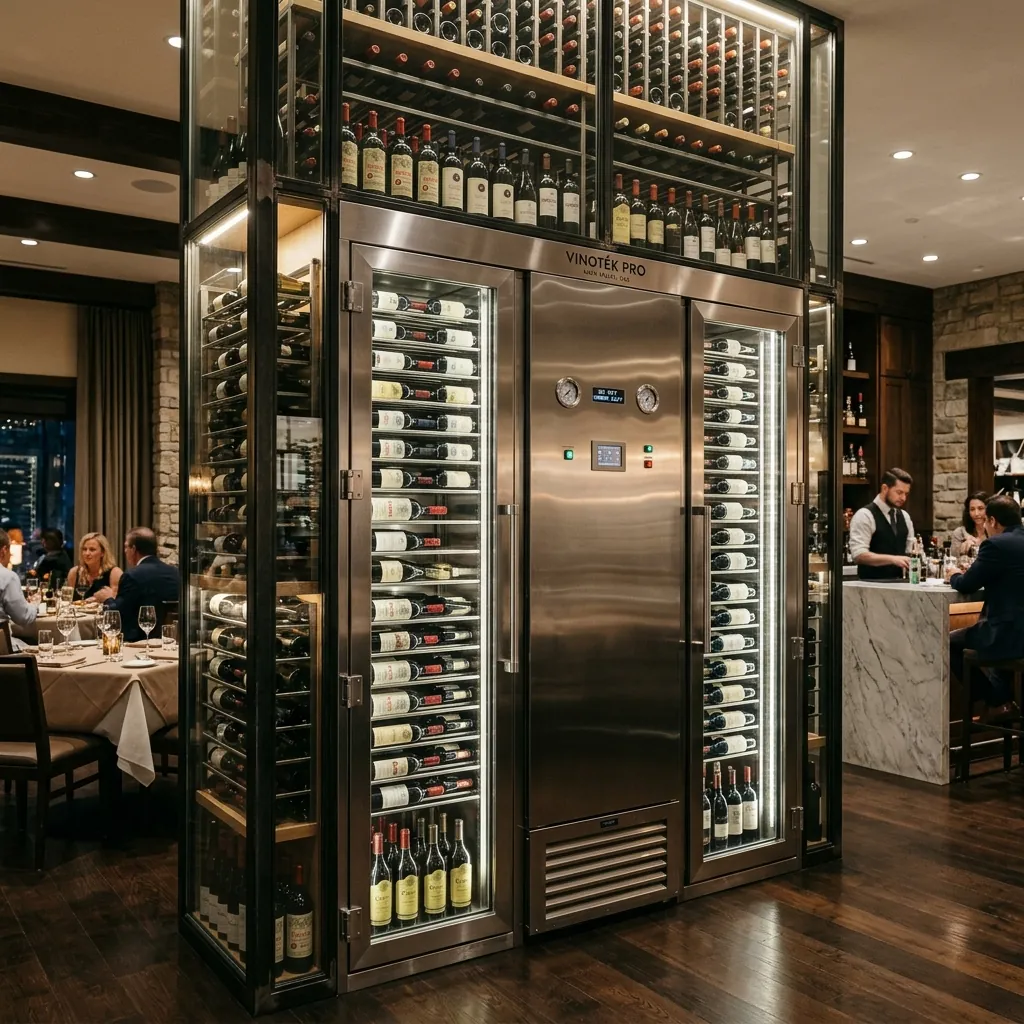
Protect your wine collection with a cellar environment built to resist mold, control humidity, and preserve every bottle at its best. This definitive guide explains how mold develops, how to stop it before it starts, and what to do if your wine cellar already shows signs of contamination.
Book a ConsultationMold in a wine cellar is more than an unsightly nuisance; it is a warning sign that the environment has drifted outside the narrow range required for long-term wine preservation. Because wine cellars are intentionally designed to be cool, dark, and humid, they can become ideal breeding grounds for mold if temperature, relative humidity, airflow, insulation, and vapor control are not carefully balanced. A properly designed cellar should protect cork integrity and stabilize aging conditions, but when excess moisture lingers on walls, ceilings, racks, or around the cooling unit, mold spores can colonize quickly and spread across wood, drywall, cardboard, labels, and even hidden cavities behind finished surfaces. The result is not only a potential threat to the structure of the cellar but also to the quality, value, and presentation of the wine collection itself. Preventing mold requires understanding the full system: the cooling equipment, the insulation envelope, the vapor barrier, door seals, drainage, airflow, and routine maintenance all work together to keep humidity in a safe range without allowing condensation. This guide is designed to help homeowners, collectors, and cellar owners identify the early warning signs of mold, understand the root causes, and implement a practical prevention and remediation strategy that protects both the cellar and the wine inside it.
Small mold colonies can grow behind racks, under trim, and around insulation long before they become visible. Catching moisture problems early prevents costly services, protects labels and corks, and reduces the chance of widespread contamination.
Wine cellars need controlled humidity, but too much moisture creates condensation and mold growth. The goal is a stable environment that keeps corks from drying out while preventing damp surfaces and stagnant air.
A properly sized and maintained wine cellar cooling system helps regulate both temperature and moisture. If the unit is undersized, oversized, dirty, or poorly installed, it can contribute to humidity swings and condensation.
Cleaning visible mold is only part of the solution. Effective remediation also corrects leaks, insulation failures, vapor barrier issues, and airflow problems so mold does not return after cleanup.
Mold thrives when three conditions come together: moisture, a food source, and time. In a wine cellar, all three can be present if the room is not engineered and maintained correctly. The moisture often comes from high relative humidity, condensation on cold surfaces, hidden leaks, or water vapor moving through walls and ceilings. The food source can be anything organic, including wood racking, cardboard storage boxes, dust, paper labels, drywall paper, and even some adhesives and finishes. Time allows spores to settle and begin colonizing, especially in areas with poor air circulation such as corners, behind racks, under stairs, or in tight mechanical closets. Because wine cellars are often enclosed and intentionally insulated to hold cool temperatures, any trapped humidity can linger far longer than it would in a typical room, creating a perfect environment for mold growth.
The most common misconception is that a cool room cannot develop mold. In reality, cooler temperatures do not eliminate the risk; they simply slow certain biological processes while allowing moisture to remain on surfaces longer. If a cellar is maintained too humid, or if the temperature drops below the dew point of the surrounding air, water can condense on walls, ceilings, cooling lines, and metal components. That condensation becomes a persistent moisture film that mold spores can exploit. Even if the visible surfaces appear dry, hidden cavities behind insulation or inside wall assemblies may stay damp for long periods, making mold remediation more complicated and expensive once the problem is discovered.
Another major factor is the relationship between humidity and the building envelope. A wine cellar is not just a room; it is a controlled environment that depends on a continuous thermal and vapor barrier. If insulation is compressed, missing, or improperly installed, warm humid air from adjacent spaces can infiltrate the cellar and condense on cooler surfaces. If the vapor barrier is punctured or incomplete, moisture can move into walls and become trapped. Over time, this trapped moisture can degrade framing, stain finishes, warp wood, and create a hidden mold reservoir that repeatedly re-seeds the room even after surface cleaning. This is why mold prevention in wine cellars must be treated as a systems issue rather than a cosmetic issue.
Airflow is equally important. Stagnant pockets of air allow moisture to settle and remain undisturbed, while gentle circulation helps equalize temperature and humidity across the room. However, too much airflow can introduce dust and dry out corks if the cellar is not balanced correctly. The goal is controlled movement, not a drafty room. In practice, that means ensuring the cooling unit is properly installed, return and supply air paths are unobstructed, and shelving or bottles are not blocking critical circulation zones. A cellar that looks elegant but traps humid air behind decorative panels or densely packed racks is far more likely to develop mold than one designed with serviceability and airflow in mind.
It is also important to recognize that mold can appear in places that are not immediately associated with the cellar interior. Condensation on the exterior of ductwork, leaks from refrigeration components, clogged drain lines, and humidity migration from adjacent rooms can all create conditions that support growth inside wall cavities or around the cooling system. In many cases, homeowners first notice a musty odor rather than visible mold, and by the time staining or spotting appears, the problem may already be well established. A proactive approach includes routine inspections, humidity monitoring, and prompt correction of any water intrusion or cooling irregularities, because mold prevention is always more affordable than full remediation.
Essential Wine Cellar Engineering Resources:
One of the leading causes of mold in a wine cellar is excessive humidity caused by poor environmental control. Wine cellars are typically kept at a higher humidity than ordinary living spaces to prevent corks from drying out, but when humidity rises beyond the recommended range, surfaces can remain damp long enough for mold to take hold. This often happens when a cooling system is improperly sized or not maintained. An undersized unit may run constantly without adequately controlling moisture, while an oversized unit may cool the room too quickly without allowing proper dehumidification. In both cases, the cellar can end up with unstable conditions that encourage condensation and mold growth. Regular service of the cooling system, including coil cleaning and drain inspection, is essential to reduce this risk.
Water intrusion is another major culprit. Even a small leak from plumbing, a roof penetration, an exterior wall, or a condensation drain can create a hidden moisture source that feeds mold for months. In a wine cellar, water damage is especially problematic because the room is usually enclosed, lined with premium finishes, and densely packed with valuable inventory. A leak behind a wall may not be visible until mold has already spread through insulation or framing. Likewise, a drain line that backs up or slopes incorrectly can discharge water into a concealed area, creating persistent dampness that is difficult to detect without a thorough inspection. Any sign of staining, peeling paint, swollen wood, or unexplained humidity fluctuations should be treated as a serious warning.
Poor insulation and incomplete vapor control frequently contribute to mold as well. A wine cellar depends on a sealed thermal envelope to keep outside air from infiltrating the room. If insulation gaps exist around doors, ceilings, outlets, or framing members, warm humid air can enter and condense on cooler interior surfaces. This is especially common in retrofit cellars where the room was converted from a basement, closet, or spare room without a full envelope redesign. The result is a space that may look finished but is still vulnerable to moisture movement. Over time, this hidden infiltration can lead to mold growth behind drywall, under flooring, or inside the ceiling assembly, where it may remain undetected until the problem becomes severe.
Another common cause is inadequate airflow around the collection and mechanical equipment. Bottles stacked too tightly against walls, racks installed flush to damp surfaces, or decorative panels that block ventilation can create pockets where moisture lingers. Mold spores are present almost everywhere, so the issue is not whether spores exist but whether the environment allows them to grow. Dust and organic debris also play a role because they provide additional nutrients for mold colonies. A cellar that is rarely cleaned, especially one with wood shelving or unfinished surfaces, can accumulate enough residue to support widespread growth if humidity is elevated. Simple housekeeping, including vacuuming dust, wiping surfaces, and keeping the cellar uncluttered, is a surprisingly effective part of mold prevention.
Finally, human behavior can unintentionally increase mold risk. Leaving the cellar door open for long periods, allowing frequent warm-air intrusion, storing wet items inside the room, or ignoring maintenance alerts can all undermine the environmental balance. Some owners also make the mistake of using portable dehumidifiers or household fans without understanding how they interact with a purpose-built cellar system. In a controlled wine environment, every added device should support the overall design, not conflict with it. The best prevention strategy is a disciplined one: keep the cellar sealed, maintain the cooling equipment, control humidity intentionally, and respond quickly to any sign of moisture, odor, or staining before a minor issue becomes a major remediation project.
Effective mold prevention starts with measurement. A wine cellar should be monitored with accurate temperature and humidity instruments so owners can identify trends before they become problems. One reading taken on a busy afternoon is not enough; the real value comes from understanding how the cellar behaves over time, especially during seasonal changes or after system adjustments. If humidity begins climbing consistently, or if temperature swings become more pronounced, the cellar may be signaling a cooling, insulation, or ventilation issue. Installing reliable monitoring equipment and reviewing the data regularly gives you a chance to intervene early, which is the most practical and cost-effective way to protect the cellar and the wine collection.
When mold is already present, remediation should begin with a thorough assessment of the source. Surface cleaning alone is not sufficient if the underlying moisture problem remains unresolved. The first step is to identify where the water is coming from, whether that is a leak, condensation, poor drainage, or a failed vapor barrier. Once the source is corrected, affected materials must be evaluated carefully. Non-porous surfaces may often be cleaned and disinfected, but porous materials such as heavily contaminated drywall, insulation, carpeting, or saturated wood may need removal and replacement. In a wine cellar, it is especially important to protect nearby bottles, labels, and finishes during this process so the collection is not exposed to unnecessary contamination or damage.
Professional remediation is often the safest choice for significant mold growth because wine cellars are specialized environments. A qualified team can determine whether the problem is isolated to a visible patch or whether it extends into concealed cavities. They can also help ensure that containment, air filtration, and cleaning methods are appropriate for an enclosed space where valuable inventory is stored. After cleanup, the cellar should be dried to the correct conditions, then retested to confirm that moisture levels have returned to normal. If the cooling system or envelope design contributed to the problem, corrections should be made before the cellar is returned to service. Otherwise, the same conditions that caused the mold will likely cause it again.
Prevention after remediation is a long-term maintenance commitment. The cellar should be inspected regularly for signs of condensation, staining, odors, and equipment issues. Door seals should remain tight, drain lines should be clear, and the cooling unit should receive routine service. Racks and shelving should be kept clean and dry, and bottles should not be stored in a way that blocks airflow or traps moisture against walls. If the cellar is in a basement or in a region with seasonal humidity swings, seasonal checks are especially important because environmental pressure on the system can change dramatically throughout the year. A cellar that is stable in winter may struggle in summer if the cooling and vapor-control strategy is not robust enough.
For homeowners who want a truly dependable solution, the best approach is to view mold prevention as part of the cellar design itself rather than as an afterthought. Proper insulation, vapor sealing, cooling system sizing, and room layout all work together to create an environment that is both wine-friendly and mold-resistant. This is where experienced cellar design and climate-control expertise can make a significant difference. When the room is engineered correctly from the beginning, maintenance becomes simpler, humidity remains predictable, and the risk of mold drops dramatically. For existing cellars, upgrades may include sealing leaks, improving airflow, replacing compromised materials, or installing a more appropriate cooling solution. The key is to solve the root cause rather than repeatedly treating the symptoms.
Ultimately, mold prevention and remediation in a wine cellar are about protecting an investment that is both financial and personal. Wine collections often represent years of curation, and the cellar itself may be a custom-built feature that adds value to the home. Mold can compromise both if it is ignored. By monitoring the environment, maintaining the cooling system, correcting moisture intrusion, and responding quickly to early warning signs, you can preserve the cellar’s performance and the integrity of every bottle stored inside it. A well-managed cellar is not merely a storage room; it is a controlled preservation space, and keeping it mold-free is essential to honoring that purpose.
A wine cellar should generally maintain humidity in a balanced range that protects corks without allowing condensation to form. The ideal target often depends on the cellar design, insulation quality, and cooling system, but the key principle is stability. If humidity remains consistently too high, mold risk increases significantly, especially on wood, drywall, and hidden surfaces. If it is too low, corks may dry out and compromise wine quality. The best practice is to monitor the cellar continuously and adjust the system so the room stays within a controlled, steady range rather than swinging widely from day to day. Because every cellar is different, the safest approach is to evaluate humidity in the context of the room’s construction and equipment rather than relying on a single generic number.
Small surface spots on non-porous materials may sometimes be cleaned by a homeowner, but wine cellars are specialized spaces and mold often indicates a deeper moisture problem. If mold covers a large area, returns after cleaning, has affected drywall or insulation, or is accompanied by a musty odor or visible water damage, professional remediation is strongly recommended. A qualified team can identify the source of moisture, determine whether hidden cavities are affected, and help ensure the cleanup does not damage the cellar structure or the wine collection. In many cases, the real value of professional help is not just removing visible growth but preventing the problem from coming back by fixing the underlying environmental issue.
A cooling system can contribute to mold growth if it is improperly sized, poorly installed, dirty, or failing to control moisture effectively. Warning signs include condensation on walls or equipment, humidity levels that stay too high, frequent cycling, inconsistent temperatures, drain issues, or a persistent musty smell in the cellar. If the unit is not removing enough moisture, or if it is creating cold surfaces where condensation forms, mold can develop even when the room appears to be functioning normally. Regular maintenance, proper system sizing, and careful inspection of coils, drains, seals, and airflow paths are essential. If you suspect the cooling system is part of the problem, the safest step is a professional evaluation of both the equipment and the cellar envelope.
Whether you need installation, service, or maintenance — our team is ready to help. Fill out the form below and we'll get back to you within 24 hours.
By submitting this form, you agree to our Privacy Policy. CSLB Lic#1055057
VA Wine Cooling engineers and maintains precision commercial and residential cooling systems across Southern California.