Wine doesn’t just age with time—it matures through a delicate balance of temperature, humidity, and light. Understanding the science behind those conditions is the key to preserving flavor, protecting value, and unlocking a bottle’s full potential.
Book a ConsultationWine aging is often described in poetic terms, but behind every great bottle is a precise set of environmental conditions that determine whether a wine develops gracefully or deteriorates prematurely. Temperature, humidity, and light are not minor details—they are the core variables that influence chemical stability, cork integrity, aroma evolution, and long-term cellar performance. For collectors, restaurateurs, and serious enthusiasts, the science of wine aging matters because wine is a living product that continues to change after bottling. When storage conditions are stable and controlled, tannins soften, fruit character integrates, and complex tertiary notes emerge over time. When conditions fluctuate, however, the aging process can become unpredictable, accelerating oxidation, drying out corks, muting aromas, or causing irreversible spoilage. At VA Wine Cooling, we understand that proper wine storage is about more than keeping bottles cold; it is about creating a consistent microclimate where each bottle can evolve at its own pace. This cornerstone guide explores the essential science behind wine aging so you can protect your collection and maximize every bottle’s potential for decades to come.
Temperature is the single most important factor in wine aging because it governs the speed of chemical reactions inside the bottle. A stable environment helps wine mature slowly and evenly, while heat spikes can push it past its peak and cold swings can stress the cork and liquid alike.
Humidity supports the cork’s long-term seal by preventing it from drying out or shrinking. The right balance helps preserve the bottle’s integrity, reduce oxidation risk, and maintain ideal conditions for long-term wine storage.
Light—especially UV light—can damage wine by triggering chemical reactions that degrade aroma, color, and flavor. Dark storage is essential for protecting delicate wines and preserving the complexity that develops during aging.
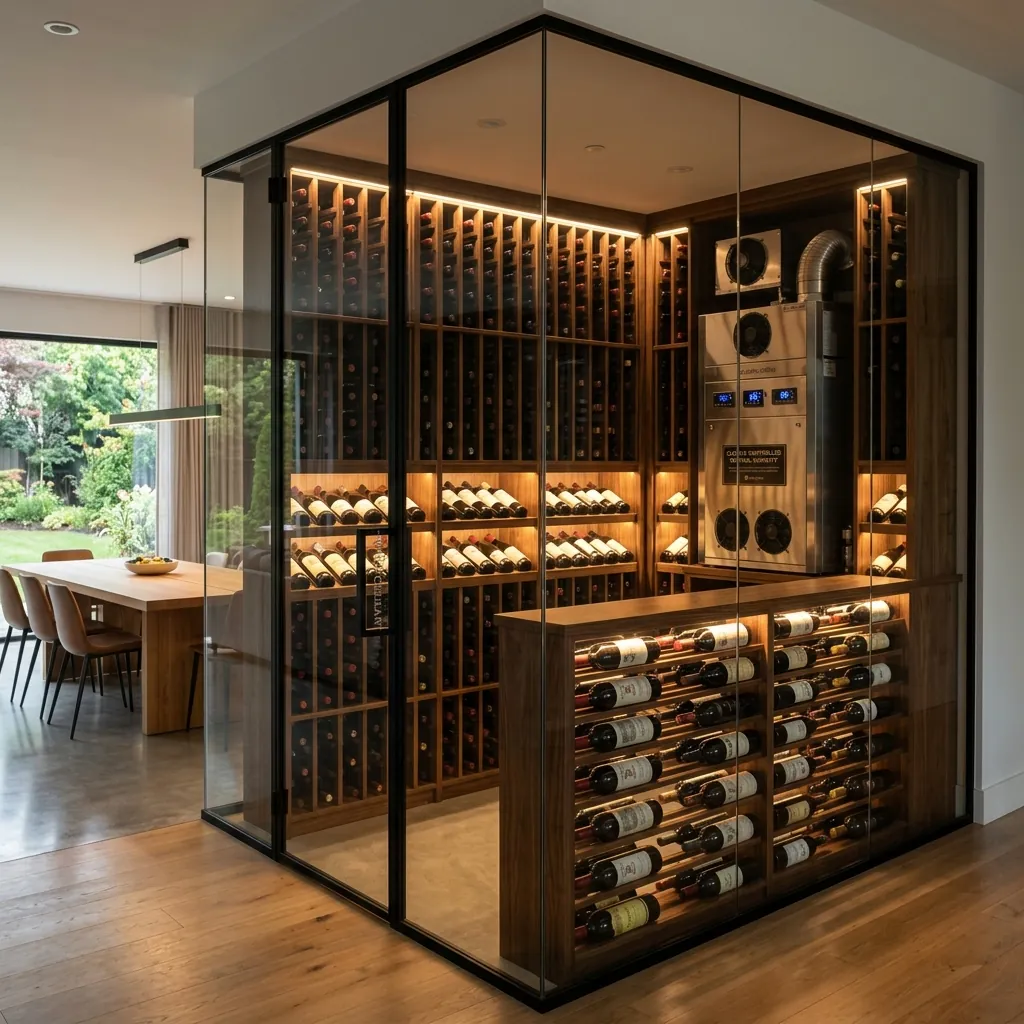
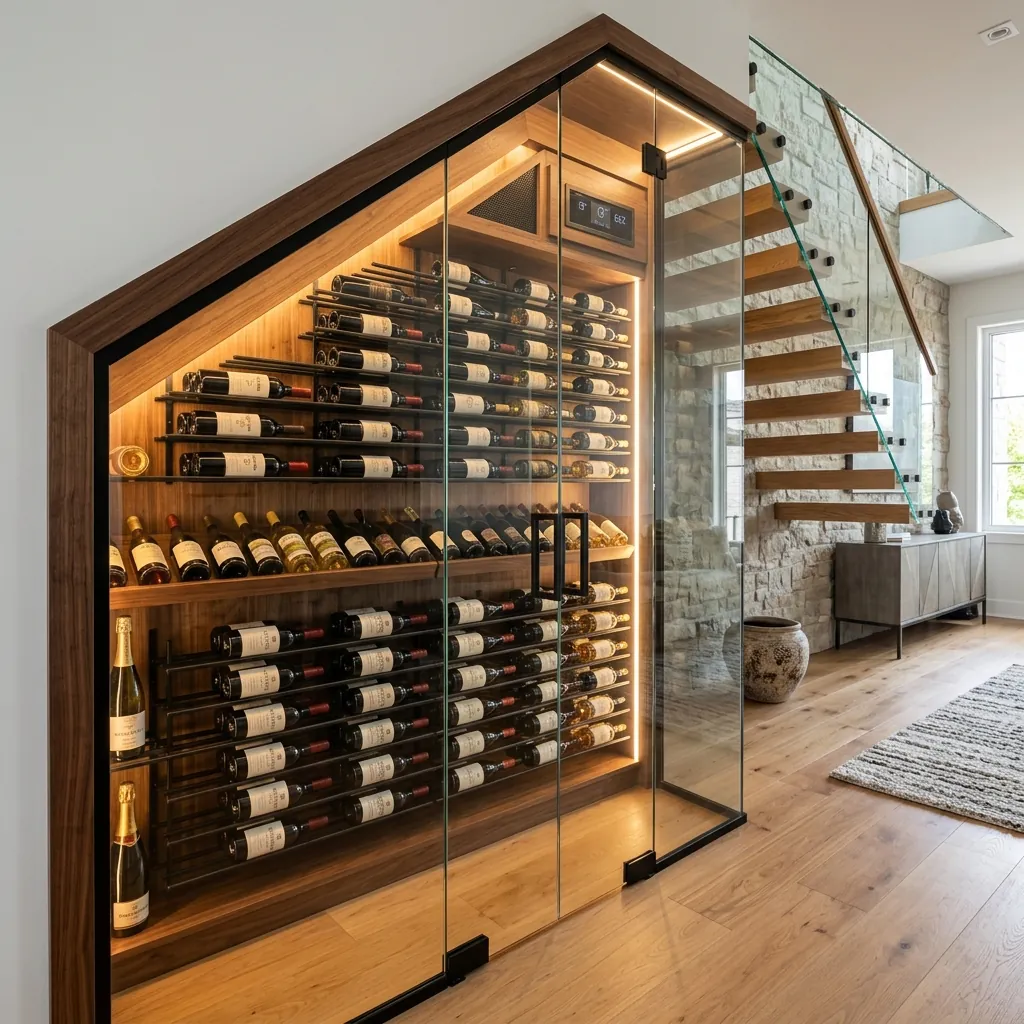
A dedicated wine cooling system creates the stable, controlled environment that serious collectors need. Unlike standard refrigeration, wine cooling equipment is designed to maintain ideal aging conditions with minimal vibration, consistent temperature, and balanced humidity.
Temperature is the foundation of wine aging because it directly affects the rate at which a wine evolves in the bottle. Every wine contains a complex combination of acids, tannins, sugars, alcohol, phenolic compounds, and aromatic molecules, all of which continue to interact after bottling. When a wine is stored at an ideal temperature, those reactions unfold slowly and predictably, allowing the wine to develop greater integration and depth. If the storage temperature is too warm, the chemical processes speed up, which may sound beneficial at first but often leads to premature aging, flattened aromas, and a shorter lifespan. If the temperature is too cold, the wine may not mature properly, and the aging process can stall, leaving the bottle closed, tight, or less expressive than intended. The science of wine aging therefore depends on consistency more than speed, because a steady environment gives the wine the chance to evolve in harmony rather than in stress.
Most experts agree that long-term wine storage is best maintained around 55°F, with only minimal variation. This is not an arbitrary number; it reflects a temperature range where wine ages gradually without being pushed into rapid oxidation or suppressed into dormancy. The reason consistency matters so much is that wine expands when warm and contracts when cool, and repeated movement in the bottle can weaken the seal at the cork over time. Even subtle fluctuations can create micro-changes in pressure that affect how much oxygen enters the bottle. Oxygen is not inherently bad—indeed, it is a part of wine’s natural evolution—but too much oxygen too quickly can strip freshness, dull fruit, and cause a wine to lose structure before its peak. In a properly controlled wine cellar or wine cooling cabinet, temperature stability helps keep the aging curve smooth, allowing the bottle to express the intended progression from youthful vibrancy to mature complexity.
Heat is one of the most damaging forces in wine storage because it accelerates all the reactions that lead to aging, including oxidation and the breakdown of delicate aromatic compounds. A bottle left in a hot room, attic, garage, or kitchen cabinet may appear fine on the outside, but internally the wine can be undergoing stress that shortens its life dramatically. Wines stored above the ideal range often develop cooked, jammy, or stewed notes, lose nuance, and become unbalanced. White wines may dull and oxidize more quickly, while reds can lose freshness and structural definition. The problem is not just high temperature itself; it is also the duration of exposure. A brief increase may not ruin a bottle, but repeated or prolonged heat exposure can permanently alter the chemistry of the wine. That is why serious collectors rely on dedicated wine cooling systems rather than improvised storage solutions. A properly engineered system keeps the environment stable, which is essential for preserving both current enjoyment and future value.
Cold temperatures can be just as problematic, though the damage manifests differently. When wine is stored too cold, the liquid contracts and can place strain on the cork, potentially allowing air to seep in over time. In very cold conditions, the wine’s maturation slows significantly, which may preserve freshness but prevent the development of secondary and tertiary aromas. This is especially relevant for collectors who want wine to age gracefully rather than merely sit unchanged. The goal is not to freeze time but to guide it. Wine aging is a controlled transformation, and that transformation depends on a moderate, stable temperature that supports gradual evolution. For that reason, temperature control is not simply a convenience feature in a wine cooling setup—it is the scientific basis for successful long-term wine storage and one of the most important protections against spoilage and premature decline.
Another critical aspect of temperature science is the relationship between storage conditions and the type of wine being aged. While most wines benefit from cool, consistent conditions, different styles have different aging horizons and sensitivities. Structured reds with firm tannins may age beautifully for decades if stored properly, while delicate whites or sparkling wines often require even more precise handling to preserve their character. The same is true for fortified wines, which can be resilient but still depend on a stable environment to maintain balance. A wine cooling system provides the control necessary to accommodate a wide range of bottle types without forcing the collector to compromise. This versatility is especially valuable in mixed collections, where a single storage environment must support both immediate drinking wines and long-term cellar candidates. In every case, the science remains the same: stable temperature protects the wine’s chemistry, preserves its intended evolution, and ensures that aging happens on the wine’s terms rather than the environment’s.
For homeowners and collectors considering how to store wine, it is important to understand that standard household appliances are not designed for the nuances of wine aging. Kitchen refrigerators are typically too cold and too dry, while basements can be inconsistent in both temperature and humidity. Even a room that feels cool to the touch may experience day-night swings that are enough to affect the bottle over time. A dedicated wine cooling solution solves this problem by maintaining a controlled microclimate specifically engineered for wine. That control is what transforms storage from a gamble into a strategy. Instead of hoping the wine will survive until opening, you can create the conditions that allow it to thrive for years. In the science of wine aging, that difference is everything.
Essential Wine Cellar Engineering Resources:
Humidity is one of the most overlooked factors in wine aging, yet it plays a vital role in preserving the bottle’s seal and protecting the wine from unwanted oxygen exposure. The cork is a natural material, and like any natural material, it responds to its environment. If the air is too dry for too long, corks can shrink, crack, or lose elasticity, creating a pathway for oxygen to enter the bottle. If the environment is excessively humid, on the other hand, mold and label damage can become concerns, particularly in long-term cellar storage. The sweet spot is a balanced humidity range that keeps corks supple without creating damp conditions that threaten the rest of the collection. This balance is part of the science of wine aging because the cork is not merely a stopper—it is a living interface between the wine and the outside world. Protecting that interface is essential for preserving freshness, preventing oxidation, and ensuring that the wine develops in a controlled way.
Oxidation is one of the primary enemies of aging wine, and humidity indirectly influences the rate at which oxidation can occur. When a cork dries out, it may no longer form a complete seal, allowing small amounts of air to enter the bottle over time. In moderation, oxygen can support the slow transformation that gives aged wine its complexity. But when air intrusion becomes excessive or uncontrolled, the wine can lose its fruit character, become brown or dull in color, and develop stale or sherry-like flavors that indicate deterioration rather than graceful maturation. This is why collectors often focus on temperature but underestimate humidity. The two are linked: a stable temperature helps maintain a stable environment, while proper humidity ensures the cork remains resilient enough to do its job. In a professional-grade wine cooling system, humidity control is part of the overall preservation strategy, especially for collections intended to age over many years.
Different storage environments create different humidity challenges. A dry climate can be especially hard on cork-sealed bottles because moisture loss happens more quickly, particularly if the bottles are stored upright for too long. In upright storage, the wine does not stay in contact with the cork, which can allow the cork to dry from both sides. That is one reason long-term wine storage is generally recommended on its side: the wine remains in contact with the cork, helping keep it hydrated from within while ambient humidity supports it from the outside. In contrast, a very humid environment may seem beneficial at first, but too much moisture can encourage mold growth on labels, cartons, and surrounding surfaces. While mold on a label does not necessarily mean the wine is spoiled, it can affect presentation, resale value, and the overall condition of the collection. A well-designed wine cellar or wine cooling cabinet manages humidity carefully so the environment remains functional, clean, and protective rather than merely damp.
The relationship between humidity and cork integrity becomes even more important as wine ages over time. Older wines often have more fragile corks, and these bottles are especially vulnerable to environmental stress. As the cork ages, it gradually loses elasticity, making it more dependent on the surrounding atmosphere for support. A bottle that has been stored in dry conditions for years may appear intact on the outside but be at increased risk of leakage or oxidation. That risk is one reason collectors who value older vintages invest in reliable wine cooling systems: the cost of protecting the bottle is far lower than the cost of replacing a rare or sentimental wine that has been compromised by poor storage. In this sense, humidity is not an abstract environmental metric; it is a direct safeguard for the bottle’s long-term viability and a key factor in preserving both drinking quality and collectible value.
Humidity also affects the broader cellar ecosystem. Wood racks, labels, paper capsules, and even the finish on storage furniture can respond to moisture levels. In a dry room, labels can curl or become brittle, making inventory management more difficult and diminishing the appearance of a collection. In a damp space, condensation can create conditions where dust clumps, surfaces degrade, and unwanted odors develop. The ideal wine aging environment is therefore not just about protecting the liquid inside the bottle but about maintaining the entire storage system in stable condition. When humidity is managed correctly, the cellar feels balanced, clean, and quiet, supporting the idea that wine should age in a place where nothing is fighting against it. That holistic approach is a hallmark of serious wine storage and one of the reasons a dedicated cooling system is so valuable for homeowners who want more than short-term convenience.
For anyone building or upgrading a cellar, humidity should be treated as a design priority rather than an afterthought. A system that maintains temperature without addressing humidity may still leave the collection vulnerable, particularly in regions with dry air or seasonal swings. The best wine cooling solutions are engineered to create a stable microclimate where both temperature and humidity work together. This is especially important for long-term collections, where bottles may remain undisturbed for years before opening. When the environment is balanced, the cork stays healthy, oxidation is minimized, and the wine can progress naturally through its aging stages. That is the hidden science behind a bottle that tastes vibrant and layered after years in storage: not luck, but the careful control of conditions that protect it from the start.
Light may seem harmless compared to heat or humidity, but in wine storage it can be a powerful source of damage, especially over long periods. Ultraviolet light and even strong artificial light can trigger chemical reactions that break down delicate compounds in wine, altering its aroma, color, and flavor. This phenomenon is often referred to as light strike, and while it is most noticeable in sensitive wines such as white wines, sparkling wines, and lighter reds, all wines are vulnerable to some degree. The science is straightforward: light energy can accelerate the degradation of molecules that contribute to freshness and complexity. Over time, this can produce unpleasant aromas, muted fruit character, and a general loss of vibrancy. That is why serious wine storage emphasizes darkness or low-light conditions. A wine cellar, cabinet, or cooling system should shelter bottles from direct exposure so the wine can age in peace rather than under constant photochemical stress.
Not all light is equally harmful, but the cumulative effect matters. Bottles stored near windows, under bright kitchen lighting, or in display areas with prolonged illumination may age less gracefully than bottles kept in a dark, controlled cellar. Even colored glass offers only partial protection. Darker glass can reduce the impact of light exposure, but it does not eliminate the risk entirely, especially when light is intense or persistent. The safest approach is to store wine in a place where light is minimal and exposure is limited. This is one reason many collectors choose dedicated wine cooling systems with closed cabinetry or insulated compartments: they remove the bottle from the visual noise of everyday living spaces and place it in an environment designed specifically for preservation. In the science of wine aging, reducing light exposure is a simple but powerful way to protect the wine’s delicate internal balance.
Vibration is another environmental factor that often goes unnoticed, yet it can influence aging by disturbing sediment and potentially interrupting the slow settling process that occurs in bottle over time. While the exact impact of vibration is still discussed among experts, the practical consensus is clear: less movement is better for long-term storage. Constant vibration from appliances, foot traffic, HVAC systems, or nearby machinery can create subtle agitation that may affect the wine’s development. This is especially relevant for older wines, which often contain sediment and are more sensitive to disturbance. A stable storage system helps keep the wine undisturbed so natural aging can proceed without interference. That is one of the reasons dedicated wine cooling equipment is preferred over makeshift storage locations. It is engineered not only to control climate but also to reduce the physical disturbances that can compromise a bottle’s quiet maturation.
When light and vibration are considered together, it becomes clear that proper wine aging is about creating a comprehensive protective environment, not just a cool place to set bottles. Wine is sensitive to nearly every element of its surroundings, and the best storage conditions minimize stress from every direction. A well-designed cellar keeps bottles out of direct light, away from appliance vibrations, and in a stable temperature and humidity range that supports gradual aging. This integrated approach is what separates true wine preservation from casual storage. It acknowledges that a bottle’s future depends on multiple variables working together, each one reinforcing the others. If the temperature is ideal but the light is harsh, the wine still suffers. If the humidity is balanced but the environment vibrates constantly, the bottle may still age unevenly. True preservation requires the whole system to work in harmony.
For collectors who want to protect both everyday drinking wines and rare vintages, investing in a proper wine cooling environment is one of the most practical decisions they can make. It offers peace of mind by removing uncertainty from the aging process and providing a consistent setting where bottles can mature on schedule. This matters not only for taste but also for presentation and value. Wines that are stored correctly retain their aromatic complexity, structural integrity, and visual appeal, all of which matter whether the bottle is being saved for a special occasion or kept as part of a long-term cellar strategy. In many ways, the best wine storage solution is invisible: it does its job quietly, without drawing attention, while allowing the wine itself to remain the focus. That is the ideal environment for aging, and it is exactly what science recommends.
Ultimately, the science of wine aging is the science of control. Temperature determines the pace, humidity protects the seal, and light exposure shapes the bottle’s long-term stability. Add vibration reduction and consistent storage practices, and you create a complete preservation system that gives wine the best possible chance to reach its peak. Whether you are building a new cellar, upgrading an existing storage space, or simply trying to understand why some bottles age beautifully while others fail, the answer lies in the environment. Wine rewards patience, but only when patience is paired with the right conditions. With expert wine cooling and thoughtful storage design, every bottle has the opportunity to become what it was meant to be.
For most long-term wine storage, the ideal temperature is around 55°F with very little fluctuation. The most important factor is consistency, because repeated swings in temperature can accelerate aging, stress the cork, and reduce the wine’s ability to develop gracefully over time. A dedicated wine cooling system is the best way to maintain that stable environment.
Humidity helps keep corks from drying out and shrinking, which is essential for maintaining a proper seal and preventing oxidation. If the air is too dry, corks can lose elasticity and allow oxygen into the bottle; if it is too humid, mold and label damage can become concerns. Balanced humidity supports both the wine and the condition of the bottle itself.
Yes. Light, especially ultraviolet light, can trigger chemical reactions that degrade aroma, flavor, and color. This is why wine should be stored in dark or low-light conditions whenever possible. Prolonged exposure to bright light can cause light strike and reduce the quality of the wine, particularly in delicate white and sparkling wines.
Whether you need installation, service, or maintenance — our team is ready to help. Fill out the form below and we'll get back to you within 24 hours.
By submitting this form, you agree to our Privacy Policy. CSLB Lic#1055057
VA Wine Cooling engineers and maintains precision commercial and residential cooling systems across Southern California.