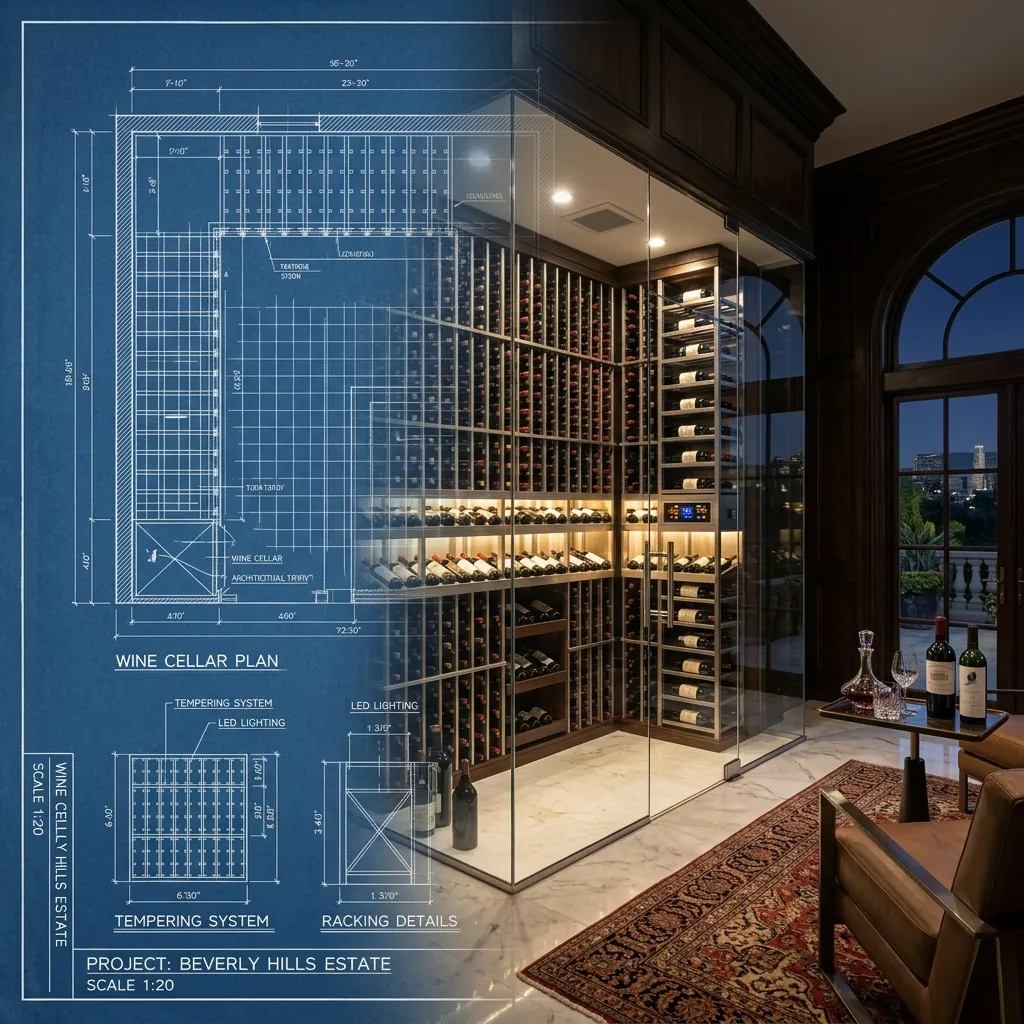
Designing a custom wine room is equal parts art, architecture, and environmental engineering. This ultimate guide explains how to create a space that protects your collection, elevates your home, and performs flawlessly for years to come.
Book a ConsultationA custom wine room is far more than a beautiful display space; it is a precisely engineered environment designed to preserve the integrity, flavor, and long-term value of every bottle in your collection. Temperature stability, humidity control, insulation, vapor barriers, air circulation, lighting selection, glass performance, and refrigeration sizing all work together as a complete system, and if even one of those elements is overlooked, the room can suffer from condensation, fluctuating temperatures, mold growth, label damage, or premature wine aging. For homeowners, collectors, designers, and builders, understanding the engineering behind a custom wine room is the difference between creating a decorative feature and building a truly functional wine preservation environment. At VA Wine Cooling, we approach each project with the mindset that a wine room should perform as beautifully as it looks, which means every design decision must support both aesthetics and long-term climate reliability. Whether the goal is a dramatic glass-enclosed showcase, a hidden cellar tucked behind a tasting lounge, or a large-scale storage room for a serious collection, custom wine room engineering ensures the space is tailored to the unique conditions of the home and the specific needs of the wine being stored.
Wine is extremely sensitive to temperature variation, so custom wine room engineering begins with a system that maintains consistent conditions day and night. Proper design protects wine from premature aging, oxidation, and spoilage by keeping the environment within a narrow target range.
Humidity is just as important as temperature because corks can dry out in overly dry conditions or develop mold in excessively damp environments. A well-engineered wine room balances moisture levels to preserve closures, labels, and the structural integrity of the room itself.
A wine room must be isolated from the surrounding home so the cooling system does not work harder than necessary. High-performance insulation and a properly installed vapor barrier reduce energy loss, prevent condensation, and create a stable environment that supports long-term reliability.
A wine room should feel like a natural extension of the home rather than an afterthought. From racking layout and lighting to glass doors and architectural finishes, custom engineering allows the room to deliver a high-end visual impact while still meeting strict preservation requirements.
The foundation of any successful custom wine room begins with climate control, because wine is a living product that continues to evolve after bottling. If the temperature swings too widely, the liquid inside expands and contracts, which can push wine past the cork or introduce oxygen into the bottle. Over time, that exposure can flatten aromas, weaken structure, and diminish the character that makes each bottle worth saving. A properly engineered wine room minimizes these risks by maintaining a stable environment that supports slow, graceful aging. In practical terms, that means the cooling system must be selected based on the actual heat load of the room, not simply on square footage alone. Glass, sun exposure, insulation quality, door type, ceiling height, and the number of exterior walls all influence the final calculation, and those variables must be considered early in the design process.
One of the most overlooked aspects of custom wine room engineering is the relationship between temperature and humidity. Many people assume that cooling a room is enough, but a wine cellar that is too dry can cause corks to shrink and lose their seal, while a room that is too humid can encourage mold and damage labels, shelving, and structural surfaces. The ideal range is not just about comfort; it is about preservation. That is why a professional design process includes a careful review of the room envelope, the refrigeration method, and the airflow path so the environment remains balanced rather than simply cold. In a properly designed wine room, the cooling equipment should operate efficiently in the background, maintaining the exact conditions the collection needs without creating drafts, vibration, or hot spots that could compromise bottle integrity.
Insulation and vapor control form the hidden backbone of the entire project. Even the most advanced cooling unit will struggle if the room leaks conditioned air or allows warm, moist air to infiltrate from the surrounding home. This is why wall assemblies, ceiling assemblies, and floor transitions must be built with precision. The goal is to create a sealed envelope that resists heat transfer and moisture migration. When the vapor barrier is installed correctly, it prevents condensation from forming inside the walls, where it could lead to rot, microbial growth, or long-term structural damage. In other words, the beauty of a custom wine room depends on the quality of what the eye cannot see. Without these details, a room may look impressive on day one but fail to protect the collection over time.
Another essential principle is airflow management. Wine cooling systems are not simply about producing cold air; they are about distributing conditioned air evenly so every part of the room experiences the same environment. Poor airflow can create temperature stratification, with warmer air collecting near the ceiling and colder air settling near the floor. It can also create localized humidity pockets or uneven cooling around glass walls and door openings. A thoughtful engineering plan addresses these issues by placing equipment strategically, selecting the correct ducting or self-contained configuration, and designing the room layout to support circulation. This is especially important in rooms with custom racking, integrated lighting, or architectural features that may alter the movement of air. When airflow is handled correctly, the room performs more predictably and the cooling system lasts longer because it does not have to compensate for preventable inefficiencies.
Finally, a high-performance wine room must be designed with the end user in mind. Some clients want maximum bottle density and simple, efficient access to inventory. Others want a showcase environment that highlights rare vintages, magnums, or collector bottles as part of the home’s interior design. A successful project balances these priorities without sacrificing preservation. That means the racking should be planned around bottle formats and future growth, the lighting should be attractive yet safe for wine, and the materials should complement the architecture of the home while remaining compatible with climate-controlled storage. When all of these elements are integrated from the start, the result is more than a room. It becomes a purpose-built wine preservation environment that enhances the home and protects the collection with engineering precision.
Essential Wine Cellar Engineering Resources:
Engineering a custom wine room begins with the structure itself, because the room must be built as a controlled envelope before any decorative finishes are installed. This means every surface needs to be evaluated for thermal resistance, moisture resistance, and compatibility with a refrigeration system that may run consistently for years. Wall framing must be designed to support the chosen racking, glass assemblies, and any integrated millwork, while also accommodating insulation depth and mechanical routing. The ceiling deserves special attention because heat rises and can concentrate at the uppermost portion of the room, especially if the room is located beneath an attic, near a roofline, or adjacent to a warm interior zone. Floors must also be considered, particularly when the wine room is installed over conditioned living space, slab-on-grade construction, or a basement area with potential moisture transmission. A truly custom approach accounts for each of these conditions rather than forcing a one-size-fits-all solution.
Material selection is another critical part of the engineering process because not every product performs well in a climate-controlled wine environment. The safest approach is to use materials that are dimensionally stable, moisture resistant, and aesthetically aligned with the design vision. For example, wood racking can be beautiful and highly functional, but it must be properly finished and installed so it does not warp or absorb excess moisture. Glass can create a stunning architectural statement, but only if it is specified with the right insulation performance and framing details. Metal accents, stone, and specialty finishes can elevate the room visually, yet they need to be chosen carefully so they do not introduce thermal bridging or maintenance problems. The best custom wine rooms are engineered with materials that support the environment rather than fight against it, allowing the whole system to operate efficiently.
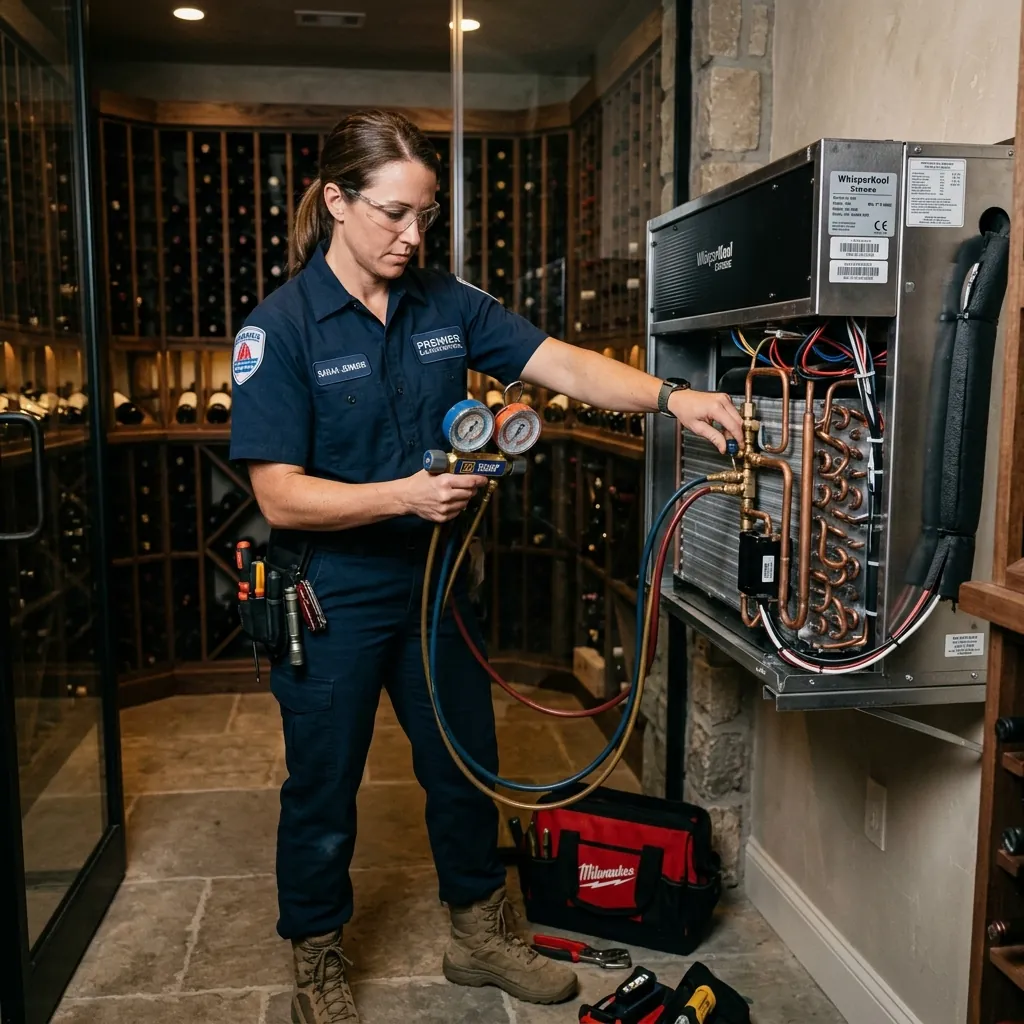
The refrigeration system is the mechanical heart of the wine room, and selecting the right type is one of the most important decisions in the project. Depending on the room size, design, and location, the project may require a ducted system, a ductless system, a split system, or another specialized configuration. Each option has benefits and tradeoffs related to noise, installation complexity, service access, and aesthetic concealment. What matters most is that the system is properly sized and matched to the room’s actual load. Oversized systems can short-cycle and create unstable conditions, while undersized systems can run constantly and still fail to maintain target settings. The cooling system should also be installed with serviceability in mind so future maintenance can be completed without disrupting the room or compromising the collection. In a premium wine room, equipment selection is not a place to cut corners; it is the central investment that determines whether the space will perform reliably.
Door and glass specifications are equally important because these openings often represent the greatest source of thermal loss in the room. A standard interior door is not appropriate for a wine room unless it has been specifically engineered for climate retention, sealing performance, and moisture resistance. Glass walls and doors should be selected with attention to insulation value, low-emissivity coatings, framing systems, and the way the assembly interfaces with the rest of the room envelope. If the room includes a dramatic glass display wall, it is especially important to account for solar gain, nearby lighting, and the visual effect of condensation risk. The best custom wine room designs use glass intentionally, not excessively, and they pair the transparency of the material with the performance required to keep the collection safe. This balance allows the room to feel open and luxurious while still functioning as a serious storage environment.
Lighting design also plays a major role in the engineering of the room, even though it is often treated as a finishing detail. Light can generate heat, and certain wavelengths can also damage wine over time if bottles are exposed too directly or too frequently. That is why wine room lighting should be low-heat, carefully positioned, and controlled with dimmers or zoning when appropriate. LED solutions are commonly preferred because they provide attractive illumination without the excess heat of older lighting technologies, but placement still matters. Shelf lighting, toe-kick lighting, accent lighting, and display lighting should all be integrated with the room design so they enhance visibility without creating hot spots or visual clutter. When lighting, structure, materials, and refrigeration are coordinated from the start, the room becomes a seamless system rather than a collection of unrelated parts. This is the hallmark of true custom wine room engineering: every decision supports both form and function.
In addition to the major components, the installation sequence itself can affect the final performance of the room. Vapor barriers must be continuous, penetrations must be sealed, and mechanical systems should be tested before finishes are closed up. This is where professional oversight becomes especially valuable, because small mistakes hidden behind drywall or millwork can create big problems later. A wine room is not like a standard renovation where minor imperfections can be tolerated. The environment must be airtight, consistent, and durable. By approaching the build with disciplined sequencing and attention to detail, the room can achieve the level of performance that serious collectors expect and that premium homes deserve.
The most successful custom wine rooms are those that reflect the owner’s lifestyle while remaining flexible enough to support future growth. A collection is rarely static; bottles are purchased, opened, traded, and reallocated over time, which means the room should be designed with expansion in mind. That may involve leaving strategic capacity in the racking layout, allowing for mixed bottle formats, or planning a display section that can evolve as the collection changes. It may also mean integrating a tasting area, a service counter, or a small presentation zone so the room can function as both storage and experience space. When future use is considered from the beginning, the wine room becomes a long-term asset rather than a fixed snapshot of a single moment in time. This forward-thinking approach is especially important for homeowners who expect their collection to grow or who want the room to remain relevant as design preferences change.
Aesthetics matter because a wine room is often one of the most memorable features in a luxury home, but beauty should never come at the expense of performance. The best designs use visual drama to reinforce the purpose of the space. Vertical racking can create a striking architectural rhythm, floating shelves can showcase labels, and dark finishes can make bottle shapes and lighting details stand out elegantly. At the same time, the layout must still allow for practical storage, easy inventory access, and proper airflow around the bottles. This is where custom engineering shines: it gives designers the freedom to create a distinctive look while ensuring the room remains technically sound. The result is a space that feels curated and refined instead of merely decorative.
Another major consideration in future-ready wine room design is maintenance. A room that is difficult to service or clean will become less efficient and less enjoyable over time. That is why access panels, equipment placement, racking clearance, and service routes should be planned early. The cooling system should be reachable for inspections and services, the finishes should be durable enough to handle the room’s environmental conditions, and the shelving should be organized so bottles can be rotated or retrieved without unnecessary disturbance. Good maintenance planning protects the investment and reduces the likelihood of emergency issues later. For owners who value convenience, this kind of practical foresight can be just as important as the visual design itself.
Technology integration is also becoming increasingly relevant in modern custom wine rooms. Many homeowners want monitoring systems that track temperature and humidity, alert them to performance changes, and provide peace of mind when they are away from home. Depending on the project, this may include smart controls, remote access, and system notifications that help identify problems before they become serious. While technology should never replace sound engineering, it can add an important layer of oversight and confidence. A well-designed monitoring system works best when it complements a properly built room, because the technology can verify performance but cannot compensate for poor insulation or an undersized cooling unit. In other words, smart features are most valuable when they are built on a foundation of excellent mechanical and structural design.
For many clients, the emotional value of a wine room is just as important as the technical value. A custom wine room may celebrate family milestones, represent years of collecting, or serve as a centerpiece for entertaining. It can be a place to share a special bottle, reflect on a memorable trip, or showcase a passion for craftsmanship and hospitality. That emotional role is one reason why custom engineering matters so much: it ensures the room is worthy of the collection and the experiences attached to it. When the environment is stable, the design is thoughtful, and the system performs quietly in the background, the owner can focus on enjoying the wine instead of worrying about storage conditions. That peace of mind is one of the greatest benefits of working with a specialist who understands both the science and the artistry of wine room construction.
Ultimately, a custom wine room should feel effortless to use, beautiful to experience, and reliable for the long term. Achieving that balance requires careful planning, expert product selection, and an engineering approach that respects the unique demands of wine preservation. From the first design conversation to the final calibration of the cooling system, every step should be guided by the same goal: create a room that protects the collection and elevates the home at the same time. When those priorities are aligned, the finished space becomes more than storage. It becomes a statement of craftsmanship, a preservation environment built to exacting standards, and a lasting reflection of the owner’s taste and dedication.
The most important factor is creating a stable, properly insulated climate-controlled environment. Temperature consistency, humidity balance, and a well-sealed room envelope all work together to protect wine from premature aging, cork failure, and condensation-related damage. A beautiful room is valuable, but without the correct engineering behind it, the collection is at risk.
Yes. A standard air conditioner is not designed for the precision, humidity management, and continuous operation required in a wine room. Wine cooling systems are specifically engineered to maintain narrow temperature ranges and support the unique thermal load of a sealed storage environment. The right system depends on room size, insulation, glass exposure, and the overall design of the space.
Long-term performance starts with proper planning and professional installation. That means using high-quality insulation, a continuous vapor barrier, correctly sized refrigeration, durable materials, and a layout that allows for airflow and maintenance access. It also helps to include monitoring tools so you can track performance over time. When the room is engineered as a complete system instead of a decorative feature, it is far more likely to remain reliable, efficient, and beautiful for many years.
Whether you need installation, service, or maintenance — our team is ready to help. Fill out the form below and we'll get back to you within 24 hours.
By submitting this form, you agree to our Privacy Policy. CSLB Lic#1055057
VA Wine Cooling engineers and maintains precision commercial and residential cooling systems across Southern California.