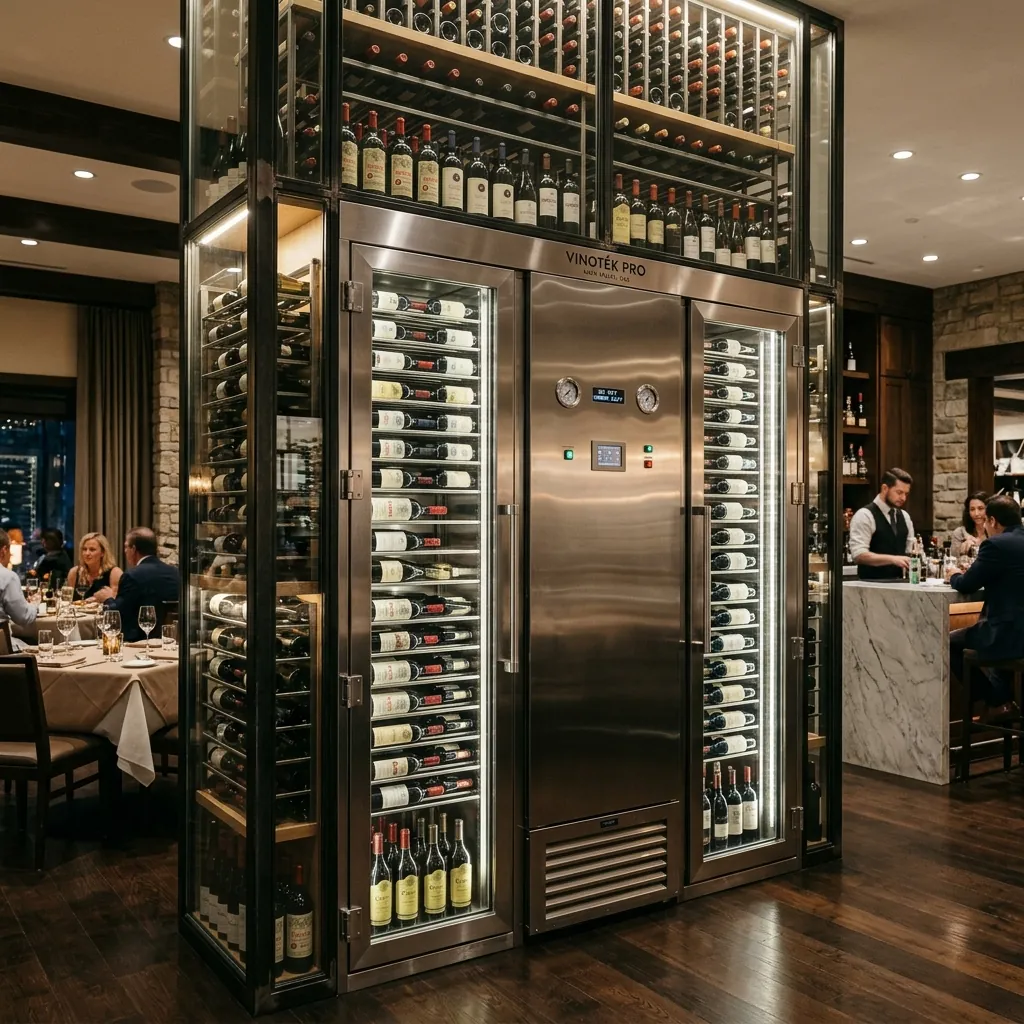
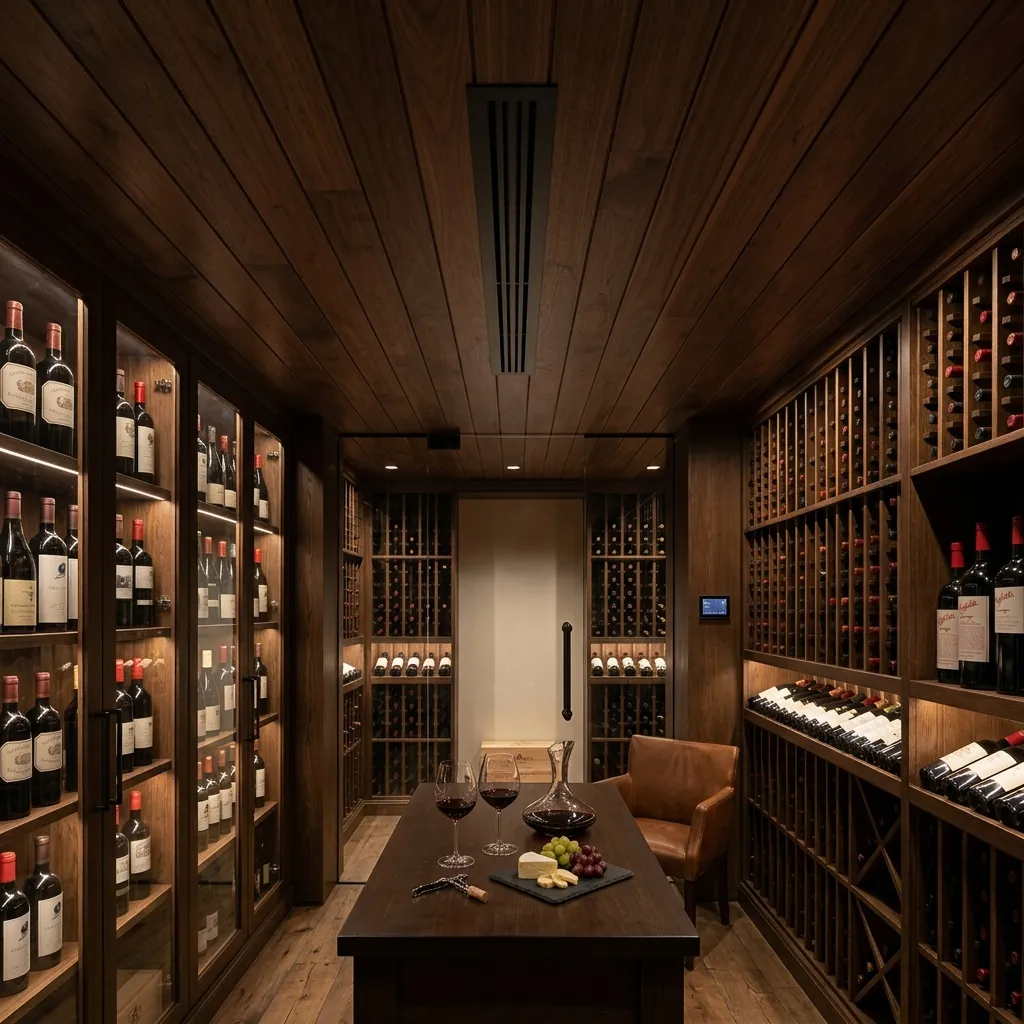
Transform awkward under-stair space into a beautifully controlled wine haven with climate solutions designed to protect every bottle. Learn how the right under-stair wine cabinet climate control system preserves flavor, prevents spoilage, and turns storage limitations into a standout feature.
Book a ConsultationAn under-stair wine cabinet is one of the most visually striking and space-efficient ways to store a collection, but it is also one of the most demanding environments to protect properly. Unlike a dedicated wine cellar built from the ground up, the space beneath a staircase is typically irregular in shape, harder to insulate, more exposed to ambient temperature swings, and more vulnerable to heat transfer from surrounding living areas. That means the success of an under-stair wine cabinet depends on much more than attractive shelving or a custom door; it depends on precise climate control that can maintain stable temperature, manage humidity, reduce vibration, and account for the unique thermal challenges created by stairs, walls, HVAC ducts, and nearby foot traffic. For homeowners who want to store wine safely and elegantly in a compact footprint, understanding these requirements is the first step toward building a system that protects both the bottles and the investment behind them.
Wine ages best when temperature stays consistently within the ideal range, and under-stair spaces often experience more fluctuation than a purpose-built cellar. A properly engineered cooling system helps prevent heat spikes, premature aging, and flavor distortion.
The right climate control setup helps maintain humidity levels that protect corks from drying out while minimizing excess moisture that can damage labels, shelving, and surrounding finishes.
Because wine is sensitive to agitation, under-stair wine cabinet climate control should prioritize quiet, low-vibration equipment that avoids disturbing sediment and preserves the natural maturation process.
Under-stair installations must make the most of every inch, so climate systems should be compact, efficient, and tailored to irregular dimensions without compromising performance or aesthetics.
Designing climate control for an under-stair wine cabinet begins with a simple truth: this is not an ordinary storage area. The space beneath a staircase often sits at the intersection of several temperature zones, each of which can affect wine in different ways. One side may border an exterior wall, another may sit adjacent to a warm living room, and overhead there may be constant heat transfer from the floor above. Even when the cabinet looks perfectly enclosed, the hidden realities of air movement, insulation gaps, and structural materials can create microclimates that are far less stable than the homeowner expects. This is why under-stair wine cabinet climate control must be treated as a specialized design challenge rather than a decorative afterthought. Wine is highly sensitive to environmental change, and if the cabinet is not properly insulated and cooled, the result can be cork shrinkage, oxidation, off-flavors, and shortened cellar life.
Another major challenge is geometry. Staircases rarely create neat, rectangular storage volumes. Instead, the available space slopes, narrows, and changes depth as it follows the stair line, making it harder to distribute cooled air evenly. In a standard wine room, climate equipment can be positioned to support a relatively uniform environment, but in an under-stair cabinet, airflow may be trapped in pockets or forced into corners where bottles are more vulnerable to heat buildup. This means the cooling strategy must account for how air travels through shelves, around bottles, and across different elevations. Without balanced circulation, one section of the cabinet may stay ideal while another becomes too warm or too dry, undermining the entire purpose of the installation.
Humidity control is equally important. Wine corks need a stable moisture level to remain supple and sealed, but under-stair spaces can swing from dry to damp depending on the surrounding structure and the season. If the area is too dry, corks may contract and allow oxygen to enter the bottle, accelerating spoilage. If it is too humid, labels can peel, mold can develop, and cabinetry materials can begin to deteriorate. A high-quality under-stair wine cabinet climate control system must therefore do more than lower temperature; it must create a balanced microenvironment that protects every bottle and every surface around it. This is especially crucial in custom installations where wood, glass, stone, and metal all respond differently to moisture and temperature changes.
Vibration is another often-overlooked issue. Staircases are high-traffic structural elements, and even subtle movement from footsteps can transfer through the framing into the cabinet. Over time, repeated vibration can disturb sediment in aged wines and interfere with the quiet maturation process that collectors value so highly. For that reason, the most effective under-stair wine cabinet climate control systems are designed to operate quietly and to minimize mechanical disturbance. This includes not only the cooling unit itself, but also how it is mounted, insulated, and isolated from the cabinet structure. The goal is to create a calm, stable environment where wine can rest undisturbed, even in a busy household.
Insulation and sealing also play a decisive role. Because under-stair cabinets are often built into existing architecture, there may be hidden air leaks, thermal bridging, or construction details that allow outside heat to infiltrate the storage area. A cooling system cannot compensate for poor enclosure design on its own. The cabinet needs a properly sealed door, insulated walls, and carefully planned vapor barriers to work as a complete climate solution. When all of these components are aligned, the under-stair space becomes more than a clever storage nook; it becomes a reliable wine preservation environment with the same level of care found in a dedicated cellar.
Finally, homeowners should consider how the cabinet will be used day to day. Frequent access means more door openings, more ambient air exchange, and more opportunities for temperature drift. A well-designed climate control setup should recover quickly after the cabinet is opened and should maintain steady conditions even when the collection is being browsed regularly. This is especially important for entertaining households where the under-stair wine cabinet serves both a practical and aesthetic function. The right system allows the collection to remain beautifully displayed while still receiving the precise environmental protection it needs, proving that small-space wine storage can be both elegant and technically sophisticated.
Essential Wine Cellar Engineering Resources:
Selecting the right cooling system for an under-stair wine cabinet begins with understanding that there is no one-size-fits-all solution. The best system depends on the cabinet’s size, insulation quality, bottle capacity, surrounding room conditions, and how often the collection will be accessed. Some installations may benefit from a ducted cooling approach that keeps mechanical components remote and discreet, while others may require a self-contained unit designed specifically for compact wine storage. What matters most is matching the equipment to the cabinet’s physical reality rather than forcing the cabinet to fit a generic system. In a space as irregular as the area under stairs, precision is everything, and the wrong unit can create noise, hot spots, or inadequate cooling capacity.
Cooling capacity is one of the first technical considerations. If the system is undersized, it will struggle to maintain temperature during warm weather or when the cabinet door is opened repeatedly. If it is oversized, it may cycle too aggressively, causing short bursts of cooling that can create temperature instability and unnecessary wear. The ideal under-stair wine cabinet climate control system should be properly calculated based on the cabinet’s cubic footage, insulation rating, ambient conditions, and any heat-producing elements nearby. This is where professional planning becomes invaluable, because a compact cabinet may still require serious cooling power if it is built into a warm interior wall or exposed to direct sunlight from nearby windows.
Air distribution is another critical factor. In a narrow or sloped cabinet, the cooling system must move air in a way that reaches all storage zones without creating drafts that dry out corks or chill one section too aggressively. Thoughtful placement of supply and return vents can make the difference between a balanced cellar environment and a cabinet with persistent warm corners. The best designs use controlled airflow paths that circulate conditioned air gently and consistently. This is especially important when bottles are displayed on angled racks, in horizontal rows, or behind glass doors, because each of these elements can influence how air moves through the cabinet.
Noise level should never be underestimated in a home environment. An under-stair wine cabinet is often located near living spaces, dining rooms, or hallways, making acoustic comfort just as important as thermal performance. A noisy cooling unit can distract from the experience of the room and make the installation feel less refined. High-quality systems are engineered for quiet operation, with attention to compressor isolation, fan design, and mount stability. For many homeowners, this quiet performance is one of the biggest advantages of a professionally planned wine cabinet climate control solution, because it allows the collection to become a natural part of the home rather than a mechanical intrusion.
Maintenance access is also essential. A beautiful custom cabinet should not become difficult to service. Filters, fans, drains, and electrical components should be accessible without dismantling the entire installation. When planning an under-stair wine cabinet, it is wise to think ahead about how the system will be inspected, cleaned, and serviceed over time. A cooling unit that is hidden behind cabinetry panels may look seamless, but if it is impossible to maintain, long-term reliability will suffer. The smartest designs balance aesthetics with serviceability, ensuring that the cabinet remains both attractive and practical for years of wine storage.
Another important consideration is how the system integrates with the rest of the home. If the cabinet is located in an open-plan space, the cooling solution should complement the surrounding architecture and not disrupt the visual flow. If the home already has a larger cellar or wine room, the under-stair cabinet may need to function as a secondary storage zone with matching environmental standards. In either case, the system should support the collection as a whole, not just cool a box of bottles. That broader perspective is what separates a simple storage cabinet from a true wine preservation environment. When the cooling equipment, insulation, cabinetry, and usage patterns all work together, the result is a highly efficient, elegant, and dependable under-stair wine cabinet climate control system that makes the most of every inch of available space.
The most successful under-stair wine cabinet installations are the ones that treat climate control as part of a larger design ecosystem. Temperature, humidity, airflow, materials, lighting, and door construction all influence one another, so the cabinet cannot be judged by cooling equipment alone. A beautifully built cabinet with poor sealing will still fail, and a powerful cooling system installed in a weak enclosure will waste energy while struggling to stabilize conditions. For that reason, the design details surrounding the climate system are just as important as the system itself. This includes choosing the right door glazing, using insulated panels, selecting moisture-resistant materials, and ensuring that the cabinet’s interior layout supports healthy circulation around the bottles.
Door design is especially important because it is the cabinet’s primary barrier against ambient air. A high-performance glass door can showcase the collection while still helping maintain temperature, but only if it is properly insulated and tightly sealed. Hinges, gaskets, and frame materials all contribute to performance. Even a small air leak can allow warm household air to enter the cabinet, forcing the cooling unit to work harder and increasing the risk of instability. In under-stair applications, where the cabinet may have a custom shape and nonstandard dimensions, the door must be carefully fitted to the opening so that the entire enclosure behaves as a controlled environment. A visually stunning door is valuable, but a well-sealed door is essential.
Lighting is another detail that affects wine preservation. While LED lighting is typically preferred because it produces minimal heat and low ultraviolet exposure, it still needs to be used thoughtfully. Too much light can degrade wine over time and create unwanted heat pockets in a compact cabinet. The best under-stair wine cabinet climate control designs use subtle, well-placed lighting that enhances presentation without compromising storage conditions. Soft illumination can transform the cabinet into a focal point of the home, but it should never overwhelm the environment or interrupt the cooling system’s ability to maintain consistency. In a smaller space, restraint is often the hallmark of quality.
Interior materials also matter. Wood can add warmth and elegance, but it must be chosen and finished carefully to resist humidity changes. Metal racking can provide durability and modern appeal, but it should be installed in a way that does not create unnecessary thermal bridges. Stone or tile accents may look luxurious, yet they can influence how the cabinet retains or releases heat. The best designs strike a balance between beauty and performance, selecting materials that support the climate system rather than fight against it. This is particularly relevant in under-stair spaces, where the cabinet may be built into an existing architectural shell and therefore depend on the surrounding construction for much of its thermal behavior.
Another design strategy that improves longevity is zoning. If the cabinet is large enough or shaped in multiple levels, the interior can be arranged to store different types of wine in ways that reflect their needs and usage frequency. For example, everyday drinking wines may be placed in easier-to-reach sections, while long-term aging bottles are stored in the most stable part of the cabinet. This not only improves convenience but also reduces unnecessary exposure to warm air when the door is opened. Thoughtful organization helps the climate system do its job more efficiently because the cabinet is used in a way that respects the flow of temperature and air inside it.
Finally, style should never be separated from function. Under-stair wine cabinets are often admired because they turn an overlooked architectural void into a signature feature of the home. When climate control is integrated seamlessly, the result feels intentional and refined rather than technical or bulky. Hidden vents, flush trim, custom millwork, and elegant bottle presentation all contribute to the overall impression, but beneath the surface the real achievement is environmental stability. That combination of beauty and performance is what makes an under-stair wine cabinet truly exceptional. It allows the homeowner to enjoy a sophisticated display while trusting that every bottle is protected by precise, dependable climate control engineered for the unique demands of the space.
Most wine collections are best stored in a stable range around 55°F, with minimal fluctuation. The exact target can vary slightly depending on the types of wine being stored, but consistency matters more than chasing a perfect number. An under-stair wine cabinet climate control system should be designed to hold the environment steady year-round, because repeated temperature swings are more damaging than being a degree or two above or below the ideal range. For long-term aging, stable conditions are especially important, since heat can accelerate chemical reactions in the wine and shorten its lifespan.
Sometimes, but only if the cabinet is properly insulated, sealed, and sized to match the unit’s capacity. Under-stair spaces are often irregular and can be more difficult to cool evenly than standard rectangular wine rooms, so a generic solution may struggle with airflow, noise, or temperature recovery after the door is opened. In many cases, a specialized under-stair wine cabinet climate control setup is a better choice because it is selected based on the cabinet’s exact dimensions, surrounding conditions, and usage patterns. The goal is not just to cool the space, but to create a stable wine-preservation environment that performs reliably over time.
Humidity control protects both the wine and the cabinet itself. If the air is too dry, corks can shrink and allow oxygen into the bottle, which can spoil the wine or age it too quickly. If the air is too humid, labels may peel, mold can form, and cabinetry materials may deteriorate. In an under-stair installation, where the microclimate can be influenced by walls, floors, and nearby living spaces, balanced humidity is essential. A good system maintains the kind of environment that supports long-term wine storage while also preserving the appearance and durability of the custom cabinet.
Whether you need installation, service, or maintenance — our team is ready to help. Fill out the form below and we'll get back to you within 24 hours.
By submitting this form, you agree to our Privacy Policy. CSLB Lic#1055057
VA Wine Cooling engineers and maintains precision commercial and residential cooling systems across Southern California.