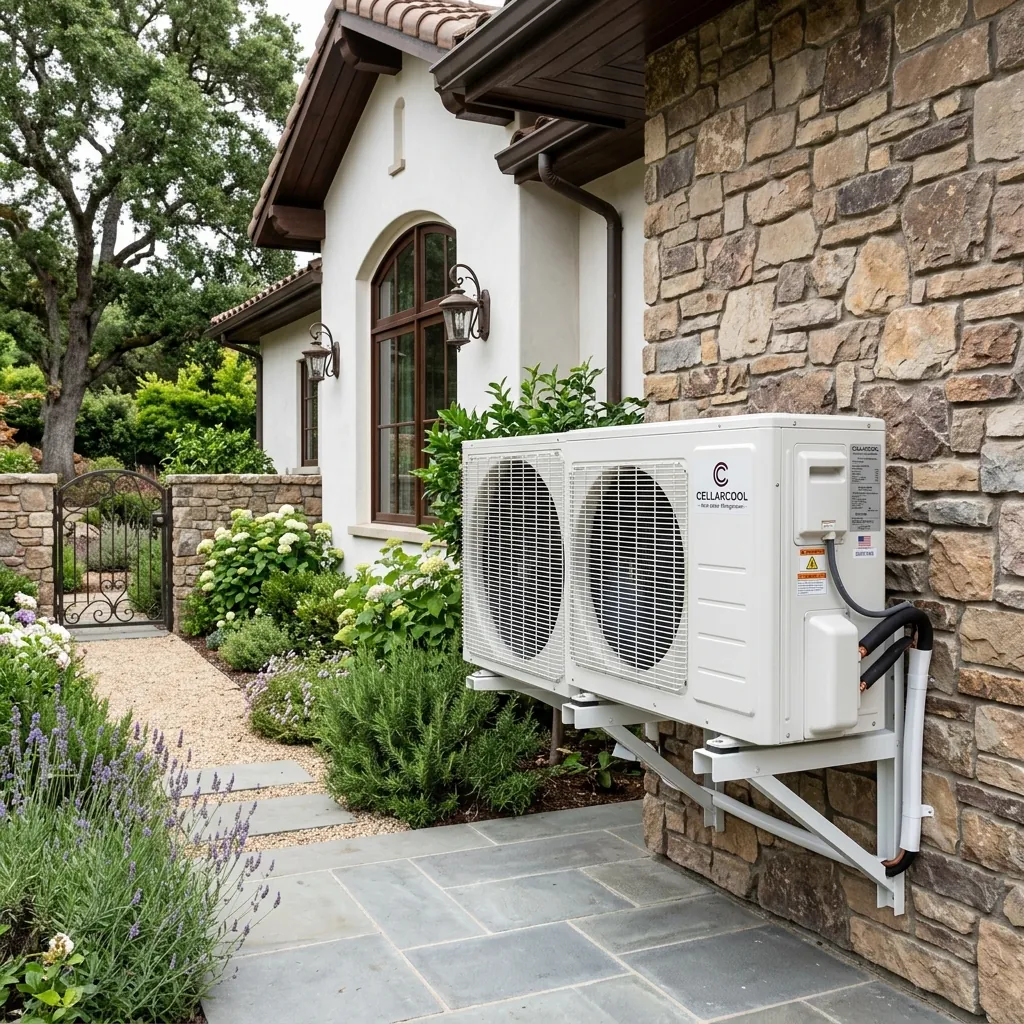
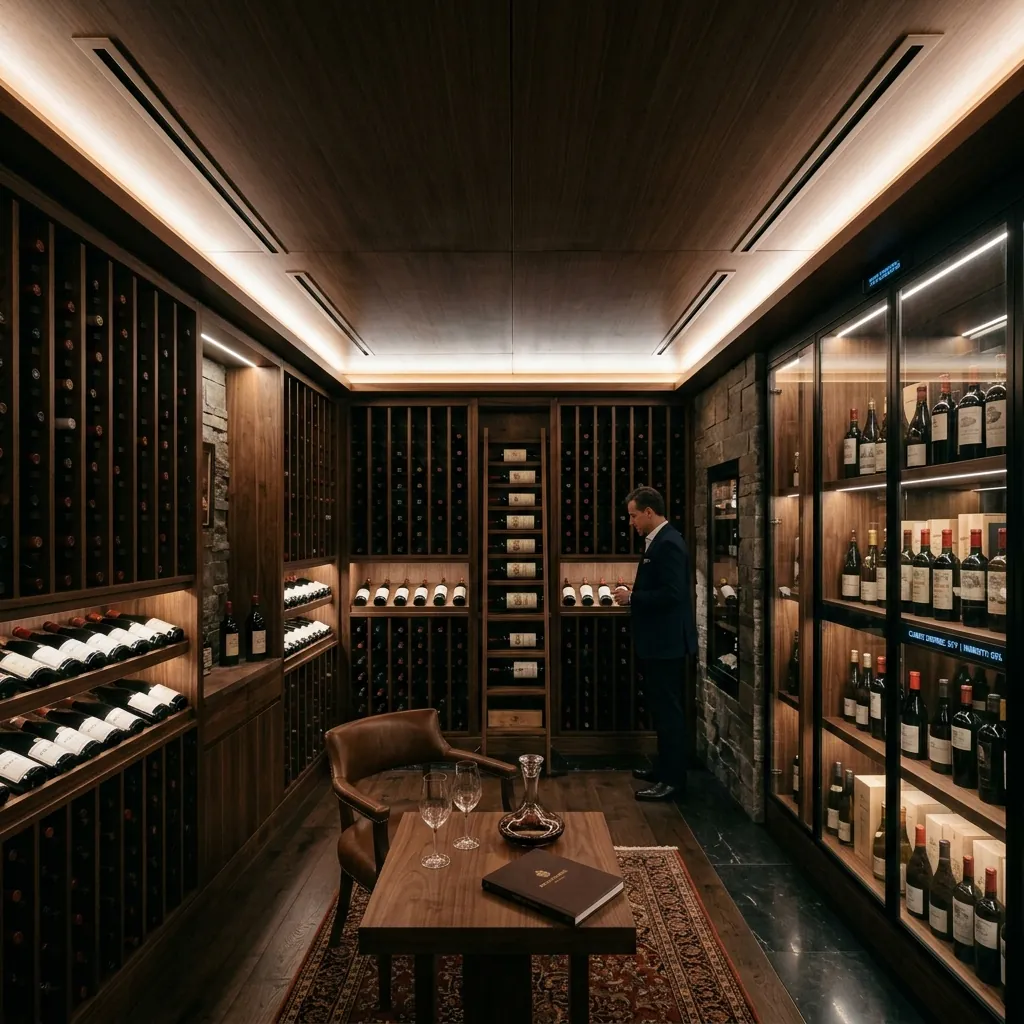
Thoughtful wine cellar lighting does far more than set the mood—it directly influences heat load, humidity stability, and the long-term performance of your cooling system. Discover how to illuminate your cellar beautifully while protecting every bottle.
Book a ConsultationWine cellar lighting is often treated as a finishing touch, something added at the end after racks, doors, and cooling equipment have already been chosen. In reality, lighting should be part of the earliest planning conversations because it can significantly affect the temperature, humidity, and overall efficiency of a wine cellar cooling system. Every light source introduces some amount of heat, and in a carefully controlled cellar environment, even small heat gains can create measurable strain over time. That means the style, placement, wattage, beam spread, runtime, and control method of your lighting all matter. A well-designed cellar uses lighting that showcases labels, highlights architecture, and creates a luxurious atmosphere without compromising the stable conditions needed for long-term wine storage. Whether you are building a compact residential cellar, a dramatic glass-enclosed display room, or a large custom collection space, the relationship between lighting and climate control should be treated as a core design principle from the start.
Modern wine cellar lighting should prioritize low-heat output, especially in enclosed spaces where a cooling unit must work continuously to offset environmental load. LED lighting has become the preferred solution for most cellars because it offers excellent brightness with minimal thermal impact compared with incandescent or halogen fixtures. Low-heat illumination helps reduce the amount of unwanted warm air introduced into the cellar, which in turn supports more stable temperatures and less frequent compressor cycling. This is especially important in smaller cellars, where a few poorly chosen fixtures can raise the load enough to affect performance. Low-heat options also help preserve wine labels, cork integrity, and wooden racking materials over time, making them a practical and aesthetically pleasing investment.
Where lighting is installed can be just as important as the type of fixture selected. Strategic placement helps deliver visual impact while minimizing direct heat exposure to bottles, cooling equipment, and temperature-sensitive zones. For example, recessed lighting can provide broad, even illumination without creating hot spots, while accent lighting can be directed at display walls, signage, or decorative features rather than at the collection itself. Careful placement also reduces glare on glass doors and prevents light from shining directly on labels for extended periods. In a wine cellar, thoughtful layout is essential because light should enhance the room’s beauty without interfering with the airflow patterns and thermal balance that keep the cellar functioning properly.
Advanced controls are one of the most effective ways to reduce lighting-related climate impact in a wine cellar. Dimmers, timers, occupancy sensors, and smart automation systems allow the cellar owner to use lighting only when needed and at the lowest practical intensity. This reduces both heat output and energy consumption while extending fixture life. Automated controls are especially valuable in cellars that are viewed frequently but not occupied for long periods, such as display cellars in entertainment spaces or hospitality settings. By integrating lighting controls with the cellar’s overall environmental strategy, owners can create a refined experience that looks impressive on demand while remaining efficient and climate-conscious behind the scenes.
The surfaces inside a cellar can influence how light behaves, how much heat is retained, and how evenly the room is illuminated. Dark finishes may create a dramatic appearance but can require more light output to achieve adequate visibility, while highly reflective surfaces may amplify brightness and create glare. Choosing the right combination of rack materials, wall finishes, and glass elements helps balance aesthetics with performance. In many cases, matte finishes and warm-neutral tones offer a sophisticated look without forcing the lighting system to work harder than necessary. These design decisions matter because a visually elegant cellar is only successful if it also supports stable storage conditions and does not create unnecessary load on the cooling system.
Lighting and climate control are inseparable in a properly engineered wine cellar. Every fixture produces some degree of heat, and that heat becomes part of the cellar’s total thermal load. In a room designed for long-term wine storage, the cooling system is calibrated to maintain a narrow temperature range, often around 55 degrees Fahrenheit, while also preserving humidity levels that protect corks and prevent label degradation. When lighting introduces extra warmth, the cooling system must work harder to remove it. Over time, that additional workload can lead to more frequent compressor cycles, higher energy use, and greater wear on critical components. This is why the choice of lighting should never be based on appearance alone. A cellar that looks beautiful but overheats or fluctuates too much is not protecting the wine the way it should.
Humidity is also closely tied to lighting performance. Warm light sources can create microclimates near fixtures, especially if they are mounted close to racks or if the room is compact. These warmer pockets can slightly alter local humidity, drying out nearby bottles or making the cooling system work unevenly across the space. Even if the overall humidity reading appears acceptable, localized changes can still create problems over time. This is particularly important in cellars with valuable aged wines, where consistent storage conditions are essential for preserving cork elasticity and preventing oxidation. The more heat a lighting system adds, the more the cellar must compensate, and the harder it becomes to maintain a truly stable environment.
LED technology has transformed wine cellar lighting because it offers a far better balance between visibility and thermal efficiency than older lighting types. Traditional incandescent and halogen bulbs convert a significant portion of their energy into heat, which is undesirable in any climate-controlled space. LEDs, by contrast, produce much less heat at the source and can be placed in a more controlled manner. That does not mean every LED setup is automatically ideal, however. High-output fixtures, poor ventilation around drivers, and excessive fixture density can still introduce unnecessary thermal load. The best approach is to think of lighting as part of the mechanical ecosystem of the cellar, not as a separate decorative layer. When lighting is selected and installed with the cooling system in mind, the entire cellar performs more efficiently and more predictably.
Another major factor is runtime. A light that is left on for hours each day contributes far more heat than one used briefly for display or access. This is why timers, motion sensors, and scene-based controls are so valuable in wine cellar design. They ensure the cellar is illuminated when needed without allowing unnecessary exposure. In many residential cellars, owners may only need full lighting for a few minutes at a time, yet the lights are often left on for convenience. That habit can quietly undermine climate stability. By contrast, a controlled lighting plan can dramatically reduce the cumulative heat introduced into the room. Over months and years, those small savings support better cooling performance and lower operating costs.
Placement relative to the cooling equipment also matters. Lighting installed too close to return air paths, evaporator units, or temperature sensors can distort the system’s readings and performance. If a sensor is warmed by a nearby fixture, it may signal a higher temperature than the rest of the room actually has, causing the cooling unit to respond unnecessarily. Likewise, lights positioned where they disrupt airflow can create inefficiencies by warming air that should be circulating smoothly. This is why professional wine cellar planning often includes both lighting and HVAC layout in the same design phase. The goal is not merely to illuminate the cellar, but to do so in a way that preserves the exact environmental conditions the wine needs.
Glass-enclosed cellars present their own lighting challenges because they are often visible from adjacent living spaces and may be designed to make a strong architectural statement. In these settings, lighting can become more prominent and more powerful than in a traditional enclosed cellar, which increases the risk of heat gain. The solution is not to avoid dramatic lighting entirely, but to use it intelligently. Layered lighting, lower-wattage fixtures, and carefully aimed accents can create depth and luxury without overwhelming the cooling system. A well-lit glass cellar should feel inviting and elegant while still functioning as a stable storage environment, and that balance depends on understanding how light and climate interact from the very beginning.
Essential Wine Cellar Engineering Resources:
The most successful wine cellar lighting designs are layered, intentional, and deeply respectful of the cellar’s primary purpose: preserving wine. A cellar should feel elegant and memorable, but it must never sacrifice environmental stability for dramatic effect. Layered lighting allows designers to combine ambient illumination, accent lighting, and task lighting in a way that supports both atmosphere and usability. Ambient lighting provides general visibility throughout the room, accent lighting highlights architectural features or premium bottles, and task lighting helps with label reading or bottle selection. When these layers are balanced properly, the cellar feels luxurious without becoming overlit, overheated, or visually harsh. This balance is especially important in custom cellars where the lighting scheme must complement the craftsmanship of the racking system, the finishes, and the surrounding interior design.
One of the most common mistakes in wine cellar lighting is using too much direct light. Direct beams can create hot spots, glare, and uneven visual contrast that makes the room feel less refined. They can also expose bottles and labels to light for longer periods than necessary. Although wine is not as vulnerable to light damage as it is to temperature swings, prolonged exposure can still affect quality, particularly in delicate wines or bottles stored for many years. The safest approach is to use soft, indirect, and well-diffused lighting wherever possible. Concealed LED strips beneath shelves, recessed ceiling fixtures, and discreet toe-kick lighting can create a rich, inviting glow without dominating the room. This kind of illumination also helps maintain a more consistent visual environment, which makes the cellar feel organized and intentional.
Task lighting deserves special attention because it is the most practical form of cellar illumination. If a cellar is used regularly, owners need to read labels, identify vintages, and move bottles safely without creating unnecessary disruption. Task lighting should be bright enough to support these activities but focused enough to avoid flooding the entire room with heat and brightness. In many cases, this means using localized light sources with narrow beam angles or adjustable heads. The advantage of this approach is that the cellar remains mostly in a low-light, low-heat state until specific tasks require more illumination. That preserves the atmosphere and supports the cooling unit, while still making the cellar highly functional for everyday use.
Accent lighting can elevate a cellar from practical storage to a true showcase. Wine collections often include bottles with visual significance—rare vintages, vertical displays, magnums, or collector’s labels that deserve attention. Accent lighting can highlight these elements and create visual hierarchy, drawing the eye to focal points without overwhelming the entire room. However, accent lighting must be handled carefully in a climate-controlled environment. The fixtures should be low-heat, and their beam angles should be tested to ensure they do not create excessive brightness on glass or directly warm the collection. When used correctly, accent lighting can make a cellar feel custom and high-end while still respecting the limits of the cooling system.
Material selection also shapes how lighting performs. Wood racking, stone walls, metal accents, and glass elements all reflect and absorb light differently. A dark walnut rack may absorb more light and require slightly stronger illumination to feel balanced, while lighter finishes can help distribute brightness more evenly. Reflective materials can create sparkle and dimension, but they can also amplify glare if fixtures are poorly positioned. A good cellar design uses these materials to complement the lighting plan rather than fight against it. The best results come from considering the room as a whole: how the light will bounce, where shadows will fall, and how each surface contributes to the overall visual temperature of the space. This holistic approach improves both beauty and performance.
It is also important to think about how lighting interacts with glass doors and display walls. Glass can make a cellar feel open and dramatic, but it also increases the need for careful light control. Reflections can obscure labels, create visual clutter, and make the room feel brighter than it actually is. In some cases, lighting that looks subtle in a solid-walled cellar can become intense once reflected in glass. That is why professional design often includes mockups or on-site testing before final installation. By evaluating how light behaves in the actual room, you can prevent common issues and ensure the cellar looks polished from every angle. The goal is to create a space that feels curated, calm, and architecturally integrated, rather than simply bright.
Ultimately, wine cellar lighting should support the collection, not compete with it. The room should be easy to navigate, visually striking, and carefully tuned to the needs of the cooling system. When lighting is designed with restraint, precision, and purpose, it enhances the cellar’s luxury feel while preserving the exacting conditions that wine requires. That is the hallmark of a truly successful wine cellar: a beautiful environment that works quietly and efficiently in the background, protecting the bottles while making them a pleasure to display and enjoy.
Creating a wine cellar that is both visually impressive and climate-safe requires discipline, planning, and an understanding of how small design choices influence long-term performance. The best practice is to begin with the cellar’s environmental requirements and then build the lighting plan around them. This means selecting fixtures with low heat output, using the fewest number of lights necessary to achieve the desired effect, and placing them where they enhance the room without disturbing the cooling cycle. In practical terms, that often means choosing LEDs with appropriate color temperature, using dimmable drivers, and avoiding oversized fixtures that generate unnecessary brightness. The result is a cellar that feels warm and inviting to the eye while remaining cool and stable where it counts.
Color temperature is another important consideration. Cooler white light can make a cellar feel crisp and modern, but it may also emphasize reflections and create a more clinical appearance. Warmer tones can feel more luxurious and complementary to wood racking, stone, and leather accents, yet they must still be selected carefully to ensure they do not make the room feel dim or underlit. In a wine cellar, the ideal lighting temperature often depends on the design style of the room and the way the collection is displayed. The key is consistency. A cohesive lighting temperature helps the cellar feel intentional and refined, while also avoiding the need for brighter output that might increase heat. Choosing the right tone can reduce the temptation to over-illuminate the space, which benefits both aesthetics and climate control.
Maintenance is another factor that is frequently overlooked. Wine cellar lighting should be easy to service without causing prolonged temperature disruption. Fixtures that require frequent bulb changes or complicated access can expose the cellar to warm air each time they are serviced. This is one reason why long-life LED systems are so advantageous. They reduce maintenance frequency and help keep the cellar closed and stable. When maintenance is necessary, it should be done efficiently, ideally during times when the cellar door can remain open for the shortest possible interval. For high-value collections, this kind of operational discipline is just as important as the initial design. A beautiful cellar only remains beautiful if it continues to perform reliably year after year.
Automation is one of the strongest tools available for preserving both atmosphere and efficiency. Smart lighting systems can be programmed to turn on in scenes, dim automatically, or activate only when the cellar is occupied. This is particularly useful in larger homes, entertainment spaces, or commercial environments where the cellar may be seen often but used intermittently. Automation reduces the chance of lights being left on unnecessarily, which lowers heat gain and improves energy efficiency. It also gives the owner a more polished experience, since the cellar can shift from subtle ambient glow to full display mode at the touch of a button. In a custom wine room, that kind of control adds sophistication while supporting the practical needs of storage.
Another best practice is to coordinate lighting with insulation and vapor barrier performance. Even the best lighting system will struggle if the cellar envelope is poorly sealed or thermally weak. When light adds heat to an already vulnerable room, the cooling system must compensate for both external and internal loads. That is why the entire cellar assembly should be viewed as one integrated system. High-performance insulation, properly sealed doors, accurate thermostat placement, and efficient lighting all work together to maintain stable conditions. If one part of the system is neglected, the others are forced to carry more of the burden. A truly effective cellar design treats lighting as one component of a larger preservation strategy.
For homeowners and collectors who want a cellar that feels luxurious without compromising wine quality, professional planning is invaluable. The right design team can help evaluate fixture types, heat output, control methods, and placement in relation to the cooling unit and storage layout. This is especially important in custom or high-end projects where the cellar is a focal point of the home. Expert guidance ensures the lighting enhances the architecture while respecting the delicate balance of temperature and humidity. In the end, the best wine cellar lighting does not call attention to itself by being overly bright or flashy. Instead, it creates a calm, elegant, and highly controlled environment where every bottle is protected and every detail feels intentional.
When all of these practices come together, the cellar becomes more than a storage room. It becomes a carefully curated environment that reflects the owner’s taste, protects the investment, and performs efficiently over time. That is the true value of mastering wine cellar lighting: not simply making the room look good, but making sure the design actively supports climate control, energy efficiency, and the long-term integrity of the wine collection.
Low-heat LED lighting is generally the best option for a wine cellar because it provides strong illumination with minimal thermal impact. LEDs help reduce strain on the cooling system, support stable temperature and humidity levels, and offer excellent longevity compared with older lighting technologies. For best results, choose dimmable fixtures and use them in a layered lighting plan that balances ambient, accent, and task lighting without overlighting the room.
Yes. Even though individual fixtures may seem small, all lighting adds heat to the cellar, and that heat becomes part of the cooling system’s workload. In a climate-controlled wine room, the cooling unit must remove both external heat entering through walls and doors and internal heat generated by lights and other equipment. If lighting is excessive, poorly placed, or left on for long periods, it can increase compressor cycling, energy use, and wear on the system. That is why lighting design should always be considered alongside climate control.
The best way to create a dramatic wine cellar without adding excessive heat is to use layered, low-heat lighting with careful placement and control. Recessed LEDs, concealed shelf lighting, toe-kick lighting, and selective accent lighting can produce a luxurious effect while keeping heat output low. Pairing those fixtures with dimmers, timers, or smart automation allows you to increase brightness only when needed. You can also use reflective materials and thoughtful finishes to enhance the visual impact of the lighting without relying on higher wattage or excessive fixture counts.
Whether you need installation, service, or maintenance — our team is ready to help. Fill out the form below and we'll get back to you within 24 hours.
By submitting this form, you agree to our Privacy Policy. CSLB Lic#1055057
VA Wine Cooling engineers and maintains precision commercial and residential cooling systems across Southern California.