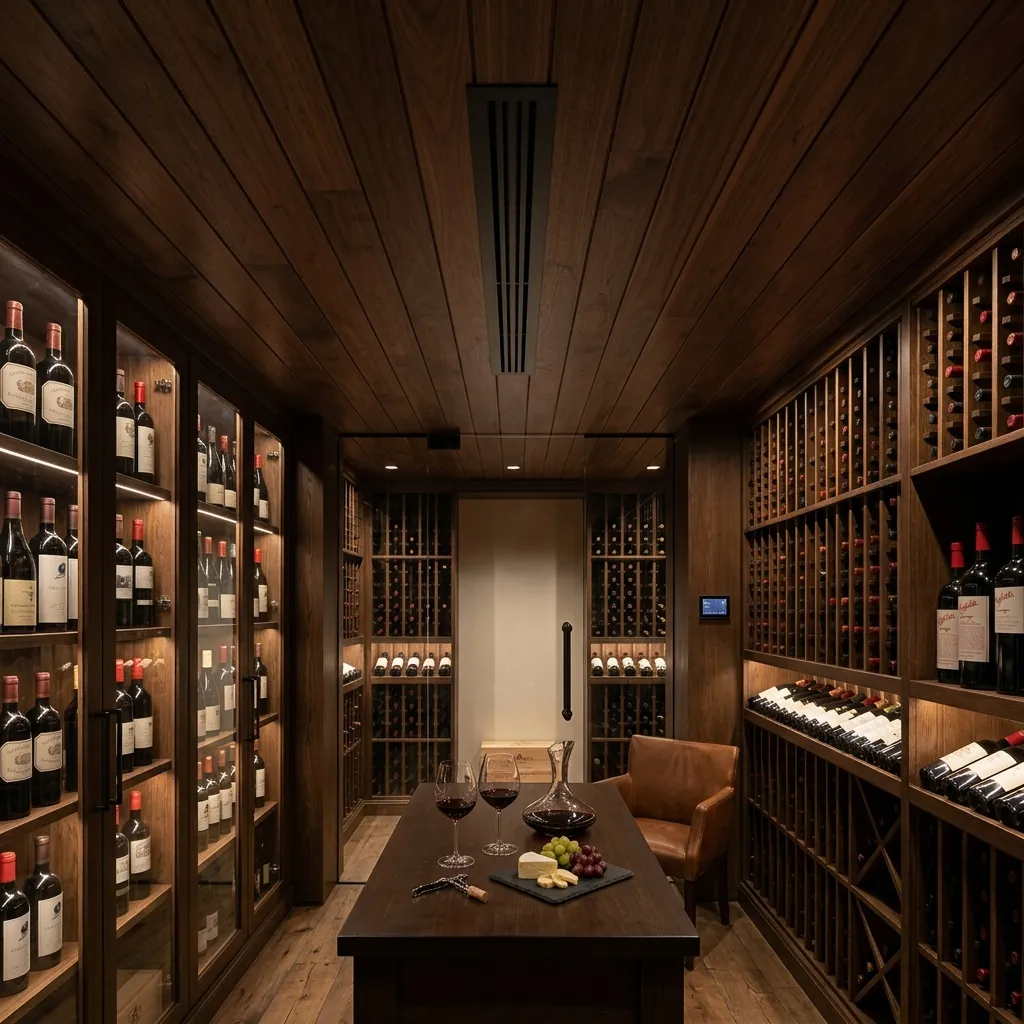
Protecting your wine collection starts behind the walls. Learn how vapor barriers and insulation work together to create a stable, efficient cellar environment that preserves every bottle at its best.
Book a ConsultationA properly designed wine cellar is far more than a beautifully finished room with racks and lighting; it is a controlled preservation environment where temperature, humidity, and air movement must all be managed with precision. At the center of that control are two critical building components that are often underestimated during planning: the vapor barrier and the insulation system. Together, they form the protective envelope that helps prevent moisture intrusion, reduces thermal transfer, and supports the long-term stability that wine requires. Without a thoughtfully installed vapor barrier and the correct insulation package, even the best cooling system can struggle to maintain ideal cellar conditions, leading to unnecessary energy use, condensation problems, mold risk, and inconsistent storage performance. For homeowners, collectors, and designers who want a cellar that not only looks exceptional but also performs reliably year after year, understanding how these materials function is essential. VA Wine Cooling emphasizes that a successful cellar begins with the structure itself, because a cooling unit can only do so much if the surrounding envelope is leaking heat or allowing moisture to migrate through walls, ceilings, and floors. In other words, the cellar’s shell is the first line of defense, and when that shell is built correctly, every other system—from refrigeration to racking to lighting—works more efficiently and more predictably.
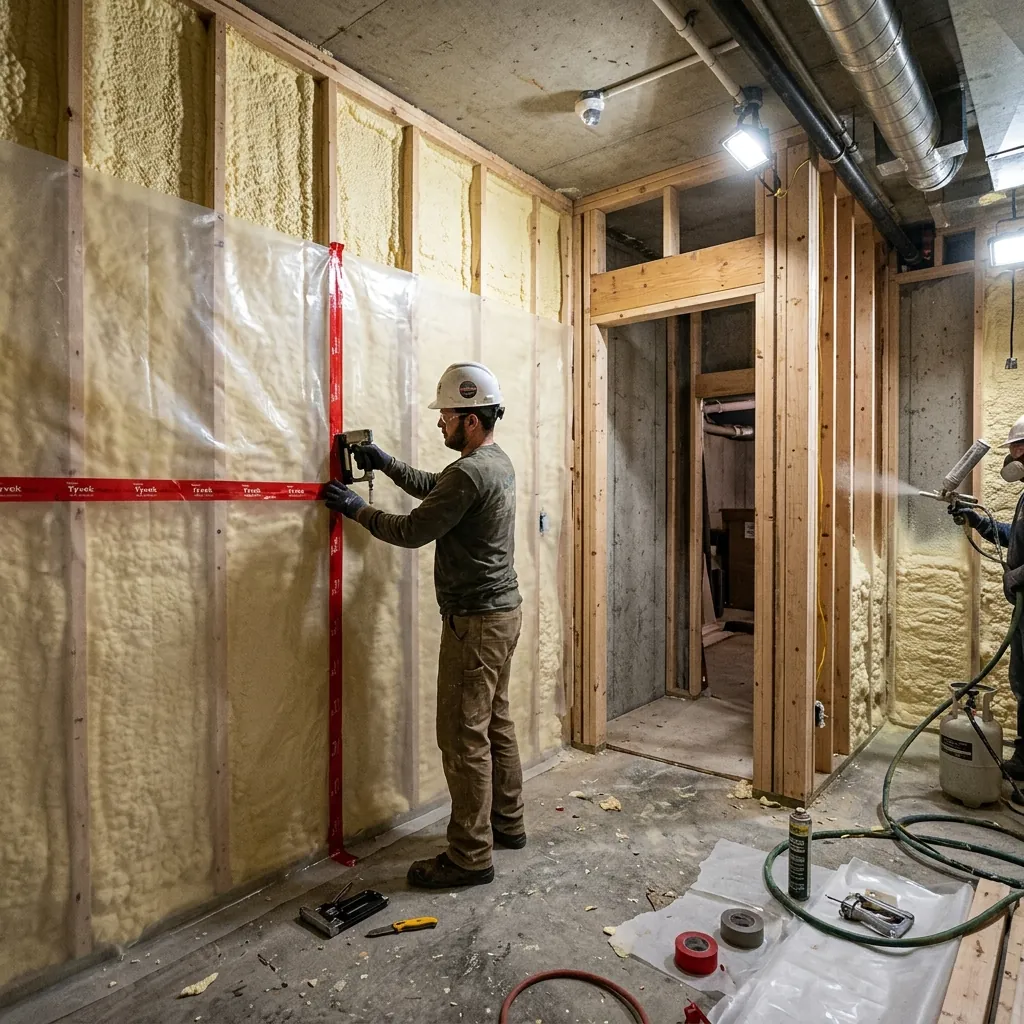
A vapor barrier helps limit the movement of moisture-laden air into the insulated wall assembly, reducing the risk of condensation, hidden dampness, and mold growth inside the cellar envelope.
Proper insulation minimizes heat transfer from adjacent rooms, exterior walls, and ceilings, allowing the wine cooling system to maintain a more stable temperature with less strain.
When the cellar is sealed and insulated correctly, the cooling equipment cycles less often, uses less energy, and delivers more consistent performance over time.
A well-built vapor barrier and insulation strategy protects both the wine collection and the structure itself by reducing the chance of moisture damage, temperature swings, and premature system wear.
When people think about wine cellar construction, they often picture the visible finishes: the wood racking, the stone accents, the elegant lighting, and the glass enclosure that turns the cellar into a focal point of the home. Yet the most important work happens before any of those aesthetic elements are installed. The science of a wine cellar begins with controlling the invisible forces that constantly try to disrupt the environment—heat, humidity, and vapor migration. A vapor barrier is designed to slow or stop moisture from moving into the wall cavity, where it can condense on cooler surfaces and create the kind of hidden damage that is expensive to service and difficult to detect until the problem has already spread. In a wine cellar, where the target temperature is typically much cooler than the surrounding home, this issue becomes even more important because the temperature difference between conditioned and unconditioned spaces can drive moisture migration aggressively. The colder interior surfaces of the cellar can cause warm, humid air from adjacent areas to condense if the envelope is not properly sealed, which is why vapor barrier placement and continuity matter so much.
In practical terms, a vapor barrier is not just a sheet of material placed somewhere inside the wall; it is part of a complete moisture management strategy. The location of the barrier depends on the climate, the wall assembly, and the direction of vapor drive, which is the tendency for moisture to move from a higher concentration area to a lower concentration area. In many wine cellar applications, the goal is to prevent humid indoor air from entering the insulated cavity and reaching colder surfaces where condensation can occur. That means seams must be sealed, penetrations must be carefully detailed, and transitions at corners, ceilings, floors, and windows must be treated with the same attention as the main wall surfaces. A single unsealed gap around a conduit or framing joint can undermine an otherwise excellent installation, allowing moisture to infiltrate and compromise the effectiveness of the insulation. This is why professional cellar design treats the vapor barrier as a continuous system rather than a single product.
Another important concept is that vapor barriers and air barriers are related but not identical. A vapor barrier restricts the diffusion of water vapor through materials, while an air barrier reduces the movement of air itself, which can carry far more moisture than diffusion alone. In a wine cellar, the best results come from assemblies that manage both. If warm air leaks into the wall cavity through cracks or gaps, it can deposit moisture rapidly as it cools, creating condensation even if the vapor barrier material itself is technically present. That is why details such as taped seams, sealed joints, gasketed electrical boxes, and properly insulated framing members are not optional extras—they are fundamental to the performance of the room. VA Wine Cooling often reminds homeowners that the cellar’s success depends on the quality of the envelope, and the envelope depends on careful construction practices that address both vapor and air control from the beginning.
The choice of vapor barrier material also influences performance. Some projects use polyethylene sheeting, while others rely on specialized vapor-retarding membranes or foam-based systems that provide both insulation and moisture resistance. The right choice depends on the design of the cellar, the climate zone, and the surrounding building materials. For example, a cellar built below grade may face different moisture pressures than one located on an upper floor or in a converted closet. Similarly, a cellar enclosed within a conditioned interior space may require a different strategy than a room with exterior walls exposed to seasonal temperature swings. What remains constant is the need for continuity: every surface that separates the wine cellar from a warmer, more humid adjacent area must be considered part of the moisture control envelope. If one section is left vulnerable, the whole assembly can be affected.
It is also worth noting that vapor barriers are not intended to trap moisture inside the cellar. Instead, they are meant to prevent unwanted moisture from entering construction cavities where it can cause damage. Wine cellars naturally maintain a controlled humidity range for cork preservation and overall collection health, but that controlled humidity should exist in the room itself, not inside the walls. This distinction is crucial because some homeowners worry that sealing a cellar too tightly will make the room feel dry or unnatural. In reality, a correctly designed cellar envelope supports the desired internal humidity by preventing outside conditions from interfering, while the cooling system and room materials help maintain balance. The objective is not to eliminate humidity from the cellar; it is to keep that humidity where it belongs and away from vulnerable building components.
For anyone planning a custom cellar, understanding vapor barriers is also a matter of protecting the investment. Wine collections can represent substantial financial and emotional value, and the cellar itself is often a significant architectural feature. Moisture damage behind the walls can lead to warped framing, degraded insulation, rusted fasteners, stained drywall, and mold remediation costs that far exceed the price of doing the envelope correctly in the first place. A properly designed vapor barrier is therefore not just a construction detail; it is a risk-management tool that safeguards the entire project. When installed with precision, it supports the cooling system, protects the structure, and creates the stable environment that fine wine deserves. That is the foundation of a well-built cellar, and it is why vapor barrier planning should never be treated as an afterthought.
Essential Wine Cellar Engineering Resources:
Insulation is the other half of the equation, and in many ways it is the component that determines whether a wine cellar can truly perform like a preservation space rather than simply a cooled room. The purpose of insulation in a wine cellar is to slow the transfer of heat from surrounding areas into the conditioned interior, giving the cooling system a manageable workload and allowing temperature to remain steady with minimal fluctuation. Because wine is sensitive to heat exposure and sudden swings, the quality of insulation directly affects the quality of storage. A cellar with insufficient insulation may cool unevenly, cycle excessively, and struggle to recover after door openings or changes in ambient conditions, while a properly insulated cellar can maintain a calm, stable environment that protects both short-term enjoyment and long-term aging potential. In that sense, insulation is not merely about comfort or efficiency; it is a preservation tool that supports the chemistry and structure of wine over time.
The effectiveness of insulation depends on several factors, including R-value, installation quality, material type, and coverage continuity. R-value measures resistance to heat flow, but a high R-value alone does not guarantee performance if the insulation is compressed, left with gaps, or interrupted by thermal bridges such as studs, joists, or metal framing. In a wine cellar, thermal bridging can be especially problematic because even small areas of unprotected structure can create pathways for heat to bypass the insulated cavity. That is why cellar design often incorporates continuous insulation strategies, such as rigid foam boards or spray foam systems, to reduce the impact of framing members and create a more uniform thermal envelope. The goal is to create a shell that behaves consistently from surface to surface, minimizing weak points where heat might enter and disrupt the cooling load.
Different insulation materials offer different benefits, and the best choice depends on the cellar’s location and construction method. Closed-cell spray foam, for example, provides both insulation and excellent air sealing, making it a popular option for wine cellar walls and ceilings where space is limited and moisture control is critical. Rigid foam panels can also be highly effective, especially when carefully sealed at seams and combined with appropriate framing methods. Fiberglass batts may be used in certain assemblies, but they require meticulous air sealing and vapor control to perform adequately in a wine cellar environment. The challenge is not simply filling a cavity with insulation; it is creating a system that resists heat transfer while also defending against moisture movement and air leakage. VA Wine Cooling evaluates these factors together because the wrong insulation strategy can create more problems than it solves, particularly if it allows condensation to form or leaves performance gaps around corners and penetrations.
Another key consideration is the relationship between insulation and the cooling unit itself. A wine cellar cooling system is sized based on the expected thermal load of the room, and that load is heavily influenced by insulation quality. If the cellar is poorly insulated, the cooling system must work harder and more frequently to maintain the target temperature, which can shorten equipment life, increase operating costs, and create more noticeable cycling noise. On the other hand, when insulation is properly installed, the cooling system can operate more efficiently and maintain a smoother temperature curve. This is especially important in custom cellars where the cooling equipment may be integrated into a wall, ceiling, or remote mechanical space. A better-insulated cellar allows that equipment to do its job quietly and effectively, preserving both the atmosphere of the room and the longevity of the system.
Insulation also affects humidity behavior, which is often overlooked in early planning. While the cooling unit is responsible for managing temperature, the cellar envelope influences how much moisture is introduced from outside and how quickly the room responds to changes in ambient conditions. Poor insulation can lead to cold spots, which may encourage condensation on surfaces or around structural elements. It can also contribute to uneven temperature distribution, where some areas of the cellar remain warmer than others, creating microclimates that are undesirable for wine storage. A well-insulated room reduces these inconsistencies and helps the cellar maintain a more uniform environment from top to bottom and wall to wall. That uniformity is especially valuable for mixed collections that include reds, whites, and sparkling wines, each of which benefits from stable storage conditions.
In high-end cellar construction, insulation is often selected and installed with a level of precision similar to that used in custom home performance projects. The thickness of the insulation, the continuity of the thermal envelope, the treatment of framing, and the integration with the vapor barrier all influence the result. Attention must also be paid to ceilings and floors, not just walls, because heat can enter from above or below depending on the room’s location. A cellar beneath a kitchen or living area may need a different strategy than a cellar adjacent to a garage or exterior wall. The best results come from a holistic approach that considers the entire assembly as a system. When properly designed, insulation turns the cellar into a stable, energy-conscious environment that protects the wine collection while reducing strain on the mechanical equipment. That is the kind of performance that makes a cellar feel effortless to use, even though it is the product of careful planning behind the scenes.
Ultimately, insulation is the backbone of temperature precision. It helps create the conditions that allow a wine cellar to remain cool without becoming unstable, costly, or noisy. It supports the vapor barrier by reducing the likelihood of temperature differences that can drive condensation. It protects the cooling system by lowering the load. And it protects the wine by helping the room maintain the kind of consistent, controlled environment that fine wine needs to age gracefully. For homeowners who want their cellar to perform as beautifully as it looks, investing in the right insulation strategy is one of the most important decisions they can make during construction or renovation.
Creating a high-performance wine cellar envelope requires more than selecting a vapor barrier and an insulation product; it demands a coordinated strategy that treats the room as a complete environmental system. The most successful cellars begin with careful planning around the location of the room, the climate zone, the surrounding building conditions, and the desired storage capacity. Before any finishes are installed, the builder should think through how heat, moisture, and air will move through the structure, because those forces will determine whether the cellar performs well over the long term. This is especially important in custom homes where the cellar may be tucked into a basement corner, integrated into a dining space, or built as a showcase enclosure with glass walls and specialized doors. Each configuration presents its own challenges, and the envelope must be tailored accordingly. A one-size-fits-all approach rarely delivers the performance that a wine collection requires.
One of the most important best practices is to ensure full continuity of the thermal and moisture barrier. That means paying attention to every transition point, including floor-to-wall intersections, wall-to-ceiling junctions, framing penetrations, electrical boxes, recessed lighting, door frames, and mechanical openings. These are the areas where failures often begin because they are easy to overlook during construction. Even a small gap can allow humid air to infiltrate the assembly or create a thermal bridge that undermines the insulation. Professional cellar builders understand that the envelope is only as strong as its weakest detail, so they seal and inspect every transition carefully. In many cases, the difference between a cellar that performs adequately and one that performs exceptionally comes down to the quality of those small details. A meticulous approach at the framing and sealing stage is far less expensive than correcting moisture damage later.
Another best practice is to match the insulation strategy to the cooling system and the cellar’s operating goals. A wine cellar cooling unit should be selected based on the room’s actual thermal load, which includes not only the size of the space but also the quality of the envelope, the number and type of doors, the amount of glass, the lighting load, and the surrounding ambient conditions. If the insulation is weak, the cooling system may need to be oversized to compensate, but oversizing can create its own issues, including short cycling and poor humidity control. A balanced design, by contrast, allows the cooling equipment to run in a more efficient and stable range. This is why envelope design and mechanical design should never be separated. They are parts of the same system, and when they are planned together, the cellar becomes more reliable, quieter, and more cost-effective to operate.
Material compatibility is another important consideration. Not every insulation or vapor-retarding product behaves the same way in a wine cellar, especially when it is exposed to long periods of controlled humidity and low temperatures. Some materials are more resistant to moisture absorption, while others may degrade or lose effectiveness if they are exposed to condensation. The same is true for adhesives, tapes, sealants, and fasteners, all of which should be selected with cellar conditions in mind. The best assemblies use products that are proven to perform in moisture-sensitive environments and that can maintain adhesion and integrity over time. Builders should also avoid creating mixed assemblies that unintentionally trap moisture in the wall cavity. If one layer blocks drying in the wrong direction while another allows vapor to enter, the system can become vulnerable to concealed damage. That is why experienced cellar professionals evaluate the entire wall, ceiling, and floor assembly rather than focusing on isolated components.
Ventilation and door performance also play a role in envelope success. A wine cellar door is not just an entry point; it is part of the climate-control boundary. If the door is poorly sealed, improperly insulated, or fitted with inadequate hardware, it can become a major source of thermal gain and humidity intrusion. Likewise, any ventilation strategy must be carefully designed so that it supports the cooling system rather than compromising the controlled environment. In most wine cellars, the objective is not to bring in outside air casually but to maintain a sealed, stable interior with only the necessary mechanical exchange. This is why high-performance doors, tight seals, and properly planned mechanical penetrations are essential. They work in concert with the vapor barrier and insulation to protect the room from the outside conditions that can undermine wine storage.
Finally, a high-performance wine cellar envelope should be inspected and tested before the room is finished. Once the drywall, paneling, millwork, or racking is installed, it becomes much harder to identify and correct hidden issues. A pre-finish review can catch gaps, misaligned seams, missing insulation, or unsealed penetrations before they become permanent. This stage is also the right time to confirm that the cooling system design aligns with the actual construction details. At VA Wine Cooling, the philosophy is simple: the best cellars are built from the inside out, with the invisible layers receiving as much attention as the visible finishes. When the envelope is designed and executed properly, the cellar becomes more than a storage room. It becomes a controlled preservation space that protects the value, character, and enjoyment of every bottle inside it, while delivering the efficiency and reliability that homeowners expect from a truly professional installation.
A vapor barrier is designed to limit moisture movement into the wall, ceiling, or floor assembly, helping prevent condensation and hidden dampness inside the construction cavity. Insulation, on the other hand, slows heat transfer between the wine cellar and the surrounding spaces so the cooling system can maintain a stable temperature more efficiently. In a properly built wine cellar, these two components work together: the vapor barrier helps manage moisture, while the insulation helps manage temperature. Both are essential because wine storage depends on a controlled environment that resists heat gain, moisture intrusion, and excessive system cycling. If either component is poorly designed or installed, the cellar may experience instability, energy waste, and long-term damage to the structure or collection.
The best insulation for a wine cellar depends on the room’s construction, climate, and performance goals, but closed-cell spray foam and carefully detailed rigid foam systems are among the most effective options because they provide strong thermal resistance and excellent air sealing. In some applications, fiberglass may be used, but it requires exceptional air sealing and vapor control to perform well in a cellar environment. What matters most is not just the material itself but how completely it is installed, whether thermal bridges are minimized, and how well the insulation integrates with the vapor barrier and cooling system. A professional evaluation is the best way to determine the right approach because the surrounding structure, room location, and desired aesthetic all influence the ideal assembly.
Wine cellars are intentionally kept cooler than the surrounding home, and that temperature difference can cause moisture in warm air to condense when it reaches colder surfaces. If that moisture enters the wall cavity or collects around framing, it can lead to mold, rot, insulation failure, and long-term structural damage. At the same time, the wine itself benefits from a stable humidity range that helps preserve corks and reduce oxidation risk. Careful moisture control ensures that humidity remains in the cellar where it belongs and away from vulnerable building materials. This balance is critical for both the health of the wine and the durability of the cellar. Proper vapor barriers, insulation, air sealing, and door detailing all contribute to that balance, making moisture control one of the most important aspects of cellar construction.
Whether you need installation, service, or maintenance — our team is ready to help. Fill out the form below and we'll get back to you within 24 hours.
By submitting this form, you agree to our Privacy Policy. CSLB Lic#1055057
VA Wine Cooling engineers and maintains precision commercial and residential cooling systems across Southern California.