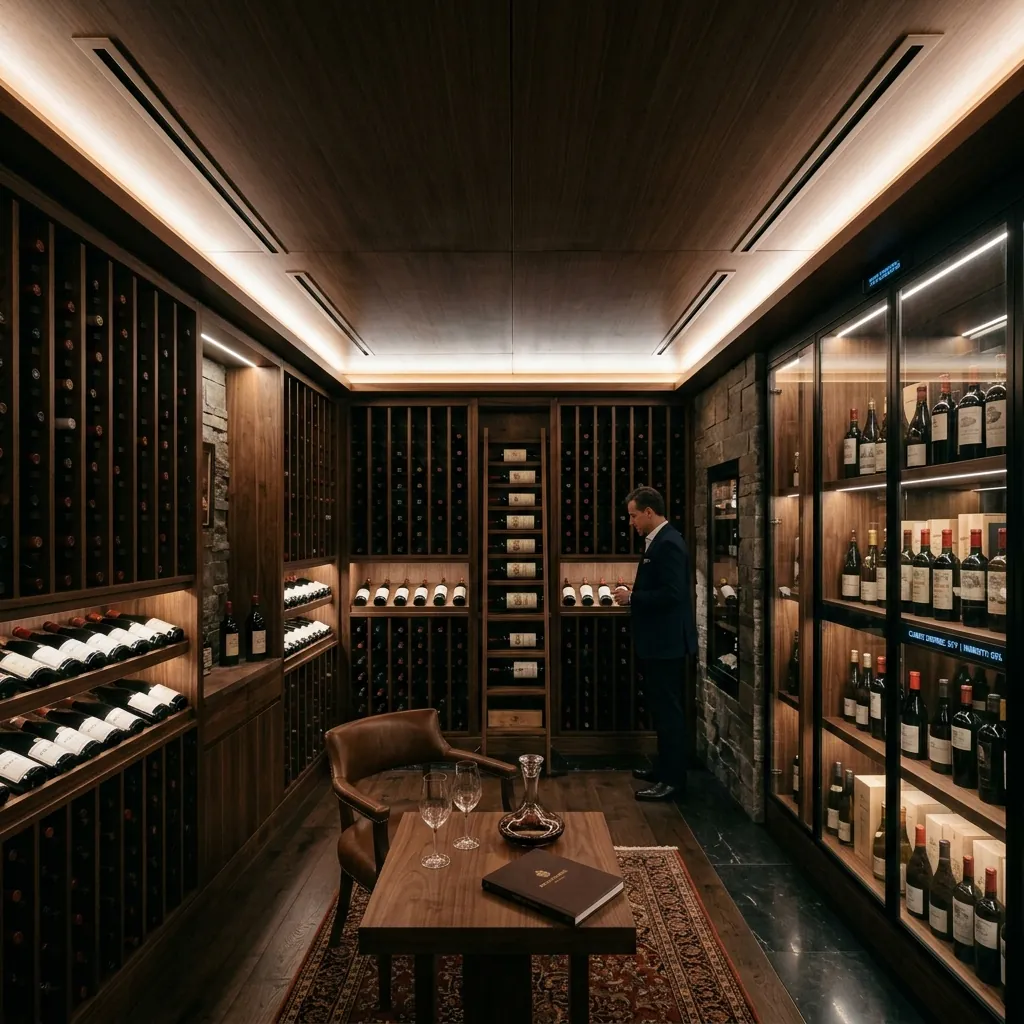
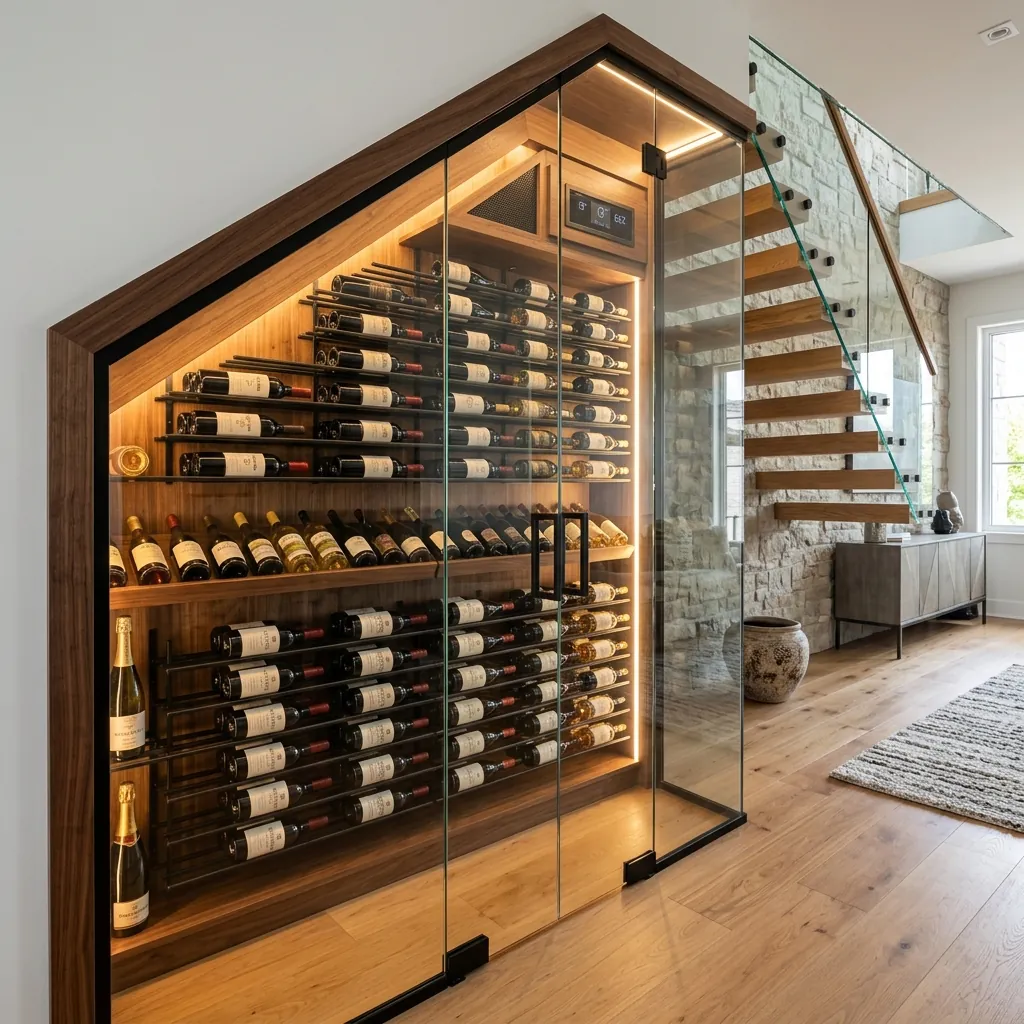
Power outages, storms, and unexpected emergencies can threaten even the most carefully curated wine cellar. VA Wine Cooling helps collectors protect their investment with reliable strategies, expert guidance, and backup-ready cooling solutions designed to preserve wine quality when conditions become unpredictable.
Book a ConsultationA fine wine collection is far more than a display of bottles; it is a living, evolving investment that depends on stable temperature, controlled humidity, and protection from vibration, light, and sudden environmental change. When the power goes out, a wine cellar can begin to drift out of its ideal range far more quickly than many collectors realize, especially in warm weather, in poorly insulated spaces, or in homes where the cellar shares a wall with areas that fluctuate in temperature. Even a short outage can create stress on corks, accelerate aging, and compromise the delicate balance that premium wines need to mature gracefully. For collectors who have spent years sourcing rare vintages, building a diversified cellar, and planning for long-term enjoyment or resale value, emergency preparedness is not optional—it is a core part of responsible wine ownership. VA Wine Cooling understands that protecting wine during outages means thinking ahead, selecting the right cooling equipment, and creating a practical response plan before disaster strikes. In a world where storms, grid failures, heat waves, and household emergencies are increasingly common, the safest cellar is the one designed to remain resilient under pressure, keeping valuable bottles protected when the unexpected happens.
The first line of defense during a power outage is the ability to slow temperature rise and maintain a stable cellar environment for as long as possible. A properly designed wine cooling system, combined with insulation and airtight construction, can buy precious time and reduce the risk of heat damage.
Sudden changes in humidity can dry out corks, increase oxidation risk, and weaken long-term storage conditions. Emergency-ready cellar design helps preserve the moisture balance that fine wines need to remain sealed and age safely.
A collection with high-value or irreplaceable wines deserves a backup strategy tailored to risk. From portable cooling options to contingency storage plans, collectors can reduce exposure when outages last longer than expected.
Preparedness is about more than equipment—it is about confidence. Knowing your cellar has a plan for emergencies helps protect both the financial value and the emotional significance of every bottle in your collection.
When a power outage interrupts a wine cellar, the most immediate concern is temperature rise, but the real danger is the combination of heat, time, and instability. Fine wine is highly sensitive to environmental fluctuation, and once the cooling system stops, the room begins to absorb heat from surrounding walls, ceilings, and ambient air. In a tightly controlled cellar, this change may happen slowly at first, which can lull collectors into a false sense of security. However, if the outage continues for hours or if the outside temperature is already elevated, the cellar can move well beyond the ideal wine storage range. For collectors who store vintage Bordeaux, Burgundy, Napa Cabernet, Champagne, or age-worthy white wines, even modest temperature spikes can compromise structure, aromatic precision, and aging potential. Protecting a wine collection during an emergency means understanding that the issue is not simply whether the bottles get warm; it is whether they are exposed to repeated stress that alters the wine’s evolution and shortens its lifespan.
Temperature swings are especially harmful because they can cause liquid expansion and contraction inside the bottle. As wine warms, it expands and may push against the cork, increasing the chance of seepage or premature oxidation. When the temperature later drops again, the wine contracts, potentially pulling air back into the bottle if the seal has been weakened. This cycle can happen during a single extended outage, during rolling blackouts, or during emergency situations where power returns and fails repeatedly. That is why wine cellar emergency planning must focus on stability rather than simply short-term cooling. A high-quality wine cooling system installed by professionals can help maintain a more insulated microclimate and reduce the speed of temperature change, but backup measures are equally important for collectors who want true resilience. VA Wine Cooling recommends a layered approach that combines equipment, cellar design, and practical response steps so that the collection remains protected even when the utility grid does not cooperate.
Humidity is another often-overlooked factor during outages. In many homes, HVAC systems help regulate indoor moisture levels, and when those systems shut down, humidity may rise or fall unpredictably. Too much humidity can encourage mold growth on labels, racks, and cellar surfaces, while too little can dry out corks and labels and increase the risk of oxygen infiltration. Fine wine storage depends on a delicate balance, typically around a moderate humidity range that keeps corks supple without creating condensation. Emergencies can disrupt that balance quickly, particularly in basements, garages, or custom cellars that are already vulnerable to climate swings. A well-insulated cellar with a dependable wine cooling unit is far better equipped to withstand these changes, but collectors should also consider whether the room has vapor barriers, sealed doors, and materials that resist moisture-related damage. In a crisis, the goal is not perfection; it is to slow deterioration enough to preserve wine integrity until normal conditions return.
Light and vibration become secondary concerns during many emergencies, but they are still important. If a generator, temporary lighting, or household activity causes repeated movement around the cellar, the bottles may be disturbed at a time when the wine is already vulnerable. Similarly, if windows are exposed during a storm or if doors are opened frequently to check conditions, ultraviolet light and warm air can add to the strain. Collectors often focus on the cooling unit alone, but true emergency preparedness involves the entire storage environment. That includes the cellar’s insulation, door seals, rack stability, and layout. The less a collector has to improvise during a stressful moment, the less likely the wine is to experience avoidable damage. A resilient cellar is one that can absorb disruption without forcing the owner into risky decisions or frantic measures that may do more harm than good.
It is also important to recognize the emotional and financial stakes involved. Many fine wine collections contain bottles that cannot easily be replaced, whether because of scarcity, provenance, or sentimental value. A power outage that compromises a cellar can erase years of careful acquisition and patient aging. For investors, the impact may be measurable in lost resale value and diminished market appeal. For enthusiasts, the loss may be personal, tied to special occasions, cellar milestones, or wines intended for future celebrations. That is why VA Wine Cooling emphasizes proactive planning rather than reactive damage control. When collectors prepare in advance, they are not just installing equipment; they are creating a safeguard for the memory, value, and future enjoyment embodied by every bottle. Emergency readiness is an essential part of wine stewardship, and it begins with understanding how quickly a seemingly minor disruption can become a serious threat to a fine wine collection.
Another factor that makes outages so dangerous is that they often occur alongside other emergencies. Heat waves, hurricanes, ice storms, floods, wildfires, and local infrastructure failures can all create conditions in which a cellar is under stress from multiple directions at once. During these events, the home itself may be warmer than usual, access to the cellar may be limited, and the owner may be focused on broader safety concerns rather than bottle-by-bottle protection. This is why the best wine cellar protection strategies are simple, durable, and ready without requiring constant intervention. A professionally designed cooling system, paired with a clear emergency plan, can make the difference between a cellar that survives a crisis with minimal fluctuation and one that suffers irreversible harm. For serious collectors, preparedness is not a luxury; it is part of the discipline of collecting well.
Essential Wine Cellar Engineering Resources:
The most effective way to protect a fine wine collection during power outages is to design the cellar with resilience in mind from the beginning. A wine cellar that is built only for ideal everyday conditions may perform well when the power is on, but it can become vulnerable the moment there is an interruption. Emergency-ready cellar design starts with insulation, because insulation slows the transfer of heat into the room and gives the cooling system more time to maintain a stable environment. High-quality insulation in the walls, ceiling, and floor, combined with a properly sealed vapor barrier, helps create a controlled envelope that resists sudden environmental change. This is especially important in regions that experience extreme summer heat, winter freezes, or frequent storms. VA Wine Cooling often advises collectors to think of insulation as the foundation of emergency protection, because a well-insulated cellar can preserve wine conditions long after an outage begins, reducing the urgency and stress of the situation.
Door quality and air sealing are equally important. A cellar door that leaks air will allow warm, humid, or dusty conditions to enter much faster during a blackout. In an emergency, every small weakness in the enclosure becomes more significant. That is why collectors should pay close attention to weatherstripping, door material, threshold sealing, and any penetrations for wiring or plumbing. Even a premium cooling system can only perform at its best if the room itself is built to support it. When the goal is protecting fine wine collections during emergencies, the cellar should be treated as a complete system rather than a room with a machine attached. The more airtight and thermally stable the space, the more forgiving it will be when the unexpected happens. This approach not only improves outage performance but also reduces daily energy use and extends the life of the cooling equipment.
Cooling equipment selection is another critical part of emergency preparedness. Not all wine cooling units are created equal, and collectors need to consider how a system will behave under stress. A reliable system should be correctly sized for the cellar volume, wine load, insulation level, and ambient conditions. If a unit is undersized, it may struggle even on normal days, leaving little reserve capacity when an outage or heat wave occurs. If it is oversized or poorly matched, it may cycle inefficiently and create unnecessary fluctuations. Professional guidance is essential here because the right system is not simply the most powerful one; it is the one that can sustain stable conditions with minimal strain. VA Wine Cooling specializes in helping collectors choose systems that are built for consistency, which is exactly what matters when emergency conditions test the cellar’s limits. In many cases, the best protection comes from a cooling unit that has been selected with the local climate and the collector’s specific storage goals in mind.
Backup power is often discussed as the obvious solution, but it should be approached carefully and realistically. Generators, battery backups, and emergency power supplies can be useful, yet they are only effective if they are sized correctly, tested regularly, and integrated safely with the home’s electrical system. A generator that cannot carry the cooling load, or that requires complicated setup during a storm, may provide less protection than a well-insulated cellar that simply slows heat gain. Collectors should evaluate how long they typically need to bridge an outage, whether the backup system can support the cooling unit continuously or intermittently, and what maintenance is required to ensure readiness. It is also wise to consider the noise, fuel storage, ventilation, and placement requirements of any backup power source. Emergency planning is not about assuming a perfect fix; it is about creating multiple layers of protection so that one failure does not leave the collection exposed.
Monitoring systems add another level of confidence. In a modern wine cellar, temperature and humidity sensors can provide real-time information and alert the owner when conditions begin to drift. This is especially valuable when the collector is away from home during a storm or evacuation. Smart monitoring can help identify whether the cellar is holding steady, whether a cooling unit has stopped, or whether humidity is rising dangerously. In emergencies, information is power. A collector who knows the exact state of the cellar can make better decisions about whether to activate backup power, relocate the most valuable bottles, or wait for utility restoration. VA Wine Cooling encourages collectors to treat monitoring as part of the emergency toolkit, not just a convenience. The ability to respond early can prevent small issues from becoming expensive losses, and it can reduce the uncertainty that makes emergencies so stressful.
Another often overlooked element is organization inside the cellar itself. Bottles should be stored in a way that supports quick assessment and, if necessary, selective relocation. High-value bottles, fragile older vintages, and wines with sensitive closures should be easy to identify. A clear inventory system helps the owner prioritize what matters most if conditions deteriorate. During a crisis, there may not be time to search through racks or decode handwritten notes. Well-labeled storage, digital inventory records, and a logical cellar layout can save precious minutes and reduce the chance of mishandling. Emergency preparedness is not only about surviving a blackout; it is about being able to act calmly and effectively if the situation escalates. A thoughtfully designed cellar makes that possible by combining durable construction, reliable cooling, smart monitoring, and practical organization into one cohesive protection strategy.
Finally, collectors should remember that emergency readiness also includes maintenance. A wine cooling system that has not been serviced may fail when it is needed most. Dirty coils, blocked airflow, worn components, and neglected controls all increase the chance of breakdown at the worst possible time. Regular inspection and maintenance help ensure that the system is operating efficiently and that any small issue is addressed before it becomes a crisis. For collectors who depend on their cellar as both a storage environment and an investment safeguard, maintenance is not an optional chore; it is part of the insurance policy. By keeping the system clean, tested, and professionally supported, owners can enter storm season or high-risk periods with far greater confidence. Emergency-ready design is ultimately about preparedness in layers, and every layer strengthens the cellar’s ability to protect wine when power is lost.
When a power outage actually occurs, the most important thing a collector can do is remain calm and avoid unnecessary intervention. Opening the cellar door repeatedly to “check” on the bottles can introduce warm air, disrupt humidity, and accelerate the very conditions you are trying to prevent. Instead, the first step should be to assess the situation with as little disturbance as possible. If the cellar has monitoring equipment, review the current temperature and humidity readings before making any decisions. If the outage is expected to be brief and the cellar is well insulated, the best course of action may be to leave the space closed and allow the thermal mass of the room and the wine itself to help stabilize conditions. Fine wine collections are best protected by thoughtful action, not panic, and emergency response should always be guided by the principle of minimizing change.
If the outage appears likely to last longer, collectors should prioritize the most valuable or sensitive bottles. This does not mean rushing to move an entire cellar, which can create risks of breakage, vibration, and temperature shock. Instead, it means identifying which wines are most vulnerable and deciding whether selective relocation to a cooler, safer environment is warranted. For some collectors, this might involve transferring a small number of irreplaceable bottles to a backup location with climate control. For others, it may mean activating a generator or portable cooling solution to preserve the cellar in place. The key is to have a plan before the emergency begins, so that decisions can be made quickly and rationally. VA Wine Cooling encourages collectors to create a written outage protocol that includes contact information, equipment instructions, and prioritization guidelines, because stress makes memory unreliable and time is often limited during emergencies.
Communication is another important part of emergency management. If the outage is part of a larger weather event or regional emergency, staying informed about utility restoration timelines and local conditions can help determine whether relocation or backup power is necessary. Collectors should also know how to safely shut down or restart their cooling equipment if needed, since improper handling can damage the system or create additional strain when power returns. In some cases, a sudden surge when electricity is restored can be as problematic as the outage itself, so surge protection and proper electrical setup are wise investments. Emergency planning should include not only what to do when the power goes off, but also how to bring the cellar back online in a controlled way once service resumes. This prevents secondary damage and helps the cooling system recover smoothly.
For collectors with large or especially valuable cellars, insurance and documentation should be part of the response plan. A detailed inventory with photos, bottle descriptions, purchase records, and provenance information can be invaluable if a prolonged emergency leads to loss or damage. While no collector wants to think about worst-case scenarios, documentation provides practical support and peace of mind. It also helps with prioritizing wines if only part of the cellar can be protected during a crisis. Knowing which bottles are most valuable, most fragile, or most time-sensitive allows the collector to focus resources where they matter most. Emergency preparedness is therefore not just about physical protection; it is also about administrative readiness, because a well-documented collection is easier to safeguard and recover if something goes wrong.
Another essential strategy is to think ahead about seasonal risk. In many climates, outages during summer are especially dangerous because ambient temperatures can rise quickly, making cellar recovery more difficult. In winter, the risks may shift toward freezing conditions, burst pipes, or humidity imbalance. Collectors should adapt their emergency plans to the season and the local weather patterns they are most likely to face. A cellar in a coastal region may require different contingency planning than one in a dry inland climate or a home in an area prone to hurricanes or snowstorms. VA Wine Cooling works with collectors to build solutions that reflect real-world conditions rather than generic assumptions. That means considering how long the cellar can hold temperature, what backup tools are realistic for the household, and how to respond if the emergency happens during travel, vacation, or an extended absence from home.
Above all, emergency response should be simple enough to execute under pressure. A plan that is too complicated may fail precisely when it is needed most. The best protection systems are intuitive, tested, and easy to activate. They may include a cooling unit with dependable performance, a monitored alarm system, a backup power source, a contact list for support, and a short checklist for outage response. These tools work together to reduce uncertainty and protect the cellar without demanding technical expertise from the owner in the middle of a crisis. Protecting fine wine collections during power outages and emergencies is ultimately about reducing risk at every stage: before the event, during the event, and after the event. The collector who plans for all three stages is far more likely to preserve the quality, value, and enjoyment of every bottle in the cellar.
There is also a long-term benefit to emergency planning that extends beyond any single outage. A cellar designed for resilience tends to perform better year-round, with more consistent temperatures, better humidity control, and fewer mechanical issues. That means wines age more gracefully, cooling equipment lasts longer, and the owner experiences fewer surprises. In other words, preparing for emergencies improves the cellar in ordinary times as well. This is one of the reasons VA Wine Cooling treats resilience as a central part of wine storage design. A collection deserves more than a machine that works on a good day; it deserves a system built to protect its contents through the difficult days too. When collectors invest in emergency readiness, they are investing in the future of the collection itself.
The answer depends on insulation, cellar size, ambient temperature, bottle load, and the quality of the cooling system. A well-built, tightly sealed cellar with strong insulation can often hold stable conditions for many hours, sometimes longer, because the room itself acts as a buffer against rapid heat gain. However, there is no universal timeframe that applies to every cellar, and collectors should never assume that a room will remain safe indefinitely without power. Hot weather, direct sun exposure, poor insulation, or frequent door openings can shorten the safe window significantly. The best approach is to treat the first hours of an outage as critical and monitor conditions closely. If the outage looks prolonged, backup power or selective relocation of the most valuable bottles may be necessary. VA Wine Cooling recommends designing the cellar so that it slows temperature rise as much as possible, giving the collector time to respond without panic.
In most cases, you should avoid moving the entire cellar unless conditions clearly require it. Moving bottles creates risks of vibration, breakage, and unnecessary temperature exposure, especially for older wines that are more delicate. The better strategy is usually to keep the cellar closed and stable while you assess the outage duration and cellar temperature. If you must relocate wines, prioritize the most valuable, fragile, or temperature-sensitive bottles first, and move them carefully to a cooler, more stable environment. A backup storage location should ideally be planned in advance so you are not improvising under pressure. For many collectors, a selective and measured response is far safer than trying to rescue everything at once.
The best emergency preparation combines strong cellar construction, reliable cooling equipment, monitoring, and a backup plan. Start with insulation, vapor barriers, and airtight sealing so the room can resist temperature change for as long as possible. Then choose a properly sized wine cooling system that can maintain stable conditions under normal use and recover efficiently after interruptions. Add temperature and humidity monitoring so you can see changes early, even when you are away from home. Finally, create a written outage plan that includes backup power options, bottle prioritization, contact information, and instructions for safely restarting the cellar after power returns. This layered approach gives your collection the best chance of surviving storms, blackouts, and other emergencies with minimal risk.
Whether you need installation, service, or maintenance — our team is ready to help. Fill out the form below and we'll get back to you within 24 hours.
By submitting this form, you agree to our Privacy Policy. CSLB Lic#1055057
VA Wine Cooling engineers and maintains precision commercial and residential cooling systems across Southern California.